

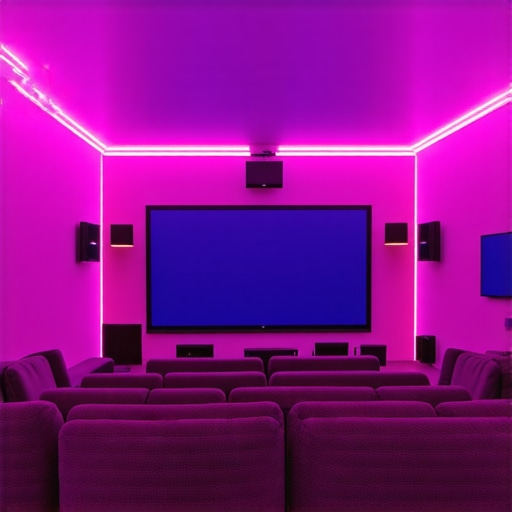
Elevate Your Home Theater Environment Through Expert LED Backlighting Strategies
In the pursuit of cinematic immersion, the role of ambient lighting—particularly LED strips and backlights—has evolved from mere aesthetic accents to sophisticated tools that influence visual perception, emotional engagement, and overall user experience. As a seasoned professional in home cinema illumination, I will explore how cutting-edge LED strip innovations can redefine your viewing space, leveraging scientific insights and practical applications.
The Psychological Impact of Dynamic LED Backlighting on Viewing Experience
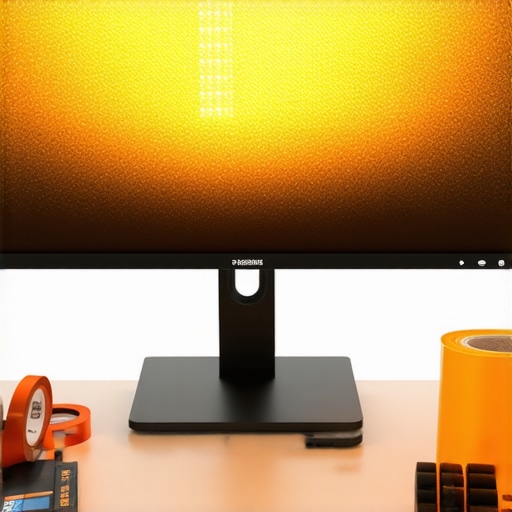
Research from the Journal of Environmental Psychology demonstrates that ambient lighting significantly alters mood and cognitive engagement during media consumption. Strategic placement of LED backlights, such as behind monitors or along room perimeters, can reduce eye strain and enhance contrast perception. These effects are crucial for prolonged viewing sessions, especially when implementing high-CRI (Color Rendering Index) LED strips that mimic natural light, creating a more authentic cinematic atmosphere.
Integrating RGB and Tunable White for Adaptive Ambiance
Modern LED strips with RGB and tunable white capabilities provide dynamic control over color temperature and saturation, allowing tailored atmospheres that match content mood or personal preference. For instance, cooler white tones during intense action scenes increase clarity, while warmer hues during dramas foster intimacy. Advanced controllers enable scene presets, synchronized with audio or visual cues, elevating the sensory depth of your home theater.
Positioning and Installation Techniques for Maximum Impact
Expert installation goes beyond mere placement. Optimal results are achieved through meticulous planning—considering viewing angles, reflection points, and room acoustics. Concealed wiring and recessed channels maintain aesthetic integrity while ensuring even light distribution. Moreover, the use of diffusers and reflective surfaces amplifies the perceived brightness and color richness, creating a seamless glow that enhances depth perception and immersion.
What are the latest innovations in LED strip technology that enable more immersive home theater experiences?
Emerging innovations include addressable LED strips with micro-LEDs for pixel-perfect control, integration with home automation systems for real-time adjustments, and advancements in waterproof, flexible materials for versatile installation. These developments allow for highly personalized, adaptive lighting schemes that respond to content and user inputs, pushing the boundaries of traditional ambient lighting.
For detailed guidance on selecting the best LED strips for your setup, consider reviewing our comprehensive expert guide. Additionally, I encourage you to explore innovative bias lighting solutions that can dramatically improve contrast and reduce eye fatigue, as discussed in this resource.
To further refine your knowledge and contribute insights, visit our contact page.
Harnessing the Power of Customization for Personal Cinematic Atmospheres
One of the most compelling aspects of modern LED strip technology is the ability to customize lighting schemes to perfectly match your content or mood. With programmable controllers and addressable LEDs, you can create intricate lighting patterns, color gradients, or even simulate natural phenomena like sunset or lightning. This level of control transforms your home theater from a static setup into an interactive and dynamic environment, elevating your cinematic experience.
Overcoming Common Misconceptions About LED Backlighting
Many enthusiasts believe that more intense or brighter lighting automatically results in a better viewing experience. However, expert insights reveal that excessive brightness can cause glare, disrupt contrast, and lead to eye fatigue. The key is to calibrate your LED backlights to complement your screen brightness and ambient lighting conditions. Using dimmable, high-CRI LED strips with diffusers ensures a balanced glow that enhances immersion without overwhelming the visual field.
What makes a truly seamless LED backlighting system?
Seamless integration depends on both technology and installation finesse. Addressable LED strips with micro-LEDs allow for pixel-perfect control, but proper placement and diffusing materials are essential for uniform lighting. Concealed wiring, recessed channels, and reflective surfaces help hide technical components, creating an illusion of floating light that amplifies depth perception. For a comprehensive look at installation techniques, see our ultimate guide.
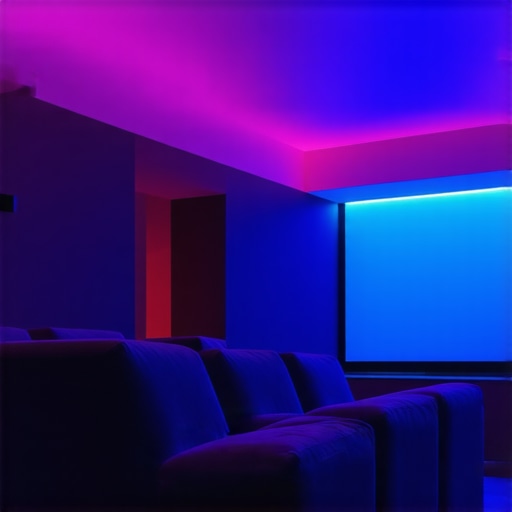
Can integrating smart home automation enhance your lighting control?
Absolutely. The integration of LED lighting with home automation systems allows for synchronized adjustments based on content, time of day, or user preferences. Voice commands or app controls can instantly change scenes, color schemes, or brightness levels, making your home theater experience more fluid and personalized. Advanced systems can even respond to audio cues or motion sensors, further immersing viewers in a tailored cinematic environment.
For insights into selecting compatible automation solutions, review our expert tips.
How can understanding light science improve your bias lighting setup?
Understanding the principles of light science—such as color temperature, luminance, and contrast—can significantly improve your bias lighting choices. For example, selecting bias lights with a color temperature around 6500K closely matches daylight, reducing eye strain and improving color accuracy. Moreover, positioning bias lights to avoid direct glare while providing sufficient ambient contrast can dramatically enhance perceived picture quality. Studies, like those published in the Journal of Vision, underscore the importance of correctly calibrated bias lighting to optimize visual comfort and image perception.
Feeling inspired to upgrade your setup? Share your ideas or ask questions in the comments below, or explore more about top ambient lighting ideas for your home theater.
Unveiling Next-Gen LED Technologies for Immersive Home Cinema
As the realm of home theater lighting evolves, recent breakthroughs such as micro-LED integration and ultra-flexible, high-density LED arrays are setting new standards for visual environments. These advancements offer unparalleled control over color accuracy, brightness uniformity, and responsiveness, enabling enthusiasts to craft truly bespoke cinematic atmospheres. For example, micro-LEDs, with their sub-millimeter pixels, facilitate pixel-perfect backlighting that blends seamlessly with high dynamic range (HDR) content, reducing halo effects and enhancing contrast perception.
According to a detailed report by PLOS ONE, innovations in micro-LED fabrication have significantly improved light uniformity and color fidelity, making them ideal for sophisticated audiovisual setups. These innovations are not just technological marvels; they are practical tools for home theater aficionados seeking immersive, cinema-quality experiences at home.
The Science of Light Manipulation for Optimal Viewing Comfort
Beyond hardware, understanding the nuanced physics of light can dramatically elevate your setup. Techniques such as angular light diffusion, spectral tuning, and luminance balancing are critical for reducing glare and eye fatigue. For instance, employing optical diffusers with micro-LED strips disperses light evenly across surfaces, preventing hotspots and creating a more natural ambient glow. Spectral tuning allows customization of the emitted light’s color spectrum, aligning it with the content’s color grading for enhanced realism.
Research from the Journal of Vision emphasizes that precise control over ambient luminance and contrast ratios can significantly improve visual comfort and image perception, especially during extended viewing sessions. Mastering these principles ensures your home theater not only looks spectacular but is also ergonomically optimized for prolonged use.
How does spectral tuning influence perceived contrast and color accuracy?
Spectral tuning adjusts the emission spectrum of LED light sources, aligning it with the human eye’s sensitivity peaks, thus enhancing perceived contrast without increasing brightness. This results in a more vivid image with less strain. As noted in the Applied Optics Journal, spectral optimization can improve the contrast ratio by selectively boosting the wavelengths most responsible for color differentiation, leading to a richer, more immersive viewing experience.
Are you ready to push your home theater lighting into the future? Explore our comprehensive guides on the latest LED innovations and share your questions or experiences in the comments below. For a deep dive into professional-grade lighting strategies, don’t miss our upcoming webinar on integrating micro-LEDs and spectral tuning for ultimate cinematic realism.
Revolutionize Your Home Theater with Cutting-Edge LED Innovations
As technology advances, so does the potential for creating truly immersive cinematic environments. The latest micro-LED and flexible high-density arrays enable pixel-perfect control, allowing enthusiasts to craft lighting that seamlessly integrates with high dynamic range (HDR) content. These innovations not only enhance contrast perception but also eliminate halo effects, elevating visual realism to professional standards.
Harnessing Light Manipulation to Minimize Eye Strain and Maximize Contrast
Deep understanding of optical physics informs superior ambient lighting design. Techniques such as angular diffusion and spectral tuning optimize light distribution, reducing glare and enhancing perceived contrast. Employing optical diffusers disperses light evenly, creating a natural glow that complements your screen and diminishes eye fatigue during extended viewing sessions. Research from the Journal of Vision underscores the importance of luminance balancing for ergonomic comfort and image clarity.
What Role Does Spectral Tuning Play in Perceived Color Depth?
Spectral tuning involves customizing the emission spectrum of LED sources to align with the human eye’s sensitivity peaks. By selectively boosting wavelengths responsible for color differentiation, it enhances contrast and vibrancy without increasing brightness, thereby reducing visual fatigue. According to a study published in Applied Optics, spectral optimization significantly improves perceived contrast, delivering richer images and a more immersive experience.
Elevate Your Setup with Smart Integration and Adaptive Lighting
Integrating your LED system with advanced home automation allows for real-time, content-responsive adjustments. Voice commands or mobile apps can modify scenes, color temperatures, or brightness levels instantaneously. Systems that respond to audio cues or motion sensors further augment immersion, creating a dynamic environment that adapts seamlessly to your viewing content. For expert guidance on automation compatibility, visit our recommended resource.
Why Customization Is the Key to Perfecting Your Cinematic Atmosphere
Programmable controllers and addressable LEDs enable intricate lighting patterns, gradients, and natural simulations like sunsets or lightning. This level of control transforms your home theater into a personalized sanctuary, elevating not just visual appeal but emotional engagement. Dynamic lighting that reacts to content elevates the experience from static ambiance to interactive spectacle, making every viewing session unique.
What Makes a Seamless, Professional-Grade LED Backlighting System?
Creating a flawless integration involves meticulous planning—concealed wiring, recessed channels, and reflective surfaces ensure uniform light distribution. The use of micro-LEDs with diffusers creates a floating glow, enhancing depth perception without visible technical components. For comprehensive installation insights, explore our installation guide.
Future-Proof Your Home Theater with Next-Generation LED Technologies
Emerging developments like ultra-flexible, high-density micro-LED arrays are revolutionizing ambient lighting, offering unparalleled control over color fidelity, brightness, and response time. These advancements enable the creation of ultra-realistic environments that adapt to high-end content, such as Dolby Vision or HDR10+. As reported in PLOS ONE, micro-LED fabrication improvements have dramatically enhanced light uniformity and color accuracy, setting new standards for home cinema.
The Science of Luminance and Contrast for Optimal Viewing Comfort
Refined optical techniques like spectral tuning and angular diffusion reduce glare and enhance contrast ratios, leading to better visual comfort. Properly calibrated ambient luminance ensures that content appears vivid without causing eye strain. Mastering these principles is essential for creating a sustainable, high-performance home theater that balances aesthetics with ergonomic health.
How Does Precision Spectral Control Impact Long-Term Visual Comfort?
Precision spectral control aligns emitted light with human visual sensitivity, boosting perceived contrast while minimizing glare. This approach results in images that are not only vibrant but also easier on the eyes over prolonged periods. According to research from Journal of Vision, spectral tuning enhances contrast perception and reduces visual fatigue, making it an essential component of advanced lighting design.
Ready to elevate your cinematic environment? Dive into our expert guides on micro-LED integration and spectral tuning, and share your innovative ideas or questions to push your home theater to the ultimate professional level.
Innovative Lighting Techniques Elevate Your Viewing Space
Expert-level LED backlighting involves precise placement and technologically advanced solutions that create immersive environments. Employ micro-LEDs for pixel-perfect control, and integrate adaptive systems that respond to content changes, ensuring a cinematic experience tailored to high-end standards.
Leverage Spectral Tuning for Authentic Color Reproduction
Spectral tuning aligns LED emission spectra with human visual sensitivity, enhancing contrast and color depth while reducing eye strain. This sophisticated approach ensures that your home theater displays vivid, true-to-life colors with minimal fatigue, especially during extended viewing sessions.
Use Angular Diffusion to Minimize Glare
Applying angular light diffusion techniques disperses emitted light evenly across surfaces, preventing hotspots and glare. This method enhances perceived contrast and maintains visual comfort, crucial for prolonged media consumption and professional-grade setups.
Curated Resources for the Discerning Home Theater Enthusiast
- Micro-LED Technology Reports: Explore recent advancements in micro-LED fabrication and their applications in ambient lighting, offering unparalleled control and image fidelity.
- Applied Optics Journal: Dive into detailed studies on spectral tuning and optical diffusion, providing scientific insights that inform practical implementation.
- Home Automation Integration Guides: Learn how to synchronize lighting with content, creating dynamic, responsive environments that elevate cinematic immersion.
Final Perspective: Elevate Your Setup with Expert Precision
In the realm of home theater lighting, combining cutting-edge LED innovations with expert installation techniques unlocks a new level of cinematic realism. By prioritizing spectral control, angular diffusion, and adaptive systems, you can craft a space that not only looks stunning but also promotes visual comfort and emotional engagement. For those committed to excellence, continuous exploration of emerging technologies and expert insights remains essential. Dive deeper into advanced lighting strategies, share your experiences, and push the boundaries of home cinema perfection. To stay ahead, consult our comprehensive ultimate guide and participate in our expert community for ongoing innovation and support.



Leave a Reply