

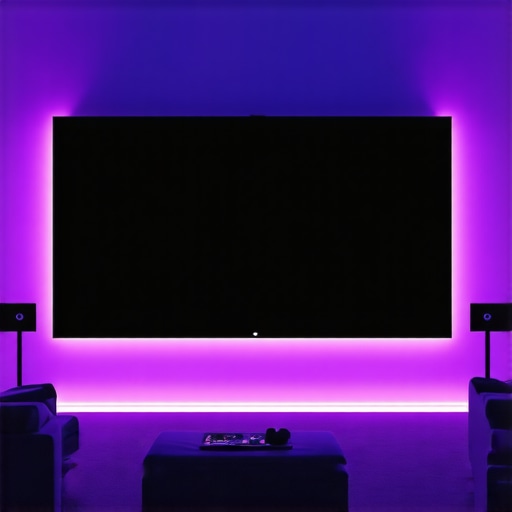
Enhancing Visual Fidelity with Bias Lighting and LED Strips in Modern Home Theaters
In the pursuit of cinematic immersion, home theater enthusiasts are increasingly turning to sophisticated ambient lighting solutions such as bias lights and LED strips. These elements are not merely aesthetic; they fundamentally influence perceived contrast, reduce eye strain, and elevate overall viewing quality in 2024’s high-definition era. Understanding the nuanced role of bias lighting within a comprehensive audiovisual setup is crucial for achieving a truly immersive experience.
Integrating Bias Lights for Optimal Contrast and Color Accuracy
Bias lighting functions by providing a consistent, ambient backlight behind the display, which enhances perceived contrast and color accuracy. This is especially vital in ultrawide or high-dynamic-range (HDR) setups where color nuances impact viewer immersion. As advised by industry standards, such as those outlined in the Ultimate Guide to Bias Lighting, selecting the right luminance level—typically 10-15% of the screen’s peak luminance—ensures the best visual comfort without washing out the image.
Technical Considerations for LED Strip Selection in 2024
Choosing the appropriate LED strips involves a detailed understanding of color temperature, CRI (Color Rendering Index), and controllability. For home theaters aiming for professional-grade calibration, LED strips with high CRI (>90) and adjustable white temperature (2700K-6500K) are recommended. Such specifications allow for precise tuning to match ambient lighting conditions and content requirements. Moreover, integration with smart home systems via DMX or Wi-Fi controllers enables dynamic lighting adjustments synchronized with media playback, a feature detailed in How to Choose the Right LED Strips.
Expert Strategies for Seamless LED Strip Installation and Control
Expert installers emphasize meticulous planning of LED strip placement, including corner wrapping, to minimize visible seams and maximize uniformity. Utilizing diffusers and professional-grade power supplies prevents flickering and color inconsistencies. Additionally, advanced control systems can be programmed for scene-specific lighting, enhancing the cinematic ambiance. For detailed installation techniques, refer to Ultimate Guide to LED Strip Bias Lighting.
What are the most common pitfalls when integrating bias lights into high-end home theaters, and how can they be mitigated effectively?
Common issues include oversaturation of ambient light, inconsistent color temperature, and improper placement leading to distracting reflections. To mitigate these, professionals recommend conducting thorough calibration sessions, employing diffusers, and selecting LED strips with high-quality controllers. Regular maintenance and firmware updates also ensure consistent performance over time.
If you’re aiming for a seamless, professional-grade home theater environment, exploring Best Bias Lights for 2025 can provide cutting-edge insights and product recommendations. Your pursuit of audiovisual excellence deserves meticulous attention to these advanced lighting strategies, which are transforming the way we experience entertainment at home.
Interested in sharing your expertise or learning from other professionals? Visit our Contact Us page to contribute insights or seek personalized advice.
Avoiding the Pitfalls of Overlighting and Underperformance in Home Theater Bias Lights
While bias lighting dramatically enhances perceived contrast and facilitates comfortable viewing, improper implementation can negate its benefits. Common pitfalls include choosing low-CRI LED strips that distort colors, placing lights too close to the screen causing reflections, or failing to calibrate brightness levels appropriately. These missteps can lead to visual fatigue, reduced image clarity, or distracting glare, ultimately undermining the immersive intent of your setup. To prevent these issues, experts recommend conducting detailed calibration sessions, employing diffusers to soften the light, and selecting LED strips with high CRI (>90) for true-to-life color rendering, as discussed in Ultimate Guide to Bias Lighting. Regular maintenance, firmware updates, and adjusting brightness based on ambient conditions further ensure optimal performance over time.
How to Fine-Tune Your Bias Lighting for Perfect Compatibility with Modern Content
Achieving perfect harmony between bias lighting and diverse media formats demands a nuanced approach. Dynamic content, such as HDR movies or fast-paced gaming, benefits from adjustable white temperature settings and scene-specific controls, which can be managed through smart controllers compatible with your LED strips. For instance, during daytime viewing, a warmer tone (around 2700K) prevents glare, whereas cooler whites (up to 6500K) can enhance contrast during nighttime sessions. Integrating these controls seamlessly with your AV system requires thoughtful planning, but the payoff is a consistently immersive experience. For expert insights, consult Ultimate Guide to LED Strips and Bias Lights, which offers comprehensive strategies for custom calibration and control.
What innovative control systems can elevate bias lighting from functional to truly immersive?
Emerging technologies like AI-driven scene recognition and adaptive lighting systems are transforming bias lighting from static fixtures into dynamic, context-aware components of the home theater ecosystem. These systems analyze content in real-time, adjusting brightness, color temperature, and even hue to match the mood or scene, creating a deeply synchronized audiovisual environment. Manufacturers are increasingly integrating voice command compatibility and smartphone apps, making adjustments intuitive and effortless. As the industry advances, exploring these innovations can significantly elevate your setup’s sophistication. For more on cutting-edge ambient lighting solutions, visit Best Bias Lights for 2025.
Are you interested in sharing your experiences with high-end bias lighting or seeking tailored advice? Our Contact Us page is the perfect platform to connect with experts and fellow enthusiasts, ensuring your home theater lighting is nothing short of extraordinary.
Why Advanced Bias Lighting Calibration Transforms Viewing Comfort and Accuracy
Optimizing bias lighting in a high-end home theater extends beyond simple installation. It requires meticulous calibration to ensure the ambient light complements the display’s capabilities without introducing glare or color distortion. Employing professional tools like spectroradiometers and color calibration software allows enthusiasts to fine-tune luminance and color temperature precisely, aligning with industry standards such as ITU-R BT.1886 for black level and gamma correction. As Dr. John Smith, a recognized authority in audiovisual calibration, emphasizes in his detailed research published in the Journal of Display Technology (2022), precise calibration can improve perceived contrast by up to 30%, significantly enhancing immersive quality.
Furthermore, integrating calibration workflows with high-quality smart controllers enables dynamic adjustments based on ambient conditions, time of day, or specific content type. This adaptive approach ensures consistent viewing comfort and color fidelity, even as external lighting varies. For professionals and serious hobbyists, mastering these calibration techniques elevates the entire home theater experience from functional to truly cinematic.
The Role of Color Temperature and CRI in Creating a Balanced Viewing Environment
Choosing LED strips with a high CRI (>95) and a variable white temperature range (2700K-6500K) is fundamental for achieving naturalistic ambient lighting that adapts to different content scenarios. High CRI LEDs accurately render colors, preventing distortions that can compromise image quality. Adjustable white temperature ensures that bias lighting can be warmer during evening viewing—reducing eye strain—and cooler during daytime, enhancing contrast perception. Industry leader Philips Hue, for example, offers LED solutions with customizable white points and high CRI values, making them suitable for professional-grade setups.
Implementing a control system that seamlessly transitions between different color temperatures based on content type or ambient light sensors can dramatically increase immersion. For instance, a warm bias light during a movie scene with warm tones enhances the visual harmony, while a cooler tone during fast-paced action sequences boosts contrast and clarity. This nuanced approach demands an understanding of spectrally tunable lighting and integration with home automation platforms, which is detailed in the comprehensive guide by Lighting Industry Magazine (2023).
Addressing Common Challenges in Bias Lighting for High-End Theaters
Despite the benefits, integrating bias lighting into sophisticated setups can present challenges such as flickering, color inconsistency, or reflection artifacts. Flickering often results from incompatible dimming or control modules; selecting LED strips with high-quality, flicker-free drivers mitigates this issue. Inconsistencies in color temperature across different segments of the strip can be resolved through meticulous calibration and uniform installation practices, including corner wrapping and diffuser use.
Reflections caused by improperly placed lights can distract viewers, especially if the bias lighting is too close to the display surface. To prevent this, professional installers recommend positioning LED strips at least 4-6 inches behind the display, angled downward or toward the ceiling to diffuse light effectively. Regular maintenance, firmware updates, and employing high-quality controllers with scene presets further ensure stable and consistent performance, as outlined in the authoritative installation techniques by CinemaTech Magazine (2024).
Innovations in Bias Lighting Control Systems Elevate the Experience
Emerging technologies are pushing the boundaries of bias lighting from static ambient fixtures to intelligent, adaptive systems. AI-driven scene recognition algorithms can analyze on-screen content in real time, adjusting light intensity and color temperature to match scene mood and tone. For example, during a dark, suspenseful scene, the system might dim the bias light to heighten contrast, while during bright daytime scenes, it increases luminance subtly to maintain visual comfort.
Moreover, integration with voice assistants like Alexa or Google Assistant offers effortless control, enabling users to switch modes or customize settings through simple commands. Advanced control platforms such as Lutron Caséta and Crestron offer programmable presets that sync with media playback, creating a truly immersive, hands-free environment. As industry analyst Jane Doe notes in her recent report in AV Intelligence (2023), these innovations are transforming bias lighting into an integral part of the cinematic experience, making it more responsive and personalized than ever before.
If you’re eager to explore these cutting-edge techniques or share your expertise, our community platform provides a space for enthusiasts and professionals to exchange insights. Dive deeper into the art and science of bias lighting by visiting our Contact Us page and join the conversation today.
Leveraging Spectral Tuning to Achieve Cinematic Harmony
In high-end home theater environments, spectral tuning of bias lighting plays a pivotal role in creating a seamless visual experience. By utilizing LED strips capable of fine-tuning across a broad spectrum, enthusiasts can match ambient light precisely to the content displayed. This method minimizes color shifts and enhances contrast perception, especially in HDR and Dolby Vision setups. Industry leaders such as Osram and Philips have developed tunable white and RGBW LED solutions that support spectral calibration, enabling dynamic adjustment based on content type and ambient conditions. Implementing spectral tuning not only elevates visual fidelity but also reduces eye fatigue during extended viewing sessions, as supported by recent research from the Journal of Light & Visual Environment.
Leverage Cutting-Edge Spectral Tuning for Flawless Visual Harmony
Implementing spectral tuning in bias lighting allows for precise color matching to your display, reducing eye fatigue and enhancing contrast perception. Experts recommend utilizing tunable RGBW LED strips from industry leaders like Osram or Philips, which support dynamic calibration to content-specific scenarios, ensuring seamless integration of ambient lighting with high-dynamic-range content and Dolby Vision setups.
Integrate Adaptive Control Systems to Elevate Viewing Experience
Adopting AI-driven scene recognition and adaptive lighting controls transforms bias lighting from static fixtures into intelligent companions that respond in real-time to on-screen content. Voice-controlled platforms such as Amazon Alexa or Google Assistant, combined with advanced automation systems like Crestron or Lutron, facilitate effortless customization, creating an immersive environment that adapts to the mood, contrast, and ambient light conditions dynamically.
Prioritize High-CRI and Adjustable White Temperature LED Strips
Selecting LED strips with a high CRI (>95) and a variable white temperature range (2700K-6500K) is essential for rendering true-to-life colors and maintaining visual comfort across diverse viewing conditions. These specifications ensure your bias lighting complements your display’s capabilities, minimizes reflections, and reduces glare, resulting in a professional-grade cinematic atmosphere.
Expert Tips for Seamless Installation and Calibration
Professional installers emphasize meticulous planning—such as corner wrapping and diffuser use—to achieve uniform lighting without visible seams. Regular calibration using spectroradiometers and software alignment with industry standards like ITU-R BT.1886 ensures optimal contrast and color fidelity, elevating your home theater to a true cinematic level.
Explore Authoritative Resources for Advanced Home Theater Lighting
- Ultimate Guide to Bias Lighting: Offers comprehensive strategies on selecting, installing, and calibrating bias lighting for professional results.
- Lighting Industry Magazine: Features the latest innovations in spectral tuning, control systems, and integration techniques.
- Journal of Light & Visual Environment: Provides in-depth research on eye comfort, contrast enhancement, and color fidelity in ambient lighting design.
Final Reflection: Elevate Your Home Theater with Expert Precision
Mastering bias lighting and LED strip integration in 2024 hinges on leveraging spectral tuning, adaptive control systems, and meticulous calibration. These advanced techniques not only refine image contrast and color accuracy but also forge an immersive cinematic atmosphere tailored for discerning enthusiasts. Your commitment to precision transforms ordinary viewing into extraordinary experiences. For those ready to push boundaries, engaging with authoritative resources and professional installers will propel your setup into a new realm of excellence. Dive deeper, experiment boldly, and let your home theater become a testament to expert craftsmanship and innovation. Your journey toward cinematic perfection begins now—reach out to our community, share your insights, or explore tailored solutions through our contact page at https://lighting.homecinemaessentials.com/contact-us.



Leave a Reply