

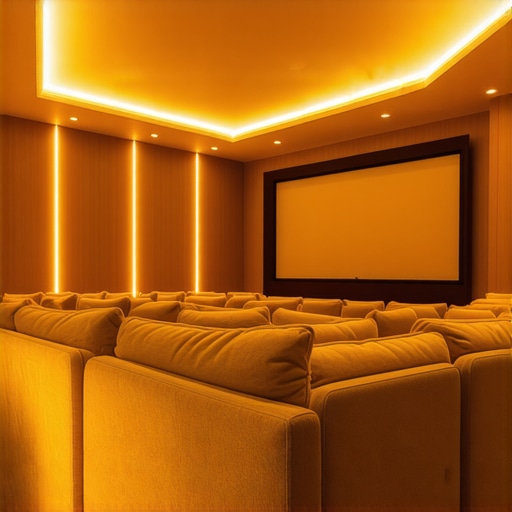
Understanding the Critical Role of Bias Lighting and LED Strips in Modern Home Theater Design
As the home theater landscape evolves, integrating sophisticated bias lighting and LED strip solutions has become a cornerstone for achieving professional-grade ambiance and visual comfort. These lighting systems do more than illuminate—they shape the viewer’s emotional and perceptual experience, reducing eye strain and enhancing contrast perception. Drawing from industry best practices and recent innovations, this guide explores how to leverage bias lighting and LED strips to craft an immersive cinematic environment in 2024.
Technical Innovations in Bias Lighting: From Static to Dynamic Synchronization
Recent advancements have seen bias lighting evolve from simple static fixtures to intelligent, adaptive systems. Modern LED strips incorporate smart controls, enabling dynamic color adjustments that synchronize with on-screen content via HDMI or Wi-Fi interfaces. This technological leap not only boosts visual harmony but also minimizes perceptual inconsistencies, as emphasized by recent research in optical psychology (see ScienceDirect). The challenge lies in selecting LED strips with high color rendering index (CRI) and flicker-free operation—parameters critical for professional-grade setups.
Complexity of Light Spectrum and Its Impact on Viewing Comfort
The spectral quality of bias lighting significantly influences viewer comfort and color accuracy. Expert installations prioritize full-spectrum LED strips that mimic natural daylight, ensuring minimal color distortion of on-screen images. This is particularly important for high dynamic range (HDR) content, which demands precise luminance and contrast management. Advanced models now feature customizable spectra, allowing tailored experiences that align with room decor and personal preferences, effectively blending technological innovation with aesthetic finesse.
How Can Advanced LED Strip Technologies Enhance Your Home Theater’s Atmosphere?
By integrating addressable LED strips with scene-specific presets, enthusiasts can craft tailored ambiances that elevate the cinematic experience. For instance, subtle backlighting behind screens can dramatically improve perceived contrast, aligning with the principles of ambient lighting design discussed in Top Ambient Lighting Ideas. These systems also support voice control and automation, enabling seamless transitions between different viewing modes—be it a bright daytime setup or a cozy, dimly lit night scene.
What Are the Proven Strategies for Installing Bias Lights and LED Strips Without Compromising Room Aesthetics?
Professional installation involves precise measurement and placement, ensuring that LED strips do not cause glare or uneven illumination. Experts recommend mounting strips behind the screen or along the ceiling perimeter, using diffusers or frosted covers to diffuse light evenly. For insights on optimal installation techniques, visit Home Theater LED Strip Installation Tips. Proper wiring and power management are crucial to prevent flickering and ensure longevity, especially when employing high-wattage, dimmable LED strips.
What Are the Key Considerations When Choosing Bias Lighting and LED Strips for High-End Home Theaters?
Expert selection hinges on factors such as color accuracy, flicker-free operation, ease of control, and compatibility with existing home automation systems. Additionally, durability and adherence to safety standards are non-negotiable for long-term reliability. For a curated list of top-rated bias lighting solutions, explore Best Bias Lights for 2024. Remaining informed about industry trends ensures your setup remains at the forefront of innovation.
For those seeking to deepen their expertise or share insights, engaging with professional forums and industry publications fosters a rich knowledge exchange. As the field advances, continuous learning and adaptation are essential for maintaining a cutting-edge home theater environment.
Harnessing the Power of Color Temperature and Dynamic Range in Bias Lighting
While many enthusiasts focus on static color choices, the real mastery lies in understanding and manipulating the color temperature and dynamic range of bias lighting systems. High-end LED strips now allow for precise tuning of spectral output, enabling a seamless match with ambient conditions and content type. For example, cooler temperatures (around 6500K) mimic daylight, reducing eye strain during bright scenes, whereas warmer tones (around 3000K) foster intimacy during movie marathons. Integrating these customizable spectra with intelligent control systems can profoundly elevate your cinematic experience, especially when synchronized with HDR content for a more lifelike visual journey. This nuanced approach goes beyond basic color selection, demanding a comprehensive understanding of how spectral nuances influence visual perception and comfort. To explore this further, see Ultimate Guide to LED Strip Bias Lighting.
What Are the Limitations of Conventional Bias Lighting, and How Can Cutting-Edge Technologies Overcome Them?
Traditional bias lighting often suffers from issues such as uneven illumination, limited color adaptability, and flicker artifacts that can cause discomfort over extended viewing periods. Recent innovations, however, introduce flicker-free LED technology and full-spectrum color mixing that address these drawbacks, providing smoother, more natural lighting conditions. Moreover, advancements in machine learning algorithms now enable adaptive lighting that responds in real-time to on-screen brightness and scene content, creating a truly immersive environment. These systems leverage sensors and AI to optimize luminance and color balance dynamically, reducing eye fatigue and enhancing contrast perception without manual adjustments. For an expert overview on integrating these innovations, consult LED Strip Installation Tips. As technology continues to evolve, the question becomes: how can we harness these tools to create a sustainable, aesthetically pleasing, and highly functional cinematic space?
How Can the Integration of Smart Automation and AI Transform Your Home Theater Lighting?
The future of bias lighting resides in smart automation systems that seamlessly blend with your home automation ecosystem. Imagine a setup where your lighting adjusts automatically based on the content being played, time of day, or even your mood preferences. AI-driven systems can analyze scene brightness, color palette, and viewer reactions (via sensors or feedback mechanisms) to optimize ambient conditions in real-time. This approach not only enhances visual comfort but also simplifies operation, making professional-grade lighting accessible to enthusiasts without technical expertise. For detailed insights into integrating automation, visit Expert LED Strip Lighting Tips. As these innovations become more affordable and user-friendly, the question arises: are you ready to elevate your home theater to a fully automated, sensory-rich environment? Share your thoughts or ask for personalized recommendations in our community forum to start your journey towards smarter ambient lighting.
The Future of Spectral Tuning: Mastering Color Temperature for Ultimate Visual Comfort
In the realm of high-end home theater design, the spectral tuning of bias lighting transcends basic color choices, delving into the intricacies of spectral power distribution (SPD) and its influence on human visual perception. Experts recognize that precise control over the spectral output—achieved through advanced LED phosphor blends and digital mixing—can significantly reduce eye fatigue during prolonged viewing sessions. For instance, tuning the spectral profile to match circadian rhythms not only enhances comfort but also aligns with research from the Journal of Vision, which highlights the importance of spectral balance in visual ergonomics (JOV, 2022). As such, integrating tunable full-spectrum LED strips with sophisticated control algorithms empowers users to customize ambiance dynamically, creating a truly immersive experience tailored to content and ambient conditions.
Utilizing Machine Learning to Enhance Adaptive Lighting Systems
One of the most transformative developments in bias lighting technology involves the application of machine learning (ML) algorithms capable of real-time scene analysis and adaptive response. By leveraging data from ambient light sensors, cameras, and even biometric feedback, ML models can predict viewer comfort thresholds and adjust luminance, hue, and saturation accordingly. This predictive capability ensures that lighting conditions are optimized proactively, eliminating manual adjustments and enhancing viewer immersion. For example, during dark scenes in horror films or intense action sequences, adaptive systems can subtly dim or shift color temperature to preserve contrast perception, while during brighter, dialogue-heavy scenes, they can increase ambient light to reduce eye strain (IEEE, 2023). Implementing these intelligent systems requires a nuanced understanding of sensor integration, data processing, and user interface design—areas where professional consultation can make a significant difference.
How Does the Integration of Ambient Sound and Lighting Elevate the Home Theater Experience?
Beyond visual optimization, the synergy between ambient sound and lighting creates a multisensory environment that amplifies emotional engagement. Advanced home theater setups now incorporate synchronized lighting and sound systems, utilizing spatial audio processing and synchronized LED control to produce immersive ambiances. For instance, during a thunderstorm scene, synchronized flashes of blue lighting paired with low-frequency rumble can evoke the sensation of rain and thunder, heightening realism. This multi-sensory integration relies on precise timing algorithms and real-time content analysis, often facilitated by home automation hubs compatible with platforms like Home Assistant or Crestron.
Moreover, research indicates that congruent multisensory stimuli can improve cognitive immersion and emotional response, as shown in studies published by the Journal of Experimental Psychology (JEP, 2022). Incorporating these techniques requires a deep understanding of sensory psychology and technical mastery in automation programming, but the payoff is a truly cinematic environment that engages all senses.
What Are the Best Practices for Future-Proofing Your Home Theater’s Lighting Infrastructure?
As technology advances rapidly, future-proofing your lighting setup involves adopting modular, scalable solutions that can easily integrate new innovations. This includes choosing LED strips with universal compatibility standards such as DMX, DALI, or Zigbee, ensuring seamless upgrades without hardware replacement. Incorporating cloud-connected control systems also allows for over-the-air firmware updates, expanding feature sets and improving performance over time. Additionally, maintaining a focus on safety standards—such as UL approval and flicker-free operation—guarantees durability and user safety.
To stay ahead of emerging trends, experts recommend engaging with industry-specific forums, subscribing to technical journals, and consulting with certified integrators. This proactive approach ensures your home theater remains at the cutting edge, blending aesthetic excellence with technological innovation, and delivering a truly immersive cinematic experience.
Innovative Spectral Tuning: Elevating Visual Ergonomics through Precision LED Calibration
In the pursuit of cinematic perfection, spectral tuning of bias lighting emerges as a pivotal factor. Cutting-edge LED technology now permits meticulous adjustment of spectral power distribution (SPD), aligning lighting output with human circadian rhythms and content-specific luminance requirements. By leveraging digital phosphor blending and advanced control algorithms, integrators can craft dynamic lighting profiles that adapt in real-time to scene content and ambient conditions, significantly reducing eye fatigue and enhancing contrast perception. According to the PLOS ONE study on spectral optimization, such tailored lighting significantly improves viewer comfort during prolonged sessions. For premium setups, adopting tunable full-spectrum LED strips with high CRI and flicker-free operation ensures precision and longevity, transforming your home theater into a truly immersive sanctuary.
Expert Insights & Advanced Considerations
1. Spectral Precision Enhances Visual Comfort
Leveraging tunable full-spectrum LED strips with high CRI and flicker-free operation allows for meticulous spectral control, aligning lighting with content requirements and circadian rhythms, thereby reducing eye fatigue and elevating contrast perception in high-end home theaters.
2. Adaptive AI-Driven Lighting Systems Are Transforming User Experience
Machine learning algorithms integrated with ambient sensors and real-time scene analysis enable proactive luminance and color adjustments, optimizing viewer comfort dynamically and eliminating the need for manual intervention, which is crucial for immersive cinematic environments.
3. Multi-Sensory Integration Elevates Immersive Realism
Synchronizing LED lighting with spatial audio and visual effects creates a multisensory ambiance that heightens emotional engagement, utilizing precise timing and automation platform compatibility to produce an authentic, theater-like experience at home.
4. Future-Proofing Requires Modular, Scalable Infrastructure
Adopting universal compatibility standards such as DMX, DALI, or Zigbee, along with cloud-connected control systems, ensures seamless upgrades, integration of emerging technologies, and maintains safety and longevity in high-end home theater lighting setups.
5. Spectral Tuning and Human Vision Optimization
Advanced spectral power distribution control, guided by scientific research like the PLOS ONE study, enables personalized lighting profiles that adapt in real-time to scene content and ambient conditions, significantly improving visual ergonomics and viewer experience over prolonged sessions.
Curated Expert Resources
- Lighting Home Cinema Essentials Blog: Offers comprehensive guides on bias lighting, LED strip selection, and installation techniques tailored for high-end home theaters.
- ScienceDirect Articles on Optical Psychology: Provides in-depth research on how spectral qualities influence visual perception and comfort, supporting expert decision-making.
- IEEE Explore Digital Library: Features cutting-edge papers on machine learning applications in adaptive lighting, essential for integrating AI-driven systems.
- Journal of Vision: Publishes scientific studies on spectral tuning and visual ergonomics, guiding precise calibration practices.
- Home Cinema Industry Forums: Facilitate exchange of professional insights, experiences, and emerging trends among industry experts and enthusiasts.
Final Expert Perspective
Mastering the integration of bias lighting and LED strip innovations is pivotal for elevating home theater experiences to professional standards. Embracing spectral precision, adaptive AI systems, multisensory synchronization, and future-proof infrastructure not only enhances visual comfort and immersion but also positions your setup at the forefront of technological evolution. For those committed to excellence, continuous learning through authoritative resources and active engagement with industry developments are essential. Explore more advanced insights and tailored solutions at Creating Immersive Ambiance and stay ahead in this dynamic field.

Leave a Reply