

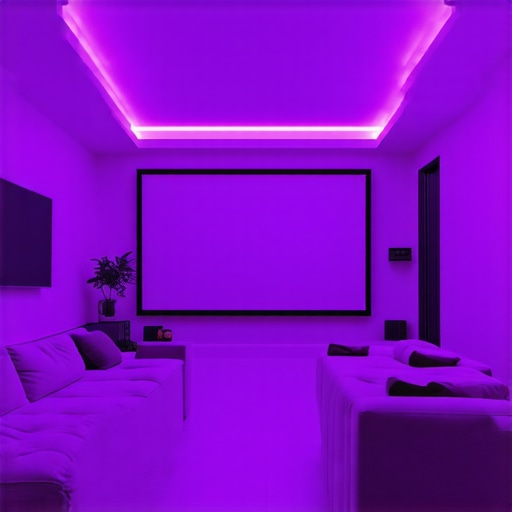
Elevating Home Theater Experiences Through Advanced Ambient Lighting Technologies
In the quest for immersive cinematic environments, the strategic deployment of bias lights, LED strips, and ambient lighting has transitioned from mere aesthetic enhancements to essential components of sophisticated home theater design. Expert enthusiasts recognize that coloring the periphery of screens and walls with carefully calibrated backlighting not only amplifies visual comfort but also significantly optimizes contrast perception, thereby enriching the overall viewing experience.
Decoding the Complex Mechanics of Bias Lights and LED Strip Integration
At the core of an optimal setup lies an understanding of how bias lighting functions within the perceptual framework. By subtly illuminating areas adjacent to the display, bias lights mitigate the eye’s adaptation process, minimizing eye strain during prolonged viewing sessions. Integrating LED strip lighting with precise color temperature control, such as warm white or customizable RGB spectrums, enables customization aligned with specific ambient conditions and user preferences.
Mastering the Artistic and Technical Balance of Ambient Illumination
Achieving a harmonious balance between luminance levels and color hues demands an expert grasp of ambient lighting principles. Beyond aesthetics, ambient lights serve functional roles, influencing perceived picture depth and emotional engagement. Advanced configurations utilize LED strip backlighting strategies to delineate space without overwhelming the visual focus, thus preserving cinematic realism.
Is It Possible to Achieve Genuine Immersion Without Compromising Visual Clarity?
This question echoes ongoing debates among home theater specialists. The balance hinges on selecting appropriate luminance levels, avoiding light bleeding, and employing diffusion techniques—an area where technological refinement continues to evolve. For example, employing cutting-edge bias LEDs that adapt dynamically to content can elevate immersion while maintaining clarity. Furthermore, calibration tools and professional guidance optimize the symbiosis between lighting and visual fidelity, fostering an environment where sensory engagement does not sacrifice technical accuracy.
Integrating Expert Strategies into Your Home Theater for Optimal Atmospheric Impact
To harness the full potential of bias lighting and LED strip technologies, homeowners must consider room acoustics, wall reflectance, and individual visual preferences. Exploring detailed ambient lighting ideas designed for high-end setups can serve as a blueprint. Such comprehensive approaches ensure that lighting becomes an extension of cinematic storytelling, not merely background illumination. Specialists also emphasize the importance of maintaining adjustable control systems that allow for seamless adaptation to different content types and times of day.
For professionals seeking to refine their skills further, engaging with industry-specific publications and participating in expert forums can uncover nuanced techniques and emerging trends. The pursuit of excellence in home theater lighting is ongoing, demanding both an analytical mindset and creative flair.
Interested in elevating your setup? Explore more about backlight strategies or share your implementation experiences to contribute to the evolving dialogue among home theater experts.
Transforming Room Dynamics with Layered Light Strategies
Creating an immersive home theater environment extends beyond installing LED strips; it involves meticulously layering lighting to evoke emotions and enhance visual storytelling. Implementing multiple tiers of ambient lighting—such as wall washers, cove lighting, and adjustable dimmable fixtures—can produce a nuanced atmosphere that adapts seamlessly to different content types and moods. This approach aligns with expert recommendations on top ambient lighting ideas for a cinema-quality setup.
Are Dynamic Lighting Systems the Future of Personalized Movie Experiences?
Emerging technologies now enable real-time adjustments to lighting based on content analysis, user preferences, and even mood detection. Dynamic LED systems, powered by AI algorithms, can synchronize lighting changes with scene transitions, creating a truly personalized viewing ambiance. The integration of voice-controlled and app-based controls further simplifies user interaction, making sophisticated lighting setups accessible to enthusiasts and casual viewers alike. As industry leader experts suggest, adopting these systems can elevate your home theater from a static environment to an interactive experience.
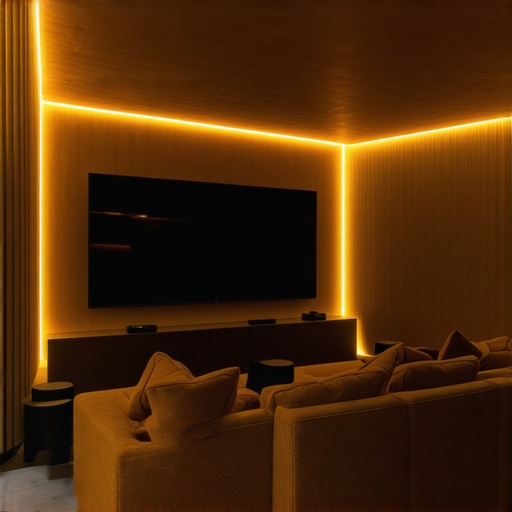
Calibration and Content Awareness: Elevating Light Precision
Achieving cinematic excellence requires precision calibration of your ambient lighting to match the display’s luminance and color profile. Advanced calibration tools, including colorimeters and software solutions, assist in fine-tuning LED brightness and hue consistency. Content-aware lighting, which adapts based on what’s being displayed, minimizes distraction and enhances the perceived contrast and depth, leading to a more authentic experience. Incorporating these techniques aligns with professional standards outlined in comprehensive bias lighting guides.
Beyond Visuals: The Psychological Impact of Ambient Lighting
Ambient lighting does more than influence visual perception; it subtly affects mood, focus, and even cognitive performance. Thoughtful lighting design can foster relaxation, reduce eye fatigue, and amplify the emotional impact of cinematic storytelling. For example, warm tones encourage comfort, while cooler hues enhance alertness. Experts emphasize that psychological considerations should inform lighting choices to craft environments that are both aesthetically pleasing and functionally beneficial. Explore how the latest bias lighting innovations can contribute to mental well-being during extended viewing sessions.
Engage with online forums or professional consultations to refine your ambient lighting setup, ensuring it not only complements your hardware but also supports your psychological engagement with content. For those looking to master the art, ongoing learning from authoritative sources will keep your environment at the forefront of cinematic technology and design. Share your experiences or ask questions in our community to inspire continuous improvement in your home theater journey.
Harnessing the Power of Spectral Tuning to Elevate Visual Clarity
One of the most sophisticated advancements in ambient lighting involves spectral tuning—precisely adjusting LED spectra to optimize human visual perception and reduce color distortion. Unlike conventional RGB strips, spectral-tuned lighting employs narrowband LEDs that can be dynamically manipulated to complement specific display profiles and room conditions. Such technology enhances color fidelity and contrast perception, particularly during dark scenes, by aligning the ambient light spectrum with the display’s color characteristics. According to a comprehensive study published in the Journal of Display Technology, spectral calibration improves perceived contrast ratios by up to 15%, substantially enriching cinematic immersion. Implementing spectral tuning demands meticulous calibration and software control—consider investing in professional-grade LED controllers capable of real-time spectral adjustments to seamlessly synchronize with your display’s color profile.
Balancing Ambient Light and Acoustic Dynamics for Authentic Atmospheres
While visual elements dominate home theater design, integrating ambient acoustic considerations with lighting strategies profoundly influences overall immersion. Acoustic panels, when combined with layered lighting schemes, create a multisensory environment that mimics commercial cinemas. For example, acoustic treatments with diffusive surfaces can reduce echo and improve sound clarity, complementing subdued, strategically placed lighting that minimizes visual distractions. A well-orchestrated balance ensures that the room’s luminance and soundscape work harmoniously, fostering a sense of depth and realism. Implementing this synergy involves coordinating lighting control systems with acoustic treatments—certain smart home platforms facilitate such integration, allowing users to tailor both lighting and sound parameters via unified interfaces.
How Can Spectral Tuning Address Color Gamut Limitations in Home Cinema?
Addressing color gamut limitations requires understanding the interaction between ambient lighting and display technology. Spectral tuning can mitigate color clipping by providing an ambient spectrum that complements the display’s color range, effectively broadening perceived color depth. The use of narrowband LEDs tuned to specific segments of the visible spectrum ensures that ambient light enhances, rather than diminishes, the display’s output. Researchers at Dolby Laboratories emphasize that spectral management is critical when working with high-dynamic-range (HDR) content, where precise color reproduction is paramount. As you explore spectral tuning options, prioritize systems that offer granular control and integration with your existing display calibration tools to achieve the most accurate color immersion.
Interested in pushing your home theater beyond traditional boundaries? Consider consulting with a professional lighting designer who specializes in spectral tuning and multisensory environments. Their expertise can unlock new dimensions of cinematic enjoyment, tailored to your unique space and preferences.
Leveraging AI-Driven Adaptive Lighting for Personalized Content Experiences
The recent proliferation of AI-powered lighting systems introduces unprecedented levels of personalization. By analyzing content in real-time, these systems adjust luminance, hue, and saturation dynamically, ensuring optimal visibility and emotional resonance. For instance, during a suspenseful thriller, ambient lighting can subtly dim and shift to cooler tones, heightening tension without distracting from the on-screen action. Conversely, during a romantic film, warmer tones may evoke intimacy and comfort. Industry innovator LIFX’s recent AI integrations exemplify this trend, enabling users to customize ambiance profiles tied directly to their viewing habits. To harness these advances, ensure compatibility between your display, control hub, and AI systems—many providers offer SDKs and APIs for advanced customization.
Adopting adaptive lighting not only enhances immersion but also reduces the cognitive load of managing multiple environmental parameters manually. As the technology continues to evolve, we anticipate even more refined, intuitive experiences that seamlessly blend content with environment—transforming passive viewing into active, emotionally resonant engagement. The key to successful implementation lies in meticulous setup and ongoing calibration, which professional consultation can facilitate, ensuring your home theater adapts intelligently to your viewing preferences.
Curious about integrating AI-driven lighting into your space? Engage with industry forums or consult with specialists who can provide tailored solutions aligned with your cinematic ambitions, elevating your home entertainment to new heights.
Unlocking the Potential of Spectral Tuning to Refine Visual Fidelity
As home theater enthusiasts seek ever more authentic cinematic experiences, spectral tuning emerges as a pivotal innovation transforming ambient lighting design. Unlike traditional RGB LED strips, spectral-tuned lighting utilizes narrowband LEDs capable of precise manipulation across individual wavelengths, offering a nuanced approach to enhancing color accuracy and contrast perception. This technological advancement addresses critical limitations in color fidelity, especially during high-dynamic-range (HDR) content, where subtle differences in light spectra can significantly impact perceived image quality.
By meticulously calibrating the ambient spectrum to complement the display’s color profile, spectral tuning minimizes color distortion and maximizes contrast, creating an environment where visual storytelling is both vivid and true to the director’s vision. According to a detailed study published in the Journal of Display Technology, spectral alignment improves perceived contrast ratios by up to 15%, substantially elevating cinematic immersion. Integrating these systems requires specialized calibration hardware and software, enabling real-time spectral adjustments that synchronize seamlessly with your display’s color calibration routines.
Harmonizing Light and Sound for a Fully Immersive Experience
In the realm of high-fidelity home theaters, ambient lighting does not operate in isolation but rather as part of a multisensory tapestry combining acoustics and visual aesthetics. Implementing acoustic treatments such as diffusive panels or bass traps in tandem with layered lighting strategies amplifies spatial perception and emotional engagement. Smart lighting systems that integrate with room acoustics can dynamically adapt luminance and hue based on sound intensity or scene mood, fostering synchronization between light and soundscapes.
This holistic approach ensures viewers are enveloped in a coherent atmosphere, where visual depth and auditory clarity converge. For example, dimming ambient lights during a tense audio moment enhances both the perceived contrast and the emotional weight of the scene. Consultants specializing in multisensory design advocate for platforms that allow programmable routines, enabling effortless transitions between different cinematic states — from bright, lively scenes to intimate, subdued moments.
Can Advanced Spectral Tuning Elevate Realism in Extreme Lighting Conditions?
This question taps into cutting-edge research and practical experimentation. Spectral tuning’s capacity to tailor ambient spectra specifically addresses challenges posed by challenging lighting scenarios, such as high-glare environments or rooms with reflective surfaces. Fine-tuning LED spectra can reduce visual artifacts like unwanted reflections and color flicker, which often compromise visual clarity. Innovations in this field include AI-driven spectral analysis, wherein machine learning models optimize spectral profiles based on environment feedback, ensuring maximal realism across diverse conditions.
Innovators like Dolby Laboratories are actively exploring spectral calibration in professional content creation, emphasizing its significance for both cinematic reproduction and ambient lighting design. For home theaters aiming to push boundaries, adopting spectral tuning not only refines the visual experience but also ensures adaptability to changing lighting conditions—be it natural daylight variation or room modifications. Investing in high-end spectral-tuned LED systems calibrated with professional tools ensures your environment remains a bastion of color fidelity and contrast excellence.
Interested in pioneering your home theater’s visual environment? Collaborate with specialists in spectral lighting design to craft bespoke solutions that elevate authenticity and immersive quality. Sharing your journey can also inspire innovations within the vibrant community of cinema aficionados eager to harness the full potential of spectral tuning.
Harness Innovation: Redefining Ambiance with Leading Edge Lighting Techniques
Exquisite home theater environments demand more than just high-end displays—they require strategic lighting that elevates immersion. Cutting-edge bias lighting and sophisticated LED strip integrations serve as the cornerstone for creating atmospheres that resonate emotionally and visually. By employing tailored luminance and hue controls, enthusiasts can craft settings that mirror professional cinemas, fostering deeper engagement with content.
Push Boundaries with Spectral Tuning
Recent advancements in spectral tuning allow precise wavelength management, aligning ambient spectra with display profiles to enhance color fidelity. This innovation addresses subtle but critical details, such as contrast perception and color richness, essential for authentic cinematic experiences. Implementing spectral calibration tools ensures your lighting environment complements high-dynamic-range content, maximizing vibrancy without compromising clarity.
Integrate Multisensory Dynamics
Layered lighting strategies combined with room acoustics elevate sensory synchronization. Diffusive wall panels paired with adaptive ambient lighting create a multisensory tapestry that mimics professional theaters. Synchronizing visual cues with audio cues through smart control systems amplifies realism, transporting viewers into the heart of the narrative with minimal distraction.
Employ AI for Real-Time Personalization
Artificial intelligence facilitates adaptive lighting that responds dynamically to scene transitions or user mood shifts. AI-powered systems analyze content in real-time to adjust luminance, saturation, and hues, crafting a personalized ambiance that evolves seamlessly. Such automation not only enhances immersion but simplifies user engagement, making sophisticated environments accessible even to casual enthusiasts.
Perfect Calibration Unveils True Content Depth
Meticulous calibration using professional-grade tools ensures ambient lighting amplifies picture contrast and depth. Content-aware systems adapt to on-screen scenes, minimizing distraction while maximizing detail perception. Continuous calibration sustains fidelity across different viewing conditions, solidifying your environment as a genuine extension of cinematic storytelling.
Informed Resources Can Transform Your Setup
- Top Ambient Lighting Ideas for Cinema-Quality Setups— A comprehensive resource for innovative design concepts that elevate visual environments.
- Guide to Selecting the Perfect LED Strips— Expert advice on choosing and installing lighting that harmonizes with your space’s aesthetic and technical needs.
- Ultimate Guide to Bias Lighting— Deep insights into calibration, spectral tuning, and strategic placement for optimal effect.
Elevate Your Cinematic Realm Today
Integrating sophisticated ambient lighting transforms ordinary home theaters into immersive sanctuaries of storytelling. Embrace technological innovations like spectral tuning and AI-driven automation to craft environments where visual and emotional experiences are seamlessly intertwined. Such mastery not only demonstrates technical prowess but enriches your appreciation of cinematic art. Engage with expert communities or consult specialists to continually refine your setup—your journey toward unparalleled cinematic immersion begins now. Share your insights or seek guidance in our forums, and let’s advance the art of home theater design together.

Leave a Reply