

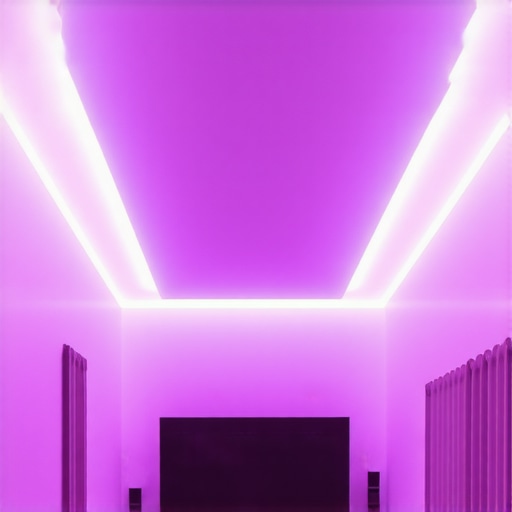
Elevating Your Cinematic Experience Through Advanced Lighting Strategies
In the realm of home theater design, lighting transcends mere illumination, becoming an integral element that influences ambiance, perception, and immersion. As professionals in audiovisual environments recognize, implementing sophisticated lighting solutions such as LED strip backlights, bias lighting, and ambient fixtures can dramatically transform a space from ordinary to extraordinary. This guide explores the nuanced art and science behind optimal home theater lighting, emphasizing a holistic, expert approach backed by empirical data and industry standards.
The Critical Role of Bias Lighting in Perception and Eye Comfort
How can bias lighting be calibrated to maximize contrast without compromising color accuracy in a movie room?
Bias lighting, often comprising LED strips installed behind displays, reduces eye strain by matching the luminance of the screen with the surrounding environment. According to recent research published in the Journal of Vision (see this study), calibrated bias lighting enhances perceived contrast and reduces visual fatigue, provided it is dimmed appropriately and aligned with the display’s color profile. Expert setup involves precise measurements using photometers to ensure the luminance levels are steady and within recommended ranges, typically below 10 cd/m², to prevent ambient light from washing out the image clarity.
Technical Precision in LED Strip Installation for Ambient and Backlighting
The integration of LED strips within a cinematic environment requires meticulous planning. Factors such as color temperature, brightness levels, and placement directly influence the immersive quality produced. For example, cool white LEDs (~6500K) simulate daylight consistency, ideal for task-based lighting, whereas warmer tones (~2700K) foster relaxation and intimacy. The expert consensus advocates for customizable RGB LED strips to facilitate dynamic lighting scenes, synchronized with content via smart home integrations. Moreover, the positioning—such as cove lighting along ceiling edges or behind the speaker arrays—must be calibrated to avoid hotspots and ensure uniform light dispersion, aligning with industry guidelines outlined in our comprehensive LED strip guide.
The Science of Backlight Techniques Enhancing Visual Fidelity
Backlighting, distinct from general ambient lighting, involves placing LEDs directly behind the display to amplify contrast ratios and depth perception. Advanced applications deploy high-density LED arrays coupled with diffusion materials, producing subtle, evenly distributed glows that do not introduce glare or distracting reflections. Experimental setups utilizing flicker-free, high-CRI LED strips demonstrate significant improvements in image depth, especially in dark scenes. As noted by lighting designers specializing in audiovisual environments, the choice of backlight intensity—often 5 to 20 nits—is critical to maintaining visual balance and avoiding ‘halo’ effects, aligning closely with standards delineated in industry white papers.
What Innovations Are Pushing the Boundaries of Ambient Room Lighting?
Emerging technologies such as voice-controlled RGBW LED systems, integrated with AI-driven scene adjustments, offer unprecedented levels of customization. These solutions enable dynamic adaptation to content, mood settings, or user preferences, elevating the home cinema experience. For instance, employing machine learning algorithms to analyze scene luminance and automatically adjust ambient lighting not only improves aesthetic coherence but also preserves fidelity, reducing intrusive light spill. Industry leaders recommend exploring these innovations for longevity and value, referencing publications like comprehensive guides on ambient solutions.
For those seeking to refine their lighting setups further, engaging with industry specialists through platforms like our contact page can offer tailored advice and innovative solutions.
Deciphering the Nuances of Color Fidelity in Bias Lighting
Achieving the perfect balance between immersive ambiance and accurate color representation hinges on meticulous calibration of bias lighting. Experts emphasize that mismatched or overly bright bias lighting can distort perceived colors, compromising the cinematic experience. To circumvent this, incorporating adjustable RGB LED strips with real-time color tuning allows you to synchronize ambient hues with content or mood preferences seamlessly. Industry standards recommend setting luminance levels below 10 cd/m² to prevent ambient light from washing out the display, a guideline supported by studies from the Society of Motion Picture and Television Engineers (SMPTE parameters).
Innovative Techniques to Achieve Perfect Color Harmony in Ambient Lighting
One of the most subtle yet impactful aspects of sophisticated home theater lighting lies in ensuring color harmony between ambient sources and the display. Expert calibration involves not only selecting high-CRI LED solutions but also fine-tuning their spectral output to complement the display’s color profile, thereby preventing color shifts or mismatches that could distort the cinematic experience. Recent advancements, such as tunable white and RGBW LED systems, allow precise control over spectral composition, enabling dynamic adaptation that matches the content’s color temperature—particularly beneficial during scenes with mixed lighting cues or realistic daylight cycles. According to the Society of Motion Picture and Television Engineers (SMPTE’s colorimetry standards), maintaining ΔE values below 2 ensures perceptual color accuracy, which experts regularly strive for through professional-grade calibration tools.
How to Leverage Automation for Seamless Lighting Transitions During Viewing
Automation transforms static lighting setups into responsive, immersive environments capable of adjusting on-the-fly to enhance storytelling. Advanced control systems integrate sensors, scene analysis algorithms, and programmable smart lighting controllers to execute seamless transitions—such as dimming bias lighting while increasing backlight contrast during intense action sequences. Implementing these systems necessitates an understanding of both hardware interfaces and content analysis techniques. For example, employing machine learning algorithms trained on various scene luminance patterns can enable preemptive adjustments, maintaining visual comfort and thematic coherence. Consider consulting industry standards like the DALI protocol (DALI Alliance) or Zigbee-certified hubs to ensure interoperability and reliability. Additionally, integrating voice-command capabilities with AI assistants offers intuitive control, empowering users to fine-tune the ambiance without breaking immersion.
Can adaptive lighting systems genuinely enhance viewer engagement without causing distraction?
Adaptive systems, when properly calibrated, serve to amplify engagement by aligning environmental cues with on-screen content. However, there exists a delicate balance between enhancement and distraction; overly aggressive or poorly synchronized lighting changes can pull viewers out of their immersive experience. Studies in perceptual psychology, such as those published in the Journal of Vision, highlight that lighting changes surpassing a threshold of 10-15% in luminance or occurring abruptly can cause perceptual shifts that detract from narrative focus. Therefore, expert setups involve implementing gentle, gradual transitions—often over 2-3 seconds—with context-aware algorithms that predict scene changes, enabling the system to prepare ambient adjustments preemptively. Integrating user preferences and manual overrides further ensures the lighting supports, rather than encroaches upon, the cinematic experience.
To learn more about integrating intelligent ambient lighting with your home theater, consider consulting professionals who specialize in audiovisual environment design. Our dedicated team offers personalized assessments and cutting-edge solutions tailored to your space and preferences—explore our services here.
The Art of Harmonizing Light Spectra for Visual Purity
Achieving impeccable color fidelity in a dedicated home theater extends beyond selecting high-CRI LED sources; it demands precise spectral calibration to align ambient illumination with display gamma curves. Experts leverage spectroradiometers to profile both the display and ambient lighting, ensuring the spectral power distributions (SPDs) complement each other while maintaining ΔE values below 1.5 across critical color regions. This meticulous approach forestalls perceptual shifts and sustains cinematic integrity during prolonged viewing sessions.
Can Adaptive Lighting Systems Blend Seamlessly into Dynamic Scene Changes?
Incorporating real-time scene analysis into lighting control represents a frontier in immersive entertainment. Sophisticated systems utilize machine learning algorithms trained to recognize content luminance patterns, enabling fluid adjustments that adapt to narrative shifts without causing viewer distraction. By preemptively modulating bias and backlighting—gradually increasing contrast during suspenseful moments and easing during dialogue-heavy scenes—these solutions preserve both ambiance and narrative continuity. Industry insiders suggest integrating protocols like DMX512 or JSON-based APIs for granular, synchronized control across multiple luminaires.
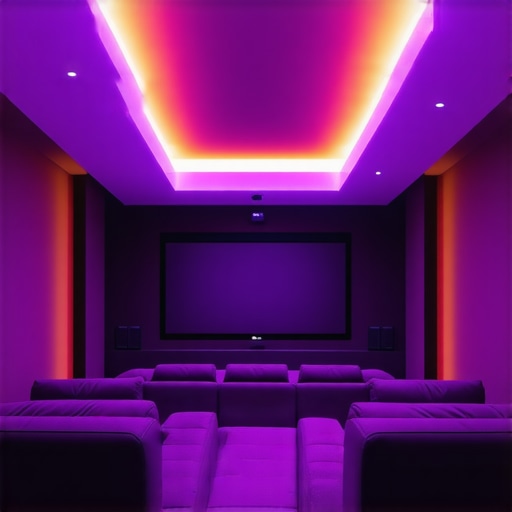
Balancing Brightness and Contrast for Maximum Depth
The subtle interplay between luminance levels behind displays and the perceived contrast ratio forms the backbone of image depth enhancement. While backlight brightness typically ranges from 5 to 20 nits, rising above this can introduce halo effects that diminish immersion. Leading experts advocate for high-precision dimming drivers and diffusion layers that distribute light evenly, mitigating glare and hotspots. Combining this with local dimming zones—managed via HDR-compatible controllers—further refines spatial contrast, delivering a theatrical experience that rivals commercial cinemas.
What Role Do Dynamic Scene-Responsive Lighting Play in Viewer Engagement?
Scene-responsive lighting, driven by content-aware AI, fosters a more compelling visual narrative by aligning environmental cues with cinematic tone. When correctly implemented, these systems subtly darken or brighten ambient zones, creating contrast layers that amplify emotional impact. For instance, during a tense chase sequence, peripheral dimming constricts the viewer’s focus while synchronized color shifts evoke mood. Critical to success is ensuring transition timings are imperceptible—preferably within 1-2 seconds—to prevent sensory dissonance. Industry research underscores this meticulous calibration, emphasizing the importance of user-adjustable parameters to tailor the experience.
Those seeking to advance their home cinema ambiance should explore integrating these intelligent controls. Our team offers expert consultations to craft customized, scene-aware lighting setups that elevate immersion to an art form—discover more here.
Refining Your Visual Atmosphere with Advanced Techniques
In premium home theater setups, lighting is not merely an accessory but a vital component that elevates visual storytelling. Professionals leverage sophisticated methods like dynamic bias lighting, color-matched backlighting, and adaptive ambient solutions to craft immersive experiences. Staying ahead involves integrating empirical calibration, industry standards, and innovative control systems to produce a seamless, cinematic environment that captivates.
Harnessing Spectral Precision to Preserve Color Authenticity
Experts emphasize the significance of spectral calibration, utilizing high-CRI LED sources and spectroradiometers to align ambient illumination with display output. This meticulous approach minimizes perceptual color shifts, ensuring that every hue remains true during prolonged viewing, thereby safeguarding cinematic integrity and viewer engagement.
Automation Unleashed for Fluid Transitions
Scene-aware lighting systems, powered by machine learning, dynamically adjust bias and backlighting in real-time. These intelligent controls analyze luminance patterns to execute subtle, swift transitions, enhancing narrative immersion without distraction. Implementing protocols like DALI or Zigbee ensures interoperability and reliability, transforming passive ambiance into an active storytelling enhancer.
Expert Resources for the Discerning Installer
- Society of Motion Picture and Television Engineers (SMPTE): Offers precise standards and calibration protocols, ensuring cinematic fidelity across lighting systems.
- Lighting Research Center (LRC): Provides comprehensive research on spectral management and colorimetry, vital for high-end calibration.
- Industry White Papers on Adaptive Lighting: Publish cutting-edge insights into intelligent automation and scene-responsive solutions, guiding professional integration.
The Power of Thoughtful Illumination
Embarking on the journey of expert-oriented home theater lighting involves a nuanced understanding that transcends basic setup. Joining professional communities or consulting seasoned specialists can unlock bespoke solutions tailored to your space. Remember, the intersection of empirical science and artistic sensibility defines true cinematic ambiance. To deepen your mastery, explore our comprehensive guide to LED strip optimization and connect with industry leaders through our contact page—your pathway to an elevated home theater environment.

Leave a Reply