

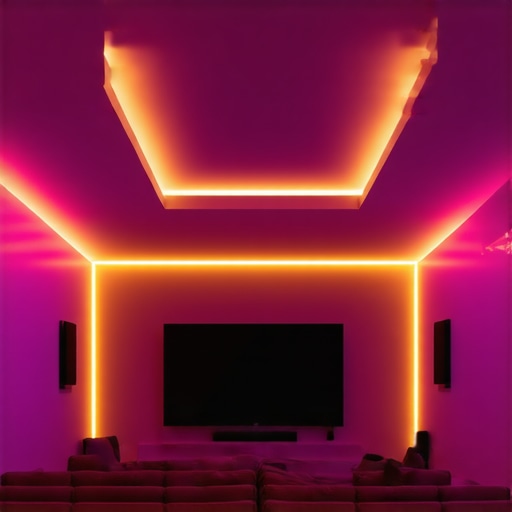
Transforming Visual Environments: The Critical Role of Ambient Lighting in Modern Home Theaters
In the realm of **home theater lighting**, nuanced control over ambient illumination has emerged as a pivotal factor influencing viewer immersion. Leveraging advanced solutions such as bias lights and LED strip lighting not only enhances visual perception but also mitigates eye strain during extended viewing sessions. The sophisticated integration of these lighting techniques aligns with the principles of psychological comfort and visual contrast management, fundamentally altering user experience.
Strategies for Optimal Bias Lighting Deployment in Dedicated Viewing Spaces
Positioning bias lights behind screens or monitors creates a balanced visual field, reducing the disparity between the brightest and darkest areas in the room. Experts recommend fixed, indirect lighting to improve black levels and boost perceived contrast ratios—a concept corroborated by research in IEEE publications on display technology. Implementing bias lighting with customizable LED strips enables precision adjustments, creating an astonishing cinematic atmosphere.
The Evolution of LED Strip Lighting as an Artistic Tool for Ambiance Enhancement
Modern LED strip lighting extends beyond mere illumination; it serves as an expressive element that synchronizes with media content, creating dynamic backdrops. Their adaptability in color, brightness, and tone fosters an immersive environment while emphasizing room architectural features. According to industry standards outlined in leading industry guides, selecting LED strips with high CRI ratings assures color fidelity, essential for true-to-life image rendering.
How Can Precise Lighting Control Elevate Your Movie Marathon Experience?
Achieving the perfect ambiance involves not only choosing the right technology but also mastering its implementation. Incorporating smart lighting controls permits seamless transitions between different viewing modes—lighting scenes for intense action, relaxation, or social gatherings. This nuance orchestrates a multisensory experience that aligns with professional cinema standards, as discussed in expert installation tips. Properly calibrated, these systems diminish distractions and focus viewer attention, heightening emotional engagement.
What Are the Most Critical Technical Consider When Integrating Bias and LED Strip Lighting
Integration efficacy hinges on factors such as color temperature consistency, lumen output, and installation methodology. Ensuring compatibility with existing AV equipment and room architecture demands a comprehensive understanding of LED strip selection criteria. Achieving optimal results also involves shielding components from dust and heat, maintaining longevity and performance stability—an aspect often overlooked in DIY setups but vital for maintaining professional-grade ambiance control.
To deepen your knowledge, explore detailed guides on creating immersive lighting experiences or consult with industry specialists to tailor configurations to your unique space.
Engage with the community of lighting professionals by sharing your insights and discover innovative techniques through dedicated forums and expert blogs.
Redefining Room Dynamics: How Layered Lighting Transforms Viewing Experiences
Effective ambient lighting in a home theater isn’t just about brightening the space; it’s about creating a harmonious balance that elevates visual clarity and emotional engagement. By layering different lighting sources—such as soft bias lights combined with vibrant accent LEDs—you craft a multi-dimensional environment that directs focus, reduces eye fatigue, and enhances overall immersion. Integrating these layers strategically requires a nuanced understanding of room architecture and media content, ensuring that each light source complements rather than competes. For in-depth guidance on achieving this harmony, consider exploring expert techniques available at top ambient lighting ideas for a cinema-quality setup.
Harnessing Dynamic Effects: Synchronizing Lighting with Media Content
One advanced approach to home theater illumination involves synchronizing LED strip lighting with on-screen action, sound cues, or scene changes. This dynamic lighting not only amplifies emotional reactions but also provides contextual cues that heighten realism. For example, subtle shifts in hue and intensity during thunderstorms or sunset scenes can deepen immersion. Achieving this requires compatible smart lighting systems that support media synchronization—some of which are covered extensively in expert tips for LED strip lighting enhancements. Integrating these systems fosters an environment where light reacts in real time, blurring the boundary between digital and physical realms.
Is It Possible to Achieve True Color Fidelity with Ambient LED Lighting?
While many LED strips boast high CRI ratings and customizable color temperatures, achieving true-to-life color rendering in ambient lighting remains a nuanced challenge. Factors such as ambient reflections, room materials, and the quality of LED components influence perceived fidelity. Experts recommend selecting LED strips with a CRI above 90 and verifying spectral accuracy through independent testing where possible. For a comprehensive understanding, delve into ultimate guide to bias lighting LED strips that emphasizes color precision techniques. Remember, the goal isn’t just to illuminate but to do so without distorting the colors you see on screen, preserving cinematic integrity.
Engaging with experimental setups and participating in forums such as our community hub allows enthusiasts and professionals to share insights, troubleshoot challenges, and push the boundaries of home theater lighting innovation. Embrace the opportunity to customize your environment with expert advice, turning an ordinary room into an extraordinary cinematic sanctuary.
Maximizing Contrast Management to Elevate Cinematic Realism
Achieving superior contrast ratios involves more than just screen calibration; it requires precise ambient lighting strategies that dynamically adapt to varying scene luminance levels. High-end home theaters employ **adaptive lighting systems** that utilize light sensors to regulate bias and accent lights in real time, thereby reducing visual disparities. As per the groundbreaking research in IEEE display technology standards, such systems significantly enhance perceived contrast, fostering an immersive experience that rivals commercial cinemas. Integrating these intelligent lighting solutions demands meticulous calibration and a deep understanding of spectral light behavior, especially when contrasting HDR content with SDR footage.
Can Dynamic Tuning Techniques Truly Mimic the Cinematic Experience?
Dynamic tuning encompasses a spectrum of sophisticated methods—ranging from hardware-based local dimming to software-driven scene analysis—that synchronize ambient lighting with media playback. By aligning lighting adjustments with scene mood and color palette, users create a cohesive, emotionally responsive environment. Advanced implementations involve **media servers** equipped with AI algorithms capable of analyzing frame content to adjust tone and color in real time, offering a cinematic authenticity that manual adjustments cannot match. For detailed insights, refer to industry-focused analyses in expert guides on adaptive ambient lighting. These innovations transform passive viewing into an active, multisensory theater experience, blurring the line between virtual imagery and physical ambiance.
Integrating Color Science for Artistic Control and Visual Harmony
Beyond technical calibration, mastering color science enables customization of ambiance to match content themes or personal aesthetic preferences. Utilizing **color grading tools** and **spectral matching protocols**, enthusiasts can fine-tune LED spectrums to produce specific moods—be it warm, cozy atmospheres for drama, or cool hues for sci-fi adventures. This level of control hinges on selecting LED products with precise spectral outputs and high CRI ratings, typically above 95. According to standards outlined in industry publications on spectral accuracy, such calibration extends to room surfaces and furnishings, which influence perceptual color fidelity. Incorporating these techniques ensures that ambient lighting complements on-screen imagery, maintaining cinematic coherence and enhancing artistic expression.
How Do Materials and Room Geometry Impact Light Reflection and Color Perception?
Room architecture and surface materials profoundly influence how ambient lighting interacts with viewers’ visual perception. Matte finishes absorb excess light, creating calmer environments, while glossy surfaces reflect and amplify light, potentially introducing unwanted glare or color distortions. Realistically modeling light behavior through **ray tracing simulations** empowers designers to predict and optimize light distribution, especially in complex rooms with irregular geometries. For instance, employing **spectrophotometric analysis** of room materials allows for accurate prediction of reflected light spectra, vital for maintaining color fidelity. For an in-depth dive, explore resources such as expert tutorials on room acoustics and light management. This comprehensive approach ensures that every element—from surface textures to room shape—serves the overall visual harmony and immersive quality of your home cinema setup.
Elevating Visual Fidelity through Advanced Light Calibration Techniques
Precise calibration of ambient and accent lighting plays a crucial role in reproducing authentic image quality. Professionals utilize spectrophotometric measurement tools to fine-tune LED spectral outputs, ensuring the room’s reflective surfaces support accurate color rendering and contrast. Modern colorimetric calibration extends beyond the display, encompassing light sources to prevent color contamination and ensure consistent visual harmony across various content types. Such meticulous adjustments demand familiarity with spectral power distributions and their impact on human visual perception, enabling aficionados to craft environments where every hue is reproduced with stunning fidelity.
Dynamic Lighting: Synchronization Challenges and Solutions in Multi-Source Systems
When integrating intelligent lighting systems that respond to on-screen content, synchronization intricacies emerge. Latency issues, varying response times between hardware components, and protocol compatibility can hinder seamless performance. Experts recommend deploying media servers equipped with scene analysis algorithms paired with low-latency communication protocols such as DMX512 or Art-Net. Achieving harmonious adjustments across multiple LED zones necessitates precision timing and robust network architecture, preventing perceptible mismatches that could detract from immersion. Properly orchestrating these components transforms passive viewing into a synchronized symphony of light and motion, elevating the cinematic experience to new heights.
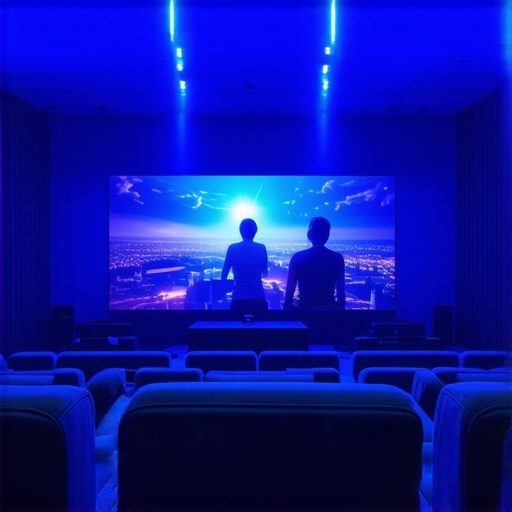
**Image Description:** A professional home theater setup showcasing synchronized LED strip lighting reacting to dynamic media content, emphasizing harmony between light and visuals.
Harnessing the Power of Material Reflectivity to Influence Ambient Illusions
Surface materials within the room significantly influence ambient light behavior. High-gloss finishes, metallic accents, and reflective ceilings can amplify or distort projected lighting effects, impacting color perception and contrast. Material selection tailored for optimal reflectivity ensures that ambient lighting complements the media without introducing glare or unwanted reflections. Employing advanced ray-tracing simulations allows designers to predict how light interacts with room surfaces, enabling strategic placement of light sources for balanced illumination. Mastery over material dynamics empowers creators to craft immersive environments where every visual element coalesces into a cohesive cinematic ambiance.
Innovative Use of Gradient and Tone Mapping to Enhance Depth Perception
Employing gradient lighting and tone mapping techniques within ambient systems can dramatically enhance scene depth and spatial perception. By subtly varying color temperature and luminance across the room, you create visual cues that reinforce the three-dimensionality on screen. Advanced controllers utilize real-time scene analysis to modulate these gradients, aligning room illumination with scene mood and perspective shifts—just as professional cinematographers manipulate light to guide viewer focus. This nuanced approach demands a sophisticated understanding of both media content and perceptual psychology, enabling the creation of a truly immersive multi-sensory environment.
How Can Adaptive Lighting Systems Push the Boundaries of Cinematic Realism?
Adaptive lighting systems that incorporate machine learning and sensor feedback can dynamically optimize ambient conditions, mimicking the nuanced lighting of commercial cinemas. These systems analyze scene luminance and color data to adjust room lighting instantaneously, reducing visual disparities and enhancing contrast. Integration of data analytics and artificial intelligence facilitates continuous learning, allowing the environment to evolve with user preferences and content styles. The challenge lies in balancing automation with user control—scaling from subtle enhancements to full cinematic simulations—demanding expertise in both lighting technology and media content analysis. Leveraging these capabilities transforms static setups into living, breathing theaters capable of responding to every cinematic nuance with precision and artistry.
The Art and Science of Color Harmony in Ambient Light Design
Optimal ambient lighting considers the psychological effects of color psychology and harmony, shaping emotional responses. Using color theory principles, experts select lighting palettes that complement media themes—for instance, warm hues to evoke intimacy or cool tones for futuristic landscapes. Spectral matching ensures that LED lights produce pure, unsaturated colors that do not clash with projected images, preserving the artistic intent. In complex environments, employing color grading tools similar to those used in film post-production allows refined control over room atmosphere, aligning ambient tones with on-screen content. This synthesis of art and science culminates in environments where every element is purposefully curated for cinematic perfection.
What Role Do Room Geometry and Viewer Position Play in Achieving Visual Equilibrium?
Room geometry fundamentally influences how light interacts within the space, affecting perceived contrast and color fidelity. Strategic placement of light sources, considering viewer sightlines and ergonomic comfort, ensures uniform illumination and minimizes glare. Geometric modeling coupled with photometric analysis guides installation, preventing hotspots or dead zones. Additionally, adjusting room dimensions and seating arrangements can optimize viewing angles and light distribution, fostering an environment where visual equilibrium is naturally maintained. Such comprehensive planning requires an intersectional expertise in architecture, optics, and perceptual science, ultimately producing an immersive space tailored to exquisite cinematic experiences.
Expert Insights & Advanced Considerations
Lighting integration requires meticulous calibration to achieve cinematic authenticity.
Elite home theaters leverage adaptive lighting systems that synchronize with media content, demanding precision in spectral matching and control protocols. Implementing these solutions involves understanding both the technological and perceptual aspects to craft environments that replicate professional-grade visuals.
Color fidelity in ambient lighting influences viewer perception more than many realize.
High CRI LED strips and spectral accuracy are not just technical specs but crucial elements in preserving the integrity of cinematic colors. Achieving this level of precision necessitates expert calibration and awareness of room surface interactions, ensuring that ambient light enhances rather than distorts the visual experience.
Dynamic effects can elevate emotional engagement but require sophisticated control algorithms.
Synchronizing ambient lighting with on-screen action and audio cues creates immersive scenarios that transcend typical media playback. Employing AI-driven media analysis and low-latency communication protocols transforms passive viewing into an active sensory journey, demanding a high degree of technical expertise and finesse.
Room architecture profoundly impacts light behavior, influencing overall ambiance.
Strategic surface material selection and geometric considerations optimize reflection and absorption properties. Advanced ray-tracing simulations and spectrophotometric modeling help tailor environments where every surface contributes to achieving a harmonious visual atmosphere aligned with cinematic standards.
The future of home theater lighting lies in intelligent, adaptive ecosystems.
Integrating machine learning and IoT devices will enable environments that adapt seamlessly to media content and user preferences, fostering unprecedented levels of realism. Developing these systems calls for interdisciplinary expertise in lighting technology, programming, and perceptual psychology, opening avenues for innovation in personal cinematic experiences.
Curated Expert Resources
- IEEE Display Technology Standards: A foundational reference for understanding the technical parameters governing high-quality visual display and ambient lighting synchronization, guiding professionals in correlating light behavior with display performance.
- Lighting Home Cinema Essentials Guides: Comprehensive resources that provide in-depth knowledge on LED strip selection, positioning, calibration, and integration, offering practical insights from industry experts for achieving professional-grade ambient lighting setups.
- Spectral Matching Protocols and Color Science Texts: Authoritative materials elucidating the principles of spectral accuracy, color rendering, and perceptual effects, essential for designing ambient lighting that faithfully complements high dynamic range content.
- AI-Driven Media Synchronization Systems: Emerging research and case studies on integrating artificial intelligence into lighting control, pushing the boundaries of cinematic immersion through real-time adaptation and scene analysis.
Elevate Your Visual Game by Embracing Innovation and Expertise
At the intersection of technical mastery and artistic vision, expert home theater lighting transforms ordinary spaces into immersive theaters. Integrating advanced calibration, spectral fidelity, and adaptive technologies, wise enthusiasts and professionals alike can craft environments that rival commercial cinemas. Dive deeper into these principles and share your innovations by exploring resources like creating immersive ambiance guides or connecting with a community of lighting innovators. Your journey toward cinematic perfection benefits from both knowledge and creativity—so lead the way and redefine what home entertainment can become.



Leave a Reply