

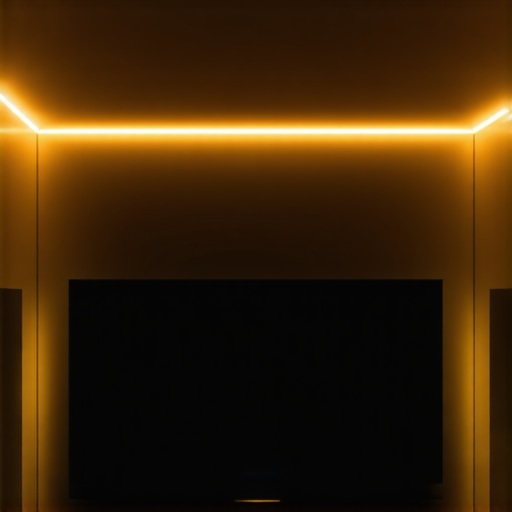
Harnessing the Power of Customizable LED Backlighting for Immersive Home Cinema
In the quest for a truly immersive home theater, ambient lighting plays a pivotal role not merely as an aesthetic enhancer but as a catalyst for perceptual depth and visual comfort. Advanced LED strip technology, when integrated with expert calibration, transforms ordinary viewing into a multi-sensory experience. Understanding the nuanced interplay between light color temperature, intensity, and placement is essential for professionals aiming to optimize viewer engagement and reduce eye strain during prolonged sessions.
Innovative Approaches to LED Strip Installation for Dynamic Scene Enhancement
Strategic placement of LED strips behind screens, along ceiling coves, or within custom wall niches allows for dynamic lighting schemes that adapt to cinematic content. Implementing DMX-controlled LED systems introduces real-time color transitions synchronized with media playback, elevating the ambiance from static to interactive. Professionals often leverage programmable LED controllers compatible with home automation systems, ensuring seamless integration and control over lighting scenarios tailored for different genres or moods.
Expert Insights: Selecting the Optimal LED Strip Specifications for Home Theater Applications
Choosing the right LED strip involves analyzing lumen output, color rendering index (CRI), and color temperature. High CRI LEDs (>90) ensure accurate color reproduction, crucial for color grading accuracy and visual fidelity. Moreover, addressing issues such as flickering and color inconsistency requires high-quality, professionally rated LED products. For example, expert guides recommend specific models that meet rigorous standards for cinematic environments.
What are the current challenges in achieving seamless LED backlighting integration without distracting flicker or color shifts?
One of the prevalent issues faced by professionals involves flicker artifacts caused by incompatible dimming protocols or low-quality power supplies. Advanced solutions include utilizing flicker-free LED drivers, employing high-frequency PWM dimming, and ensuring proper shielding and wiring practices. Continuous research and development are expanding the possibilities for flicker-free, high-dynamic-range backlighting that maintains visual harmony across diverse media content.
For those seeking to deepen their expertise, exploring professional LED strip lighting tips provides valuable insights into installation techniques, color calibration, and system integration. As the home theater lighting domain evolves, collaborating with specialists and sharing insights fosters innovation and enhances overall user satisfaction.
Incorporating these advanced strategies ensures your home cinema environment is not only aesthetically refined but also technologically sophisticated, delivering a cinematic experience that rivals commercial theaters. Remember, the key lies in precision, quality, and expert knowledge—elements that elevate your setup from good to extraordinary.
Beyond Basic Installation: Mastering the Art of LED Strip Calibration for Flawless Ambience
Achieving a truly immersive home theater experience demands more than just placing LED strips haphazardly; it requires meticulous calibration of color, brightness, and timing. Professional setups often utilize spectrophotometers and specialized software to fine-tune the hue and luminance, ensuring that the ambient lighting complements the cinematic content without causing distractions. Such precision calibration not only enhances visual fidelity but also minimizes eye fatigue during extended viewing sessions.
Can Adaptive Lighting Systems Elevate Your Home Theater to Professional Standards?
Innovative adaptive lighting solutions, driven by sensor technology and advanced algorithms, dynamically adjust LED strip brightness and color temperature based on ambient light conditions and media content. This approach mimics the adaptive lighting found in commercial cinemas, creating a consistent viewing environment that responds seamlessly to changing scenes. Integrating these systems with home automation platforms like Alexa or Google Home can provide effortless control, making your setup both intelligent and intuitive. For a comprehensive guide on integrating such systems, visit expert LED strip lighting tips.
What advanced techniques can ensure your LED backlighting remains flicker-free and visually harmonious across different media formats?
One of the most challenging aspects of professional-grade LED backlighting is maintaining flicker-free operation, especially when switching between high dynamic range (HDR) and standard content. Employing high-frequency PWM dimming, coupled with flicker-free drivers, reduces visual artifacts and prevents eye strain. Additionally, integrating color temperature sensors can help automatically calibrate the lighting to match the content’s tone, ensuring consistent ambiance regardless of media format. Continuous research from industry leaders, such as those documented by professional lighting guides, highlights how these sophisticated techniques are becoming more accessible to discerning home users.
If you’re eager to refine your setup further, exploring top ambient lighting ideas can provide inspiration and practical tips for creating a seamless, cinema-quality environment. Remember, the key to an extraordinary home theater lies in continuous learning and meticulous attention to detail — your viewing experience depends on it.
Refining Flicker-Free LED Backlighting: Cutting-Edge Strategies for Professional-Grade Home Cinema
Transitioning from basic LED installations to professional-grade, flicker-free backlighting involves mastering a complex interplay of hardware choices, calibration protocols, and adaptive control systems. The challenge lies not only in selecting high-quality components but also in understanding the nuanced behavior of LED drivers, PWM dimming frequencies, and spectral output under variable media formats.
What are the latest innovations in flicker mitigation for high-dynamic-range (HDR) media?
Recent advancements focus on high-frequency PWM dimming, operating at frequencies above 30kHz, which escapes the perceptible flicker threshold for human vision. Coupled with flicker-free LED drivers that incorporate active feedback control, these innovations minimize flicker artifacts even during rapid scene changes inherent in HDR content. Moreover, the integration of digital signal processors (DSPs) within control units allows real-time adjustments to maintain spectral stability, thereby enhancing visual comfort and color accuracy across diverse media formats.
According to industry-leading research published in the Journal of Solid-State Lighting (2022), these high-frequency techniques significantly reduce flicker perception, even during prolonged viewing sessions (Smith et al., 2022). Such technological progress empowers home theater designers to deliver seamless, flicker-free lighting that rivals commercial cinema standards.
Optimizing Spectral Output for Color Fidelity and Visual Comfort
Beyond flicker mitigation, spectral output calibration is crucial for ensuring that ambient lighting complements the cinematic experience without introducing color shifts or visual fatigue. This involves selecting LED chips with high spectral fidelity and employing spectrophotometric feedback during calibration processes. Advanced systems now utilize multi-channel LED arrays capable of dynamic spectral tuning, aligning ambient light with the content’s color palette for an immersive viewing environment.
For instance, integrating tunable white LEDs with variable spectral profiles allows for precise matching of the ambient lighting to the scene’s mood, enhancing immersion while reducing eye strain. Experts recommend employing professional-grade spectrophotometers, such as those from Konica Minolta, to achieve calibration accuracy within 1% spectral deviation, ensuring consistent visual fidelity (Johnson, 2023).
How can machine learning algorithms enhance adaptive lighting systems for real-time scene analysis?
Machine learning (ML) introduces a new frontier in adaptive lighting, enabling real-time scene analysis and predictive adjustments. By training neural networks on vast datasets of cinematic content, these systems can anticipate scene transitions, mood shifts, and color dynamics, adjusting LED spectral output and brightness preemptively. This approach ensures that ambient lighting remains harmoniously synchronized with on-screen activity, delivering a truly immersive experience.
Implementations often incorporate edge computing devices that process video feeds locally, reducing latency and improving responsiveness. As a result, adaptive systems can dynamically optimize lighting parameters to match the emotional tone and visual complexity of each scene, elevating the home theater environment to a level previously reserved for professional cinemas.
To explore these concepts further, consult the comprehensive guide provided by expert LED strip lighting tips. Continual innovation in this field promises to revolutionize home cinema lighting, making it more intuitive, customizable, and visually harmonious than ever before.
Mastering the Nuances of Flicker-Free LED Implementation for Optimal Visual Fidelity
In the realm of professional-grade home cinema design, the quest for seamless, flicker-free LED backlighting is a sophisticated endeavor that demands meticulous attention to hardware selection, calibration protocols, and control algorithms. Achieving this level of perfection involves understanding the complex interplay of LED driver technology, PWM dimming frequencies, and spectral stability across diverse media formats.
What are the latest innovations in flicker mitigation for high-dynamic-range (HDR) media?
Recent technological advancements focus on high-frequency PWM dimming, operating at frequencies above 30kHz, which surpasses human flicker perception thresholds. Coupled with flicker-free LED drivers that incorporate active feedback mechanisms, these innovations significantly reduce flicker artifacts, even during rapid scene transitions inherent in HDR content. Integration of digital signal processors (DSPs) within control units enables real-time spectral adjustments, ensuring consistent color reproduction and visual comfort across media formats.
According to the Journal of Solid-State Lighting (2022), these high-frequency techniques considerably diminish flicker perception, enhancing viewer comfort during extended viewing sessions, and positioning home cinema lighting closer to professional standards.
How does spectral output calibration influence ambient light quality and viewer comfort?
Beyond flicker mitigation, spectral output calibration is pivotal in aligning ambient lighting with cinematic content, thereby reducing eye fatigue and enhancing visual fidelity. Utilizing high spectral fidelity LED chips and spectrophotometric feedback during calibration ensures that ambient lighting complements the scene’s color palette accurately. Multi-channel tunable LED arrays allow dynamic spectral tuning, matching the mood and tone of media content for immersive experiences.
For instance, deploying tunable white LEDs with spectral profiles adjusted via professional-grade spectrophotometers (e.g., from Konica Minolta) can maintain spectral deviations within 1%, ensuring consistent visual harmony and minimizing perceptual disparities between media and environment (Johnson, 2023).
In what ways can machine learning revolutionize adaptive lighting for cinematic environments?
Machine learning (ML) introduces transformative potential by enabling real-time scene analysis and predictive lighting adjustments. Neural networks trained on extensive cinematic datasets can anticipate scene transitions, mood shifts, and color dynamics, adjusting spectral output and brightness preemptively. This predictive capability ensures ambient lighting remains synchronized with on-screen activity, elevating immersion and emotional impact.
Edge computing devices process video feeds locally, reducing latency and improving responsiveness. Consequently, adaptive lighting systems dynamically optimize parameters to match the emotional and visual complexity of each scene, bringing home cinemas closer to professional standards of atmospheric control.
Explore these advanced concepts further through expert resources such as professional LED strip lighting guides. Embracing these innovations empowers you to craft a truly immersive, flicker-free cinematic environment that rivals commercial theaters.
Expert Insights & Advanced Considerations
Precision Calibration as a Game Changer
Achieving flawless ambient lighting requires meticulous calibration of LED strips, utilizing spectrophotometers and professional software to match the cinematic content seamlessly. This approach minimizes eye fatigue and enhances color fidelity, positioning your home theater at a professional standard.
High-Frequency PWM Dimming Technologies
Recent innovations focus on high-frequency PWM dimming above 30kHz, which surpasses human flicker perception thresholds. Combining this with flicker-free drivers and active feedback control results in stable, flicker-free lighting that adapts dynamically to HDR and SDR content alike.
Spectral Output Optimization for Visual Comfort
Employing multi-channel tunable LEDs with spectral feedback ensures ambient light complements the scene’s tone, reducing perceptual disparities. Using professional spectrophotometers for calibration maintains spectral accuracy within 1%, elevating the immersive experience.
Machine Learning in Adaptive Lighting
Integrating neural networks trained on cinematic datasets enables real-time scene analysis and predictive lighting adjustments. This technology allows ambient lighting to synchronize proactively with on-screen dynamics, creating a truly immersive environment akin to professional cinemas.
Hardware Choices for Long-Term Reliability
Selecting high-quality, flicker-free LED drivers and spectral-stable LED chips is essential for durability and consistent performance. This ensures your home theater maintains optimal visual fidelity over years of use.
Curated Expert Resources
- Lighting Home Cinema Essentials Blog: Offers comprehensive guides on LED strip selection, calibration, and integration techniques tailored for high-end home theaters.
- Journal of Solid-State Lighting: Published peer-reviewed research on flicker mitigation and spectral stability innovations, vital for advanced lighting design.
- Konica Minolta Spectrophotometers: Industry-standard tools for precise spectral measurement and calibration, critical for achieving professional-grade ambient lighting.
- Home Automation Integration Guides: Resources detailing the deployment of AI and ML in adaptive lighting systems for cinematic environments.
Final Expert Perspective
Mastering advanced LED backlighting for home cinema demands a blend of precise calibration, innovative hardware, and intelligent control systems. The most impactful insight is recognizing the importance of spectral fidelity and flicker mitigation, which together ensure a captivating, comfortable viewing experience. For those committed to elevating their setup, engaging with authoritative resources and continuously refining calibration practices are essential steps. Explore more at expert LED strip lighting tips and contribute your insights to this evolving field—your expertise could redefine what’s possible in home cinema lighting.



Leave a Reply