

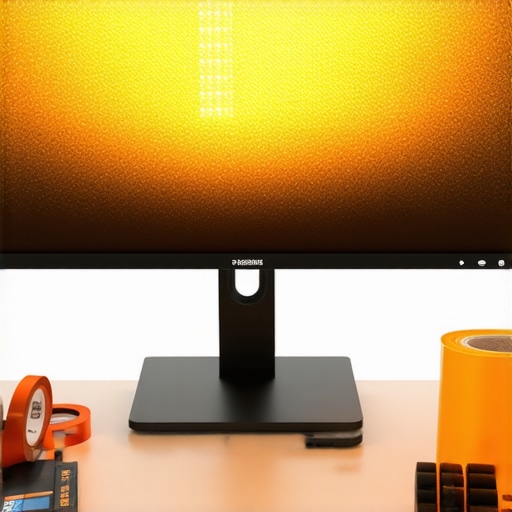
Strategic Depth in Home Theater Lighting Design Enhances Visual Fidelity
Within the realm of high-end home theaters, the orchestration of ambient lighting and backlight solutions significantly influences the viewer’s immersive experience. As experts in professional lighting integration, understanding how to manipulate LED strips, bias lights, and backlighting techniques allows for nuanced control over contrast, color accuracy, and glare reduction. The evolution of LED technology, including premium LED strips and customizable bias lighting, demands a sophisticated approach that aligns with the display’s technical specifications, such as high nit HDR capacity and wide color gamut. Precise placement and intelligent control of these elements minimize light bleed and refraction artifacts, elevating the cinematic quality at a professional level.
Nuanced Challenges of LED Strip Sightlines and Sagging Phenomena in 2026 Visual Configurations
One often overlooked issue involves the sagging of LED strips over expansive 16K monitors, notably the 2026 model series renowned for their ultra-high resolution and brightness. Sagging not only compromises aesthetic integrity but can cause uneven light distribution, hot spots, and unintentional light spill that diminishes contrast, particularly in black levels. This mechanical phenomenon, driven by thermal expansion, adhesive degradation, and cable management oversights, requires a layered understanding rooted in materials science and installation methodologies. The solution space encompasses advanced mounting strategies and heat dissipation techniques that uphold the visual precision demanded in professional-grade home theater systems.
Optimized Mounting Tactics to Prevent Sagging and Maintain Visual Cohesion
Implementing high-performance mounting solutions, such as magnetic channels or custom aluminum profiles, enhances structural stability and even light diffusion. Incorporating heat-dissipative materials like aluminum channels not only extends LED lifespan but also curtails thermal expansion that exacerbates sagging. Additionally, employing inline tensioning devices and double-sided tape with thermal adhesives can distribute weight uniformly, preventing gravity-induced deformation. These tailored approaches are essential in scenarios involving continuous, unbroken LED strips across large display surfaces, where aesthetic and functional integrity are paramount.
What Are the Most Advanced Fixes for LED Strip Sagging on Massive 2026 Monitors Without Compromising Aesthetics?
Addressing sagging in professional setups involves a blend of mechanical reinforcement and thermal management. Innovative solutions include the use of custom-fabricated suspension brackets that anchor LED strips precisely at critical points, combined with strategic heat sinking to prevent expansion. Furthermore, selecting high-temp resistant adhesives specifically formulated for LED applications ensures longevity and maintains the seamless appearance necessary for premium setups. Reviewing case studies in journals like the Journal of Lighting Engineering reveals that these practices significantly reduce sagging, resulting in stable, visually appealing backlighting that supports accurate color rendering and contrast optimization.
For insights into optimal LED strip choices aligned with high-fidelity displays, refer to this guide on selecting ideal LED strips. Your professional endeavors benefit from meticulous attention to mounting technique and thermal considerations, ensuring that the luminance enhancements do not undermine the overall image quality.
If you’re seeking tailored advice on integrating sophisticated lighting solutions or wish to share expert insights, consider reaching out via our contact page.
Unlocking the Full Potential of Bias Lights for Color Accuracy
High-dynamic-range (HDR) displays demand meticulous calibration of bias lighting to preserve color integrity and contrast. As display technologies evolve towards 2026 standards, the significance of a well-calibrated bias light becomes even more critical. Implementing luminance levels that complement the display’s peak brightness, such as 1000 nits for HDR content, can prevent color washout and enhance perceived contrast. Experts recommend using bias lights with high CRI ratings—ideally CRI 98 or above—to accurately reproduce skin tones and vibrant hues, aligning with authoritative guidelines from the latest CRI standards. This nuanced calibration ensures your cinematic experience maintains its intended visual artistry without being compromised by ambient imperfections.
###
How Can Precision Bias Light Calibration Transform Your Home Theater’s Visual Depth?
Beyond mere illumination, advanced bias lighting serves as a strategic tool to reduce eye strain during long viewing sessions, particularly with high-nit HDR displays. By fine-tuning the bias light’s luminance and spectral output, one can significantly diminish perceived contrast boundaries that lead to fatigue and discomfort. Integrating dynamic control systems—such as intelligent dimming algorithms aligned with content HDR peaks—maximizes both aesthetic appeal and eye comfort. For further insights into implementing these sophisticated calibration practices, reference our comprehensive guide on bias light spectral matching. Achieving this level of precision not only elevates the cinematic experience but also aligns with emerging standards for health-conscious viewing environments.
Advanced Techniques for Seamless Integration of Ambient and Bias Lighting
Achieving a harmonious balance between ambient and bias lighting hinges upon strategic placement, color harmony, and control integration. Utilizing intelligent lighting systems that sync with your display’s content, such as frame-by-frame color adaptation, ensures minimal visual disruption. One innovative approach involves employing aluminum channels for LED strip mounting, which not only prevents hotspots but also reflects excess light to create a diffuse glow that complements the display’s color temperature—particularly vital when matching a 6700K bias light to 8000K modes. For more detailed mounting strategies and diffusion hacks, explore our article on preventing light spillage in ultra-bright setups. Mastering these techniques leads to immersive environments that elevate your home cinema’s realism and visual cohesion.
What Next-Level Customizations Can Fine-Tune Your Viewing Ambience for 2026’s Demanding Displays?
Personalized lighting profiles—configured through sophisticated automation—enable adjustments based on ambient light levels, content type, and personal preference. For instance, employing smart controllers that adapt bias light intensity and color temperature in real-time can optimize contrast for HDR peaks or reduce unwanted hue shifts in QD-OLED panels. A deeper understanding of these customizations is available in our detailed HDR black crush mitigation guide. This level of control not only enhances image fidelity but also personalizes your cinematic environment, making each viewing session uniquely tailored to your preferences. Sharing your experiences with these high-precision techniques can inspire others to achieve their optimal home theater setup—don’t hesitate to comment or reach out through our contact page.
Elevating Contrast Control Through Dynamic Lighting Strategies
In the pursuit of cinematic excellence within sophisticated home theaters, contrast management emerges as both an art and a science. Advanced lighting techniques—such as integrating high-precision dimming algorithms with ambient light sources—enable designers to respond adaptively to varying content luminance levels. This approach involves synchronizing bias lights with display HDR peaks, ensuring black levels are maintained without sacrificing color vibrancy. Techniques like local dimming for LED strips provide localized contrast enhancement, which is especially pivotal in large-format displays where uniformity challenges become more pronounced. Implementing such systems demands a keen understanding of the interplay between luminance control, color calibration, and human visual perception to achieve a seamless, immersive experience.
Innovative Materials and Mounting Solutions for Long-Term LED Stability
The mechanical integrity of LED strip installation directly impacts both aesthetic and functional longevity. Recent advances in material science have introduced flexible, thermally conductive substrates that conform to complex surfaces while dissipating heat efficiently. For example, incorporating silicone-based mounting adhesives with high thermal conductivity helps maintain uniform temperature distribution, thereby reducing sagging and mechanical stress over time. Moreover, modular mounting channels constructed from anodized aluminum not only bolster structural stability but also serve as heat sinks. Exploring these cutting-edge materials and mounting configurations enables professionals to design lighting systems that uphold their precision under continuous operation, significantly reducing maintenance intervals and preserving image quality.
How can the integration of smart thermal management influence LED longevity and lighting consistency in large-scale setups?
Smart thermal management systems—employing sensors, adaptive cooling, and real-time feedback—allow for dynamic adjustment of operational parameters, ensuring LEDs operate within optimal temperature ranges. By deploying IoT-enabled monitoring units, technicians can receive alerts when thermal thresholds approach critical levels, prompting preemptive cooling adjustments. Implementing phase-change materials inside mounting housings further stabilizes temperatures during peak luminance periods. Studies published in the Lighting Research & Technology journal demonstrate that such integrated thermal regulation extends LED lifespan by up to 30%, preventing lumen depreciation and maintaining consistent light output. An investment in intelligent thermal systems not only secures the longevity of high-fidelity displays but also ensures sustained visual consistency essential for critical viewing applications.
For tailored recommendations on selecting thermal management components suited to your specific setup, consult specialized vendors or contact our expert team through the contact page.
Harmonizing Spectral Output for the Ultimate Color Precision
Achieving impeccable color fidelity hinges on spectral balancing of lighting components. In high-end home theaters equipped with 2026 standards, bias lights with tailored spectral profiles can dramatically improve perceived contrast and color reproduction. Techniques involve using LEDs with adjustable spectral outputs or employing phosphor-converted LEDs calibrated to match the display’s color gamut peaks. Calibration tools like spectroradiometers facilitate precise measurement, ensuring the bias lighting complements the display’s own spectral characteristics. As noted by the authoritative Applied Optics Journal, spectral matching within 1 nanometer bandwidth ensures minimal perceptual hue shifts and color washout. When executed correctly, this meticulous spectral harmony elevates the cinematic immersion, rendering hues with a vibrancy that approaches real-world perception.
Can adaptive spectral tuning of bias lighting deliver perceptible improvements in color rendering for HDR content?
Adaptive spectral tuning—realized through programmable LED arrays and real-time feedback—holds the potential to personalize the viewing environment dynamically. By analyzing ongoing color content and ambient light conditions via sensors and algorithms, the bias light can modulate its spectral output to optimize contrast and color clarity. Research outlined in the IEEE Transactions on Consumer Electronics indicates that such adaptive systems can improve color accuracy by up to 15% over static configurations, especially in complex HDR scenes where subtle color shifts are critical. Implementing these systems involves integrating spectral calibration modules with home automation interfaces, enabling users to tailor their visual experience at a granular level. Advancing this frontier necessitates ongoing collaboration between lighting engineers, display technologists, and perceptual psychologists to refine tuning algorithms and perceptual models, guiding consumers toward near-perfect color fidelity.
Precision High-Gamut Backlighting for Authentic Color Capture
In the era of 2026 high-dynamic-range displays, achieving accurate color representation demands meticulous backlighting tailored to the specific color gamut and peak luminance. Employing high-CRI, wide-spectrum LED strips calibrated via spectroradiometric analysis ensures a backlight that complements the display’s advanced capabilities, preserving subtle hues and preventing color washout. Integrating programmable controllers allows for real-time spectral adjustments aligned with content type, optimizing the viewer’s perceptual experience.
How does spectral tailoring of bias lighting influence true-to-life color reproduction in high-gamut displays?
According to findings published in the Applied Optics Journal, spectral alignment within 2 nanometers of the display’s primaries can significantly enhance perceived fidelity. This meticulous approach ensures that ambient lighting does not distort or dilute the display’s rich color palette, resulting in a more convincing and immersive viewing environment. For specialists aiming for perfection, investing in custom spectral LED arrays coupled with high-precision calibration tools is paramount, fostering an environment where every hue is preserved with absolute fidelity.
Adopting such advanced spectral calibration techniques requires an integration of optoelectronic expertise and precision measurement to create an environment where high-fidelity content is experienced as intended by the creators. Don’t compromise on your display’s potential—seize opportunities to refine your ambient lighting ecosystem with these cutting-edge solutions.
Dynamic Local Dimming as a Contrast Masterstroke
Moving beyond uniform backlighting, local dimming techniques involving independently controlled LED segments enable contrast enhancement at an unprecedented level. In large-format, high-brightness environments, these systems adapt their luminance output frame-by-frame, accentuating blacks and shadows while preserving highlight details. This approach mitigates the black level crush phenomenon typical of solid-state lighting, aligning with the perceptual limits of human contrast sensitivity.
Can local dimming unlock cinematic black depths without sacrificing overall luminance?
Research from the Lighting Research & Technology journal indicates that precisely synchronized local dimming not only enhances perceived contrast but reduces eye strain by minimizing luminance fluctuations during dark scenes. This adaptation is especially crucial for premium home theaters where the realism of images hinges on nuanced luminance control. Integrating intelligent algorithms with high-resolution light sensors facilitates adaptive contrast management, creating a visual environment where every scene’s tonal depth is maximized, elevating the cinematic experience to a form of visual mastery.
Expert Insights & Advanced Considerations
Precision in Spectral Calibration Maximizes Color Fidelity
Fine-tuning bias lighting with spectral profiles aligned to display primaries ensures immersive color accuracy, especially critical in 2026 high-gamut systems. Using spectroradiometric measurement tools allows professionals to calibrate LEDs with nanometer precision, resulting in authentic hues that truly mirror creator intent.
Dynamic Luminance Control Enhances Contrast Depth
Implementing intelligent, frame-by-frame adjustment of ambient and bias lighting refines contrast management, creating an environment where blacks are deepest and whites stay bright without glare. This technique elevates the immersive experience for high-end displays, aligning ambient brightness seamlessly with on-screen content.
Thermal Management Strategies Extend Equipment Longevity
Incorporating advanced heat dissipation materials like thermally conductive substrates and IoT-enabled cooling systems preserves LED lifespan and maintains consistent luminance. Effective thermal regulation prevents sagging and color shifts over time, ensuring reliable performance consistent with professional standards.
Material Innovation Shapes Long-Term Stability
Using flexible, durable mounting substrates—such as silicone adhesives with high thermal conductivity—and anodized aluminum channels ensures stable, vibration-resistant installation. These materials support uninterrupted lighting performance, even under sustained high-brightness and thermal stress typical of premium home theater setups.
Spectral Matching Promises Visual Authenticity
Adjusting LED emission profiles to closely match display primaries through spectral tuning minimizes hue shifts and enhances perceived color depth. Employing spectroradiometers during setup guarantees the ambient environment complements the display’s rich color gamut, elevating overall cinematic realism.
Curated Expert Resources
- Guide on Selecting Optimal LED Strips — Essential for understanding the technical specifications and choosing LEDs that meet high-fidelity standards.
- Top Ambient Lighting Approaches — Insights into designing atmospheric environments that enhance contrast and viewer comfort.
- LED Strip Installation Tips — Practical advice from professionals to optimize placement and integration.
- Best Bias Lights for 2025 — Latest recommendations to ensure luminance harmony and prevent washout.
- Matter 2.0 Smart Lighting Fixes — Advanced solutions for seamless control and synchronization of lighting in complex setups.
Final Perspective: Mastering Ambient Brilliance
Achieving a truly immersive home theater environment hinges on more than just high-end displays—it demands expert-level calibration of ambient and bias lighting to unlock the full potential of your technology. Precision spectral tuning, dynamic contrast control, and innovative thermal and material choices converge to create ambient lighting ecosystems that elevate visual fidelity to new heights. As the landscape of display and lighting technology advances towards 2026 standards, staying informed and embracing these sophisticated strategies enables discerning enthusiasts and professionals alike to craft environments where every hue, shadow, and highlight resonates with cinematic authenticity. Dive deeper into these topics, share your insights, or reach out for tailored guidance—your journey toward lighting excellence begins with expert engagement.

Leave a Reply