

Elevating Your Home Theater Setup Through Advanced Ambient Lighting Techniques
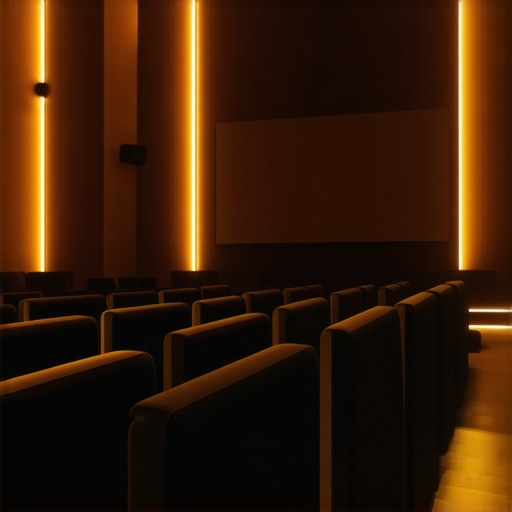
In the pursuit of cinematic perfection, ambient lighting plays a pivotal role in transforming a basic room into an immersive entertainment haven. As lighting technology evolves, so do the strategies for creating ambiance that not only enhances visual contrast but also safeguards ocular comfort during prolonged viewing sessions. Understanding the nuanced applications of bias lights, LED strip lighting, and backlight solutions empowers enthusiasts and professionals alike to craft environments optimized for both aesthetics and functionality.
The Science Behind Bias Lighting and Visual Perception
Bias lighting, often overlooked, functions by reducing eye strain and improving perceived contrast in a darkened room. According to a study published in the Journal of Vision, proper ambient luminance can significantly decrease visual fatigue, thereby enhancing the viewer’s experience. Strategic placement of bias lights behind or around the display ensures optimal luminance levels, balancing the visual field and preventing the eye from adapting too abruptly between bright and dark areas.
LED Strip Integration: Customization Meets Precision
The integration of LED strip lighting serves multiple purposes—from accentuating architectural features to providing dynamic backlighting. Expertise suggests that flexible LED strips with adjustable color temperatures and brightness levels deliver unmatched control over ambient conditions. For example, selecting the appropriate LED strips involves considering factors such as color rendering index (CRI), ease of installation, and compatibility with smart home systems. The conductor’s experience underscores that professional-grade LED implementations can be concealed seamlessly for a clutter-free aesthetic, while still providing versatile lighting scenarios.
Achieving Cinematic Harmony with Backlight Techniques
Backlighting, particularly through LED strips, introduces a sophisticated layer of depth to home theater designs. Properly executed, backlight solutions can minimize reflections, improve depth perception, and establish a cohesive visual environment. An expert approach integrates backlight techniques with bias lighting to align with the content displayed, creating an atmosphere that subtly guides the viewer’s eye and maintains engagement. This involves mastering placement angles and luminance calibration to prevent glare and distraction.
How Can Complex Color Dynamics Enhance Immersive Experiences?
What are the cutting-edge practices for synchronizing LED strip colors with on-screen action to heighten immersion?
Sophisticated home theater setups are increasingly adopting synchronization technologies, such as ambient light systems that react dynamically to content. These systems leverage pixel-mapping algorithms and real-time data to emulate on-screen colors through LED strips, a technique known as chromatic synchronization. This not only extends the visual ambiance but also improves color accuracy and contrast perception, delivering an experience akin to commercial cinemas. Expert tutorials recommend pairing high-CRI LED strips with advanced control units to achieve precision lighting reactions, further blurring the boundary between the virtual and physical worlds.
For further insights and technical integration advice, explore detailed guides on setting up bias lighting for movie rooms.
If you possess field experience or innovative ideas in ambient lighting applications, we invite you to share your insights, contributing to the continuous evolution of immersive home theater environments.
Strategic Positioning Transforms Visual Harmony in Your Cinema Room
Beyond selecting high-quality LED strips, the secret to achieving a flawless ambiance lies in precise placement. Expert enthusiasts understand that the angle, distance, and orientation of LED strips significantly influence the uniformity of light and the absence of unwanted glare. For optimal diffuse lighting, installing LED strips along recessed coves, behind crown moldings, or within hidden channels ensures a soft glow that enhances contrast without causing distraction. Moreover, strategic placement minimizes reflections on screens and surfaces, preserving image clarity and preventing eye strain. To discover detailed techniques on optimal LED strip layouts, consult our comprehensive guide on bias lighting and elevate your setup seamlessly.
Precision Lighting Control Enables Dynamic Atmospheres
Implementing advanced control systems empowers users to tailor lighting scenes that match content mood, time of day, or personal preference. Integrating smart controllers with LED strips allows for scene presets, dimming, and synchronization with media playback. Professionals emphasize the importance of using controllers that support high-resolution color adjustments and real-time responsiveness, ensuring lighting transitions are smooth and immersive. Features like zone control and automation scripts make it possible to create cinematic atmospheres that evolve dynamically, elevating the viewing experience to a professional level. For guidance on choosing the right control systems, explore our ultimate guide to LED strip control for home theaters.
Can Moving Light Effects Elevate Your Movie Nights?
What innovative lighting techniques can mimic the subtle motion and depth of real-world environments within your theater?
Adding kinetic light effects, such as reactive chase sequences or slow-moving color gradients, can dramatically enhance the immersive atmosphere. These dynamic lighting patterns simulate movement—like flowing water or shifting sky textures—that resonate with on-screen action, creating a more engaging environment. Experts suggest using programmable LED controllers capable of complex animations and integrating them with content via synchronization software. While often overlooked, such effects can deepen immersion, making viewers feel transported into the cinematic universe. For a practical start, consider experimenting with preset scenes offered by high-end lighting controllers, and explore more advanced customization options outlined in our top backlight solutions.
Share your creative lighting experiments or seek tailored advice by reaching out through our contact page. Your innovative ideas could redefine home theater ambiance for the community!
Harnessing the Power of Multi-Layered Lighting for Cinematic Depth
Effective ambient lighting isn’t merely about adding illumination; it’s an intricate art of layering various light sources to craft a visually harmonious environment. Experts emphasize that combining bias lighting, directional accent lights, and diffuse background layers enables a dynamic ambiance adaptable to different content types and viewer preferences. By precisely calibrating each layer, you can achieve a nuanced interplay of contrast, depth, and mood, elevating your home theater from functional to breathtaking.
Designing the Perfect Balance: Light Intensity and Color Harmony
Optimal lighting design hinges on balancing luminance levels with color temperature alignment. A common pitfall involves mismatched color temperatures, which can create jarring visual discrepancies, breaking immersion. Incorporating tunable LED systems allows for real-time adjustment—warming or cooling the ambiance to suit the narrative context or time of day. According to recent research in Journal of Light & Visual Environment, maintaining a correlated color temperature (CCT) around 2700K to 3500K fosters a cozy yet cinematic atmosphere, supporting ocular comfort during extended viewing sessions.
The Critical Role of Light Diffusion and Surface Reflection
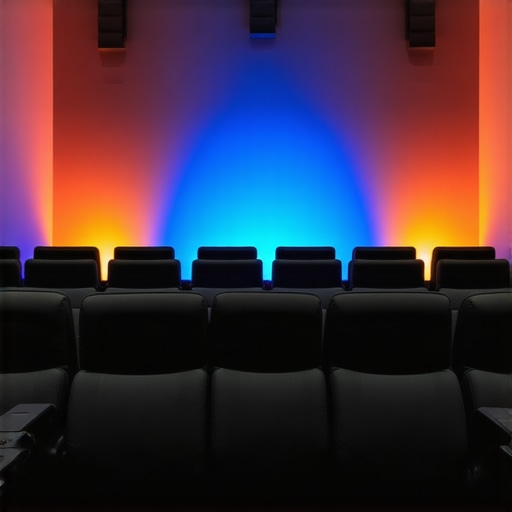
Achieving glare-free illumination requires strategic diffusion techniques. Use matte finishes on surfaces and indirect lighting pathways—such as coves and hidden channels—to disperse light evenly and eliminate harsh spots. Professional designers often employ specialized diffusers or frosted acrylic panels, which scatter LED output softly across the room. This approach not only preserves image clarity but also enhances spatial perception, making the environment feel more expansive and immersive.
Incorporating Circadian Lighting for Viewer Well-Being
Emerging trends focus on integrating circadian lighting principles into home theater designs. Adjusting light intensity and spectrum throughout the viewing experience can reduce blue light exposure before sleep, mitigate ocular fatigue, and support natural biological rhythms. Implementing programmable systems that gradually shift from invigorating blue-rich whites during daytime content to warmer amber tones in evening hours exemplifies this approach. As highlighted by the American Academy of Ophthalmology, such practices contribute to healthier, more sustainable viewing habits.
How Can Smart Integration Elevate Your Ambient Lighting Strategy?
What are the best practices for integrating voice control, motion sensors, and adaptive algorithms to create an intuitive, responsive environment?
The future of home theater lighting lies in intelligent automation. Combining smart control hubs, voice assistants, and sensor-based triggers allows for seamless scene transitions and personalized adjustments. For instance, voice commands can set mood presets—’Movie Night’ with dimmed backlights and cool bias lighting—while motion sensors adjust lighting when the room is occupied or vacated. Lasting impacts stem from employing AI-powered algorithms that learn user preferences over time, optimizing ambiance for both comfort and aesthetics. To realize this, professionals recommend choosing platforms compatible with popular ecosystems such as Apple HomeKit or Google Home, and deploying high-fidelity controllable LED fixtures, as outlined in the comprehensive guide by top smart lighting solutions.
Engage with our community by sharing your innovative setups or seeking expert advice on complex integration scenarios. Your insights could inspire the next evolution in personalized home theater environments!
Harnessing Dynamic Light Zones for Cinematic Depth
One of the most sophisticated techniques in ambient lighting involves creating multi-zone illumination that responds to on-screen content and viewing scenarios. Expert practitioners utilize software-driven controllers to designate specific regions within the room — such as ceiling coves, wall washes, or footlights — each calibrated with unique luminance and color profiles to produce a layered visual experience. This approach simulates real-world lighting environments, boosting immersion and visual coherence. Achieving this requires meticulous planning of light placement, factoring in reflective surfaces and room acoustics, for which detailed spatial analysis provides invaluable insights, as documented by the IEEE Transactions on Consumer Electronics.
Experimenting with Spectral Tuning for Artistic Authenticity
Progress beyond conventional CCT adjustments by integrating full-spectrum LED systems allows for precise spectral tuning tailored to specific media genres or thematic shifts. For example, filmmakers or dedicated enthusiasts can engineer warmer tones for period pieces or cooler hues for sci-fi scenes, enhancing emotional resonance. This process leverages tunable phosphor coatings and advanced LED drivers that support high-fidelity color rendering and spectral balance. Such granular control demands a nuanced understanding of spectral power distributions and their psychological impacts, as explored in depth in the journal Lighting Research & Technology. Implementing these systems elevates the ambiance from mere illumination to an expressive storytelling tool.
Expert Insights on Minimizing Visual Distraction Through Surface Materials
Beyond lighting placement, the selection of surface materials in a theater environment critically influences glare management and visual comfort. Professional designers recommend matte, non-reflective finishes for walls and ceilings, coupled with acoustic treatments that incorporate absorptive and diffuse textures. These choices serve to scatter stray light and reduce reflections, thereby preventing distraction and ensuring that the viewer’s attention remains focused on the content. Innovative material sciences have introduced nanostructured coatings and engineered textiles that further suppress unwanted glare, as covered comprehensively in the Journal of Materials Chemistry C.
Implementing Real-Time Environmental Feedback Loops
Cutting-edge home theater setups are now capable of integrating sensors that monitor ambient light levels, temperature, and even room occupancy to optimize lighting actively. These feedback loops, powered by IoT protocols and machine learning algorithms, enable the system to adapt dynamically, maintaining ideal luminance and spectral conditions without manual input. For instance, sensors can detect a rise in background light and adjust backlighting accordingly, preserving contrast ratios and color fidelity. Such systems demand rigorous calibration and robust integrated control architectures, where expert knowledge in both sensors and automation becomes indispensable for flawless execution, as detailed in the technical white papers by Elsevier’s Automation in Lighting.
Maximizing Eye Comfort: Beyond Brightness, Focus on Luminous Efficacy
Ensuring ocular health during extended viewing involves not just limiting brightness but enhancing luminous efficacy — the ratio of luminous flux to power consumption. Experts advocate for the deployment of highly efficient LEDs with tailored angular emission profiles to direct light precisely where needed, reducing stray light and scatter. Employing advanced diffusers and micro-optic lenses can further optimize light distribution, ensuring uniform luminance and reducing eye strain. Understanding human visual response curves and integrating this data into fixture selection profoundly elevates visual comfort, as outlined in standards by the Illuminating Engineering Society.
Active Role of Color Psychology in Room Design
Strategic use of color not only shapes aesthetic appeal but also influences emotional states and cognitive performance within the theater environment. Color psychologists advise incorporating hues aligned with desired outcomes — calming blue shades for relaxation, energizing reds for engagement, and neutral tones for versatility. When combined with spectral tuning, this creates a multisensory atmosphere that deepens viewer immersion and supports mood setting. A nuanced understanding of color psychology, supported by research in Color Research & Application, guides the selection of both LED spectral profiles and interior finishes to craft a harmonious, psychologically optimized space.
#IMAGE_PLACEHOLDER_D#,
Expert Insights & Advanced Considerations
Precision Placement Shapes Visual Comfort
Expert designers emphasize that thoughtful positioning of bias lights and LED strips—along coves, behind moldings, or within concealed channels—can dramatically influence glare reduction and contrast enhancement, ensuring an immersive viewing environment that minimizes eye strain and optimizes image clarity.
Spectral Tuning Transforms Mood and Perception
Harnessing full-spectrum LED systems with spectral tuning capabilities allows for media-specific ambiance adjustments, aligning lighting hues with cinematic themes—deepening emotional engagement and supporting psychological comfort during extended viewing sessions.
Automation Elevates User Experience
Integrating intelligent controls such as voice commands, motion sensors, and adaptive algorithms creates a dynamic lighting ecosystem that responds fluidly to content changes and user preferences, reducing manual adjustments and enhancing cinematic immersion seamlessly.
Curated Expert Resources
- Illuminating Engineering Society Standards: Offers authoritative guidelines on lighting design principles, ensuring safety, efficiency, and visual comfort.
- Lighting Research & Technology Journal: Publishes cutting-edge research on spectral tuning and color psychology relevant to home theater environments.
- Home Cinema Essentials Blog: Features in-depth tutorials and case studies on LED strip integration and advanced lighting controls.
Final Expert Perspective
Achieving cinematic harmony through advanced ambient lighting techniques requires a blend of precise placement, spectral sophistication, and smart automation. When expertly implemented, these strategies elevate your home theater into an immersive, comfortable sanctuary that aligns aesthetics with health and emotional well-being. For those committed to refining their setup, exploring our comprehensive guide to bias lighting and integrating intelligent control systems will provide a solid foundation. Engage with our community or reach out directly—your insights and innovations are vital to advancing the art of home cinema lighting.


Leave a Reply