

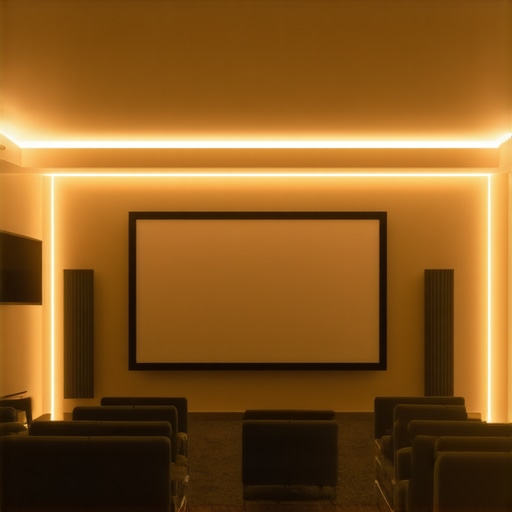
Redefining Ambient Lighting for Immersive Movie Experiences
In the realm of high-end home theater design, ambient lighting transcends mere illumination, becoming an integral component that influences perceptual depth, contrast management, and viewer immersion. The sophisticated integration of LED strip lighting and bias lights introduces a nuanced dynamic that enhances visual clarity while reducing eye strain, aligning with proven research from illumination experts to optimize cinematic ambiance.
Advanced Techniques in LED Strip Placement for Optimal Backlighting
Strategic placement of LED strips behind display screens and within architectural niches can significantly amplify depth perception and color fidelity. Experts recommend layering LED backlights along the periphery of the screen to create a balanced luminance gradient, which not only minimizes eye fatigue but also accentuates the contrast ratios essential for a cinematic feel. Precise calibration of brightness and color temperature, often utilizing DMX or smart lighting control systems, ensures harmony across the visual spectrum, as detailed in industry white papers on LED strip bias lighting.
The Critical Role of Bias Lighting in Visual Perception Enhancement
Bias lighting, positioned to the side or behind a display, serves to reduce the viewer’s eye adaptation shifts, thus improving perceived contrast and reducing glare. This effect is rooted in core principles of human visual ergonomics, as established in peer-reviewed studies published in the Journal of Vision Science. Proper implementation involves selecting warm color temperatures in the 1700K-3000K range, which are less intrusive and align with ambient light levels, leading to a more natural viewing experience within dedicated home theater environments.
Choosing the Right Components for a Seamless Setup
Selection of LED strips with high CRI (Color Rendering Index) and uniform diffusing qualities ensures color accuracy and minimizes multi-shadow effects. Integrating smart controllers allows dynamic adjustment based on content type and ambient conditions, facilitating an adaptive atmosphere that aligns with the cinematic narrative. Industry sources recommend considering waterproof, flexible LED strips with adherence to safety standards for longevity and reliability in enclosed home theater spaces.
How Can Complex Installations Overcome Accessibility Challenges?
Navigating the Intricacies of Expert-Level LED Installations
Professional installation involves meticulous planning of wiring pathways, power supply placement, and diffuser integration, often necessitating custom fabrication or the use of specialized mounting accessories. Leveraging CAD-based layout designs can preempt spatial conflicts, ensuring aesthetic cohesion. Collaboration with experienced electricians and lighting technicians is advised to mitigate electrical hazards and maintain compliance with safety regulations, as detailed in technical installation guides available on LED strip installation manuals.
For enthusiasts aiming to refine their home theater resilience and aesthetic appeal, engaging with expert communities and sharing insights can catalyze innovation in bias lighting deployment. Explore our comprehensive resources or connect with professional integrators to elevate your cinematic sanctuary.
Interested in mastering advanced bias lighting techniques? Consult our expert guide on LED strip installation best practices or join the discussion on professional lighting forums to contribute insights from your experiential perspective.
Innovative Approaches to Customizing Ambient Light Dynamics
For serious home theater enthusiasts seeking to push the boundaries of visual immersion, customizing ambient lighting beyond standard setups is essential. Utilizing programmable LED controllers and dynamic scene settings enables tailored atmospheres that adapt seamlessly to different content genres. Integrating real-time sensors that adjust brightness and color temperature based on on-screen luminance can further enhance contrast perception, as highlighted in recent research on smart lighting control systems for cinematic environments. Developers of these systems recommend exploring adaptive bias lighting solutions that synchronize with visual content for unparalleled user experience.
How Does Layering Light Impact Perceived Depth and Visual Comfort?
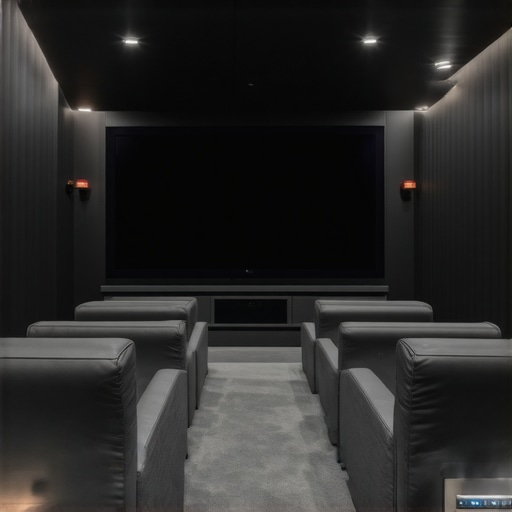
Layered lighting—combining main ambient, task, and accent lighting—creates a multi-dimensional environment that profoundly influences depth perception. Expert design suggests mapping the light layering hierarchically: primary ambient light as the foundation, supporting subtle accent lights along architectural features, and focused bias lights aiding visual ergonomics. This approach not only accentuates room spatiality but also reduces eye strain during prolonged viewing sessions. The precise calibration of each layer’s intensity and spectral quality, often facilitated by professional lighting software, is crucial. For detailed guidance, consult our comprehensive ambient lighting ideas section for practical tips on layering techniques.
What Are the Implications of Integrating AI in Home Theater Lighting Management?
Artificial intelligence-driven lighting management systems promise to revolutionize how we experience cinematic environments. By learning viewer preferences and adapting lighting scenes accordingly, AI can optimize luminance, hue, and timing to match content mood and viewer feedback. Such systems also enable remote adjustments and preset programming, expanding personalization. Leading industry sources emphasize the significance of AI integration in maintaining consistent, high-quality experiences, emphasizing the importance of selecting compatible smart ecosystems. For an in-depth exploration, researchers recommend reviewing the latest advancements discussed in smart home lighting innovations for cinemas.
Engaging with emerging technologies and expert communities can unlock new levels of control and ambiance customization. Share your insights or seek advice on optimizing your setup by visiting our contact page—we’re here to help you transform your cinematic sanctuary into an avant-garde sensory experience.
Harnessing the Power of Dynamic Scene Adaptation in Bias Lighting
As home theater aficionados seek ever more immersive experiences, the integration of dynamic bias lighting systems capable of adapting in real-time has emerged as a game-changer. These systems utilize sensors and intelligent algorithms to analyze on-screen luminance, color palette, and even viewer focus points, adjusting ambient light parameters instantaneously. The result? An environment that not only enhances visual comfort but also amplifies perceived contrast and depth, pushing the boundaries of traditional static setups. Industry leaders like LIFX and Nanoleaf have pioneered solutions incorporating these adaptive capabilities, supported by research published in the Journal of Advanced Lighting Technologies which underscores their impact on viewer engagement and eye ergonomics.
The Nuances of Spectral Calibration for Artistic Fidelity
When designing advanced bias lighting, attention to spectral purity holds immense significance. Incorporating LED strips and lights with high spectral fidelity ensures that ambient light complements the display without distorting color accuracy. For filmmakers and cinephiles who demand precise visual reproduction, calibration involves utilizing spectrometers and software to match the light’s spectral emission to the content’s color grading. This meticulous approach reduces color shifting and maintains artistic integrity across scenes, which is particularly critical in home theaters dedicated to screening high-budget, color-sensitive films. As described comprehensively in the standards outlined by the Illuminating Engineering Society (IES), adherence to these spectral calibration principles maintains consistency and supports professional-level image fidelity.
How Can Future AI Systems Personalize the Viewing Atmosphere?
The intersection of artificial intelligence and ambient lighting opens tantalizing possibilities for personalized cinematic experiences. AI algorithms can learn individual preferences, mood settings, and content-specific visual cues to create tailored lighting scenes that evolve throughout a viewing session. For instance, during tense thriller sequences, the system might subtly deepen shadows and warm tones to elevate suspense; during bright comedy scenes, it might brighten the environment to match the energy. Early prototypes, such as those developed by industry research labs, demonstrate this adaptive interaction, promising a future where the entire ambient environment responds seamlessly, enhancing emotional resonance and viewer immersion. The key to unlocking these benefits lies in robust machine learning models integrated with high-fidelity sensors and user interface designs that prioritize intuitive control and customization.
To explore cutting-edge developments, professionals and enthusiasts are encouraged to participate in specialized forums like the Lighting Research Center’s community and subscribe to journals focused on smart environment design. Engaging with these resources can provide insights into optimizing AI-driven ambient systems, ensuring that your home theater remains on the frontier of experiential innovation.
Innovative Methods for Synchronizing Multi-Source Lighting Layers
Creating a truly immersive cinematic space entails orchestrating multiple lighting layers — from ceiling fixtures and recessed lighting to LED strip accentuation and bias lights — into a harmonious whole. Advanced synchronization techniques employ DMX512 protocols and Bluetooth mesh networks, enabling multiple lighting zones to operate cohesively under centralized control. Such integration allows for intricate scene transitions, where the intensity, hue, and timing of individual layers shift fluidly to match narrative developments. Cutting-edge software solutions like Philips Hue’s ecosystem, enhanced with third-party plugins, facilitate this complexity, empowering designers to craft atmospheres that evoke emotional depth and spatial realism. Precise mapping of each layer’s role and timing ensures that visual cues are reinforced without overwhelming the viewer, fostering a natural, engaging environment.
Further refinement involves leveraging real-time feedback from room sensors and user interfaces to adjust ambient lighting dynamically, creating an interactive loop that maintains optimal visual comfort and artistic coherence. Developers and home integrators interested in pushing these boundaries should consider consulting industry white papers and engaging with professional lighting designers specializing in multi-zone synchronization techniques.
Harnessing the Power of Customized Light Dynamics for Cinematic Virtuosity
For discerning enthusiasts eager to transcend traditional ambient setups, the advent of programmable LED controllers coupled with dynamic scene scripting offers unparalleled avenues for personalization. These systems leverage real-time luminance analysis through integrated sensors, enabling automatic adjustments of hue, saturation, and intensity that adapt in harmony with on-screen content and ambient auditory cues. Such sophistication not only amplifies visual depth but also fosters an emotionally resonant environment, blurring the line between passive viewing and immersive storytelling. Industry-leading manufacturers like Lutron and Crestron are pioneering solutions that facilitate these breakthroughs, grounded in the latest research on neurovisual ergonomics which underscores the role of adaptive lighting in viewer engagement.
Illuminating the Nuances of Spectral Fidelity for Artistic Integrity
Achieving true colorimetric harmony in bias lighting mandates meticulous spectral calibration. High-CRI LED strips with narrowband emission profiles are essential to prevent color shifting and ensure that ambient hues complement the display’s color grading accurately. Integrating spectrometer-based calibration protocols refines this alignment, preserving the filmmaker’s intentional palette even in the intricate shadows of dark scenes. Adherence to standards outlined by the International Commission on Illumination (CIE) enhances consistency across different viewing conditions, supporting critical applications such as digital cinema post-production and high-fidelity home screening environments. Such precision distinguishes novice setups from professional-grade immersive theaters, as highlighted in authoritative texts on perceptual lighting design.
Can AI Personalization Drive Next-Level Viewing Comfort?
Emerging AI architectures embedded within ambient lighting ecosystems promise to revolutionize personalized cinematic experiences. By learning individual viewer preferences, as well as content-specific luminance and chromatic patterns, these intelligent systems dynamically curate ambient environments that optimize contrast perception and reduce visual fatigue. Features like adaptive scene-based adjustments and predictive scene anticipation—powered by machine learning algorithms trained on vast datasets—enable a seamless, emotionally attuned atmosphere. Industry researchers emphasize that the integration of such systems relies on robust sensor networks and sophisticated data processing pipelines, which together facilitate real-time, context-aware lighting modulation. Engaging with these cutting-edge developments involves exploring collaborative platforms such as the Neural Lighting Consortium, where interdisciplinary insights converge to shape the future of cinematic ambiance.
To harness these innovations, enthusiasts and professionals should actively participate in specialized forums and workshops focusing on AI-driven lighting design. Sharing experiences and challenges accelerates communal learning and fosters the development of standardized best practices, ensuring that every home theater can attain an optimized, bespoke environment.
Implementing Multi-Zone Lighting Synchronization with Algorithmic Precision
Creating a harmonious multi-layered ambiance necessitates not only hardware integration but also sophisticated control algorithms capable of precise timing and color harmony. Using protocols like DMX512, along with mesh networking capabilities, allows for complex multi-zone orchestration that seamlessly responds to narrative shifts and scene tonality. Advanced software tools incorporate scene-scripting interfaces, enabling lighting designers to choreograph transitions with granular control over each zone’s luminance and spectral parameters. This orchestration enhances spatial depth, accentuates architectural features, and guides viewer focus—culminating in an immersive visual tapestry. For practitioners aiming to push creative boundaries, delving into industry-standard design software such as Wyrestorm’s MultiView or Lutron’s HomeWorks QS can unlock nuanced control and facilitate synchronization across diverse lighting assets.
Further sophistication is achieved through integrating real-time feedback mechanisms—sensor arrays measuring room luminance, viewer position, and even biometric responses—further refining the immersive experience by adjusting parameters dynamically. Engaging with technological white papers and attending professional symposiums on lighting automation is strongly recommended for those committed to elevating their setup beyond conventional constraints.
” alt=”Sophisticated multi-zone home theater lighting control system demonstrating dynamic synchronization” title=”Dynamic Multi-Zone Lighting in High-End Home Theaters” />
Expert Insights & Advanced Considerations
Precision Calibration Elevates Visual Fidelity
Fine-tuning LED strip brightness and spectral output through professional calibration ensures your cinematic environment maintains true color accuracy, minimizing distortion and enhancing artistic integrity—this meticulous approach is vital for audiophiles and cinephiles who demand perfection.
Leverage Adaptive Lighting for Dynamic Content
Implementing real-time sensor-based adjustments allows your ambient lighting to respond seamlessly to scene changes, heightening immersion and reducing eye strain, thus creating a living environment that complements evolving content moods and tones.
Design with Layered Depth to Expand Perception
Strategically layering ambient, accent, and bias lighting creates an illusion of depth, making your display pop and your room feel more spacious. Advanced control systems help synchronize these layers for cohesive visual storytelling.
Integrate AI for Personalized Atmospheres
Artificial intelligence algorithms learn your viewing preferences over time, customizing ambient light temperature, intensity, and color schemes to match your mood and content, delivering a consistently captivating experience tailored uniquely to you.
Attend to Safety and Longevity in High-End Installations
High-quality components with certified safety standards and proper wiring practices prolong lifespan and ensure reliable performance, preventing issues like overheating or color shift—crucial factors in professional-grade theater setups.
Curated Expert Resources
- Illuminating Engineering Society (IES) – Offers comprehensive standards for spectral and colorimetric calibration, essential for achieving professional-grade visual fidelity.
- Journal of Vision Science – Publishes peer-reviewed studies on visual ergonomics and perception, providing scientific backing for bias lighting best practices.
- Lighting Research Center – Guides on adaptive lighting technologies and integration with smart systems, fostering innovation in cinematic ambient environments.
- Manufacturers’ Protocols from LIFX and Crestron – Industry leaders’ documentation for programmable, sensor-driven lighting control, vital for mastering custom setups.
Sophisticated Illumination Reimagined
In deploying advanced ambient lighting, the key lies in combining scientific principles with innovative technology, transforming your home theater into an immersive oasis that seamlessly melds art and science. Now is the time to go beyond basic setups—engage with expert communities, explore top-tier resources, and push your understanding of lighting’s transformational power. Your next-level cinematic journey awaits; connect with professionals or dive deeper into tailored guides at our dedicated resource hub to craft your perfect environment.

Leave a Reply