

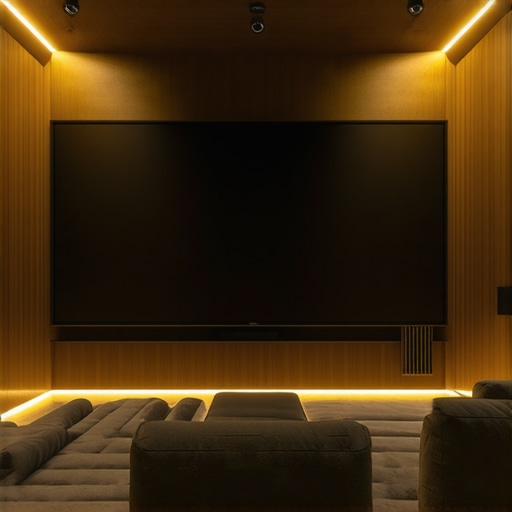
Harnessing Ambient Lighting for Cinematic Excellence
Optimal integration of bias lights and LED strip lighting transcends simple illumination, transforming a standard room into an immersive cinematic environment. For enthusiasts seeking professional-grade ambiance, understanding the intricate balance of lighting types becomes crucial.
The Role of Bias Lights in Reducing Eye Strain and Enhancing Perception
Bias lighting, strategically placed behind displays or around room perimeters, offers a subtle yet powerful influence on visual comfort. Research published in the Journal of Vision indicates that proper bias lighting can significantly reduce eye fatigue during prolonged viewing sessions, especially in low-light conditions. When implementing bias lights, selecting high-quality LED strips with adjustable color temperature ensures seamless adaptation to different content needs.
Advanced Techniques for LED Strip Installation and Positioning
Expert application involves integrating LED strips along ceiling coves, behind media cabinets, or beneath wall panels to achieve indirect lighting effects. The placement must be calculated to prevent glare or uneven illumination, crucial for maintaining visual clarity and preserving the room’s aesthetic integrity. Utilizing diffusers and dimming controls enhances the subtlety of the emitted light, allowing for dynamic ambiance adjustments.
Integrating Backlighting for Enhanced Depth and Focus
Backlighting extends beyond bias lighting, becoming a vital technique to create depth perception. Strategically positioned LED strips behind screens or within wall niches can provide a warm glow that reduces contrast disparities, thereby elevating perceived picture quality. This method is particularly effective when combined with ambient lighting schemes, fostering a balanced and fatigue-free viewing experience.
How can LED strip color temperature modulation influence viewer perception and comfort in a cinema-like setup?
Adjusting the color temperature of LED strips—from warm 2700K tones to cooler 6500K hues—affects both the mood and visual comfort. Cooler temperatures can simulate daylight, beneficial for task lighting, while warmer tones foster a cozy atmosphere suitable for relaxation. Expert installers recommend dynamic control systems capable of shifting settings based on content type and time of day, aligning with circadian regulation principles.
For comprehensive guidance on optimal LED strip choices tailored to your home theater, reference our Ultimate Guide to Bias Lights and LED Strips for Home Theater.
If you’re eager to elevate your setup further, consider exploring advanced ambient lighting techniques that complement high-fidelity audio and visual systems. Sharing your experiences or professional insights with fellow enthusiasts can foster innovation and refine best practices across the community.
Customizing Bias Lighting to Match Your Mood and Content
One of the most nuanced aspects of effective bias lighting is tailoring the ambiance to the specific mood or genre of your content. For instance, a suspense thriller might benefit from dim, cool-toned lighting that heightens tension, whereas a cozy family movie could be complemented by warm, soft glows. By integrating adjustable LED strips with smart controls, enthusiasts can seamlessly shift between atmospheres, enhancing the overall viewing experience. Exploring options like voice-controlled or app-enabled systems makes real-time customization effortless, aligning your environment instantly with your entertainment choices.
Is Your Room’s Layout Limiting Your Lighting Potential?
Room geometry and furniture placement critically influence how effectively bias and ambient lighting can be implemented. For irregularly shaped rooms or spaces with high ceilings, standard cove installations may fall short, requiring innovative mounting solutions or modular LED strip configurations. In such cases, expert consultation ensures that lighting is both functional and aesthetically pleasing, avoiding shadows or uneven illumination that disrupt immersion. For more insights into optimal setup configurations, see our Guide to Installing LED Strips for Ambience.
” alt=”Custom LED strip installation in a home theater” title=”Custom LED strip installation adapting to room layout”/>
Enhancing Visual Perception Through Lighting Dynamics
Dynamic lighting techniques employ programmable LED systems to create movement and varying intensities of light, simulating natural environments or cinematic effects. For example, gradual fading or color shifts synchronized with on-screen action can heighten immersion, making viewers feel as if they are part of the scene. Implementing such advanced schemes requires an understanding of timing, color theory, and integration with media systems. Leveraging software platforms designed for lighting synchronization allows for precise control, elevating the sensory dimension of your setup. A detailed framework for these integrations can be found in our Ultimate Guide to Bias Lighting and LED Strips for Movie Room Ambience.
What future innovations in LED technology could redefine home theater ambient lighting?
Advancements such as micro-LEDs, ultraviolet-light integration, and AI-driven adaptive lighting systems promise to revolutionize how immersive environments are crafted. These innovations aim to deliver more granular control, increased energy efficiency, and even personalized lighting profiles based on user preferences or content analysis. Staying abreast of emerging trends ensures your setup remains at the forefront of cinematic ambiance design, offering richer, more responsive environments that deepen viewer engagement. For pioneering ideas, consider exploring articles on cutting-edge lighting tech or consulting industry experts through specialty forums and publications.
For a comprehensive selection of premium LED strips suited to dynamic and customizable setups, visit our Ultimate Guide to Bias Lights and LED Strips for Home Theater. Sharing your journey with adaptive lighting systems can inspire fellow enthusiasts to push creative boundaries and refine their immersive environments.
Harnessing Circadian Rhythms Through Adaptive Lighting
One of the most sophisticated advancements in ambient lighting involves calibrating luminance and color temperature to align with human circadian rhythms, thereby enhancing comfort and reducing fatigue during extended viewing sessions. Implementing smart lighting systems capable of predictive adjustments offers an personalized experience that promotes alertness during daytime and relaxation at night. According to research published in the Journal of Sleep Research, ambient lighting tailored to circadian phases can improve sleep quality and overall well-being for home theater enthusiasts, illustrating the importance of integrating biological insights into design choices.
How does ambient lighting influence emotional perception of on-screen content?
Beyond mere visual comfort, ambient lighting can profoundly impact viewers’ emotional responses and immersion levels. Warmer, dimmer hues tend to evoke feelings of intimacy and nostalgia, while cooler tones can sharpen focus and heighten suspense. This psychological interplay is supported by studies such as those by Psychology of Aesthetics, Creativity, and the Arts, which demonstrate that viewers’ emotional states are modulated by surrounding light conditions, influencing narrative engagement. By carefully programming lighting schemes to match narrative tones and viewer mood, enthusiasts can craft a more immersive cinematic environment that resonates deeply with their audience.
Incorporating voice or app-controlled dynamic lighting profiles allows real-time adjustments aligned with content genre or personal preference, fostering an emotionally attuned experience that transcends traditional viewing conventions.
Emerging Technologies Shaping Next-Generation Ambient Lighting
Innovative directions such as quantum dot LEDs and organic light-emitting diode (OLED) integrations promise to elevate ambient lighting fidelity, color accuracy, and energy efficiency. Quantum dot LED advancements enable precise spectral tuning, crucial for replicating cinematic color gamuts and enhancing visual realism in home theaters. Similarly, OLED-based ambient lighting systems facilitate ultra-thin, seamless installations that meld seamlessly with architectural features, unlocking new aesthetic possibilities.
Moreover, artificial intelligence and machine learning are beginning to spearhead adaptive lighting systems that learn viewer preferences and optimize settings autonomously. For example, AI models trained on user interaction data can predict preferred lighting conditions across genres or times of day, delivering a consistently refined ambiance without manual input.
To stay ahead, enthusiasts and installers should explore emerging protocols like Wi-Fi 6E and Zigbee 3.0, which promise lower latency, increased device capacity, and more reliable control of complex lighting ecosystems. Engaging with industry trials and beta programs can provide early insights into these transformative technologies, ensuring your home theater remains at the forefront of immersive design.
What role will AI and deep learning play in personalizing lighting environments for each viewer?
Artificial intelligence’s capacity to analyze real-time data—such as facial expressions, biometric feedback, or content mood—can enable unparalleled customization of ambient lighting. For instance, AI-driven systems could dynamically adjust lighting parameters to match a viewer’s emotional state or engagement level, thereby reinforcing immersion or promoting relaxation as desired. Companies like Nanoleaf are already exploring such capabilities with their intelligent lighting panels that respond to music and user interactions, hinting at a future where personalized ambient lighting becomes intuitive and impactful.
As these technologies evolve, it will be essential for users to balance automation with manual control, ensuring the system enhances rather than overrides personal preferences. active participation and customization options will remain vital for creating a truly tailored cinematic environment that adapts seamlessly to evolving content and mood.
Reflecting on these trends, exploring modular and programmable lighting solutions from vendors like LIFX or Philips Hue can provide the necessary hardware foundation. These platforms support firmware updates, custom scripting, and integration with voice assistants, making them ideal for experimenting with sophisticated, personalized ambient lighting strategies. To deepen your understanding and stay updated on cutting-edge developments, subscribe to industry-specific forums and expert-led webinars focused on intelligent illumination for home entertainment.
Enhancing Visual Depth with Multi-Zone Lighting Strategies
Implementing multi-zone lighting allows for precise control over different sections of a home theater, enabling users to tailor illumination based on specific scenes or content genres. By dividing your ambient lighting into distinct zones—such as behind the screen, along ceiling coves, and along wall panels—you can create a dynamic environment that responds to mood shifts and narrative tones. Advanced dimming and color controls facilitate seamless transitions, enriching the cinematic atmosphere and fostering a more immersive viewing experience.
The Science of Color Psychology in Ambient Lighting
Color psychology plays a pivotal role in shaping viewers’ emotional responses to on-screen content. Warm hues like amber and deep reds evoke feelings of intimacy and comfort, ideal for romantic scenes or relaxed viewing. Conversely, cool tones such as blue and green heighten focus and alertness, which can amplify suspense or action sequences. Integrating tunable LED systems controlled via smart home platforms empowers enthusiasts to craft atmospheres aligned with the emotional narrative, leveraging empirical insights into human affective responses.
Can you leverage circadian lighting principles to improve your movie nights?
Absolutely. Circadian lighting techniques involve modulating spectral content and luminance levels to synchronize with natural biological rhythms, thus reducing viewer fatigue and promoting relaxation. For instance, gradually dimming warm, low-intensity light during evening screenings mimics sunset, encouraging melatonin production and preparing the body for rest. Conversely, brighter, bluer-rich lighting during daytime enhances alertness. Employing AI-driven control systems that adapt lighting profiles based on time and content can deliver a health-conscious yet immersive entertainment environment, as supported by research in the Frontiers in Psychology.
Top Lighting Tactics for Cinematic Brilliance
Impeccable ambient lighting surpasses basic illumination, shaping an environment that immerses and captivates. From strategic LED placement to color psychology, mastering these techniques transforms your space into a personalized theater experience.
Achieve Depth with Multi-Zone Controls
Segmented lighting allows precise atmosphere tailoring, enabling dynamic shifts that mirror mood changes or scene transitions. Integrating smart controls ensures seamless adaptation, elevating the cinematic journey.
Harness the Power of Color for Mood Modulation
Color choices profoundly influence perception and emotion. Warm hues foster intimacy, while cooler tones sharpen focus. Employ tunable LED systems to craft atmospheres aligning with content narrative or personal preference.
Implement Dynamic Lighting for Real-Time Engagement
Programmable LEDs that respond to on-screen action or sound can heighten immersion. Synchronization via dedicated software adds a layer of sophistication, making each viewing session uniquely compelling.
Stay Ahead with Emerging Tech Innovations
Next-generation micro-LEDs, AI-driven adaptive systems, and spectral tuning promise unprecedented control and realism. Keeping abreast of these trends ensures your setup remains cutting-edge in the immersive entertainment landscape.
Exclusive Resources for the Serious Enthusiast
- Ultimate Guide to Bias Lights and LED Strips for Home Theater: Comprehensive insights on selecting and installing ambient lighting solutions that deliver both function and style.
- Creating Immersive Ambiance Best Bias Lights for 2025: Advanced techniques and future-proof recommendations to keep your environment at the forefront of innovation.
- Guide to Installing LED Strips Ambient Lighting for Movie Rooms: Practical steps and expert tips for flawless integration into your space.
The Final Word from Lighting Experts
Designing an optimal home theater environment demands a nuanced understanding of ambient lighting, from color psychology to technical implementation. Balancing aesthetics with functionality ensures immersive experiences that resonate. Embracing emerging technologies and expert insights not only refines your setup but also elevates your craftsmanship. Engage with the community by sharing your innovations or exploring comprehensive resources—your journey toward cinematic perfection continues beyond this guide. For more tailored advice or to explore cutting-edge solutions, visit our contact page.


Leave a Reply