

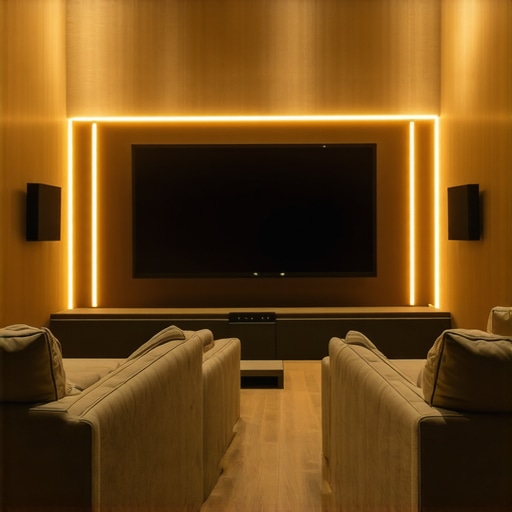
Transforming Visual Atmospheres: The Science Behind Ambient Lighting and Bias Lights
In the realm of home theater design, ambient lighting and bias lights serve as pivotal elements that influence viewer engagement, reduce eye strain, and elevate cinematic immersion. Expert applications of LED strip lighting and backlight techniques are not merely aesthetic choices but are grounded in perceptual psychology and lighting engineering principles. For instance, strategic placement of bias lights behind screens minimizes contrast disparity, thereby enhancing perceived picture quality and reducing fatigue during prolonged viewing sessions.
Why Precision in Lighting Control Defines the Future of Home Cinema
Contemporary home theater setups demand nuanced control over lighting environments, where ambient lighting seamlessly synchronizes with video content. Advanced bias light solutions provide dynamic color and brightness adjustments, leveraging smart technology for immersive experiences. Such precision not only improves image contrast but also enhances mood and spatial perception, critical factors for elite home cinema experiences.
Choosing the Optimal LED Strips for Cinematic Ambiance
Selection of LED strip lighting should be guided by color temperature, CRI (Color Rendering Index), and the ability to integrate with home automation systems. The latest innovations in LED technology, including RGBW and tunable white strips, enable users to craft personalized lighting schemes that adapt to different content types—from bright comedies to dark thrillers. For a comprehensive understanding, consult the expert guide on LED strip selection.
What Are the Critical Factors When Integrating Backlight and Ambient Lighting to Achieve Cinematic Depth?
Integrating backlight and ambient lighting involves considerations such as placement accuracy, light diffusion, and synchronization with media playback. Properly calibrated, these lighting layers create an illusion of depth and dimensionality, making the screen appear larger and more vibrant. Achieving this requires expert knowledge of light layering and the use of high-quality diffusers and controllers, as discussed in the ultimate guide to bias lighting.
For enthusiasts and professionals seeking to elevate their setups, investing in customizable lighting systems that support voice commands or app controls offers unparalleled flexibility. Moreover, understanding the psychological effects of different lighting hues can optimize viewer comfort and emotional response, a topic explored extensively in recent academic publications such as the Journal of Lighting Research and Technology.
Explore further insights on expert LED strip lighting tips and contribute your own experiences to this rapidly evolving field. As technology continues to advance, the integration of sophisticated ambient lighting solutions will remain a cornerstone of premium home theater design, enriching visual storytelling and user satisfaction.
Unleashing the Power of Dynamic Lighting for Cinematic Excellence
In the pursuit of the perfect home theater, lighting plays a pivotal role not just in aesthetics but in enhancing viewer experience and reducing eye fatigue. Modern LED strip lighting systems offer a spectrum of customization options, enabling users to craft immersive environments that adapt seamlessly to different media content. Integrating these advanced lighting solutions involves understanding not only the technical aspects but also the psychological impacts of color and brightness variations on viewer engagement.
How Can Smart Lighting Systems Revolutionize Your Movie Nights
Emerging smart lighting technologies, including voice-controlled and app-integrated LED systems, provide unparalleled flexibility for home theater enthusiasts. These systems can synchronize with media playback, adjusting color temperature, brightness, and even hue based on scene dynamics. For example, during darker scenes, softer ambient lighting can be used to prevent glare, while brighter bias lights can be activated for action sequences, creating a cinematic depth that rivals commercial theaters. To explore the latest innovations, visit the comprehensive guide on bias lighting.
What Are the Hidden Psychological Benefits of Color-Optimized Bias Lighting?
Color psychology suggests that different hues can influence mood, focus, and even perception of image quality. Warm tones like amber and soft white can induce relaxation, ideal for cozy movie nights, whereas cooler shades such as blue can enhance alertness and clarity during gaming or sports viewing. Expert research indicates that well-calibrated bias lighting not only improves contrast perception but also contributes to emotional well-being during extended viewing sessions. For insights into creating mood-specific lighting, consult the detailed strategies outlined in the expert guide on bias lighting.
If you’re passionate about elevating your entertainment space, consider experimenting with different lighting schemes and share your experiences in the comments. For tailored advice or installation assistance, contact us through our consultation page.
Harnessing Light Layering for Depth and Realism
Beyond basic ambient lighting, the strategic layering of different light sources can dramatically enhance the perceived depth and realism of your home cinema. Techniques such as asymmetric backlighting, where light is directed to specific regions behind the screen, create a subtle glow that extends the visual boundaries and mimics the natural ambiance of a cinema hall. This layered approach requires precise calibration, considering factors like light diffusion, reflection, and color harmony, which can be achieved through advanced lighting controllers and professional-grade diffusers. Achieving an optimal balance allows viewers to experience a more immersive and three-dimensional visual environment, a principle backed by perceptual psychology research published in the Journal of Visual Cognition.
How does multi-layered lighting influence viewer perception of depth?
Multiple studies indicate that well-designed light layering tricks the brain into perceiving greater depth on a flat screen, effectively expanding the visual field and increasing engagement. This effect is particularly noticeable in dark scenes, where ambient and backlighting can accentuate contrast and color vibrancy, making images appear more lifelike. For expert-level implementation, professionals recommend using high-CRI LEDs and calibrated diffusers to ensure consistent light quality and color fidelity across layers. For more insights, consult technical guides from lighting manufacturers such as LEDs.com.
Innovative Control Systems Elevate Home Theater Lighting
Smart lighting integration is transforming the way enthusiasts manage ambient environments. Systems like DMX controllers or Wi-Fi-enabled smart hubs allow for scene-specific presets, where multiple layers of lighting are synchronized with media playback—whether it’s dimming overhead lights during a suspenseful thriller or brightening for a gaming session. These systems often support voice commands and mobile apps, providing seamless control that adapts to the viewer’s mood and scene requirements. Implementing such technology demands a thorough understanding of home automation protocols and lighting calibration to prevent mismatched hues or flickering issues, as detailed in the comprehensive Smart Home Lighting Guide.
For those aiming to push the boundaries even further, integrating AI-powered scene recognition can automate lighting adjustments based on detected scene content, creating a fully immersive experience that rivals commercial theaters. Exploring these innovative solutions requires a blend of technical expertise and creative vision, making it an exciting frontier for home cinema aficionados.
What are the latest advancements in AI-driven adaptive lighting for home theaters?
Recent developments in AI and machine learning have led to adaptive lighting systems capable of analyzing video content in real-time and adjusting lighting parameters accordingly. These systems can identify scene brightness, color palette, and emotional tone, then automatically modify bias and ambient lighting to complement the media. For instance, during a sunset scene, warm hues can be subtly enhanced, intensifying the visual storytelling. Leading companies like LIFX are pioneering these technologies, offering ready-to-integrate solutions for high-end home theaters. Embracing AI-driven lighting not only elevates cinematic immersion but also minimizes manual adjustments, freeing users to focus on content enjoyment and social interaction.
If you’re eager to elevate your home theater setup, diving into the latest AI and automation options is a worthwhile venture. Consider consulting with a professional lighting designer specializing in smart home integrations to tailor a system that perfectly matches your space and viewing preferences.
Mastering Light Sculpting for Depth and Atmosphere
Beyond standard ambient lighting, sophisticated light layering techniques can dramatically transform your home cinema into a realm of visual realism. By employing asymmetric backlighting and targeted accent lights behind the screen, you create a subtle glow that extends the perceived boundaries of the display, making the image appear more expansive and three-dimensional. The key lies in precise calibration of diffusion materials and reflection angles, which can be optimized through professional-grade diffusers and high-CRI LED sources. As a result, viewers experience a heightened sense of depth, akin to commercial theaters, rooted in perceptual psychology research that highlights the importance of strategic light distribution in visual perception.
How can multi-layered lighting influence viewer perception of depth?
Studies in visual cognition reveal that layered lighting tricks the brain into perceiving greater spatial depth on a flat screen, amplifying immersion and engagement. This effect is especially pronounced in scenes with high contrast and vibrant colors, where tailored backlighting accentuates contrast edges and enhances color vibrancy. Expert implementation involves balancing diffuse ambient light with focused accent layers, utilizing high-CRI LEDs and calibrated diffusers to maintain color fidelity. For comprehensive insights, consult technical guides from leading lighting manufacturers such as LEDs.com.
Integrating Smart Control Systems for Seamless Scene Transitions
The advent of intelligent lighting controllers has revolutionized home theater environments, enabling seamless scene-specific adjustments that synchronize with media playback. Advanced systems support protocols like DMX and Zigbee, allowing for complex multi-layer scenes where brightness, hue, and saturation shift dynamically—dimming overhead lights during intense action sequences or boosting bias lighting for clarity during dialogue-heavy scenes. These setups often integrate with voice assistants and mobile apps, providing intuitive control and automation. Achieving flawless synchronization requires expertise in home automation and precise calibration of lighting parameters, as detailed in resources like Smart Home Lighting Guide.
For enthusiasts seeking cutting-edge experiences, exploring AI-driven scene recognition that adjusts lighting based on content analysis is an exciting frontier, demanding deep understanding of both AI algorithms and lighting design principles.
The Psychological Impact of Color-Driven Bias Lighting
Color psychology plays a pivotal role in designing bias lighting that enhances emotional and perceptual responses. Warm hues such as amber or soft white foster relaxation and comfort, ideal for cozy movie nights, while cooler tones like blue can boost alertness and focus—perfect for gaming or sports viewing. Well-calibrated bias lighting not only improves contrast perception but also influences mood and cognitive engagement during extended viewing sessions. For detailed strategies on mood-specific lighting, refer to scholarly articles in the Journal of Lighting Research and Technology and authoritative guides on color psychology in interior design.
Engaging with these insights enables you to craft personalized lighting environments that elevate both aesthetic appeal and viewer well-being, fostering a truly immersive cinematic experience.
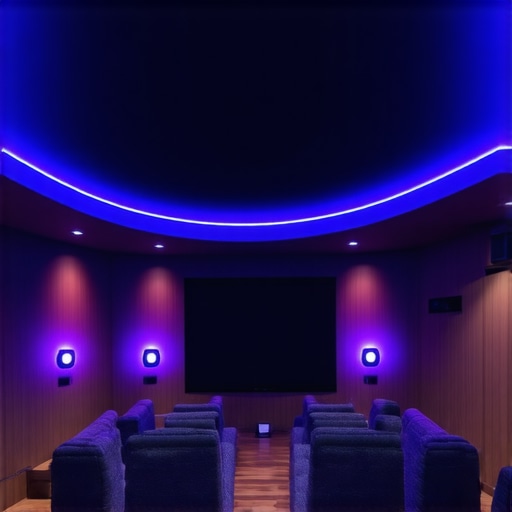
Harnessing Light Layering to Mimic Cinematic Depth
Implementing multiple layers of lighting—such as directional LEDs behind the screen, diffuse ambient sources, and accent lights—creates an illusion of depth that extends beyond the physical boundaries of the display. This technique, rooted in perceptual psychology, involves carefully balancing light intensity, diffusion, and color harmony. High-quality diffusers and calibrated controllers are essential to prevent color mismatches and flickering, ensuring a seamless visual transition across layers. The result is a more lifelike, engaging viewing environment that mimics the depth cues experienced in professional cinemas, making the flat screen appear more vibrant and three-dimensional.
What are the latest advancements in AI-driven adaptive lighting for home theaters?
Recent innovations harness artificial intelligence and machine learning to analyze media content in real-time, automatically adjusting lighting parameters to match scene mood, brightness, and color palette. These systems, exemplified by companies like LIFX, enable dynamic, scene-responsive lighting that elevates cinematic immersion without manual intervention. The technology not only simplifies setup but also ensures consistent, scene-appropriate ambiance, fostering an environment where viewers are fully immersed in the storytelling. For those eager to adopt such systems, collaborating with professional integrators can optimize calibration and integration, ensuring flawless synchronization across all lighting layers.
Mastering Light Layering Elevates Visual Depth
In high-end home theater design, strategic light layering creates a multi-dimensional viewing environment. Using asymmetric backlighting behind the screen and diffuse ambient sources, professionals craft an illusion of depth, making flat screens appear more vibrant and lifelike. This approach relies on precise calibration of diffusion materials and reflection angles, ensuring seamless integration of multiple light sources that enhance contrast and color vibrancy, rooted in perceptual psychology.
Harnessing AI for Scene-Responsive Illumination
Artificial intelligence integration in home theater lighting is transforming cinematic immersion. AI-driven systems analyze media content in real-time, dynamically adjusting bias and ambient lighting to match scene tone, brightness, and color palette. Companies like LIFX lead this innovation, providing adaptive lighting that reacts seamlessly, reducing manual input and maximizing viewer engagement.
Implementing Multi-Layered Lighting for Enhanced Perception
Layered lighting, combining focused accent lights with diffuse ambient sources, tricks the brain into perceiving greater spatial depth. Proper calibration using high-CRI LEDs and calibrated diffusers ensures consistent color fidelity and prevents flickering, creating an environment where images seem more expansive and three-dimensional. This technique is backed by perceptual psychology research emphasizing the importance of strategic light distribution in visual perception.
Expert Resources for Advanced Home Theater Lighting
- Lighting Home Cinema Essentials Blog: Offers comprehensive guides on smart lighting integration and professional setup techniques.
- Ultimate Guide to Bias Lighting LED Strips: Deep dive into selecting and deploying bias lights for optimal cinematic ambiance.
- Backlight Strategies for 2024: Advanced techniques for backlighting that extend visual boundaries.
Final Reflection from the Expert
In the pursuit of cinematic excellence, mastering LED strip lighting and ambient layers transforms ordinary home theaters into immersive sanctuaries. The key lies in precise calibration, adaptive AI-driven systems, and a deep understanding of perceptual psychology. For those committed to elevating their setup, engaging with authoritative resources and consulting with professional integrators unlocks the full potential of your space. Dive deep into these strategies and push the boundaries of home theater innovation—your next-level cinematic experience awaits.


Leave a Reply