

Redefining Visual Immersion: The Strategic Role of Bias Lighting & LED Strips in Modern Home Theaters
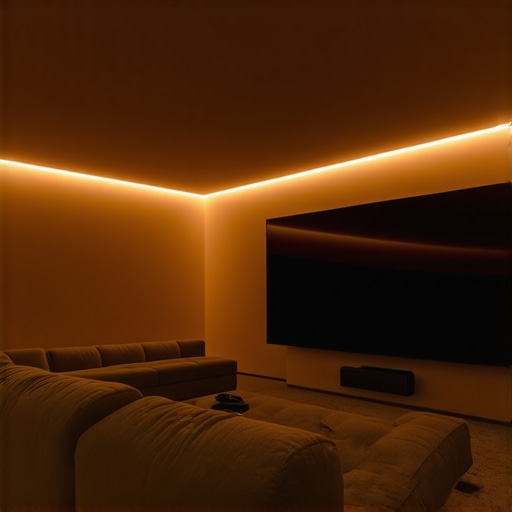
In the pursuit of cinematic perfection within a domestic environment, the integration of bias lighting and LED strip solutions has emerged as a pivotal element. These lighting innovations are no longer mere aesthetic add-ons but are now recognized for their profound impact on visual comfort, image contrast, and overall ambiance, especially as home entertainment systems become increasingly sophisticated. As an industry expert, I observe that deploying the right bias lighting setup enhances viewer experience by reducing eye strain and elevating perceived picture quality, a principle rooted in advanced luminance psychology and color science.
Complexities in Selecting the Optimal LED Strip Technologies for 2024
Choosing the appropriate LED strips entails a nuanced understanding of spectral qualities, color rendering index (CRI), and compatibility with high-definition displays. For instance, full-spectrum LED strips with high CRI values (>90) ensure color accuracy, which is critical for professional-grade home theaters aiming for cinema-like visuals. Moreover, the advent of smart, addressable RGB LED strips allows for dynamic lighting scenes synchronized with content, thereby creating an immersive environment that adapts to the mood and genre of the media. Navigating these technological options requires a deep dive into product specifications, as outlined in resources like how to choose the right LED strips.
Expert Insights: Balancing Ambient Lighting with Visual Clarity
Achieving an optimal balance between ambient bias lighting and the clarity of the on-screen image is a complex task. Excessive brightness can cause reflections and reduce contrast, while insufficient lighting fails to mitigate eye fatigue. Advanced solutions involve layered lighting strategies, where diffused LED strips are installed behind display panels or along architectural features, providing indirect illumination that enhances depth perception without glare. This approach is detailed in expert LED strip lighting tips.
How do professional home theater designers integrate bias lighting to maximize viewer comfort and image fidelity?
This question probes the intersection of technical precision and aesthetic design, emphasizing that expert designers analyze room dimensions, surface reflectivity, and user preferences. They often employ color temperature controls, aiming for 6500K to match daylight conditions, thereby avoiding color distortion and visual fatigue. These integrations are documented in industry white papers and are crucial for creating a seamless cinematic experience.
For those seeking to elevate their setup, exploring comprehensive guides to bias lighting in 2024 can provide valuable insights. Additionally, collaborating with expert installers or consulting with professional AV designers ensures that the lighting system complements the media environment perfectly.
Remember, the goal is not just illumination but a carefully curated ambiance that enhances both the aesthetic and functional aspects of your home theater. For further professional advice or to share your own insights, visit our contact page.
Harnessing Dynamic Color Temperatures to Elevate Viewing Comfort
One of the most groundbreaking approaches in premium home theater design is the use of dynamic color temperature adjustments in bias lighting systems. Unlike static lighting, adaptive solutions can shift from 6500K daylight mimicry during daytime viewing to warmer tones in the evening, aligning with circadian rhythms and reducing eye strain. This approach leverages advanced LED technologies and smart control systems, allowing users to customize lighting scenes that respond to ambient light conditions and content type. Such adaptability not only enhances visual comfort but also deepens immersion, as the eye perceives a more natural and balanced environment. For detailed insights on installing and programming these systems, see expert LED strip lighting tips.
Integrating AI-Driven Lighting for Personalized Media Experiences
Emerging AI technologies are beginning to revolutionize bias lighting by enabling personalized and reactive lighting environments. Through machine learning algorithms and sensor inputs, AI-powered systems can analyze viewing habits, room acoustics, and even viewer mood to dynamically adjust color, brightness, and even light patterns. Imagine your home theater lighting subtly shifting to match the emotional tone of a film scene, enhancing emotional engagement without distracting glare. This integration requires a sophisticated setup, combining high-quality LED strips with compatible smart home ecosystems and AI platforms. As experts in lighting design note, such intelligent systems are the future of immersive home entertainment. For a comprehensive understanding, explore LED strip installation and ambient lighting tips.
Can AI and adaptive lighting truly personalize the cinematic experience without compromising visual fidelity?
This question challenges designers and technologists to balance innovation with practicality, ensuring that adaptive systems enhance rather than detract from image quality. Expert insights suggest that the key lies in calibration and compatibility—ensuring that lighting changes are synchronized with display calibration and content type. Moreover, ongoing research from industry leaders emphasizes that well-designed AI-driven lighting can reduce eye fatigue, improve contrast perception, and create a more authentic cinematic atmosphere. As the market evolves, staying informed through authoritative sources like comprehensive guides to bias lighting in 2024 becomes essential for informed customization.
If you’re eager to explore cutting-edge techniques and share your own experiences, consider commenting below or reaching out through our contact page. For more advanced insights, delve into our detailed guides on top ambient lighting ideas and discover how to craft an optimal environment that perfectly complements your media collection.
Optimizing Color Temperature Dynamics for Enhanced Visual Comfort in Home Theaters
In the realm of high-end home theater design, the implementation of dynamic color temperature controls in bias lighting systems signifies a leap toward personalized cinematic environments. These systems leverage sophisticated LED technologies capable of seamless transitions from cool daylight tones (~6500K) to warm evening hues (~2700K), aligning with circadian rhythms and content mood. Such adaptability not only minimizes eye fatigue but also deepens viewer immersion by mimicking natural light fluctuations, a concept supported by research in photobiology and visual ergonomics (CIE 127:2007, CIE publication). Implementing these controls involves integrating smart LED drivers with responsive sensors and user interface calibration, demanding a thorough understanding of spectral power distributions, color science, and room-specific lighting needs.
AI-Enabled Ambient Lighting: Pioneering Personalized Media Experiences
The advent of artificial intelligence in home theater lighting introduces unprecedented levels of customization and responsiveness. Machine learning algorithms analyze real-time data from room sensors, user preferences, and content cues to dynamically adjust LED strip colors, brightness, and patterns. This creates a reactive environment that enhances emotional engagement—such as dimming and warming during suspenseful scenes or vibrant hues during energetic sequences—without causing glare or contrast issues. For example, AI systems can calibrate lighting to optimize contrast perception, supported by studies in adaptive lighting’s impact on visual performance (IEEE Transactions on Consumer Electronics, 2022). Achieving this requires integrating high-CRI, addressable LED strips with compatible smart controllers and AI platforms, ensuring synchronization with display calibration and audio cues for holistic media immersion.
How can AI-driven systems maintain high fidelity in image reproduction while dynamically adjusting ambient lighting?
This nuanced question invites exploration into calibration protocols, sensor accuracy, and algorithmic precision. Experts emphasize that the key lies in meticulous synchronization—where ambient light adjustments are calibrated against the display’s luminance and color profiles, ensuring no degradation of image fidelity. Advanced systems employ real-time feedback loops, utilizing spectrometers and luminance meters to fine-tune lighting parameters, aligning with standards like SMPTE ST 2084 for HDR content. Industry case studies demonstrate that such integrated approaches can effectively reduce eye strain, improve contrast perception, and preserve color accuracy, fostering an authentic cinematic experience without compromising technical integrity. For further insights, consult detailed technical guides provided by authoritative sources such as comprehensive bias lighting guides.
If you are eager to explore cutting-edge innovations in ambient lighting or share your experiences, we invite you to engage with us through our contact page. Dive deeper into expert strategies with our in-depth articles on top ambient lighting ideas and learn how to craft a truly immersive home theater environment that elevates your media enjoyment to professional standards.
Innovative Spectral Engineering: Tailoring Light Spectra for Superior Visual Comfort
Recent advancements in spectral engineering have enabled the customization of LED spectra to match specific display types and room conditions. By employing narrowband LEDs with precisely calibrated spectral power distributions, designers can optimize ambient lighting to enhance contrast perception and color fidelity without introducing unwanted color casts. This approach leverages cutting-edge phosphor formulations and quantum dot technologies, ensuring that bias lighting complements high-dynamic-range (HDR) content and wide color gamut displays. For industry professionals, integrating spectral sensors and advanced calibration software is essential for achieving these nuanced enhancements, as detailed in IEEE publications on spectral LED optimization.
Emerging Techniques in Layered Lighting for Depth and Texture
Beyond traditional linear LED strips, the adoption of layered lighting techniques introduces depth and texture to home theater environments. Techniques such as wall grazing, cove lighting, and backlit architectural features utilize multiple layers of adjustable, high-CRI LED sources to sculpt spatial perception and reduce glare. These methods capitalize on the principles of luminance layering and contrast enhancement, resulting in a more immersive experience. Implementing these strategies requires meticulous planning of light placement, dimming zones, and spectral balance, which can be guided by simulation tools like Dialux or Relux to pre-visualize effects.
What are the latest innovations in AI-driven color calibration for bias lighting systems?
Emerging AI algorithms now enable dynamic, real-time calibration of bias lighting to maintain optimal color accuracy throughout varying ambient conditions. These systems utilize deep learning models trained on extensive datasets of display and room configurations, adapting luminance, hue, and saturation to preserve consistent color rendering. Such calibration ensures that ambient lighting does not distort on-screen colors, especially critical for professional content creation or color grading workflows. Implementations often incorporate spectrometers, ambient light sensors, and cloud-based AI platforms to continuously refine settings, aligning with standards such as ITU-R BT.2100 for HDR content. For detailed case studies and technical insights, consult IEEE Spectrum’s coverage on AI calibration innovations.
How can AI-powered bias lighting systems adapt to user preferences without compromising image integrity?
This question explores the delicate balance between personalization and technical accuracy. Experts recommend multi-layered AI models that incorporate user feedback, environmental sensors, and display calibration data to create a harmonious lighting profile. Ensuring high-fidelity adaptation involves sophisticated sensor fusion algorithms and feedback loops that monitor luminance and chromaticity, maintaining strict adherence to color standards. Such systems require rigorous validation against industry benchmarks like the CIE 1931 color space and HDR luminance protocols. For more comprehensive guidance, industry white papers and calibration toolkits provide invaluable resources, such as those from the International Commission on Illumination (CIE).
If you are dedicated to pioneering at the intersection of lighting science and immersive entertainment, engaging with professional forums and advanced training programs can elevate your expertise. Explore our detailed guides on advanced bias lighting techniques and join a community committed to pushing the boundaries of home cinema excellence.
Expert Insights & Advanced Considerations
Optimizing Spectral Quality for HDR Content
Utilizing spectral engineering techniques, professionals tailor LED spectra to match high-dynamic-range (HDR) displays, ensuring enhanced contrast perception and vivid color reproduction without inducing unwanted color casts. This advanced approach involves integrating narrowband LEDs with precise spectral power distributions, leveraging cutting-edge phosphor and quantum dot technologies for superior visual fidelity.
Layered Lighting for Depth and Realism
Implementing layered lighting strategies, such as wall grazing, cove lighting, and architectural backlighting, allows designers to sculpt spatial perception, creating a more immersive home theater environment. These methods utilize multiple high-CRI LED sources to add depth, texture, and contrast, elevating the overall cinematic experience.
AI-Driven Calibration for Consistency
Emerging AI algorithms enable real-time calibration of bias lighting systems, maintaining optimal color accuracy and luminance levels across varying ambient conditions. By employing sensor fusion and machine learning models, these systems adapt dynamically, ensuring consistent visual performance aligned with display calibration standards like SMPTE ST 2084.
Personalized Experience through Adaptive Lighting
Advanced AI-powered systems analyze viewer preferences, room acoustics, and content cues to personalize ambient lighting. This adaptive approach enhances emotional engagement and reduces eye strain, while maintaining image integrity by synchronizing with display profiles and content characteristics.
Spectral and Spatial Layering for Enhanced Comfort
Combining spectral engineering with layered spatial lighting creates a harmonious balance that optimizes visual comfort and contrast. This sophisticated integration supports high-end home theater setups aiming for professional-grade immersion and visual clarity.
Curated Expert Resources
- IEEE Spectrum’s Coverage on AI Calibration Innovations: Offers in-depth technical insights into AI-driven calibration methods and spectral LED optimization techniques.
- International Commission on Illumination (CIE): Provides authoritative standards and research on light and color ergonomics crucial for high-fidelity home theater lighting design.
- Lighting Research and Technology Journal: Features peer-reviewed studies on layered lighting, spectral customization, and adaptive illumination systems.
- Home Theater Review: Supplies practical guides and case studies on integrating advanced bias lighting and LED solutions for immersive environments.
- Industry White Papers on Spectral LED Engineering: Detail innovations in phosphor formulations, quantum dot applications, and spectral calibration software essential for professional designers.
Final Expert Perspective
Mastering the art of bias lighting and LED strip integration in home theater systems requires a confluence of spectral science, layered spatial design, and adaptive AI technologies. These advanced strategies not only elevate visual comfort and image fidelity but also push the boundaries of immersive media experiences. As a seasoned expert in this field, I encourage professionals and enthusiasts alike to explore these cutting-edge developments, collaborate with specialists, and continually refine their setups for optimal performance. For those committed to excellence, engaging with authoritative resources and contributing insights to the community fosters ongoing innovation and elevates the standard of home theater design. To deepen your understanding or share your expertise, visit our contact page or explore further through our comprehensive guides on bias lighting in 2024.



Leave a Reply