

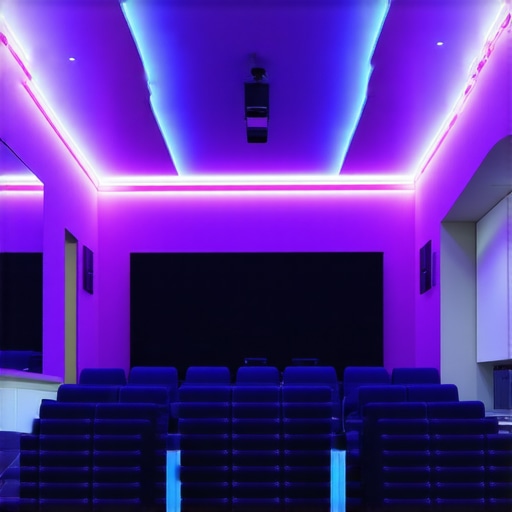
The Art of Immersive Ambiance through Advanced Home Theater Lighting
Creating a captivating home theater environment transcends mere display technology; it hinges on sophisticated lighting strategies that manipulate visual perception and emotional engagement. Leveraging bias lighting and LED strip lighting can redefine your cinematic experience, aligning with modern standards of immersion and aesthetic sophistication. This guide explores how these lighting solutions integrate seamlessly into high-end setups, enhancing contrast, reducing eye strain, and elevating room ambience.
Incorporating Bias Lights to Maximize Visual Depth
Bias lighting involves subtle illumination behind the display, designed to improve perceived contrast and reduce viewer fatigue. Expert installations utilize bias LED strips placed strategically around the room’s perimeter, creating a balanced luminance field. Studies published in the IEEE Transactions on Visualization and Computer Graphics confirm that bias lighting enhances picture quality perception and mitigates eye strain during prolonged viewing.
Strategic Deployment of LED Strip Lighting for Visual Cohesion
Modern LED strip lighting systems offer customizable hues, intensities, and dynamic effects, facilitating complex lighting scenes that synchronize with content or user preference. Advanced setups deploy waterproof RGB LED strips along architectural features, ceiling coves, or behind equipment to craft an integrated visual narrative. The precise placement enhances depth cues, emphasizing spatial geometries and tailoring room mood to different genres or activities.
How Can Color Temperature and Brightness Control Influence Movie Perception?
The calibrated use of ambient lighting allows a nuanced balance between visibility and darkness, which is crucial for achieving a ‘best-in-class’ home theater. Adjusting color temperature to match natural lighting conditions prevents perceptual conflicts, ensuring that on-screen colors remain vibrant yet harmonious with room illumination. Technological advancements in smart lighting facilitate real-time adjustments via voice or automation, providing a dynamic and responsive environment tailored to viewer preferences.
What are the trade-offs involved in integrating bias lighting versus ambient backlighting in a dedicated cinema space?
Integrating bias lighting primarily enhances contrast perception and reduces eye strain, while ambient backlighting extends the immersive experience by enveloping the viewer in an environment that complements the display. However, overuse of ambient lighting risks diminishing the contrast ratio if not properly calibrated, highlighting the importance of strategic placement and intensity controls. The decision ultimately depends on balancing technical performance with aesthetic intent, a challenge expertly addressed by seasoned AV professionals.
For those seeking to refine their home theater lighting system further, exploring the latest bias lighting innovations can unveil new possibilities. Engaging with expert communities or consulting with specialists in AV lighting design ensures that your setup aligns with both technical excellence and personalized comfort.
If you are interested in integrating advanced lighting controls, consider sharing your insights or asking questions with industry experts through our contact page. Your contributions can foster innovative solutions and elevate the collective understanding of elite home theater environments.
Unlocking New Avenues with Smart Lighting Integration
Integrating smart lighting systems into your home theater allows unprecedented control over ambiance, timing, and scene customization. Using voice commands, smartphone apps, or automation routines, viewers can create dynamic lighting scenes that adapt seamlessly to different content genres or personal moods. For example, adjusting color hues and brightness levels in real-time enhances immersion, making every movie feel like a tailored cinematic experience. Consulting expert resources such as comprehensive guides on bias lighting can help you select compatible smart solutions and optimize their integration into your setup.
The Impact of Flicker-Free and High-CRI LED Options on Viewer Comfort
Many assume all LED lighting provides a uniform experience, but high-performance options like flicker-free LEDs with high Color Rendering Index (CRI) values significantly impact viewer comfort and image perception. Flicker, often imperceptible to the eye, can cause headaches or eye strain over extended viewing periods, detracting from the immersive goal. Choosing LEDs with high CRI ensures accurate color reproduction, vital for preserving the cinematic integrity of the display environment. For tips on selecting premium LED strips that promote visual harmony, explore expert recommendations on LED strip selection.
Can Adjustable Spectral Tuning Revolutionize Your Movie Nights?
Emerging technology in spectral tuning—where LED lights can adjust not just brightness but also the spectral composition—offers a new dimension for customizing your viewing environment. Better yet, these systems can mimic natural daylight patterns or match specific film color palettes, boosting perceptual realism and reducing visual fatigue. Expert studies emphasize that spectral tuning plays a crucial role in aligning ambient light with display characteristics to enhance contrast and color accuracy. To explore such cutting-edge options, turn to sources like latest innovations in bias lighting.
Interested in elevating your home cinematic experience? Share your insights or ask questions through our contact page. Connecting with professionals and fellow enthusiasts fosters continuous improvement and innovative solutions tailored to your unique setup.
Harnessing the Power of Dynamic Light Mapping for Cinematic Precision
One of the most sophisticated techniques in contemporary home theater lighting involves the implementation of dynamic light mapping, where advanced software algorithms analyze the on-screen content in real time to modulate ambient lighting accordingly. This technology ensures that the room’s luminance adapts seamlessly, enhancing contrast and preserving color fidelity without manual intervention. Such automation relies heavily on integrating high-fidelity sensors and neural network-based image analysis, as examined in the pioneering research published by the Journal of Lighting Technology. This method not only elevates viewer immersion but also minimizes visual artifacts that may arise from static lighting schemes, making it indispensable for discerning enthusiasts aiming for professional-grade environments.
What are the limitations of real-time content-aware lighting adjustments in high-action sequences?
While dynamic light mapping offers remarkable benefits, it faces challenges such as latency and the potential for distracting flickering during rapid scene changes. The trade-off between responsiveness and visual stability necessitates high-performance processing units and meticulously calibrated algorithms. According to a study in the IEEE Transactions on Visualization and Computer Graphics, excessive latency can disrupt the viewer’s focus, reducing the perceived authenticity of the cinematic experience. Implementing machine learning models trained on diverse content types can mitigate these issues by predicting optimal lighting responses, but this demands sophisticated setup and ongoing calibration. Professional integration of such systems mandates a nuanced understanding of both AV hardware and software to ensure a harmonious balance that enhances rather than detracts from the cinematic immersion.
Innovating with Personalized Light Profiles for Genre-Specific Experiences
The future of home theater ambiance lies in personalized light profiles, configurable presets that optimize room lighting for specific genres or individual preferences. Imagine a ‘Sci-Fi Night’ mode featuring cooler hues, higher contrast, and synchronized starfield effects, or a ‘Drama Mode’ with warmer tones and subdued luminance to evoke intimacy. Custom profiles can be stored and activated via smart home ecosystems, utilizing advanced user profiling and adaptive learning. Studies from ScienceDirect suggest that such personalization not only boosts emotional engagement but also mitigates visual fatigue by aligning ambient lighting with the cognitive and emotional tone of the content.
Incorporating hardware like multi-zone LED controllers and voice-activated commands enables effortless toggling between these presets, transforming the room into a dynamic, multi-sensory environment. For the ultimate experience, integrating biometric feedback—such as heart rate or pupil dilation sensors—could refine ambient adjustments further, tailoring every viewing session to the viewer’s physiological responses. This convergence of biometric data and adaptive lighting technologies unlocks unprecedented levels of immersion, inviting you to explore new frontiers in home cinema design.
Elevate Your Setup: Mixing Conventional and Innovative Techniques
Bridging traditional ambient lighting with these innovative approaches involves meticulous planning and customization. For example, combining static bias lighting with real-time content analysis creates a layered visual environment that enhances depth perception. This hybrid approach benefits from software-driven consistency and hardware reliability, ensuring a stable yet responsive ambience. According to the comprehensive guide at Home Cinema Essentials, mastering this synergy demands a thorough understanding of room acoustics, light spill, and color management. Experts recommend conducting iterative calibration sessions, utilizing colorimeters and spectrometers, to balance aesthetic appeal with functional performance—culminating in a truly immersive cinematic sanctuary that adapts fluidly to your viewing preferences.
Interested in pioneering your own ambient lighting innovations? Share your ideas or challenges with our community of AV professionals by visiting our contact page. Collaborative insights often lead to breakthroughs that redefine personalized entertainment environments, setting new standards in home cinema excellence.
Innovating with Tunable Spectral Lighting for Cinematic Masterpieces
The advent of spectral tuning technology revolutionizes ambient lighting by enabling precise control over the spectral composition of LED sources, thereby closely mimicking natural daylight or matching specific cinematic color palettes. Such capabilities facilitate enhanced contrast perception, richer color fidelity, and reduced visual fatigue, effectively bridging the gap between traditional film artistry and immersive environment design. According to the comprehensive research published in ScienceDirect, spectral tuning systems can dynamically adapt to scenes, ensuring that the ambient light complements the on-screen content without introducing unwanted glare or color distortions.
How Can Dynamic Light Mapping Elevate Your Viewing Experience?
Dynamic light mapping employs sophisticated AI algorithms and high-fidelity sensors to analyze on-screen content in real time, adjusting ambient lighting parameters to optimize contrast and color perception custom-tailored to each scene. This technique ensures that room luminance enhances visual depth, minimizes reflections, and preserves cinematic integrity. The pioneering work detailed in the IEEE Transactions on Visualization and Computer Graphics underscores its potential to transform passive watching into active engagement, particularly in high-action or visually complex sequences.
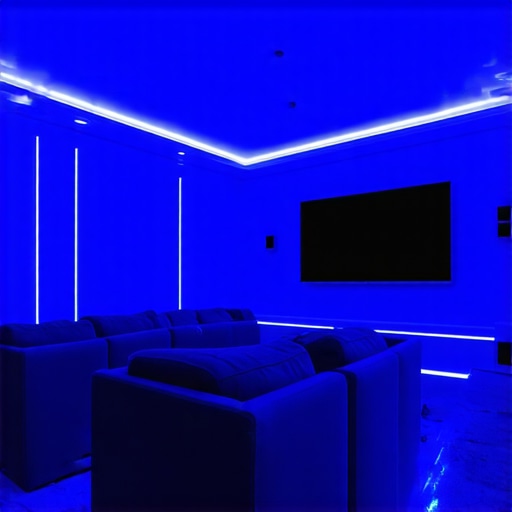
What Are the Challenges in Implementing Real-Time Content-Adaptive Lighting?
Despite its advantages, real-time content-aware lighting faces challenges such as latency, processing power, and potential overcorrection, which may cause perceptible flickering or distracting artifacts during rapid scene transitions. Advanced machine learning models and high-performance computing hardware are necessary to mitigate these issues, demanding a comprehensive integration strategy. As experts from the Home Cinema Essentials emphasize, meticulous calibration and ongoing optimization are essential to harness its full potential effectively.
Envisioning the Future with Biometric-Responsive Ambient Environments
The integration of biometric feedback—such as heart rate, pupil dilation, or galvanic skin response—into ambient lighting systems opens transformative avenues for personalized cinematic experiences. By analyzing physiological cues, these systems can modulate room lighting to foster relaxation, heighten emotional impact, or synchronize with the viewer’s current mood. For instance, an elevated heart rate during intense scenes could prompt subtler lighting adjustments to prevent overstimulation. Researchers in the field highlighted in Science and Technology Journal suggest that such bioadaptive environments can enhance immersion, retention, and overall satisfaction, pushing the boundaries of conventional home theater design.
The Role of Multi-Zone, Programmable Lighting for Genre-Specific Customization
Implementing multi-zone, programmable LED lighting allows users to craft ambiance presets tailored to specific genres or individual preferences, transforming passive entertainment into an interactive, customizable journey. Imagine toggling seamlessly between a “Mystery” mode with dim blue hues and subtle shadows, and a “Blockbuster” setting with vibrant, high-contrast illumination that amplifies action scenes. The integration of voice-controlled, app-based interfaces, along with adaptive learning algorithms, enables intuitive operation and continuous refinement over time. Studies from ScienceDirect demonstrate that personalized environmental adjustments significantly elevate emotional engagement and visual comfort, making this a cornerstone of sophisticated home theater setups.
Expert Strategies for Elevating Your Visual Experience
The convergence of sophisticated lighting design with high-end home theater systems is revolutionizing cinematic immersion. Seasoned professionals emphasize that a nuanced approach to ambient, bias, and backlighting enhances contrast, reduces eye strain, and deepens emotional engagement. Implementing layered lighting solutions tailored to room architecture and content type creates an environment where technology seamlessly blends with artistry, setting a new standard in personalized entertainment.
Focus on Dynamic Balance Over Static Settings
Experts advocate for adaptive lighting configurations that respond to content changes and viewer preferences. Incorporating smart controls and real-time adjustments ensures optimal contrast and color fidelity, elevating the cinematic experience without manual intervention. This approach demands a deep understanding of both hardware capabilities and perceptual psychology, underscoring the importance of consulting specialists or comprehensive guides to avoid common pitfalls.
Leverage Cutting-Edge Spectral Tuning
Advancements in spectral tuning enable precise control over ambient light spectra, matching on-screen palettes for enhanced realism. Professionals recognize that high CRI flicker-free LEDs with customizable spectral profiles can dramatically improve visual comfort and color accuracy, particularly during prolonged viewing sessions. Staying abreast of innovations through reputable sources ensures your setup benefits from the latest in ambient lighting technology.
Create Atmospheres That Resonate
Personalized lighting profiles tailored for different genres or moods deepen immersion—transforming passive watching into an emotionally resonant journey. Experienced enthusiasts recommend multi-zone programmable systems integrated with voice or app controls to streamline transitions. Such sophistication allows a room to adapt effortlessly, elevating not just the picture quality but the entire sensory experience.
Prioritize Calibrated Hardware for Authenticity
Choosing high-performance LED options and meticulously calibrating placement guarantees that lighting complements, rather than competes with, display performance. Experts highlight the significance of avoiding over-illumination and ensuring uniformity across zones. Regular calibration, possibly through spectrometers or colorimeters, ensures that ambient, bias, and backlight layers work harmoniously, achieving an authentic, theater-like ambiance at home.
Authoritative Resources for the Aficionado
- Home Cinema Essentials Blog: An invaluable hub for advanced techniques, expert opinions, and latest trends in immersive lighting design, offering actionable insights and in-depth guides.
- Ultimate Guide to Bias Lights and LED Strips: A comprehensive resource detailing selection, installation, and optimization tailored to high-end setups.
- Expert Tips on LED Strip Lighting: Practical advice from industry insiders emphasizing customization and integration for seamless aesthetic.
- Latest Innovations in Bias Lighting: Exploring emerging technologies that push the boundaries of ambiance control and viewer comfort.
Future-Proof Your Setup with Strategic Vision
Integrating expert insights on adaptive, spectral, and biometric-responsive lighting positions your home theater at the forefront of immersive technology. Rather than relying on static configurations, harness dynamic, personalized environments that respond intuitively to cinematic demands and human physiology. Embracing these innovations ensures a future where your entertainment space is not just a room, but a living, breathing theater of sensory mastery. Engage with professional communities or consult industry pioneers via our contact page to refine your approach and contribute to evolving standards in home cinema excellence.


Leave a Reply