

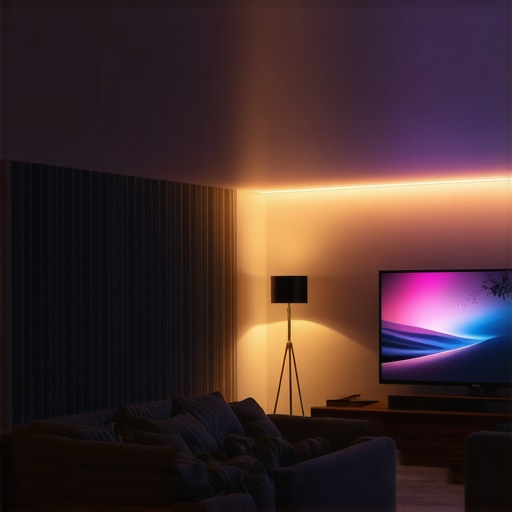
Elevating Home Theater Experiences Through Expert LED Strip Installation
In the realm of home entertainment, ambient lighting has transitioned from a mere aesthetic addition to a crucial component that influences perception, immersion, and overall cinematic quality. As an industry expert, I recognize that strategic placement and sophisticated integration of LED strips can dramatically enhance the viewer’s sensory experience, transforming an ordinary movie night into an immersive escape. This article explores advanced techniques for LED strip installation, emphasizing the importance of precise planning, color calibration, and ambient light layering.
Understanding the Technical Nuances of LED Strip Integration
Achieving optimal ambient lighting requires a nuanced comprehension of LED strip specifications, including color temperature, luminous flux, and dimming capabilities. For example, selecting the right LED strips involves balancing brightness with color accuracy to match the mood and content. Additionally, expert installation considers the electrical wiring, power supply capacity, and synchronization with media playback, ensuring seamless performance without flickering or latency issues.
Expert Strategies for Ambient Layering and Dynamic Lighting Control
Advanced ambient lighting design integrates multiple layers—background, accent, and task lighting—to create depth and dimensionality. Dynamic control systems, such as DMX or Zigbee protocols, enable synchronized color transitions aligned with on-screen action, heightening emotional engagement. Implementing scenes that adapt to genres—dramatic reds for thrillers, cool blues for sci-fi—requires meticulous calibration and real-time adjustment, often via professional-grade controllers.
What Are the Challenges in Achieving Professional-Level LED Ambient Lighting?
How can homeowners troubleshoot color inconsistency and uneven light distribution in complex room geometries?
Addressing these challenges involves meticulous planning, including the use of diffusers, reflective surfaces, and custom mounting solutions. Moreover, employing high-precision color calibration tools and software ensures consistent hues across multiple LED strips, especially in irregularly shaped rooms or multi-level setups. Regular maintenance and firmware updates also play vital roles in sustaining optimal performance.
For further insights, exploring the comprehensive guide to bias lights and LED strips can deepen your understanding of expert-level installation techniques and industry standards.
Leveraging Ambient Lighting to Create a Cinematic Atmosphere
Strategic placement of LED strips behind the TV, along ceiling coves, or beneath furniture can dramatically influence room ambiance. When combined with soundproofing and acoustic treatments, ambient lighting becomes a powerful tool for achieving a true cinema-quality environment. Furthermore, integrating voice-controlled systems or smart home hubs allows for effortless scene switching and customization, elevating user experience.
Professional insights emphasize that the art of ambient lighting extends beyond illumination—it’s about creating an emotional canvas that complements visual storytelling. For those seeking inspiration, visiting top ambient lighting ideas provides a curated selection of expert recommendations and innovative concepts to refine your setup.
Interested in sharing your experiences or seeking tailored advice? Contact our expert team for personalized consultations and advanced installation support.
How Can Precision Calibration Elevate Your Home Theater’s Ambient Lighting?
Achieving a truly immersive cinematic experience hinges on more than just installing LED strips; it demands meticulous calibration to ensure color consistency, brightness uniformity, and seamless integration with your media content. High-end calibration tools, such as colorimeters and professional-grade software, enable homeowners to fine-tune hues and luminance levels, ensuring that ambient lighting complements on-screen visuals without causing distraction or eye strain. Regular calibration sessions, especially after firmware updates or physical modifications, are crucial for maintaining optimal performance. For further insights into calibration best practices, see the comprehensive guide on bias lights and LED strips.
Can Layering Different Types of Ambient Light Create a Multidimensional Atmosphere?
Indeed, combining various ambient lighting layers—such as wall-mounted LED strips, cove lighting, and under-furniture LEDs—can craft a rich, multidimensional environment that elevates your home theater. Expert designers often recommend a layered approach: background lighting that sets the overall mood, accent lights to highlight architectural features, and task lighting for practical needs. When these layers are synchronized through smart controls, they offer dynamic scene transitions aligned with film genres or viewing preferences. Exploring sophisticated layering techniques can be further enhanced by consulting expert LED strip lighting tips.
What Are the Cutting-Edge Innovations in LED Technology That Can Transform Home Theater Lighting?
Emerging innovations, such as micro-LEDs, RGBW (Red, Green, Blue, White) configurations, and tunable white temperature capabilities, are pushing the boundaries of ambient lighting. These advancements enable more precise color rendering, better integration with high-dynamic-range (HDR) content, and increased energy efficiency. Furthermore, integration with voice assistants and AI-driven scene recognition allows for automatic adjustment of lighting based on content genre or viewer preferences, creating a truly intelligent environment. Staying abreast of these technological trends ensures your setup remains both future-proof and aligned with industry standards. For a deeper dive into the latest innovations, visit the top bias lights and LED strip ideas for 2024.
If you’re eager to elevate your home theater’s ambiance further, consider sharing your setup experiences or asking for tailored advice by visiting our expert consultation page. Enhancing your space with expert guidance can unlock new levels of cinematic immersion and visual harmony.
Harnessing the Power of Custom LED Profiles for Dynamic Scene Transitions
One of the most sophisticated methods to elevate your home theater ambiance involves creating custom LED profiles tailored to specific genres, moods, or even individual scenes in a movie. By programming multiple presets with precise color, brightness, and transition effects, homeowners can evoke emotional responses and seamlessly switch atmospheres at the press of a button. This requires not only compatible hardware—such as advanced DMX controllers and programmable LED drivers—but also a deep understanding of color psychology and scene timing, often integrated via professional lighting design software like Lightjams or Madrix. The result is an immersive experience where lighting and visual content are perfectly synchronized, amplifying emotional engagement and realism.
Unveiling the Next Frontier: Micro-LEDs and Their Impact on Home Theater Lighting
The evolution of LED technology, particularly the advent of micro-LEDs, signifies a paradigm shift in ambient lighting for home theaters. These diminutive yet powerful light sources facilitate unprecedented precision in color rendering, spatial distribution, and energy efficiency. Integrating micro-LEDs into your setup not only enhances visual fidelity but also enables more intricate layering and dynamic scene control, elevating the immersive experience to professional standards. For those committed to future-proofing their environments, understanding the nuances of micro-LED deployment is essential.
How Can AI-Driven Lighting Systems Revolutionize Your Viewing Experience?
Artificial intelligence integration into lighting controls offers a transformative approach to ambient customization. AI algorithms analyze real-time content, adjusting color palettes, brightness, and scene transitions autonomously. This technology ensures that lighting harmonizes seamlessly with on-screen action, genre, or viewer preferences without manual intervention. Additionally, AI can learn user habits, optimizing lighting presets for different times of day or specific entertainment types, thereby creating a truly personalized cinematic environment. Exploring AI-enabled systems can drastically simplify complex setups while delivering unparalleled ambiance adaptability.
What Are the Key Considerations When Designing Multi-Zone LED Lighting for Complex Room Geometries?
Designing multi-zone lighting in irregularly shaped or multi-level rooms demands meticulous planning to prevent uneven illumination and color inconsistency. Employing advanced layout software, such as DIALux or Dialux Evo, allows for precise mapping of LED placement, ensuring optimal coverage and color uniformity. Incorporating diffusers and reflective surfaces minimizes hotspots and shadows, while zoned controllers facilitate independent adjustment of each segment. This layered approach offers nuanced control over the entire space, creating a cohesive yet dynamic visual narrative that complements your media content.
How does the integration of tunable white and RGBW LEDs enhance tonal versatility in high-end home theaters?
Combining tunable white with RGBW LEDs provides a spectrum of possibilities, from warm, cozy hues to crisp, daylight-like illumination. This versatility allows for meticulous calibration that matches the room’s decor, mood, and content requirements, ensuring minimal color spill and maximum harmony. Such configurations are especially beneficial in multi-use spaces, where different activities—cinema viewing, reading, or socializing—necessitate distinct lighting atmospheres. High-quality tunable white and RGBW systems, when paired with professional calibration tools, enable a level of control previously unattainable with standard RGB-only strips.
To stay at the forefront of this technological revolution, regularly consult industry-leading sources like LEDinside for updates on emerging innovations. Elevate your installation with expert insights by collaborating with professional lighting designers who specialize in high-end home theater environments. Take the next step to transform your space into a true cinematic sanctuary—explore advanced techniques today.
How Can Custom Lighting Profiles Drive Emotional Engagement in Your Home Theater?
Developing bespoke lighting profiles tailored to specific genres, scenes, or even emotional cues unlocks new levels of immersion. Utilizing sophisticated lighting control software, you can pre-program nuanced color transitions, dimming sequences, and synchronized effects that respond dynamically to on-screen action. For example, a suspense thriller might feature slow fades to deep reds and shadows, while an action scene could trigger rapid color shifts and strobe effects. This synchronization amplifies the emotional response, making viewers feel as though they are part of the narrative. Investing in professional lighting design ensures that these profiles are not only technically precise but also artistically compelling.
If you’re eager to push your home theater ambiance into new dimensions, consider consulting with specialists who can craft custom profiles aligned with your cinematic vision. Contact us to access tailored guidance and cutting-edge solutions that redefine your entertainment landscape.
Expert Insights & Advanced Considerations
1. Precision Calibration as the Cornerstone of Immersive Experience
High-end calibration ensures that LED strip color, brightness, and hue consistency align perfectly with on-screen content, minimizing eye strain and enhancing realism. Professionals often employ colorimeters and software calibration tools to achieve this level of precision, which is vital for a truly cinematic ambiance.
2. Dynamic Scene Programming Unlocks Emotional Depth
Developing custom LED profiles tailored to specific genres or scenes allows for profound emotional engagement. Advanced lighting controllers like Madrix or Lightjams enable pre-programmed transitions, syncing lighting effects seamlessly with media cues for an immersive viewer experience.
3. Micro-LED Innovations as a Future Standard
The advent of micro-LED technology offers unprecedented control over color rendering and spatial distribution. Integrating micro-LEDs into your setup can elevate ambient lighting from functional to artful, ensuring your home theater remains at the forefront of technological evolution.
4. AI-Driven Systems for Adaptive, Hands-Free Control
Artificial intelligence integration allows lighting systems to analyze content in real-time, adjusting hues, brightness, and transitions automatically. This creates a dynamic environment that responds intuitively to the movie’s mood, enhancing immersion without manual input.
5. Multi-Zone Design for Complex Room Geometries
Designing multi-zone LED lighting with software like DIALux allows for precise coverage in irregular spaces. Using diffusers and zoned controllers ensures uniform lighting, creating a cohesive yet adaptable ambiance that complements complex room layouts.
Curated Expert Resources
- Lighting Industry Journals: Stay updated with industry-leading publications that analyze emerging trends and technological breakthroughs.
- Professional Calibration Tools: Resources like calibration software and colorimeters are essential for achieving expert-level accuracy.
- Advanced Lighting Controllers: Explore professional-grade controllers capable of complex scene programming and synchronization.
- Innovative LED Technologies: Follow updates at LEDinside for insights into micro-LED and RGBW advancements shaping the industry.
Final Expert Perspective
Mastering ambient LED lighting in your home theater requires a synthesis of technical precision, innovative technology, and artistic vision. As experts, we recognize that the true power lies in customizing beyond standard solutions—leveraging calibration, dynamic programming, and cutting-edge micro-LED innovations to craft an environment that elevates your cinematic experience to professional standards. To truly excel, ongoing engagement with industry developments and consultation with seasoned professionals is indispensable. For those committed to pushing the boundaries of home theater ambiance, we invite you to collaborate with specialists and explore comprehensive resources that ensure your setup remains both advanced and adaptable. Your journey into expert-level ambient lighting begins today—embrace it with confidence and curiosity.



Leave a Reply