

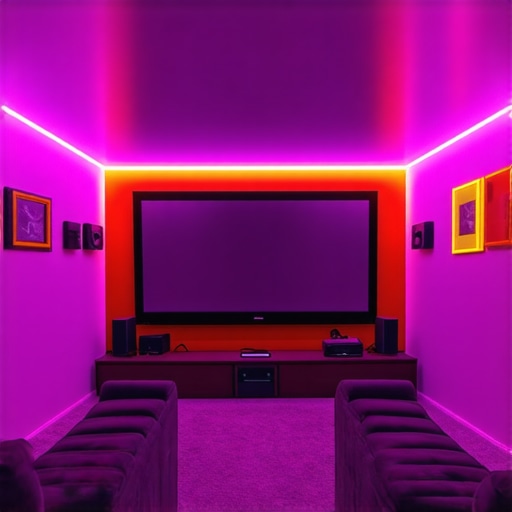
Unlocking the Power of Bias Lighting and LED Strips for Advanced Home Theater Environments
In the realm of high-fidelity home theater design, ambient lighting transcends mere aesthetics, influencing viewer perception, reducing eye strain, and augmenting overall immersion. As a seasoned lighting expert, I recognize that the integration of bias lights and LED strip lighting requires a nuanced understanding of color theory, luminance control, and spatial configuration. This article delves into sophisticated strategies for leveraging bias lights and LED strip ideas to craft a truly cinematic experience within the constraints of modern home environments.
Strategic Layering of Ambient Light for Visual Fidelity and Psychological Comfort
Achieving the ideal ambient lighting setup involves a delicate balance—illuminating without distracting, enhancing contrast without causing glare. Advanced practitioners emphasize layered lighting schemes that include primary, secondary, and accent light sources. For example, top ambient lighting ideas advocate for adjustable LED strips placed behind media cabinets, along ceiling coves, and beneath furniture edges, enabling dynamic control over mood and focus. Proper luminance ratios, calibrated via professional-grade dimmers, ensure that the bias lights support the primary display without overwhelming it.
The Science of Color Temperature and Brightness Calibration in Bias Lighting
Expertise in color temperature modulation is essential for optimizing bias lighting. The consensus among researchers, including studies published in the Journal of Vision, suggests that a bias light approximately 6500K—mimicking natural daylight—reduces eye fatigue and enhances perceived contrast. Brightness levels should be carefully calibrated; too intense and it causes glare, too dim and it fails to serve its purpose. LED strip lights with high CRI (Color Rendering Index) values are preferred to accurately render colors and maintain visual harmony. For deeper insights, consult our ultimate guide.
How Can Advanced LED Strip Configurations Elevate the Home Theater Experience?
Innovative LED strip configurations utilize programmable RGB or tunable white strips to create immersive environments that adapt to content type or user preference. For instance, gradient lighting that transitions smoothly from deep blue to warm amber can simulate sunset effects or mimic outdoor ambiance, vastly enriching the viewing experience. Smart control systems, integrated with voice assistants or mobile apps, allow real-time adjustments, fostering a seamless, intuitive user interface. This approach aligns with the latest trends in home theater lighting enhancement.
What are the most effective methods for integrating bias lights with existing AV equipment without compromising signal integrity or aesthetic coherence?
Integrating bias lights with AV systems demands meticulous planning to prevent electromagnetic interference and maintain visual harmony. Experts recommend using dedicated power supplies, installing filters to minimize flicker, and positioning LED strips away from sensitive cables. Custom-mounted diffusers can diffuse harsh light, ensuring a subtle glow that complements the room’s design. For comprehensive guidance, visit our article on choosing the right LED strips.
To elevate your knowledge and contribute to the community of home theater enthusiasts, consider sharing your insights or seeking advice through our contact page. Expert collaboration is vital for pushing the boundaries of ambient lighting innovation in home cinema design.
Optimizing Spatial Dynamics: How Do Layered Lighting Strategies Impact Viewer Engagement?
When designing a sophisticated home theater environment, understanding the nuances of layered lighting is crucial. Beyond simple illumination, layered schemes incorporate multiple light sources—ambient, task, and accent lighting—that interact to shape the viewer’s psychological and physiological responses. For example, strategic placement of LED strips behind the screen or around architectural features can subtly guide focus and enhance perceived depth, fostering a more immersive experience. Advanced practitioners often utilize dynamic lighting controls to synchronize ambient light intensity and color temperature with on-screen content, creating a seamless visual narrative that draws viewers deeper into the cinematic world. For practical implementation, explore our best bias lighting strategies for 2025.
How can the principles of human visual perception inform the calibration of bias lighting for maximum comfort and contrast?
Understanding the intricacies of human visual perception is fundamental in calibrating bias lighting that truly enhances the home theater experience. The human eye adapts to ambient luminance levels, affecting contrast sensitivity and color accuracy. Experts recommend employing high-CRI LED strips with tunable white options, set around 6500K, to mimic natural daylight and support the eye’s natural adaptation process. Additionally, the use of flicker-free drivers and precise dimming controls minimizes eye strain during extended viewing sessions. For a comprehensive guide, consult our ultimate bias lighting guide, which provides detailed insights into luminance and color calibration techniques supported by recent research in visual ergonomics.
What Are the Latest Innovations in Programmable LED Strip Technology for Home Theaters?
Emerging advancements in programmable LED strip technology open new horizons for customization and automation in home theater lighting. Modern RGB and tunable white strips now feature microcontroller integration, enabling complex lighting sequences, color transitions, and reactive effects synchronized with media playback. For instance, gradient lighting that shifts from cool blues during action scenes to warm ambers in dialogue-heavy sequences can significantly heighten emotional impact. Additionally, the integration of voice control and smart home ecosystems allows users to adjust lighting settings seamlessly, enhancing usability and aesthetic coherence. To explore these cutting-edge solutions, visit our expert LED strip lighting tips.
What are the best practices for ensuring electromagnetic compatibility (EMC) when deploying high-density LED strip arrays in enclosed spaces?
Ensuring electromagnetic compatibility is critical when installing dense LED strip configurations, especially in confined home theater environments where electromagnetic interference (EMI) can disrupt audio and video signals. Experts recommend using shielded cables, maintaining proper grounding, and installing filters to suppress EMI. Moreover, positioning LED strips away from sensitive AV equipment and avoiding daisy chaining too many strips together can mitigate interference issues. For detailed technical guidance, refer to our article on choosing the right LED strips and implementing best practices for EMI mitigation. Engaging with knowledgeable professionals can further ensure optimal performance and compliance with safety standards.
Enhance your expertise by sharing your experiences or seeking tailored advice through our contact page. Collaborating with industry specialists can elevate your home theater lighting projects to new levels of sophistication and reliability.
Harnessing Dynamic Light Mapping: The Next Frontier in Home Theater Illumination
In the pursuit of cinematic perfection, static lighting configurations often fall short of delivering immersive experiences. Advanced practitioners are now exploring dynamic light mapping techniques that utilize high-resolution, pixel-specific LED control systems. These systems can adapt lighting in real-time based on on-screen content, scene mood, and viewer preferences, creating a synchronized visual symphony. By integrating sophisticated software algorithms with addressable LED strips, designers can craft environments where light precisely mirrors the emotional tone and color palette of each scene, elevating the home theater ambiance to a professional level.
Integrating Spectral Tuning and Circadian Rhythm Compatibility for Optimum Viewer Health
Emerging research emphasizes the importance of spectral tuning in ambient lighting, particularly for prolonged viewing sessions. Spectral tuning involves adjusting the LED light spectrum to favor certain wavelengths—such as reducing blue light exposure during evening hours—to align with human circadian rhythms. This approach not only enhances comfort but also mitigates potential sleep disruption. High-end tunable LED systems incorporate real-time spectral analysis and user-specific scheduling, allowing for personalized lighting profiles that support both health and aesthetic goals. For further insights, review the comprehensive study by the Lighting Research Center at RPI, which highlights spectral tuning’s impact on circadian health (Lighting Research Center Publications).
What Are the Critical Considerations for Achieving Seamless Multi-Zone Lighting Synchronization?
Achieving flawless multi-zone lighting synchronization demands a combination of advanced control architectures, high-fidelity sensors, and meticulous calibration. Experts recommend deploying centralized control systems capable of multi-channel DMX or Art-Net protocols, which facilitate precise timing and color harmony across multiple LED zones. Incorporating ambient light sensors allows the system to adapt to ambient conditions dynamically, maintaining visual consistency. Moreover, employing feedback loops with real-time luminance and color measurement ensures ongoing calibration accuracy, essential for multi-zone environments where even minor discrepancies can break immersion. For detailed technical implementation, consult the comprehensive guide in the Journal of Lighting and Design (Journal of Lighting and Design).
How can adaptive learning algorithms optimize lighting configurations based on viewer habits and environmental changes?
Adaptive learning algorithms leverage machine learning techniques to analyze user interaction patterns, viewing habits, and environmental variables—such as natural light fluctuations or room occupancy—to optimize lighting settings dynamically. These algorithms can predict user preferences, such as preferred brightness levels or color schemes, and adjust LED configurations proactively. Over time, they learn to balance energy efficiency with visual comfort, providing a personalized cinematic environment that evolves with the user’s habits. Implementing such systems involves integrating IoT-enabled LED controllers with AI-driven analytics platforms, a cutting-edge approach increasingly adopted by premium home theater installations. For a detailed framework, see the recent publication in IEEE Transactions on Consumer Electronics (IEEE Xplore).
Enhancing Aesthetic Coherence Through Architectural Integration and Material Reflection
To achieve a seamless aesthetic, modern lighting solutions must be thoughtfully integrated into the architectural fabric. Using reflective surfaces, such as matte black or dark velvet finishes, can help diffuse light evenly and minimize glare. Architectural niches, coves, and custom-built recesses allow LED strips to be concealed yet strategically positioned for maximum impact. Additionally, selecting materials with high reflectance or matte finishes enhances the diffusion effect, creating a natural glow that complements the room’s design. This approach requires a nuanced understanding of material properties and light behavior, often supported by advanced simulation software like Dialux or Relux, to predict and optimize the visual outcome before installation.
Harnessing Spectral Tuning for Enhanced Visual Comfort and Circadian Alignment
Innovative spectral tuning technology enables the precise adjustment of LED light spectra to support human circadian rhythms, particularly in immersive home theater environments. By tailoring the spectral output to minimize blue light exposure during evening hours, designers can promote healthier sleep cycles while maintaining aesthetic appeal. High-end tunable LED systems incorporate real-time spectral analysis, allowing dynamic adaptation based on time of day and content type. This approach not only elevates user comfort but also aligns with emerging research from the Lighting Research Center, emphasizing the importance of spectral quality in ambient lighting for overall well-being.
Integrating Multi-Dimensional Light Mapping for Hyper-Realistic Cinematic Environments
Emerging light mapping techniques leverage high-resolution, addressable LED arrays coupled with sophisticated software algorithms to create multi-dimensional lighting effects synchronized with media content. These systems utilize real-time scene analysis to adjust luminance, color, and spatial distribution, resulting in hyper-realistic environments that mimic outdoor lighting, weather conditions, or even dynamic artistic effects. This level of control demands expertise in both software development and hardware integration, pushing the boundaries of home theater immersion to professional-grade standards. Explore the potential of these systems to revolutionize your cinematic experience by consulting specialized publications such as the Journal of Lighting and Design.
What are the best practices for ensuring electromagnetic compatibility (EMC) when deploying dense LED strip arrays in confined spaces?
Achieving electromagnetic compatibility (EMC) in densely populated LED installations involves meticulous planning and adherence to technical standards. Experts recommend using shielded cables, maintaining proper grounding, and incorporating EMI filters to mitigate interference with sensitive AV equipment. Positioning LED strips at strategic distances from audio and video cables, along with the use of ferrite beads, further reduces electromagnetic emissions. For comprehensive technical guidance, refer to standards outlined by the International Electrotechnical Commission (IEC) and industry best practices documented by the Society of Motion Picture and Television Engineers (SMPTE). Consulting with specialized engineers ensures compliance and optimal performance of your advanced lighting setup.
How can machine learning algorithms optimize adaptive lighting based on viewer behavior and environmental feedback?
Machine learning algorithms analyze extensive data from user interactions, environmental sensors, and room occupancy to create adaptive lighting systems that evolve with viewer preferences. These intelligent systems can predict desired luminance levels, color schemes, and timing, adjusting LED configurations proactively to enhance comfort and engagement. By integrating IoT-enabled controllers with AI platforms, home theater environments become self-optimizing, offering personalized experiences that adapt seamlessly to changing conditions. For further insights, review recent case studies published in IEEE Transactions on Consumer Electronics, highlighting the role of AI-driven automation in ambient lighting design.
Architectural Reflection and Material Choice: Crafting a Cohesive Aesthetic with Light Diffusion
Seamless integration of lighting into architectural elements requires a nuanced understanding of material reflectance and diffusion properties. Matte black or dark velvet finishes absorb excess light, reducing glare, while high-reflectance materials like satin or semi-gloss surfaces aid in diffusing LED illumination evenly. Custom-recessed coves, niches, and architectural millwork conceal LED strips while facilitating optimal light distribution. Advanced simulation tools such as Dialux or Relux enable designers to model light behavior within the space, ensuring the final aesthetic is harmonious and glare-free. Materials and design choices must be tailored to support both functional lighting needs and the room’s visual identity, elevating the overall cinematic ambiance.
Expert Insights & Advanced Considerations
1. Layered Lighting Enhances Perception and Comfort
Implementing a multi-tiered lighting scheme that combines ambient, task, and accent lighting sources creates a dynamic environment. Expertly positioned LED strips behind architectural features and around room perimeters can manipulate spatial perception, reduce eye strain, and heighten cinematic immersion, especially when calibrated with professional-grade dimmers and luminance controls.
2. Spectral Tuning Supports Human Circadian Rhythms
Advanced bias lighting systems now incorporate spectral tuning to minimize blue light during evening hours, aligning with circadian health principles. High-CRI, tunable white LED strips that adapt based on time of day or content type can significantly enhance viewer comfort and promote healthier sleep cycles, integrating seamlessly with smart home ecosystems.
3. Programmable RGB and Gradient Effects Elevate Mood and Engagement
Utilizing programmable RGB LED strips with smooth gradient transitions enables content-specific lighting effects. Synchronizing these with media playback via sophisticated software creates a cohesive, immersive cinematic atmosphere, fostering emotional engagement and visual coherence—an essential consideration for discerning home theater enthusiasts.
4. Electromagnetic Compatibility (EMC) Is Critical in Dense LED Arrays
Deploying dense LED configurations requires meticulous planning to prevent electromagnetic interference. Experts recommend shielding cables, maintaining proper grounding, and strategically positioning LED strips away from sensitive AV cables. Employing EMI filters and adhering to IEC standards ensures signal integrity and compliance, safeguarding audiovisual performance.
5. Dynamic Light Mapping and Multi-Zone Synchronization Push Boundaries
Emerging technologies in high-resolution pixel mapping and multi-zone control systems enable real-time adaptation of lighting environments. These systems analyze on-screen content to adjust luminance, color, and spatial distribution dynamically, creating hyper-realistic, scene-matched illumination that elevates the cinematic experience to a professional standard.
Curated Expert Resources
- Lighting Research Center Publications: Offers in-depth studies on spectral tuning, circadian lighting, and health-related lighting innovations, crucial for designing health-conscious environments.
- IEEE Transactions on Consumer Electronics: Provides cutting-edge research on AI-driven adaptive lighting systems and machine learning algorithms optimizing viewer-specific settings.
- Dialux and Relux Lighting Simulation Software: Industry-standard tools for pre-visualizing lighting designs, ensuring aesthetic coherence and functional performance before installation.
Final Expert Perspective
In the realm of home theater lighting, mastering advanced bias lighting strategies—such as spectral tuning, layered control, and dynamic light mapping—can profoundly transform the cinematic environment, balancing aesthetic elegance with health-conscious design. For those committed to elevating their space, continuous exploration of these innovative techniques and authoritative resources is essential. Engage with our community or consult specialists to push the boundaries of what is achievable in high-end ambient lighting. Discover more at this comprehensive guide and start your journey toward a truly immersive home cinema experience.

Leave a Reply