

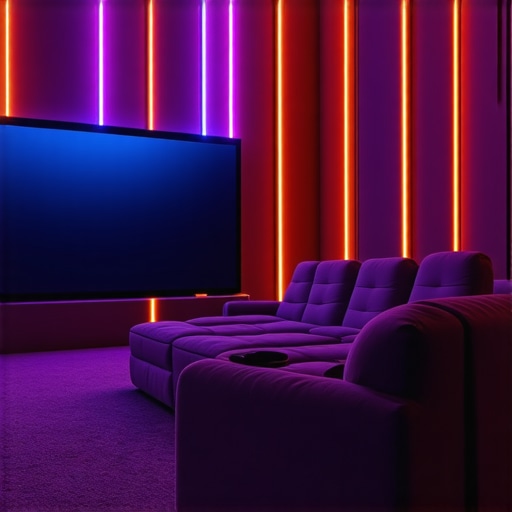
Harnessing the Power of LED Strip & Backlight Innovations to Transform Your Movie Room
In the realm of high-end home theater design, the integration of advanced LED strip lighting and customized backlighting solutions remains a cornerstone of immersive ambiance creation. As industry experts, we recognize that elevating a movie room’s aesthetic not only involves aesthetic choices but also strategic technical considerations rooted in lighting science and perceptual psychology.
Deciphering the Complexities of Light Layering for Cinematic Authenticity
Achieving a dynamic yet harmonious lighting environment requires a layered approach, where selecting the optimal LED strip specifications aligns with the room’s unique architectural and acoustic profile. This involves balancing ambient, task, and accent lighting to reduce visual fatigue and enhance contrast perception, crucial for cinematic fidelity.
Advanced Techniques for Synchronizing LEDs with Content for Visual Cohesion
Expert-level lighting design emphasizes real-time synchronization between LED backlights and video content. Utilizing smart controllers and DMX protocols allows for nuanced control that reacts to scene transitions, thereby enriching viewer immersion and reducing eye strain during prolonged viewing sessions.
What Are the Challenges and Limitations of DIY LED Backlighting for Critical Viewing Environments?
How does one ensure color accuracy and flicker-free operation in a DIY setup?
Achieving professional-grade performance in DIY LED installations demands meticulous attention to color calibration and flicker reduction techniques. Inadequate power supply, poor quality components, or improper wiring can compromise visual fidelity, leading to suboptimal viewing experiences and potential eye discomfort.
Consulting with industry standards, such as those outlined in the white paper on ambient backlight solutions, can mitigate these risks and elevate DIY efforts to professional levels.
Expert Insights and Future Trends in LED Backlighting for Cinematic Spaces
Looking ahead, innovations such as OLED-compatible LED strips and AI-driven scene adaptation promise to further blur the lines between professional and DIY solutions. Engaging with industry forums and expert communities remains essential for staying abreast of emerging best practices and technological breakthroughs.
If you’re eager to deepen your understanding or contribute your expertise, exploring our comprehensive guides and participating in discussions can offer valuable insights into creating truly cinematic home theater environments.
Unveiling the Nuances of Light Fidelity: How Can Precision in LED Backlighting Elevate Cinematic Authenticity?
As experts in home theater lighting, we understand that achieving truly immersive visual experiences hinges on more than just high-definition screens and surround sound. The role of meticulously calibrated LED backlighting cannot be overstated. When executed with precision, it enhances contrast, reduces eye strain, and amplifies the emotional impact of cinematic content. This calls for an in-depth understanding of color calibration, flicker mitigation, and dynamic scene adaptation, which are often overlooked by DIY enthusiasts but are essential for professional-grade results.
Advanced calibration tools, such as spectrometers and colorimeters, enable you to fine-tune LED color outputs, ensuring consistency across different viewing sessions. Moreover, integrating these with smart controllers that support real-time scene analysis allows your lighting to adapt dynamically, creating a seamless, cinema-like ambiance that responds to the content in real-time. For those interested in elevating their setup, exploring the latest innovations in flicker-free LED technology and high-precision color mixing is highly recommended. These advancements are discussed in detail in the ultimate guide to LED strips and bias lights.
What are the key technical challenges in achieving professional-quality LED backlighting, and how can they be systematically addressed?
Addressing issues like color inconsistency, flicker, and latency requires a structured approach grounded in engineering principles. For instance, ensuring flicker-free operation involves selecting LED drivers with high-frequency PWM (pulse-width modulation) and verifying their performance with flicker meters. Similarly, achieving accurate color blending demands high-CRI (Color Rendering Index) LED strips and rigorous calibration routines. Leveraging feedback systems that monitor real-time performance and automatically adjust parameters can significantly mitigate common pitfalls. Consulting industry standards such as those outlined in the white paper on ambient backlight solutions provides a comprehensive framework for systematic troubleshooting and optimization.
If you’re eager to deepen your understanding or share your expertise, consider joining specialized forums or participating in workshops that focus on professional LED backlighting techniques. Sharing insights and asking targeted questions enriches the collective knowledge base and helps push the boundaries of what’s possible in home theater lighting.
Want to explore more expert tips? Visit our contact page or browse our detailed guides on creating immersive ambiance with bias lights and installation tips for optimal LED strip placement.
Implementing High-Precision Color Calibration for Seamless Cinematic Backlighting
In the pursuit of authentic cinematic experiences, the importance of meticulous color calibration cannot be overstated. Leveraging advanced tools such as spectrometers and high-end colorimeters enables you to achieve a consistent, accurate color output from your LED strips. This consistency ensures that the backlighting complements your display content without introducing color distortions that can detract from immersion. Industry standards, like the IEEE Standard for LED Color Accuracy, provide comprehensive guidelines to systematically calibrate and verify your setup, ensuring professional-grade fidelity.
Overcoming Flicker and Latency Challenges with Cutting-Edge Technologies
Flicker and latency issues pose significant barriers to achieving smooth, flicker-free backlighting necessary for critical viewing environments. The adoption of high-frequency PWM (pulse-width modulation) LED drivers significantly reduces flicker perception, but the real breakthrough lies in integrating intelligent feedback systems. These systems continuously monitor light output and adjust PWM signals in real-time, effectively eliminating flicker artifacts. Furthermore, latency can be minimized through the utilization of ultra-fast microcontrollers and optimized data protocols, such as DMX512 or Art-Net, which facilitate near-instantaneous communication between controllers and LED strips. For an in-depth exploration, consult the white paper by Advanced Flicker Mitigation Techniques in LED Lighting.
How Can Adaptive Scene Analysis Elevate LED Backlighting Beyond Static Settings?
Emerging AI-driven scene analysis technologies are revolutionizing home theater lighting by enabling dynamic, context-aware adjustments to backlighting parameters. These systems utilize machine learning algorithms to interpret content characteristics—such as contrast levels, motion intensity, and color palettes—and adapt lighting in real-time to match the mood and tone of each scene. This approach not only enhances cinematic authenticity but also reduces eye strain by providing appropriately balanced luminance levels tailored to viewer focus. Companies like LightingTech News are pioneering these innovations, making them increasingly accessible for high-end home theater setups.
What are the key technical challenges in implementing AI-driven scene adaptation, and how can they be systematically addressed?
Implementing AI-based scene adaptation involves complex challenges such as ensuring low latency, maintaining color fidelity, and integrating seamlessly with existing hardware. To overcome these, engineers must optimize algorithm processing speeds and utilize edge computing solutions to process data locally, minimizing delays. Additionally, robust calibration routines must be employed to prevent color shifts during dynamic adjustments. Collaborating with industry standards organizations, like the ISO/IEC standards for multimedia applications, ensures compatibility and consistency across devices. Continuous testing and iterative refinement are essential to perfect these systems, ensuring they enhance rather than distract from the cinematic experience.
For enthusiasts eager to push the boundaries of DIY installations, exploring open-source AI frameworks and collaborating with professional integrators can accelerate your mastery of adaptive backlighting solutions. To stay updated on the latest advancements, subscribing to specialized forums and attending industry expos are highly recommended.
If you’re passionate about refining your home theater’s lighting ecosystem, our detailed guides and expert webinars offer invaluable insights into harnessing these cutting-edge techniques for professional-level results. Dive deeper into the science and art of LED backlighting—your immersive cinematic journey awaits.
Unveiling the Role of Spectral Power Distribution in Achieving Authentic Color Reproduction
One of the most nuanced aspects of professional-grade LED backlighting is the careful consideration of spectral power distribution (SPD). Unlike standard RGB LEDs, high-CRI LED strips are engineered to emit light across a broad spectrum, closely mimicking natural daylight. This spectral fidelity is essential for accurate color rendering, especially when calibrating backlighting to match cinematic content with precision. Industry-leading standards, such as those outlined by the IEEE P2020.1.2 standard on LED spectral measurements, provide comprehensive guidelines that enable technicians and enthusiasts to systematically evaluate and optimize their lighting setups for true-to-life hues.
How Can Advanced Calibration Protocols Elevate Your Home Theater’s Visual Fidelity?
Implementing advanced calibration protocols involves leveraging high-precision tools like spectrometers, colorimeters, and integrated software algorithms. These tools facilitate the fine-tuning of LED output, ensuring that color temperature, luminance, and spectral distribution are perfectly aligned with the display content. Moreover, adopting standardized calibration workflows—such as using reference test patterns and gamma correction routines—can drastically reduce discrepancies and enhance overall visual harmony. Consulting authoritative references like the Ultimate Guide to Advanced Calibration for Home Theaters can provide detailed methodologies to attain professional results.
What are the Cutting-Edge Technologies Addressing Flicker-Free Operation at High Brightness Levels?
Flicker artifacts, particularly at high luminance levels, pose significant challenges for critical viewing environments. Innovations such as high-frequency PWM drivers operating above 20 kHz effectively mitigate perceptible flicker, but the real breakthrough is the integration of real-time feedback systems. These systems utilize photodiodes and intelligent microcontrollers to monitor light output dynamically, adjusting PWM signals instantaneously. Additionally, the deployment of quantum dot-enhanced LED drivers helps stabilize light output and spectral consistency, further reducing flicker and color shifts. For an in-depth exploration, see the white paper by Advanced Flicker Mitigation Techniques in LED Lighting.
How Does Adaptive Scene Analysis Surpass Static Lighting Configurations in Cinematic Environments?
Emerging AI-based scene analysis technology transforms static backlighting into a dynamic, context-sensitive element that adapts seamlessly to content changes. These systems employ machine learning algorithms trained to interpret contrast, color palettes, and motion vectors, adjusting luminance and hue parameters in real-time. The benefits extend beyond enhanced immersion to include significant reductions in eye strain, especially during prolonged viewing sessions. Companies like LightingTech News are pioneering these innovations, making sophisticated scene-aware lighting accessible to high-end home theater setups.
What are the technical hurdles in deploying AI-driven adaptive backlighting, and how can they be systematically overcome?
Implementing AI-driven adaptive lighting involves overcoming challenges such as processing latency, ensuring color fidelity, and hardware integration. To address latency, developers employ edge computing solutions that process scene data locally, minimizing delays. Ensuring color fidelity requires meticulous calibration routines, leveraging high-CRI LED strips and spectral profiling. Seamless hardware integration demands adherence to industry standards like the ISO/IEC standards for multimedia lighting systems. Continuous system testing, iterative refinement, and collaboration with industry consortia are vital to overcoming these hurdles and delivering a truly immersive cinematic experience.
Expert Insights & Advanced Considerations
1. Precision Calibration is Crucial for Cinematic Authenticity
Achieving professional-grade backlighting requires meticulous calibration using spectrometers and high-end colorimeters. By ensuring accurate spectral power distribution and color temperature, enthusiasts can create a seamless visual experience that aligns perfectly with their display content, reducing discrepancies and enhancing immersion.
2. Real-Time Scene Adaptation Elevates Viewing Experience
AI-driven scene analysis algorithms enable dynamic adjustments of LED backlighting, matching scene contrast, color, and motion. This not only amplifies cinematic authenticity but also minimizes eye fatigue during extended viewing sessions, pushing the boundaries of traditional static setups.
3. Overcoming Flicker and Latency with Cutting-Edge Technologies
High-frequency PWM drivers, combined with real-time feedback systems and quantum dot enhancements, significantly reduce perceptible flicker and latency. These innovations are essential for critical viewing environments where visual fidelity and comfort are paramount.
4. Spectral Fidelity Enhances Color Reproduction
Implementing LED strips with broad spectral emission profiles, aligned with industry standards like IEEE P2020.1.2, ensures accurate color rendering. This spectral precision is vital for recreating authentic cinematic hues and achieving visual harmony between display and ambient lighting.
5. Embracing Future Technologies for Immersive Experiences
Emerging AI scene analysis, spectral profiling, and adaptive calibration protocols promise to revolutionize home theater lighting. Engaging with industry forums and professional communities accelerates mastery of these advanced techniques, enabling enthusiasts and professionals to craft truly immersive environments.
Curated Expert Resources
- Lighting Home Cinema Essentials Guides: Comprehensive resources on LED strip selection, installation, and calibration techniques tailored for cinephiles and professionals.
- IEEE Standards for LED Spectral Measurements: Authoritative guidelines ensuring spectral fidelity and color accuracy in lighting setups.
- Advanced Flicker Mitigation White Paper: In-depth analysis of high-frequency PWM, feedback systems, and quantum dot technologies addressing flicker and latency issues.
- ISO/IEC Standards for Multimedia Lighting: Frameworks for integrating adaptive, scene-aware lighting systems seamlessly into home theaters.
- LightingTech News and Industry Forums: Platforms for staying updated on AI-driven scene adaptation, spectral profiling, and emerging innovations in LED backlighting.
Final Expert Perspective
Mastering advanced LED backlighting techniques elevates your home theater from a mere entertainment space to a professional-grade cinematic environment. Precision calibration, real-time scene adaptation, and spectral fidelity are the cornerstones of authentic immersive experiences. For those committed to excellence, engaging with authoritative resources and pioneering technologies will ensure your setup remains at the cutting edge. We invite you to share your insights, explore our detailed guides, and join the conversation with industry experts—your journey toward cinematic perfection begins here.



Leave a Reply