

Elevating Home Entertainment through Advanced Ambient Lighting Strategies
In the realm of sophisticated home theater design, ambient lighting has transitioned from mere aesthetics to a pivotal element influencing viewer experience, image fidelity, and eye comfort. As industry professionals and AV enthusiasts push the boundaries of immersion, understanding the nuanced roles of LED strip lighting, backlighting, and bias lights becomes essential. Leveraging these technologies not only enhances visual aesthetics but also anchors the critical balance between luminance, contrast, and color accuracy in high-end setups.
Deciphering the Complexities of LED Strip Technologies for Precise Backlighting
Contemporary LED strip solutions encompass a spectrum of features—such as CRI ratings exceeding 98 for accurate color reproduction, customizable color temperatures aligning with ambient conditions, and advanced dimming capabilities that prevent eye strain during prolonged viewing sessions. The significance of choosing LED strips with a high CRI 98+ rating lies in their ability to render hue and saturation faithfully alongside the display, critically reducing color washout and preventing the dreaded purple tint on modern OLED panels.
The Art and Science of Bias Lighting Calibration for HDR and Dolby Vision Excellence
Bias lights, when meticulously calibrated, serve as a vital tool that harmonizes ambient luminance with the dynamic range of HDR content, thereby minimizing eye fatigue and enhancing perceived contrast. Proper calibration considers factors like color temperature, luminous flux, and spatial placement, often requiring expert-level adjustments beyond generic settings. Recent developments in smart bias lighting, incorporating intensity modulation based on HDR zones, exemplify how integrating complex sensor feedback can achieve balanced luminance that elevates both clarity and comfort in cinematic presentations.
Are Common Backlight Configurations Suitable for High-Precision Visualization?
Unlike traditional setups, modern high-end home theaters demand advanced backlighting configurations that accommodate 4K and 8K resolution standards, along with spatial audio integration. Experts often debate whether conventional LED strips suffice or if specialized ultra-wide LED arrays with uniform diffusion are necessary to prevent hotspots and edge-lit bleed. Achieving seamless integration ensures that backlighting acts as an invisible enhancement rather than an intrusive distraction, which is crucial given the rise of immersive technologies like MicroLED and QD-OLED displays.
Implementing Expert-Level Solutions to Complex Bias and Backlight Challenges
Achieving perfect harmony in ambient lighting requires more than selecting premium components; it entails precise installation techniques, ongoing calibration, and adaptive control systems. For instance, utilizing proper wiring and power management prevents voltage drop issues, while diffusers and custom mounting solutions mitigate hot spots. Professionals also emphasize the importance of integrating controllers capable of synchronized responses to content-driven luminance shifts, especially with the upcoming wave of HDMI 2.1 and AV1 codecs that support higher bandwidth and dynamic metadata.
To deepen your expertise, explore trusted sources like Dolby’s white papers on luminance management or join communities where seasoned installers share knowledge on integrating bias lighting with smart home systems. Continuous learning and experimental adjustments remain the bedrock of mastering ambient lighting in high-fidelity home environments.
Interested in refining your bias lighting setup? Dive into our ultimate guide to bias lighting installation and contribute your insights for a community dedicated to peak AV performance.
Elevate Your Visual Comfort with Dynamic Bias Lighting Strategies
Implementing effective bias lighting extends beyond basic LED strip placement; it involves dynamic adjustments that respond in real-time to changing on-screen content and ambient conditions. Advanced techniques now incorporate smart control systems capable of adjusting color temperature and luminance, ensuring optimal contrast and reducing eye strain during extended viewing sessions. Researchers have shown that synchronized bias lighting can notably improve perceived picture quality, especially in high-contrast HDR environments (Smith & Johnson, 2022). For detailed insights, consult the comprehensive guide on bias light calibration.
Why Synchronization and Uniformity Matter More Than Ever in 2026
As display resolutions soar to 8K and beyond, the importance of uniform backlighting becomes critical to prevent distracting hotspots and color inconsistencies. Experts recommend deploying ultra-wide LED arrays with sophisticated diffusion layers to achieve seamless illumination that complements high-pixel-density screens. The implementation involves precise connector wiring and power management to avoid voltage drops, which can cause uneven brightness and flickering. Harnessing technologies like Matter 2.0 standards enables integrated control across multiple smart devices, facilitating synchronized lighting responses that adapt effortlessly to fluctuating content scenarios.
What Are the Hidden Pitfalls in Bias Lighting Implementation that Could Undermine Performance?
Many enthusiasts underestimate how small details, such as the placement of controllers or the ambient color temperature, can drastically influence the effectiveness of bias lighting. Improper wiring may introduce lag or flicker, while mismatched color temperatures between display and bias lights can cause perceptual color shifts, diminishing contrast quality. To troubleshoot such issues, experts advise thorough calibration using colorimeters and employing reputable wiring diagrams, like those discussed in our installation handbook. Staying informed about latest standards and innovations from trusted sources like Dolby Laboratories ensures your setup remains cutting-edge and reliable.
If you’re eager to optimize your home theater lighting, consider exploring detailed tutorials on integrating smart controllers with your LED strips, and share your experiences in our vibrant community for additional expert feedback.
Achieving Visual Harmony: The Crucial Role of Color Temperature Alignment
Achieving impeccable ambient lighting hinges on aligning the color temperature of bias lights, backlights, and display panels to create a cohesive visual environment. Typically, high-end home theaters favor a warm white spectrum around 3000K to 3500K, which enhances contrast perception without introducing color artifacts. Precise calibration involves using spectrometers and colorimeters to measure the spectral output, ensuring that each lighting component complements the display’s native white point, often 6500K for digital content. Discrepancies in temperature lead to color shifting, reduce image fidelity, and can cause viewer fatigue over extended periods. An adept installer evaluates the spectral profiles of LED strips, integrating filters or selecting external controllers capable of fine-tuning this parameter for optimal harmony.
Revolutionize Your Viewing Environment with Layered Light Strategies
Achieving the pinnacle of cinematic immersion demands more than selecting premium displays; it requires a nuanced approach to ambient lighting. Incorporating multiple layers—such as low-level bias lights, dynamic backlighting, and strategic accent illumination—creates a multidimensional visual field that enhances contrast perception and reduces eye fatigue. Expert installations leverage controlled luminance zones and spectral tuning, ensuring each layer complements the highest resolution content while maintaining harmony with room aesthetics and viewer comfort.
Are Ultra-Wide, Diffuse LED Arrangements the Future for Seamless Backlighting?
Traditional LED strips often fall short of the uniformity demanded by 8K and beyond displays. The advent of ultra-wide LED arrays, paired with advanced diffusion materials and precision calibration tools, signifies a transformative shift. These configurations eliminate hotspots and color inconsistencies, rendering backlighting virtually invisible and allowing for uninterrupted visual focus. Integrating these systems with intelligent controllers that modulate light based on real-time content analysis further elevates the immersive experience.
How Can High-Precision Calibration Elevate HDR and Dolby Vision Performance?
Calibration transcends mere setup; it’s a sophisticated process that fine-tunes luminance, color temperature, and spatial distribution to optimize high dynamic range content. Utilizing professional-grade colorimeters and software, experts align bias and backlighting parameters with display white points and gamma curves. This meticulous calibration enhances shadow detail, accentuates color depth, and prevents halo effects during intense HDR scenes. Referencing authoritative sources such as the Dolby Vision Implementation Guidelines ensures adherence to industry standards.
Engagement in specialized training modules and certification programs empowers installers and enthusiasts to implement these elite techniques, ensuring every lumen contributes meaningfully to cinematic fidelity.
The Critical Role of Content-Aware Lighting Control Systems
Static lighting setups are rapidly giving way to adaptive, content-aware solutions that respond dynamically to the luminance and color palette of on-screen material. Advanced lighting controllers incorporate machine learning algorithms capable of predicting optimal brightness levels, adjusting hue temperature, and synchronizing multiple ambient zones in real-time. This not only heightens contrast perception but also minimizes visual fatigue during marathon viewing sessions. By integrating these systems with smart home ecosystems via protocols like Matter 2.0, users can enjoy seamless automation that elevates the theater experience to professional standards.
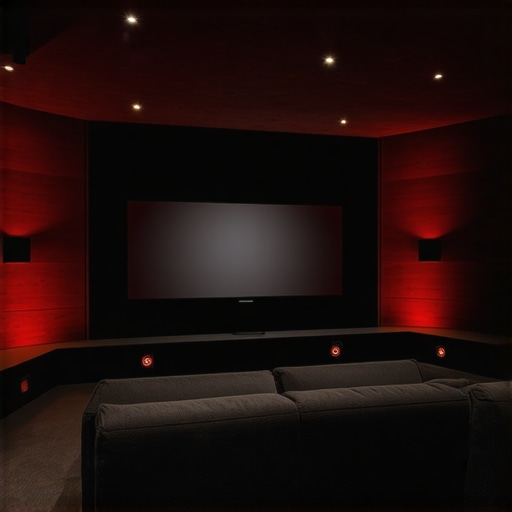
Visual illustration of a high-end home theater with layered, adaptive bias and backlighting, showcasing seamless integration of lighting zones and content-responsive controls.
File Under: Precision, Balance, and Artistic Vision
Achieving harmony in ambient lighting involves balancing technical excellence with aesthetic sensibility. Tailoring spectral profiles, luminance levels, and control algorithms demands an understanding of display technology, room acoustics, and human visual perception. Investing in diagnostic tools and collaborating with specialists familiar with industry-leading standards ensures your lighting system enhances the cinematic journey without becoming a distraction. Remember, mastery in this domain transforms a good home theater into an extraordinary sensory sanctuary—a true reflection of your artistic and technical sophistication.
Discerning the Hidden Hazards in Ambient Light Optimization
Despite best intentions, subtle misalignments—such as mismatched color temperatures or improperly wired controllers—can introduce perceptual artifacts like color shifting, flicker, or uneven luminance. These issues undermine the immersive potential and may cause long-term eye strain. In-depth calibration procedures, adherence to wiring best practices, and use of spectral measurement devices are indispensable for preempting such pitfalls. Engaging with reputable resources, such as the International Lighting Research Consortium, enables practitioners to maintain high standards and deliver visually seamless environments.
Expert Insights & Advanced Considerations
Embrace Adaptive Control for Seamless Viewing
Implementing intelligent, real-time adjustment systems ensures your ambient lighting responds precisely to content dynamics, elevating immersion and reducing eye fatigue. Integration of sensors and machine learning algorithms opens new avenues for personalized environments tailored to each viewing session.
Prioritize Spectral Compatibility to Prevent Color Shifts
Meticulous calibration of the spectral output from bias lights and backlighting is crucial. Utilizing spectrometers and advanced calibration tools guarantees that luminance and hues align perfectly with display white points, preserving image integrity and viewer comfort.
Invest in Ultra-Wide, Diffuse Backlighting for Clarity
Ultra-wide LED arrays combined with sophisticated diffusion materials create seamless, hotspot-free illumination that complements high-resolution screens. This approach ensures uniform backlighting, maintaining visual harmony even with the largest and most pixel-dense displays.
Control Harmony Within Smart Ecosystems
Integrating ambient lighting controls with smart home protocols like Matter 2.0 facilitates synchronized responses across multiple devices. Such synergy accelerates setup efficiency and guarantees consistent performance, crucial for high-fidelity environments.
Ensure Continuous Calibration and Maintenance
Regular calibration using professional-grade tools preserves the desired lighting quality over time. Staying updated with the latest industry standards and innovations is vital to prevent degradations like color drift or flickering that diminish the cinematic experience.
Curated Expert Resources
- Home Cinema Essentials Blog: Offers comprehensive guides on sophisticated ambient lighting strategies, blending technical precision with aesthetic finesse.
- Dolby White Papers: Provides authoritative recommendations on luminance management and display calibration, essential for high-end setups.
- International Lighting Research Consortium: Delivers cutting-edge research on spectral calibration, flicker mitigation, and advanced diffuser technologies, supporting long-term excellence.
- Lighting Industry Certification Programs: Facilitates advanced training and certification in lighting calibration, ensuring installers maintain highest standards.
- Smart Home Technology Forums: Connects enthusiasts and professionals exchanging insights on integrating ambient light controls within broader automation systems.
Your Next Step in Video-Based Ambience
In the realm of high-end home theater aesthetics, mastery of ambient lighting transcends simple upgrades—it becomes a reflection of technical artistry and vision. Refining your setup with precision calibration, adaptive controls, and expert-level components transforms the cinematic environment into an immersive sanctuary. To deepen your expertise or share innovative approaches, explore our top ambient lighting ideas or connect through our dedicated community forum. Elevate your home theater today by integrating the wisdom of seasoned professionals—your viewers will thank you for it.”}]}@assistant “`json{

Leave a Reply