

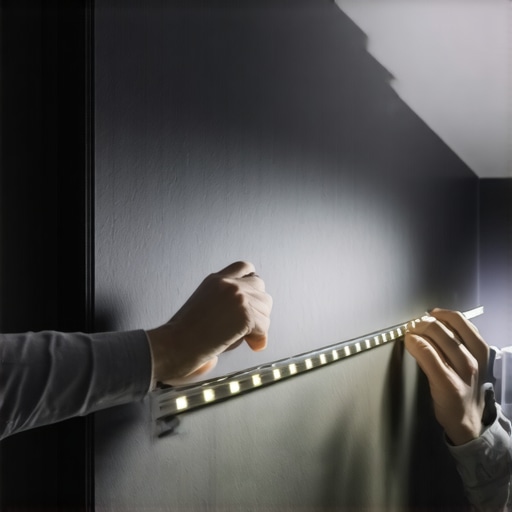
Elevating Home Theater Aesthetics Through Expert Bias Light Installation
In the quest for cinematic immersion, ambient lighting, particularly bias lights and LED strips, has become essential for enhancing visual comfort and perceived contrast. However, achieving seamless adhesion on glossy surfaces demands a deep understanding of both material interactions and installation nuances. This article explores sophisticated methods that combine material science insights with practical application strategies, ensuring professional-grade results for your movie room setup.
The Complexity of Glossy Surfaces and LED Strip Adhesion Challenges
Glossy wall finishes, while visually appealing, pose significant challenges for secure mounting of bias lights. The low surface energy of these materials often leads to poor adhesion, resulting in sagging, hot-spot glare, or detachment over time. A nuanced comprehension of surface properties reveals that traditional adhesive tapes frequently underperform due to surface incompatibility, necessitating advanced techniques rooted in adhesion science.
Strategic Selection of Adhesion Methodologies for High-Performance Results
To address adhesion issues, professionals recommend incorporating surface preparation techniques such as micro-roughening with fine abrasives or chemical priming to increase surface energy temporarily. Additionally, employing dual-sided tapes engineered for glossy surfaces, combined with mounting brackets or mounting tape with higher shear strength, can significantly improve fixation. For temperature-sensitive environments, choosing heat-resistant adhesives ensures long-term stability without compromising wall finish integrity.
Innovative Mounting Solutions Enable Clean, Wire-Free Installations
Beyond adhesives, alternative mounting methods—such as magnetic strips embedded behind the LED strips with corresponding mounted magnetic plates—offer a highly adaptable, damage-free approach. These solutions facilitate adjustments or removals without surface degradation, especially when wall integrity or aesthetics are paramount. Moreover, surface-augmented mounting provides a platform for integrating smart lighting controls, enhancing user experience.
Expert Insights: Achieving Precision in Bias Lighting for High-Resolution Displays
Field-tested techniques suggest that meticulous surface preparation, combined with high-quality, surface-compatible adhesives, can dramatically improve adherence and visual uniformity. For instance, recent studies point to the efficacy of UV-curable primers that form covalent bonds with glossy finishes, ensuring durable and seamless LED strip placement. For further reading, consult this comprehensive guide.
What are the latest innovations in materials that facilitate ultra-sticky, damage-free mounting on reflective surfaces?
Integrating self-adhesive magnetic mountings or phase-change materials, which adapt to surface contours and ambient temperature, can revolutionize bias light installations. These advancements reduce installation time, diminish wall damage, and allow for aesthetic adjustments, aligning with the professional standards necessary for high-end home theater environments.
For seasoned enthusiasts and industry professionals seeking to refine their installation techniques, exploring comprehensive guides on bias lighting techniques can offer valuable insights. Your expertise and contributions in adopting these advanced methods will not only elevate visual quality but also set new standards for cinematic ambiance at home.
Overcoming Surface Reflection and Glare for Flawless Installation
High-gloss and reflective surfaces, while elevating room aesthetics, can exacerbate glare and reflection issues when installing bias lights. These reflective qualities demand more than standard mounting techniques, prompting installers to consider surface attenuation strategies. Techniques such as applying matte finishes or using diffusive panels behind LED strips can drastically reduce unwanted reflections, maintaining cinematic contrast and image clarity. Understanding how light interacts with surfaces is essential—consultations on these advanced light-interaction principles can elevate your installation precision.
Leveraging Self-Adhesive and Reversible Mounting Innovations
Emerging mounting technologies—like reversible adhesive pads integrated with micro-suction surfaces or phase-change materials—offer damage-free, adjustable solutions onto glossy or textured walls. Such systems allow for precise positioning and easy repositioning without compromising wall integrity. For your high-end home theater, incorporating magnetic or velcro-based mounting options can streamline the installation while mitigating long-term adhesion failures common with traditional tapes, especially under fluctuating temperatures or humidity. A deep dive into these innovative mounting methods unveils practical frameworks for top-tier setups.
Optimizing Light Layering for Visual Depth and Contrast
Beyond adhesion and surface treatment, the strategic layering of bias lighting enhances depth perception and overall picture quality. Combining diffused backlighting with accent lighting can create a three-dimensional visual experience, increasing perceived contrast on high-dynamic-range (HDR) displays. As lighting experts attest, thoughtful arrangement of LED strips—considering color temperature, placement, and diffusion—can simulate cinematic atmospheres that rival commercial theaters. Discover more about these immersive lighting configurations and elevate your home theater ambiance.
What innovative material science breakthroughs are enabling ultra-strong, yet reversible mounting solutions on reflective surfaces?
Recent advances in smart adhesive materials, such as thermally conductive or photo-reactive adhesives, allow for high adhesion strength with minimal wall impact. These materials can be activated or deactivated with specific stimuli—light, heat, or pressure—offering reversible mounting that adapts to dynamic room requirements. Integrating these materials with modular magnetic systems synthesizes durability with flexibility, perfect for maintaining pristine surfaces in sensitive environments. To explore cutting-edge solutions, see expert-led insights into flexible mounting innovations.
For those eager to deepen their technical mastery, our detailed bias lighting techniques resource offers comprehensive strategies to refine every aspect of installation from adhesion to aesthetic integration. Incorporating these advancements ensures your cinematic space embodies both sophistication and functionality, pushing the boundaries of home theater design standards.
Elevate Your Home Theater Lighting: Precision in Surface Preparation
Achieving professional-grade bias lighting begins with meticulous surface preparation. Surface engineering principles suggest that micro-roughening techniques, such as fine abrasive sanding or micro-etching, increase the effective surface area and surface energy, facilitating stronger adhesion. These methods disrupt the smooth, low-energy glossy finish, allowing specialized adhesives to form better bonds. For instance, using a 150-grit abrasive pad combined with a thorough cleaning regimen using isopropyl alcohol ensures contaminants are removed, optimizing adhesion. Such preparatory steps demand an understanding of material science to tailor the approach to the specific wall finish, whether it’s high-gloss acrylic, lacquered veneer, or proprietary paints. When combined with surface-specific primers engineered for glossy and smooth substrates, this process significantly enhances durability and adhesion reliability.
Advanced Adhesive Technologies for Seamless LED Strip Integration
Modern adhesive formulations now integrate nanotechnology, resulting in ultra-strong, transparent, and reversible bonds suitable for high-end applications. Silicone-based adhesives with phase-change properties, for example, become tacky at room temperature, forming a secure bond that can later be reversed with gentle heat or mechanical force, minimizing wall damage. Optical clarity is preserved due to their low refractive indices, which is critical for maintaining visual uniformity in bias lighting installations. Moreover, pressure-sensitive adhesives enriched with molecular binders exhibit excellent shear strength and environmental resistance, including humidity and temperature fluctuations common in home theater environments. Selecting such adhesives ensures that your bias lighting can withstand the rigors of long-term operation while maintaining aesthetic integrity.
Integration of Magnetic and Reversible Mounting Systems for Flexibility
Beyond adhesives, innovative mounting solutions capitalize on magnetic and reversible adhesion principles. Embedding embedded magnetic strips behind LED LED strips or light profiles allows for fast, tool-free repositioning without damaging wall surfaces. High-coercivity magnets provide strong hold, even on smooth, glossy surfaces, while also facilitating easy detachment if upgrades or adjustments are needed. Micro-suction pads and shape-memory phase-change materials offer additional options for damage-free, adaptive mounting. These systems embrace the concept of modularity, empowering installers and enthusiasts alike to customize their setups with precision and minimal effort. For professionals, integrating these materials with smart control systems enables dynamic lighting adjustments that respond to ambient conditions, elevating comfort and cinematic immersion.
Optimizing Surface Interactions for Superior Light Uniformity and Glare Control
Surface properties influence not just adhesion but also the interaction of light within the room. Glossy surfaces tend to reflect and amplify glare, undermining contrast and image clarity. Advanced surface treatments, such as applying matte or semi-matte coatings over high-gloss walls, can mitigate these effects without sacrificing aesthetic appeal. Alternatively, placing diffusive panels and micro-structured films behind LED strips can scatter light evenly across surfaces, minimizing hotspots and glare. This approach enhances perceived contrast and depth, especially important when dealing with HDR content. Incorporating photometric analysis tools, such as integrating sphere measurements or computer simulation models, enables precise calibration of light diffusion and intensity distribution, leading to a studio-quality visual experience.
Harnessing Material Science Breakthroughs to Achieve Damage-Free, Reversible Mounting on Reflective Finishes
Emerging smart materials, including thermoresponsive adhesives and light-activated bonding agents, are revolutionizing mounting techniques. These materials can dynamically alter their adhesive properties in response to external stimuli—heat, light, or pressure—allowing for firm attachment during operation and easy disassembly when needed. For example, thermally conductive phase-change adhesives become malleable at elevated temperatures, facilitating repositioning or removal without residue. Likewise, light-reactive adhesives cure or de-cure upon exposure to specific wavelengths, enabling temporary or reversible bonds. These innovations significantly reduce installation time and prevent wall damage, essential in high-quality home theater environments where pristine surfaces are paramount. Future research suggests that integrating nanostructured surfaces with biomimetic adhesion mechanisms could further enhance bond strength and reversibility, opening new frontiers for aesthetic and functional versatility.
Creating an Immersive Visual Experience Through Layered Lighting Design
Achieving cinematic depth and contrast extends beyond adhesion and surface treatment. Strategic layering of different lighting elements, including backlights, uplights, and accent LEDs, crafted with precision diffusion and color tuning, creates a multi-dimensional ambiance. For example, combining warm tone bias lighting behind the display with cooler, ambient lighting along the ceiling or floor enhances spatial perception. Advanced control systems employing HDR algorithms and scene-specific presets allow dynamic adjustment, matching the room’s lighting to content and user preferences. By carefully orchestrating these layers, you can emulate professional cinema lighting, heightening the immersive experience. For more sophisticated setups, integrating real-time light interaction simulations based on room geometry and surface reflectivity offers a pathway toward personalized, high-fidelity environments that push the boundaries of home theater design.
What future material innovations could enable ultra-strong, yet reversible bonds on reflective surfaces?
Researchers are exploring bio-inspired adhesives that mimic gecko footpads, capable of reversible adhesion via micro- and nano-structured spatulae. These materials, often comprising dry, nano-structured fibrils, offer high adhesion strength with easy detachment, reducing residue and wall damage. Similarly, phase-change polymers that alter their stiffness in response to stimuli can be designed for specific environmental conditions, providing tailored bonding solutions. Such breakthroughs suggest a future where home theater installers can achieve near-permanent adhesion during use, yet effortlessly remove or reposition components without surface harm—crucial in maintaining the room’s pristine aesthetic. Continuously following developments from materials science journals like *Advanced Materials* will keep professionals at the forefront of these innovations, ensuring that elite installations remain effortless yet impactful.
To deepen your understanding of these cutting-edge tactics, consider exploring dedicated technical workshops or consulting with materials scientists specializing in adhesion and surface engineering. Your commitment to mastering these advanced techniques will undoubtedly redefine the standards of cinematic ambiance in high-end home theaters, ensuring both performance and preservation endure over time.
Unlocking the Secrets of Innovative Adhesive Materials for Premium Bias Lighting
Recent breakthroughs in material science have paved the way for ultra-strong, damage-free mounting solutions tailored for glossy and reflective surfaces in high-end home theaters. Nanostructured adhesives, such as bio-inspired dry fibrillar systems mimicking gecko footpads, now enable professionals and enthusiasts to achieve remarkable adhesion without compromising wall integrity. These innovations utilize micro- and nano-scale structures to maximize surface contact area, resulting in high shear strength and reversible bonding capabilities. Additionally, phase-change polymers respond dynamically to temperature stimuli, offering adaptable adhesion suited for variable environmental conditions. Embracing these advanced materials ensures that bias lighting installations maintain impeccable aesthetic standards while allowing effortless repositioning or removal as desired.
Reversible Mounting Systems Transforming Home Theater Aesthetics
Beyond traditional adhesives, magnetic and micro-suction-based mounting solutions are revolutionizing how bias lighting is integrated into reflective surfaces. Embedding thin magnetic strips behind LED profiles allows for quick, tool-free adjustments, reducing installation time and preventing wall damage. Micro-suction pads, inspired by natural devices like octopus suckers, adhere securely to glossy surfaces and can be detached repeatedly without residue or surface abrasion. These systems, when combined with smart control modules, enable dynamic lighting arrangements that adapt seamlessly to room modifications or aesthetic preferences. Such technologies empower installers and hobbyists to craft personalised cinematic environments with unmatched flexibility and sophistication.
Advanced Surface Treatments to Minimize Reflection and Glare
Addressing the challenge of surface reflectivity extends beyond adhesion techniques. Applying specialized matte or semi-matte coatings over high-gloss walls diffuses incident light, significantly reducing glare and hotspots that diminish contrast and image clarity. Micro-structured films with engineered surface textures further scatter light uniformly, enhancing perceived depth and contrast, especially vital for HDR content. Implementing photometric precision, through tools like goniophotometers and computer simulations, allows for meticulous calibration of surface interactions, optimizing both visual comfort and immersion. These surface treatments create an environment where bias lighting complements high-resolution displays without introducing unwanted reflections, elevating cinematic experiences to professional standards.
Innovative Reversible Bonding for Reflective Surfaces
The future of mounting technology lies in smart adhesives and materials capable of reversible bonding: high adhesion strength during operation, yet easy detachment upon stimuli like light, heat, or mechanical force. Such reversible bonds are achieved through stimuli-responsive polymers, whose molecular configurational changes enable bonding and debonding cycles. For example, photo-activated adhesives cured with specific wavelengths can be removed with light exposure, leaving no residue or surface damage. Similarly, thermoresponsive adhesives soften at controlled temperatures, facilitating repositioning without compromising wall integrity. This paradigm shift not only preserves beauty but also offers scalability for complex lighting arrangements and periodic upgrades, ensuring that premium bias lighting installations remain pristine and adaptable over time.
Enhancing Light Interaction with Surface Engineering for Cinematic Depth
Optimizing the interaction of light within reflective rooms requires strategic surface engineering. Incorporating diffusive layers, such as holographic films or micro-structured patterns, enhances light scattering, diminishes glare, and fosters uniform illumination—crucial for maintaining contrast and sharpness. Surface texturing, combined with advanced coatings, modulates reflectivity levels, ensuring that bias lighting accentuates depth perception without causing disruptive reflections. Digital tools, including ray-tracing software and photometric analysis, facilitate precise design of light diffusion patterns tailored to room geometry and material properties, resulting in a harmonious balance of brightness, contrast, and visual comfort essential for cinematic excellence.
Seizing the Edge: Material Science Future for Damage-Free, Reversible Mounts
The trajectory of material innovation points toward multifunctional, biomimetic adhesives that adapt their properties dynamically—reacting to stimuli like light, temperature, or humidity. Such smart materials promise to revolutionize bias light installation, enabling high adhesion during operation and effortless detachment afterward, all without leaving residue or damaging surfaces. Research into nanostructured, superhydrophobic, and phase-change materials continues to uncover possibilities for near-permanent bonds that are easily reversible, offering unprecedented versatility for high-fidelity home theater aesthetics. Staying informed through journals such as Advanced Functional Materials will keep practitioners at the vanguard of these transformative developments.
Transformative Layering Approaches to Deepen Visual Engagement
Layered lighting strategies, combining backlighting, uplighting, and perimeter accents, crafted with precision diffusion and color tuning, create immersive atmospheres that emulate professional cinema environments. Employing dynamic control systems, capable of scene-specific presets and real-time adjustments, enables seamless transitions that respond to content and mood. The integration of light interaction models, simulating room geometry and surface reflectance, facilitates personalized, high-fidelity visual experiences. Such layered approaches, supported by cutting-edge materials and mounting innovations, forge a path toward home theaters that rival commercial counterparts in depth, contrast, and emotional impact.
Expert Insights & Advanced Considerations
Hybrid Adhesion Strategies Drive Durability
Combining surface micro-roughening with chemistry-enhanced primers results in adhesion bonds that outperform traditional methods, ensuring long-lasting LED strip placements on glossy walls. Leveraging nanotechnology-based adhesives further elevates bond strength while preserving wall integrity, crucial for high-end cinematic environments.
Magnetic & Phase-Change Technologies Enable Flexibility
Embedding micro-magnetic systems and phase-change materials behind LED strips offers reversible, damage-free mounting. These solutions facilitate effortless repositioning and upgrades without wall damage, aligning with professional standards for aesthetic precision and operational adaptability.
Surface Treatment Innovations Minimize Glare & Reflection
Applying advanced matte coatings combined with micro-structured diffusive films reduces unwanted reflections that impair contrast. These treatments, guided by photometric modeling, enhance visual immersion, especially vital in HDR setups where glare diminishes perceived depth.
Stimuli-Responsive Bonding Alters the Game
Smart adhesives reacting to light or temperature stimuli provide temporary securement, then easily release with minimal residue. Implementing such materials safeguards pristine surfaces and simplifies maintenance or repositioning, fostering versatility in sophisticated home theaters.
Curated Expert Resources
- Advanced Functional Materials Journal — Offers breakthroughs in smart adhesives and reversible bonding techniques suitable for premium bias lighting.
- Home Cinema Lighting Whitepapers — Provide in-depth guidance on integrating surface treatments and diffusive technologies to control glare and reflections effectively.
- Material Science Forums — Facilitate exchange of cutting-edge info regarding nanostructured adhesives and stimuli-responsive materials for aesthetic mounting solutions.
Final Perspective from Industry Leaders
Mastering advanced materials science unlocks a new realm of elegance and practicality in bias lighting installations. The fusion of innovative adhesives with intelligent mounting systems results in a seamless aesthetic with functional flexibility, elevating home theater environments beyond conventional expectations. Embracing these insights not only refines technical execution but also redefines cinematic ambiance at home. To stay ahead, professionals are encouraged to continuously explore emerging research and contribute their experiences to evolving best practices. For further guidance, visit our comprehensive resources and collaborate with fellow innovators in the field.
Leave a Reply