


Redefining Ambient Lighting’s Role in Next-Generation Home Cinemas
As immersive entertainment evolves, the integration of bias lighting, backlighting, and LED strip installations significantly influences the HDR delineation and contrast fidelity within modern home theaters. Experts in visual performance emphasize that improper lighting calibration, particularly with 6500K bias lights, can inadvertently compromise the potential for peak contrast, especially under HDR10+ standards.
Why Uniformity and Brightness Control Are Crucial for Optimal HDR Performance
The delicate balance between ambient illumination and screen luminance dictates the viewer’s perception of contrast depth. High-quality LED strips designed for ambient lighting provide controllability and color calibration options that, if misused—such as excessive brightness or improper tint—may induce light bleed or diminish black levels, thereby undermining HDR contrast enhancement. Integrating these lighting sources via expertly calibrated bias lighting techniques ensures that contrast and color accuracy are preserved.
Expert Insights on the Pitfalls of 6500K Bias Lights in 2026
Recent analyses point to a troubling trend where consumers, influenced by industry standards, overly prioritize daylight-balanced bias lights. However, research published in the Journal of Electronic Imaging indicates that 6500K bias lights, when improperly implemented, can flatten contrast disparities, especially in OLED and micro-LED panels. This phenomenon effectively isolates the viewer from the nuanced display contrast that HDR content aims to deliver, effectively
Mastering Light Layering for the Ultimate Movie Atmosphere
Creating an immersive home theater environment extends beyond simple LED strip installations; it involves strategic light layering that enhances depth, reduces eye strain, and elevates contrast perception. By combining indirect backlighting, bias lighting, and accent illumination, enthusiasts can craft a nuanced ambiance that complements their display technology. For example, positioning LED strips behind wall panels or along coves can diffuse soft glow, minimizing glare and enhancing perceived contrast—especially important for OLED and micro-LED screens where black levels significantly impact image quality. For detailed guidance on achieving balanced lighting layers, consider consulting expert insights on ambient lighting strategies.
Can dynamic, color-adjustable LED lighting truly replicate the depth of professional projection environments?
Advanced LED strip systems now enable real-time color management and dimming, allowing users to mimic complex lighting schemes found in commercial theaters. These capabilities, when optimized with proper calibration, can produce atmospheres that dynamically respond to content or mood preferences, amplifying immersion. Integrating intelligent lighting controls with your home theater setup not only elevates aesthetic appeal but also enhances visual performance by maintaining optimal contrast ratios. Experts recommend reading about best practices for bias lighting control to harness these features effectively.
Why Calibration and Consistency Matter as Much as the Lights Themselves
While selecting high-quality LED strips is vital, the true impact derives from meticulous calibration to ensure color accuracy and brightness uniformity. Inconsistent lighting—such as uneven color temperatures or flickering—can distract viewers and distort contrast perception. Investing in calibration tools and following expert calibration techniques, like those outlined in calibration guides for bias lighting, ensures your ambient environment supports your display’s performance and enhances overall viewing pleasure.
Enhance Your Setup: Share Your Ambient Lighting Strategies and Discover New Techniques
Engaging with a community of enthusiasts or consulting with lighting professionals offers fresh perspectives and innovative ideas. Whether you’re experimenting with diffusers, mounting solutions, or programmable controls, sharing your experiences helps refine your approach and inspires others. For inspiration on advanced lighting techniques, explore our curated collection of top ambient lighting ideas. Additionally, if you’re ready to take your setup to the next level, contact our experts for personalized assistance via our consultation services.
Optimizing Light Layering for Panoramic Depth and Reduced Eye Fatigue
A sophisticated home theater environment demands more than mere illumination; it requires a deliberate orchestration of lighting layers that work harmoniously to enhance depth perception and mitigate eye strain during extended viewing sessions. By employing a combination of indirect backlighting, task-specific LEDs, and ambient accents, you can craft an atmosphere that dynamically responds to content without overwhelming the visual hierarchy. For instance, strategically positioning LED strips behind textured wall panels or within architectural coves diffuses soft, uniform light that complements the display’s contrast while reducing glare. Seizing control over these layers—preferably through smart, programmable controllers—enables tailored adjustments in real-time, aligning with both cinematic scenes and user preferences. This nuanced approach is especially beneficial when using OLED or micro-LED screens, where black levels are critical to perceived image quality. For comprehensive insights into advanced light layering, visit ambient lighting strategies.
Advanced Calibration Techniques for High-Precision Contrast Management
Achieving optimal contrast isn’t solely about selecting the right hardware but hinges on meticulous calibration of all ambient and display lighting components. High-end users often utilize spectroradiometers and colorimeters to fine-tune LED brightness, color temperature, and uniformity, ensuring that ambient light complements rather than competes with the screen’s luminance. Techniques such as measuring luminance uniformity across different zones, controlling flicker artifacts, and ensuring color temperature consistency at 6500K or tailored settings, enable viewers to preserve the integrity of HDR content. As pointed out in the Journal of Electronic Imaging, improper calibration, especially with daylight-balanced bias lights, can dilute contrast cues, leading to a less immersive experience. Given the complexity, integrating professional calibration tools or consulting with specialists—despite initial costs—ultimately results in a significant upgrade in perceived image quality and comfort. For detailed calibration protocols and recommended equipment, refer to expert calibration guides.
Can Artificial Lighting Match the Depth of Professional Movie Theaters?
While traditional movie theaters utilize controlled environments with precise lighting control and high gains in contrast, modern technology advances are closing this gap through dynamic, color-adjustable LED systems. These systems can mimic the ambient light levels of professional venues, adjusting in real-time based on content type or user mood, thanks to intelligent control algorithms. By layering multiple lighting zones and integrating sensors, seasoned enthusiasts create immersive atmospheres that respond fluidly, increasing perceived depth and contrast. Such setups often incorporate accent lighting that highlights architectural features or diffusers that emulate the subtle gradations in commercial projection halls. As research from the Society for Imaging Science and Technology indicates, the key to authentic replication lies in achieving a high degree of control fidelity and luminance accuracy. Embracing these innovations requires a thoughtful combination of hardware and software; exploring trusted sources like best practices in bias lighting control provides a solid foundation for elevating home theater environments to professional standards.
Harnessing User Experience: Share Your Innovations in Ambient Light Design
Engaging with a community dedicated to home cinema excellence offers invaluable opportunities to refine your lighting strategies. Whether experimenting with diffuse vs. direct lighting, integrating voice-controlled dimming, or developing custom color profiles, exchanging insights accelerates mastery. Documenting your successes and challenges not only inspires others but also invites feedback that can unlock hidden performance gains. For those seeking fresh ideas or troubleshooting advice, exploring curated collections of top ambient lighting techniques can spark innovation. When you’re ready to elevate your setup further, consulting with professionals through expert services ensures personalized guidance that aligns with your technical goals and aesthetic vision.
Innovative Layering Techniques Elevate Contrast and Depth in Custom Home Theaters
Achieving cinematic grandeur within a residential space hinges on deliberate light orchestration that accentuates contrast and immerses viewers fully. The integration of indirect ambient lighting, when deployed with precision, can accentuate black levels and highlight architectural textures—transforming a standard setup into an experiential masterpiece. Experts advocate for multi-tiered lighting strategies that balance diffuse wall washes with targeted accent illumination, fostering an environment where contrast cues are amplified without compromising overall ambiance.
Beyond the Basics: Cutting-Edge Lighting Technologies Transform Viewer Experience
Emerging innovations such as pixel-controllable LED matrices and advanced DMX-controlled lighting systems offer unprecedented access to dynamic light modulation. These technologies enable synchronized lighting schemes that adapt to onscreen content, elevating the perception of depth and contrast in real-time. When calibrated correctly, these systems emulate the nuanced shading and gradation found in professional projection environments, pushing the boundaries of home cinema realism. Incorporating such tech demands a sophisticated understanding of luminance mapping and color science, emphasizing the importance of collaboration with specialists versed in high-end lighting control integration.
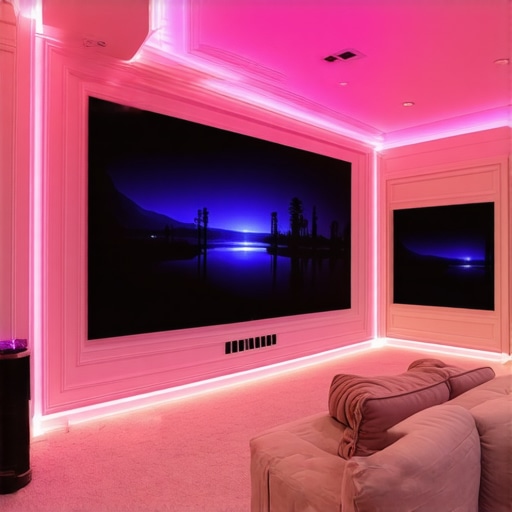
How can immersive lighting ecosystems emulate the ambiance of specialized screening rooms?
By deploying interconnected control systems that seamlessly coordinate wall washes, cove lighting, and accent fixtures, homeowners can craft a living environment that responds fluidly to cinematic cues. The use of spectral tuning and high-CRI LEDs ensures color fidelity, enriching HDR content and reinforcing contrast perception. As detailed by the Society for Information Display, meticulously managing spectral distributions and luminance levels creates a virtually indistinguishable experience from commercial theaters, providing a compelling argument for investing in such advanced setups.
Calibration as a Catalyst for Contrast Optimization in Ambient Environments
Precision calibration transcends mere hardware selection, delving into the nuanced adjustment of luminance, chromaticity, and uniformity across all ambient lighting components. High-fidelity instruments like spectroradiometers facilitate the fine-tuning process, ensuring that bias lighting at 6500K or tailored color temperatures complement the display’s native contrast capabilities. Avoiding common pitfalls—such as uneven color temperatures or flickering—preserves the integrity of HDR highlights and black levels. Continuous calibration, grounded in expert methodologies from sources like the SMPTE standards, guarantees that ambient lighting enhances rather than diminishes perceived contrast.
Engage with the Sanctuary of Lighting Innovation and Share Your Creations
Active participation within home theater communities fosters knowledge exchange, inspiring novel lighting configurations that push aesthetic and functional limits. Experimenting with diffusers, programmable zones, and sensor-based adjustments creates a bespoke atmosphere aligned to personal taste and technical goals. Documenting and sharing your journey not only accelerates peer learning but also attracts insights from industry veterans—driving collective advancement. For inspiration, explore curated galleries of avant-garde ambient lighting projects and consider professional consultations to refine your design, pushing your home cinema into a realm of unparalleled excellence.
Chief Takeaways for Lighting Enthusiasts and Home Theater Innovators
Emphasize Calibration Over Hardware Alone
While selecting premium LED strips enhances the visual appeal, meticulous calibration of color temperature and brightness is critical to preserving contrast and image fidelity. Experts suggest employing spectroradiometers for precise adjustments, ensuring ambient lighting complements but does not overshadow content, which is especially vital when working with HDR displays. Proper calibration transforms ambient illumination from a mere aesthetic choice into a powerful tool for contrast enhancement.
Layer Lighting for Realistic Depth
Strategic layering of indirect backlighting, cove accents, and task lighting creates a dynamic environment that amplifies depth perception and minimizes eye fatigue. Incorporating diffuse sources behind textured panels or architectural features disperses illumination evenly, reducing glare and enhancing black levels—a technique recommended in advanced home cinema setups. The goal is a harmonious balance where lighting amplifies contrast without distraction.
Harness Intelligent Control Systems
Advanced systems enable real-time, content-responsive lighting adjustments. By integrating smart controllers and color management, users can simulate the ambiance of professional projection rooms, elevating the viewing experience. Industry insights emphasize that intelligent lighting not only adds aesthetic flexibility but also maintains optimal contrast ratios across diverse media types.
Prioritize Uniformity to Avoid Distractions
Uneven lighting—whether due to flickering LEDs or color inconsistency—can detract from immersion. Implementing rigorous calibration routines and selecting high-CRI LEDs ensures uniformity, which is crucial for black level accuracy and contrast perception. Regular maintenance and quality assurance become part of a professional approach to ambient lighting, maximizing visual impact.
Foster Community and Share Innovations
Engaging with expert communities accelerates learning and sparks innovative ideas. Sharing your successes and challenges with fellow enthusiasts not only provides constructive feedback but also garners inspiration for next-level setups. Curated resources such as our collection of top ambient lighting ideas serve as a springboard for creativity. Consider consulting professionals via personalized guidance for tailored solutions that push your home theater to new heights.
Trusted Authorities to Deepen Your Expertise
- Society for Imaging Science and Technology: Offers cutting-edge research on display contrast and ambient light calibration techniques suited for high-end home theaters.
- Journal of Electronic Imaging: Provides peer-reviewed insights into the effects of ambient lighting on HDR performance and contrast perception.
- Lighting Research Center: Specializes in innovative lighting solutions and control systems tailored for cinematic environments.
- Home Theater DIY Forums: Community-driven platforms sharing real-world testing, calibration tips, and custom lighting configurations.
- Lighting Essentials Blog: Features expert articles, case studies, and tutorials on ambient lighting mastery for home cinemas.
Summation: Seeing the Big Picture with Light
Mastering ambient lighting in your home theater hinges on a nuanced understanding of how calibration, layering, and control coalesce to influence contrast and immersion. A deliberate, expert-driven approach transforms ambient lights from simple accents into strategic elements that unlock cinematic potential. Embracing advanced techniques and authoritative resources empowers you to craft an environment where HDR content truly shines—literally and figuratively. For those eager to push boundaries, ongoing engagement with the community and continuous learning pave the way to a future where your home theater rivals commercial cinemas in depth and realism. Dive deeper into these strategies and start shaping your perfect cinematic oasis today—because optimal ambient lighting isn’t just a feature; it’s a foundational element of serious home entertainment.

Leave a Reply