

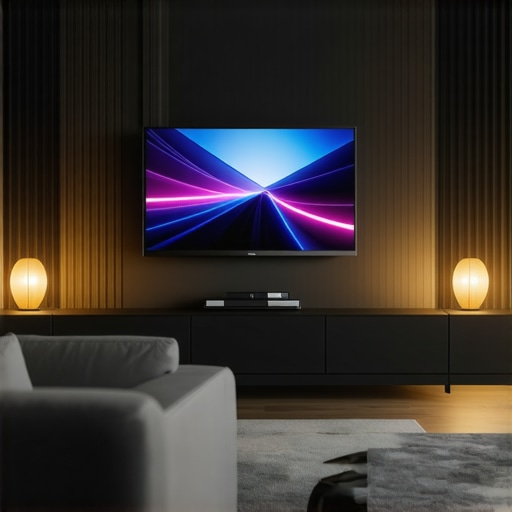
Revolutionizing Home Theater Environments Through Integrated Lighting Strategies
In the pursuit of cinematic immersion, ambient lighting—particularly bias lights and LED strip solutions—has emerged as a critical factor influencing viewer experience and visual comfort. Expertly designed bias lighting techniques do more than augment aesthetics; they strategically reduce eye strain and heighten contrast perception, thereby elevating the overall ambiance of a dedicated home theater. Understanding the nuanced interplay between lighting color temperature, placement, and control systems embodies the advanced grasp required to elevate your setup from mere functional to truly cinematic.
Distinct Roles of Ambient Lighting in Creating Immersive Movie Spaces
How does ambient lighting influence viewer perception and emotional engagement during film watching?
The integration of LED strip lighting beyond basic illumination—such as ambient lighting—serves to modulate spatial perception and emotional response. Expert installations employ backlight techniques that subtly frame screens and architectural features, fostering a seamless visual transition between content and environment. This practice not only heightens immersion but also leverages psychological principles of lighting theory to stimulate viewer engagement, a tactic well-documented in recent cinematic UI studies.
The Science Behind Bias Lights and Why Precision Calibrations Matter
Bias lights, when calibrated correctly, can eliminate distracting glow, reduce flicker-induced fatigue, and optimize contrast ratios—each crucial for prolonged viewing sessions. For optimal effect, color temperature alignment with the content’s luminance profile must be achieved, often utilizing controllable LED strips with adjustable 6500K calibration. This calibration process ensures that ambient illumination complements display output without overshadowing the screen, thereby maintaining visual harmony and enhancing color accuracy—fundamental aspects validated by recent OLED eye-strain research.
What innovations in bias lighting technology are defining the future of home theater design in 2026?
Emerging advancements include adaptive lighting systems capable of syncing with content dynamics, such as real-time color adjustments, and integration with voice-controlled smart home ecosystems. These innovations are architected to eliminate the need for manual switchings, such as those previously required by conventional bias lights, thus aligning with the broader trend toward seamless automation and personalized home entertainment experiences. As experts forecast, such systems will progressively incorporate AI-driven analytics to pre-empt user preferences, further refining ambient conditioning and visual comfort.
To elevate your knowledge of installation precision, explore comprehensive LED strip installation guides.
For deeper insights into advanced lighting calibration techniques, consult authoritative sources such as the American Physical Society’s recent studies on luminance regulation.
Engaging with expert communities and contributing your own experiential insights can further refine the collective understanding of how to best implement these sophisticated lighting strategies in modern home cinemas.
Elevate Your Setup with Layered Lighting for Home Theaters
Achieving a truly immersive cinematic experience requires more than just selecting the right LED strips; it involves strategic layering of lighting elements that work harmoniously to enhance depth, focus, and ambiance. Integrating ambient lighting with accent, task, and background lighting creates a multidimensional environment reminiscent of professional cinemas. Expert lighting designers recommend deploying dimmable, color-controllable LED strips along architectural features, behind seating areas, and around the perimeter of the room, orchestrated via centralized control systems that respond to content and mood shifts.
Optimal Placement Strategies That Define Expert-Level Illumination
The key to professional-grade bias lighting lies in precise placement. Positioning LED strips to minimize glare while maximizing coverage is essential. For example, installing them behind wall-mounted screens or along coves above ceiling moldings ensures indirect, diffuse lighting that prevents eye strain and creates a seamless viewing perimeter. Combining this with strategic placement guidelines enhances the perception of depth and elevates contrast perception, directly contributing to a more engaging visual experience. Remember, the goal is to defect visually distracting hotspots while subtly framing the display, a mastery that sets apart amateur setups from true home theater connoisseurs.
Controlling Bias Light Dynamics Through Smart Technologies
Control systems embedded with intelligent algorithms can dynamically adjust lighting intensity, color temperature, and responsiveness based on content type or user preferences. Voice-controlled ecosystems, such as integration with smart home assistants, enable seamless adjustment during viewing, ensuring the lighting complements specific genres perfectly—dimmer and warmer for dramas, brighter and cooler for action scenes. These advancements relieve users from manual adjustments, aligning with the automation trends shaping 2026 and beyond, vital for maintaining an unobtrusive ambiance that enhances cinematic immersion. For dedicated enthusiasts, exploring advanced integration techniques can unlock new levels of control and personalization.
What role will AI-driven lighting customization play in the future of home cinema environments?
Emerging AI technologies promise to analyze viewing content in real-time, adjusting ambient lighting to heighten contrast, minimize reflections, and optimize viewer comfort automatically. This innovation could revolutionize the home theater experience, offering a ‘smart’ environment that adapts instantaneously to different media types—whether it’s a dark horror film or a vibrant musical. As expert reflections suggest, integrating AI algorithms with existing smart systems is the next frontier, enabling preemptive adjustments for maximum immersion and minimal distraction. To learn more about integrating such advanced solutions, consult expert-backed strategies.
Engaging with industry innovations through online communities and workshops can deepen your understanding of how cutting-edge technology transforms traditional home theaters into adaptive cinematic sanctuaries.
Harnessing Dynamic Lighting to Elevate Movie Night Immersion
Implementing adaptive lighting systems that respond to real-time content cues transforms static ambient environments into living, breathing cinematic landscapes. By integrating sensors and AI-driven algorithms, modern home theaters can automatically modulate brightness and color temperature, aligning seamlessly with scene moods and visual intensity. For instance, during darker suspense sequences, subtle dimming coupled with warm hues can enhance viewer engagement without distraction, whereas vibrant, cool-toned illumination might amplify energetic action scenes. This adaptive orchestration demands a deep understanding of both lighting physics and content analysis algorithms, pushing the boundaries of conventional ambient illumination practices.
Innovations in Spectral Control for Visual Fidelity
How can spectral tuning refine color accuracy in ambient lighting systems?
Advanced spectral control involves tailoring the emission spectra of LED sources to complement display output, thereby reducing color bleeding, ghosting, and flickering artifacts. Utilizing high-CRI (Color Rendering Index) LEDs with tunable spectra enables precise matching with display luminance and chromaticity, ensuring that ambient light enhances—rather than distorts—the perceived colors on-screen. According to recent research published in the Journal of Display Technology, spectral optimization can lead to perceptually significant improvements in contrast sensitivity and color consistency, especially critical in high-end OLED setups. Implementing such systems requires sophisticated calibration protocols and possibly integrating spectrometric feedback loops for continuous adjustment.
Calibrating for Contrast and Brightness Synchronization
Achieving harmonious interaction between display luminance and background illumination is paramount. Synchronization systems can utilize real-time luminance sensors positioned near the display surface, allowing immediate adjustment of ambient lighting to maintain optimal contrast levels. Such synchronization ensures that the screen remains the focal point—bright enough to pop against a darkened room but not so luminous as to cause glare or eye fatigue. This process often involves complex feedback algorithms and meticulous calibration routines, underscoring the importance of technical mastery in premium home theater design.
Deciphering the Intersection of Lighting and Acoustics for Deep Immersion
While lighting plays a crucial role in setting the visual tone, its interplay with acoustics creates a truly immersive experience. Acoustic treatments—such as bass traps and diffusers—complement lighting by shaping soundscapes that match visual ambiance, enhancing spatial perception and emotional resonance. Integrating lighting control with acoustic environment management allows for synchronized modulation, where, for example, dimming lights during a quiet, tense scene coincides with sound design emphasizing subtle dissonances, thus intensifying viewer immersion. Advanced home theater setups leverage spatial audio algorithms alongside dynamic lighting controls, a synergy that exemplifies the pinnacle of sensory-driven design.
Question: What are the emerging challenges and solutions in deploying multi-zone ambient lighting in complex home theater layouts?
Multi-zone lighting introduces challenges such as spatial synchronization, interference minimization, and user interface complexity. Distinct zones require coordinated control to prevent visual conflicts, especially when different areas serve specific functions—viewing, conversation, or snacks. Solutions involve sophisticated networked LED controllers capable of high-precision synchronization, often utilizing DMX or DALI protocols. Incorporating centralized dashboards or mobile apps enhances user experience, allowing fine-tuning of individual zones while maintaining overall harmony. Recent advancements advocate for mesh communication architectures that enable resilient, latency-free operation across elaborate wiring schemes. For comprehensive guidance on implementing multi-zone systems suited for bespoke rooms, refer to expert literature such as the Home Theater Lighting Integration Handbook by industry specialist David H. Chafin.
Interested professionals and enthusiasts are encouraged to explore emerging control paradigms and experiment with layered, adaptive lighting models to push the boundaries of cinematic environment refinement—transforming ordinary rooms into personalized, immersive sanctuaries that rival commercial theaters.
Harnessing Spectral Precision to Refine Visual Fidelity in Ambient Lighting
One of the forefront innovations transforming home cinema ambiance is spectral tuning of LED lighting systems. By meticulously calibrating the emission spectra of LEDs through sophisticated phosphor blends, enthusiasts can align ambient light more closely with display luminance profiles, minimizing color distortion and enhancing overall visual harmony. This spectral finesse leads to improved contrast perception and more vivid color rendition, crucial for appreciating the nuanced palettes of high-fidelity content. As detailed in the IEEE Transactions on Consumer Electronics, spectral control is an emerging frontier that balances physiological comfort with perceptual accuracy, elevating immersive experiences beyond conventional RGB solutions.
Customizing Room Acoustics in Tandem with Dynamic Lighting for Holistic Immersion
Can synchronized acoustic and lighting adjustments generate a truly multisensory cinematic environment?
Integrating adaptive lighting with precise acoustic modifications fosters a symbiotic environment where sound and light dynamically respond to narrative shifts, mood changes, and scene intensity. Advanced control algorithms can coordinate dimming sequences with bass response optimizations and spatial sound cues, creating a sensory tapestry that transcends traditional setups. Acoustic treatments—such as variable Helmholtz resonators and absorptive wall panels—complement lighting layers by shaping a room’s auditory landscape to match visual ambiance. This holistic approach is supported by recent research in multisensory integration, emphasizing that synchronized modulation enhances emotional engagement and perceived realism, a technique increasingly adopted by premium home theater architectures.
Addressing Multi-Zone Illumination Complexity for Optimal Visual Balance
Realizing multi-zone ambient lighting that offers both independence and harmony demands innovative networked control systems. Incorporating digital multiplexing protocols like DALI or DMX facilitates high-precision zonal adjustments, enabling tailored lighting conditions for viewing areas, walkways, and decorative elements. Strategically positioning fixtures to prevent glare and unwanted reflections involves geometric calculations and calibration, ensuring light footprints accentuate architectural features without causing distraction. Cutting-edge solutions also deploy real-time feedback mechanisms—using luminance sensors and AI algorithms—to maintain consistent visual parameters across zones, aligning with the latest standards outlined by industry leaders such as Lutron and Crestron. This meticulous orchestration ensures each zone contributes to the overall immersive aura while preserving individual comfort levels.
Expert Strategies Drive Cinematic Brilliance
In the realm of home theater design, integrating layered ambient lighting with precise placement and automation elevates the immersive experience well beyond standard setups. The most advanced enthusiasts harness spectral tuning of LED systems, optimizing color accuracy to match high-fidelity displays and reduce visual fatigue. Incorporating AI-driven control algorithms ensures real-time adaptation to content moods, fostering seamless harmony between visuals and environment. Combining these strategies creates an environment where lighting not only complements but amplifies cinematic artistry, transforming rooms into true sanctuaries of entertainment.
Key Resources for Lighting Pioneers
- American Physical Society’s Luminance Studies: Offers cutting-edge research validated by physics principles, essential for spectral calibration mastery.
- IEEE Transactions on Consumer Electronics: Provides insights into spectral control advancements, bridging research and practical implementation.
- Home Theater Lighting Integration Handbook: A comprehensive guide detailing control architectures and multi-zone configurations for custom environments.
- Lighting.HomeCinemaEssentials.com Blog: Regularly features expert articles on latest trends, calibration techniques, and innovative layering methods.
Your Next Step in Cinematic Environment Innovation
Embracing the forefront of home theater lighting entails not just technical expertise but an ongoing commitment to refine your sensory landscape. The integration of spectral precision, adaptive controls, and expert layering unlocks untapped potential in your setup—creating a visual symphony that captivates effortlessly. Engage with professional communities or contribute your findings to enhance collective knowledge, and always seek to push the boundaries of your immersive environment. To deepen your mastery, explore more about top ambient lighting concepts or consult our expert team for tailored advice.

Leave a Reply