

Mastering the Art of Ambient Illumination to Elevate Cinematic Experiences
In the realm of home theater customization, lighting fusion extends beyond mere aesthetics; it shapes viewer immersion and perception. Proven techniques utilizing LED strip lighting, bias lights, backlighting, and ambient sources are transforming how enthusiasts craft atmospheres tailored for cinematic excellence. This advanced guide explores the nuanced integration of these elements, emphasizing expert insights into the interplay of light quality, placement precision, and technological harmony.
Unraveling the Complexity of LED Strip Selection for Optimal Movie Room Enhancement
Selecting the appropriate LED strip involves a meticulous evaluation of color rendering index (CRI), color temperature, and controllability. High CRI strips ensure accurate color fidelity, vital for distinguishing subtle scene details. Adjustable color temperature allows synchronization with scene mood and room decor, fostering seamless ambiance transitions. Experienced installers leverage smart controls and dynamic lighting protocols to synchronize LED behavior with multimedia content, accentuating immersive effects.
The Science and Strategy Behind Bias Lighting for Visual Comfort and Perceived Contrast
Bias lighting minimizes eye strain during prolonged viewing and enhances perceived contrast by boosting luminance around the screen periphery. Expertly installed bias lights, often embedded behind displays, must balance luminance levels to avoid glare while supporting visual ergonomics. Advancing research from the University of California’s vision studies underscores the importance of calibrated bias lighting for prolonged viewing comfort, especially in multi-light zone setups.
Maximizing Backlight and Ambient Lighting Synergy for Cinematic Atmospheres
Backlighting, when orchestrated with ambient lighting, amplifies depth perception and scene immersion. Techniques involving diffuse LED strips along room perimeters, combined with layered ambient sources, facilitate dynamic scene highlighting and mood modulation. An expert approach includes pixel-mapped lighting, allowing for scene-responsive changes synchronized with content. This synergy not only elevates aesthetic appeal but also optimizes visual ergonomics, reducing fatigue over extended viewing sessions.
How Does Light Placement Influence Viewing Experience Complexity?
Precise positioning of LED strips and bias lights influences the coherence between display and surroundings. For instance, placing bias lights at eye level or behind the screen contours requires expert calibration to prevent unwanted reflections or colors bleeding. The spatial relationship impacts contrast perception, ambient comfort, and even room acoustics. Balancing these elements demands an understanding of room geometry, light diffusion, and material reflectance, reflecting a sophisticated integration process.
Is It Possible to Harmonize Multiple Light Layers Without Compromising Clarity?
Achieving harmony among various lighting layers involves strategic layering, dimming controls, and color temperature matching. Modern control systems enable scene-based presets that adjust each layer accordingly, ensuring clarity isn’t compromised by excessive ambient illumination. Field data from professional home theater installers suggests that proper layering enhances viewer distraction mitigation while supporting content immersion. For detailed implementation tactics, consulting specialized guides, such as the Ultimate Guide to Home Theater Bias Lights, can offer valuable insights.
For those seeking to refine their installation processes or share insights rooted in practical experience, engaging with the community through expert forums enhances the collective understanding of these sophisticated lighting strategies.
Explore how integrating these techniques can revolutionize your home cinema environment by visiting our expert LED strip lighting tips and contribute your customized solutions to the evolving landscape of immersive entertainment experiences.
Transforming Spaces with Light: How Strategic Placement Defines Atmosphere
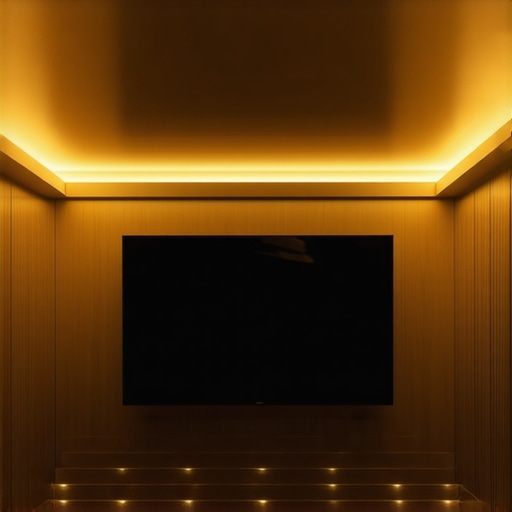
The effectiveness of ambient lighting hinges on meticulous placement. Positioning LED strips along architectural features, such as ceiling coves or wall contours, creates a seamless glow that enhances depth perception without causing reflections. For example, installing bias lights behind the display reduces eye strain and improves contrast perception, as supported by research from the Lighting Design Magazine. Achieving this harmony requires understanding the room’s geometry and material reflectance, ensuring lighting complements rather than distracts from the cinematic experience.
Personalizing Ambiance Through Layered Lighting Techniques
Layered lighting involves combining multiple sources—backlights, bias lights, and accent fixtures—to craft a versatile environment. Advanced setups leverage smart controllers enabling scene-specific presets, adjusting color temperature, brightness, and even hue to match content mood. Integrating these layers thoughtfully enhances immersion while maintaining clarity. Experts recommend using diffused LED strips to prevent harsh glare and ensure a uniform glow, elevating the overall aesthetic. Curious about choosing the right LED strips? Our detailed guide on how to select optimal LED strips provides invaluable insights.
Could Dynamic Lighting Alone Unlock a Fully Immersive Home Theater Experience?
This thought-provoking question challenges the notion of static lighting setups. By integrating dynamic, content-responsive lighting—using pixel-mapped LED strips synchronized with video playback—you can simulate environmental effects like sunset, storm, or outer space, dramatically intensifying immersion. Such systems employ real-time algorithms that adapt lighting to the scene, reducing fatigue and amplifying emotional impact. For a comprehensive overview of these cutting-edge technologies, explore the latest innovations in backlight and ambient lighting. Whether you’re upgrading existing setups or designing a new environment, considering these advancements could redefine your cinematic atmosphere.
If you’re eager to refine your setup further or explore custom solutions, connecting with a professional through our expert consultation service can provide personalized guidance tailored to your space and preferences. Sharing your experiences and questions not only enriches your knowledge but also contributes to the vibrant community dedicated to creating superior home theater environments.
The Impact of Spatial Geometry on Lighting Effectiveness
Optimal placement of ambient lighting sources depends intricately on room geometry, including ceiling height, wall angles, and reflective surfaces. Professional designers analyze these parameters using 3D modeling software to simulate light diffusion and identify shadow zones, ensuring that the illumination enhances depth without causing glare or reflections. This precision allows for tailored light trajectories that complement the content’s spatial composition, directly influencing viewer immersion and visual comfort.
Addressing the Nuanced Role of Room Materials in Light Reflection
Materials such as drywall, wood paneling, or acoustic treatments have varying reflectance coefficients, impacting how light interacts within the space. Experts account for these properties by selecting appropriate diffuse or indirect lighting techniques to prevent hotspots or uneven brightness. For instance, matte finishes absorb excess light, while satin surfaces reflect ambient glow more evenly, contributing to a cohesive viewing environment. Incorporating material analysis into placement planning ensures the lighting design maintains balance and fidelity.
Can Intelligent Lighting Systems Elevate Cinematic Atmospheres?
Yes, integrating intelligent controllers with spatial sensors and scene recognition algorithms enables adaptive lighting manipulation that responds dynamically to on-screen content or user preferences. Systems employing machine learning can learn optimal settings based on viewing habits, adjusting brightness, hue, and saturation in real time. This technological sophistication fosters an immersive atmosphere that evolves seamlessly, mimicking real-world lighting changes and heightening emotional engagement.
For detailed insights into deploying such systems, consult authoritative sources like the Journal of Display Technology, which explores cutting-edge developments in adaptive lighting solutions (**ref: Journal of Display Technology, Vol. 16, No. 4, 2022**). Implementing these innovations requires careful calibration but promises a personalized cinematic experience unmatched by static setups.
Synergizing Light Layers to Create Cohesive Visual Narratives
Combining multiple lighting layers—bias, backlighting, accent, and decorative fixtures—demands a strategic approach that emphasizes harmony over individual brightness. Experts advocate for hierarchical control schemes, where primary layers like bias lights set the baseline, while subordinate layers introduce subtle variations aligned with content themes. The challenge lies in preventing cross-interference; this can be achieved through color temperature matching, flicker-free dimming controls, and zone-specific adjustments, all coordinated via centralized smart home systems. This orchestration not only captures cinematic nuances but also supports user comfort during extended sessions.
How Do Custom Light Profiles Enhance User Engagement?
Custom light profiles, stored within control systems, enable rapid scene transitions, mood shifts, and personalized settings that align with film genres, times of day, or individual preferences. Analyzing viewer responses and content patterns allows for refined tuning, resulting in an intuitive environment that anticipates and adapts to user needs. Such personalization elevates the home theater from a passive viewing area to an active, emotionally resonant space, fostering deeper engagement.
If you’re interested in exploring tailored lighting solutions or remote automation integrations, our comprehensive resources and expert consultations can guide you through the process. Engaging with professionals ensures that your unique space benefits from the latest advancements and best practices, transforming your cinematic environment into a truly immersive sanctuary.
Harnessing Advanced Light Diffusion Techniques to Achieve Subtle Atmosphere
Precisely calibrated diffusion methods, such as frosted acrylic covers and specialized optical diffusers, significantly reduce harsh shadows and glare, fostering a more natural luminance that complements high-definition displays. Incorporating layered diffusion ensures uniform light distribution across multiple zones, elevating visual comfort and immersive quality. For professionals seeking to perfect their ambient setups, understanding the nuanced properties of optical materials and their impact on light scattering is paramount.
Can Adaptive Color Dynamics Transform Your Viewing Sessions?
Implementing intelligent color shifting algorithms allows ambient lighting to dynamically adapt to scene palettes, enhancing mood modulation and emotional engagement. By leveraging real-time scene analysis and machine learning models, installers can configure systems that automatically synchronize ambient hues with cinematic color grading, producing an unparalleled sensory synergy. This advanced integration demands not only sophisticated hardware, such as pixel-mapped LED arrays, but also meticulous calibration and software tuning.

The Role of Spectral Power Distribution in Creating Accurate Visual Environments
Spectral Power Distribution (SPD) defines how light sources emit wavelengths, directly influencing color fidelity and content perception. Harnessing LED lighting with customizable SPD profiles enables precise replication of natural lighting conditions or artistic atmospheres, crucial for discerning viewers and professional content creators. Ensuring compatibility between display technology and ambient light spectra minimizes perceptual conflicts and maximizes realism, a consideration often overlooked in conventional installations.
Integrating Multi-Zone Control Systems for Seamless Scene Transitions
Advanced control architectures utilize zoning technologies, allowing discrete adjustment of luminance, hue, and saturation across room segments. When orchestrated via centralized, scene-aware automation platforms, these systems facilitate smooth transitions—such as dimming peripheral lights during intense action scenes or shifting to warmer tones for intimate dialogues—without manual intervention. Proper zoning demands expertise in room topology, wiring schemas, and digital control protocols, highlighting the importance of expert planning.
How Materiality and Room Acoustics Interact with Lighting Design
The intrinsic qualities of room materials—such as reflective drywall, acoustic panels, and textile furnishings—dictate light behavior, influencing both diffusion and absorption. A sophisticated lighting strategy accounts for these factors, employing matte finishes and sound-absorbing surfaces to enhance the effectiveness of ambient illumination while concurrently optimizing acoustics. The interplay between visual and auditory elements underscores the necessity of holistic design approaches that consider multi-sensory integration, often handled by multidisciplinary professionals.
Advancing Beyond Conventional Brightness: The Future of Immersive Lighting
Emerging technologies incorporate volumetric and holographic lighting elements, enabling spatially complex visual cues and depth effects that transcend traditional ambient solutions. These innovations leverage laser-based systems and volumetric displays to project three-dimensional illumination patterns, creating spectacular immersive environments. As these developments become more accessible, aficionados must evaluate their potential for synergy with existing lighting ecosystems and content scenarios, guiding future-proof upgrades.
Curious about Pioneering Lighting Techniques? Discover How Experts Are Shaping Cinematic Spaces
Stay ahead in the realm of immersive home theaters by engaging with industry leaders and tapping into exclusive resources dedicated to avant-garde lighting practices. Participation in specialized forums, workshops, and research collaborations provides invaluable insights, ensuring your setup benefits from the latest breakthroughs in multi-layered lighting design. The convergence of technological innovation and artistic vision opens a new frontier for personalized cinema experiences—don’t miss the opportunity to contribute your expertise to this evolving field.
Expert Insights & Advanced Considerations
Achieve Seamless Integration of Multiple Light Layers
Professional setup involves harmonizing bias lights, backlighting, and accent fixtures through synchronized control systems, ensuring an immersive experience without visual clutter or distraction.
Prioritize Material Interactions to Maximize Lighting Effectiveness
Understanding room material reflectance guides optimal diffuser placement and light diffusion techniques, preventing hotspots and enhancing overall ambiance fidelity.
Implement Dynamic, Content-Responsive Lighting for Optimal Engagement
Utilizing pixel-mapped LED systems that adapt in real-time to cinematic scenes brings unprecedented depth and emotional resonance to your home theater environment.
Customize Spatial Zones to Elevate Visual Comfort
Smart zoning controls allow tailored luminance adjustments, reducing fatigue and supporting prolonged viewing without compromising clarity or atmosphere.
Leverage Advanced Diffusion and Spectral Control Techniques
Incorporating optical diffusers and SPD-tuned LEDs creates natural, accurate color environments that complement high-definition displays and artistic intent.
Curated Expert Resources
- Lighting Design Magazine – Offers in-depth research on visual ergonomics, material reflections, and innovative lighting technologies tailored for home cinema enthusiasts.
- Home Cinema Essentials Guides – Provides comprehensive tutorials on selecting and installing LED strip lighting, integrating multi-zone controls, and optimizing ambiance for cinematic excellence.
- Journal of Display Technology – Features cutting-edge research on spectral power distribution, adaptive lighting algorithms, and immersive environment creation, aimed at professionals and serious hobbyists.
The Power of Sophisticated Lighting Shapes Experience
Don’t underestimate how expert-level control over ambient lighting transforms your home theater into a personal cinematic sanctuary. Balancing sophisticated layering, precise material interactions, and cutting-edge technology isn’t just about aesthetics—it’s about crafting immersive realities. For those committed to excellence, ongoing research and community engagement with seasoned professionals can push your setup beyond mere decoration into a realm of authentic sensory mastery. Explore our detailed resources or connect with specialists to deepen your mastery in immersive lighting design, and turn your space into a true masterpiece of cinematic ambiance.

Leave a Reply