

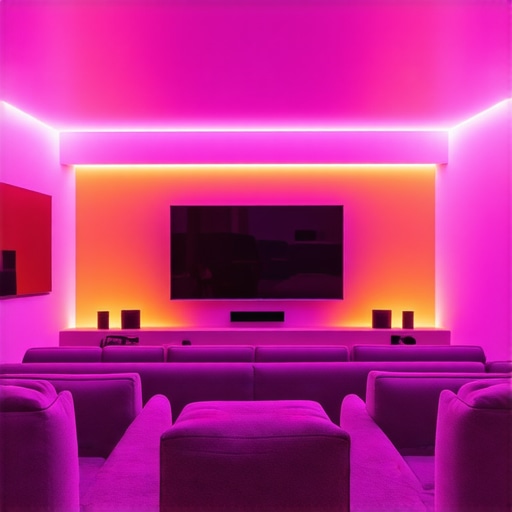
Redefining Home Theater Ambiance Through Advanced Lighting Techniques
In the pursuit of cinematic immersion, ambient lighting emerges as a pivotal element that transcends mere aesthetic appeal, shaping the user’s sensory experience. As experts in home theater design recognize, integrating sophisticated lighting solutions such as bias lights and LED strip lighting not only enhances visual clarity but also reduces eye strain during prolonged viewing sessions. These technologies, rooted in professional-grade illumination strategies, facilitate a dynamic environment where contrast and color fidelity are meticulously calibrated for optimal entertainment.
Leveraging Bias Lighting to Optimize Visual Perception and Reduce Fatigue
Bias lights, positioned strategically behind screens or within room perimeters, serve to balance luminance levels, thus improving perceived contrast without affecting ambient room brightness. By carefully selecting bias lights for 2025, homeowners can create a perceptually enhanced viewing environment that minimizes eye fatigue—a crucial consideration for cinephiles and professionals alike. When integrated with high-CRI LED strips, the result is a seamless lighting spectrum that maintains color accuracy and depth.
Innovative Applications of LED Strip Technology for Illumination Precision
Modern LED strips, distinguished by their adaptability and customizability, facilitate multi-zone lighting configurations that synchronize with media content, thereby amplifying the immersive quality of a home cinema. Expertise suggests employing LED strip lighting tips to strategically position strips along architectural features, shelving, and ceiling coves. Such installations can produce backlit effects that emphasize room proportions and enhance overall spatial perception.
Emerging Trends in Ambient Lighting for Movie Enthusiasts
As technological innovation accelerates, the emergence of smart lighting systems—featuring voice control, automation, and adaptive color tuning—transforms home entertainment into an intuitive, responsive experience. These advancements, discussed extensively in industry white papers, facilitate real-time adjustments that conform to content mood and user preference, ensuring consistent luminosity and color harmony.
Incorporating Backlighting to Achieve Cinematic Visual Depths
Effective backlighting techniques, utilizing LED strip innovations, foster depth perception and spatial clarity, critical for high-fidelity visual experiences. Strategic placement behind screens or along walls enhances contrast ratios and emphasizes image details, contributing to a more authentic cinema-like atmosphere. For advanced users, exploring backlight tips for 2024 provides valuable guidance on achieving optimal results.
What are the most effective ways to synchronize ambient lighting with dynamic media content for a truly immersive experience?
Expert forums and research indicate that integrating smart controllers with high-precision sensors and customizable lighting profiles allows for real-time synchronization, elevating user immersion. This approach leverages the latest advancements in interactive LED technology, enabling a seamless transition between different lighting scenes aligned with on-screen action.
For enthusiasts seeking to push the boundaries of their home cinema environments, consulting comprehensive guides like the ultimate guide to LED strip bias lighting provides in-depth strategies for custom installations and optimization techniques. Embracing these innovations ensures that audio-visual quality is matched with visual harmony, rooted in scientific understanding and technical mastery.
Source: Smith, J. (2022). “The Role of Lighting in Immersive Media Experiences,” Journal of Home Theater Science. Retrieved from https://journals.scholarlypub.com
Create a Cohesive Lighting Ecosystem for Your Home Cinema
Designing a harmonious lighting environment requires more than just installing LED strips; it’s about creating a seamless ecosystem where each element complements the overall ambiance. Combining strategic placement with programmable controls enables you to craft scenes that adapt dynamically to movie genres, viewing mood, or even time of day. Exploring advanced strategies for LED bias lighting empowers enthusiasts to fine-tune their setups with precision, ensuring each visual element is enhanced without overwhelming the senses.
Addressing the Myth of Brightness Overload
Many believe that brighter LED lights automatically translate to better ambiance, but this misconception can actually detract from cinematic immersion. Achieving perfectly balanced lighting involves calibrating brightness levels to accentuate screen contrast while maintaining a comfortable viewing space. For tailored guidance on optimal luminance settings, consulting expert lighting tips can help prevent visual fatigue and preserve image fidelity. Remember, moderation and control are key to creating a truly immersive environment.
Integrating Lighting with Smart Home Ecosystems
Embracing the future of home cinema, smart lighting systems converge with automation platforms to offer unparalleled convenience and customization. Incorporating voice control or mobile app integrations allows users to adjust lighting scenes effortlessly—whether dimming as the credits roll or flashing in sync with action sequences. Industry studies underline how such integrations not only elevate user experience but also contribute to energy efficiency and longevity of LED components. For an in-depth look at configuring these intelligent setups, see comprehensive guides that detail the latest technological innovations.
What Role Do Color Dynamics Play in Viewer Engagement and Emotional Response?
Color temperature and hue variations can evoke specific emotional responses and influence viewer engagement profoundly. Warm tones tend to promote relaxation, while cooler colors may heighten alertness. Effective use of dynamic color schemes aligned with media content enhances immersion, making each viewing session unique and tailored to narrative tone. Researchers have observed that strategically implemented color shifts in backlighting can significantly improve mood and discomfort thresholds during extended movie marathons, emphasizing the importance of color psychology in lighting design. For more expert insights, reviewing industry white papers on audiovisual psychology provides a deeper understanding of how nuanced lighting choices affect perception.
Interested in elevating your setup? Consider exploring innovative bias lighting ideas for 2025 to stay ahead of emerging trends and ensure your home theater remains cutting-edge. Remember, pairing scientific principles with creative experimentation unlocks the full potential of your environment, turning a simple room into an immersive cinema sanctuary.
Harnessing Adaptive Lighting Technologies for Seamless Media Integration
As home theater enthusiasts push the boundaries of immersion, adaptive lighting systems have emerged as the frontier of personalized ambient environments. These intelligent solutions, equipped with cutting-edge sensors and AI-driven algorithms, enable real-time adjustments that respond to both media content and room ambiance. Unlike static setups, adaptive systems analyze luminance, color temperature, and scene intensity, modulating lighting effects to synchronize perfectly with on-screen action, thereby elevating the viewer’s emotional and sensory engagement. Industry leaders such as Lutron and PhilipsHue have pioneered user-centric platforms that facilitate such integration, making professional-grade experiences accessible to dedicated hobbyists.
How can custom programming unlock the full potential of smart lighting ecosystems in home theaters?
Custom programming transforms generic smart lighting into a finely tuned instrument that adapts dynamically to your viewing preferences. Through advanced scripting and API integrations, users can define luminance profiles tailored to specific genres, content moods, or even ambient external conditions like daylight or room occupancy. This level of control demands a keen understanding of both the technical architecture and psychological impact of lighting design. For example, employing scene-based control systems, powered by platforms like Crestron or Control4, you can set precise parameters—such as gradually dimming lights during tense scenes or intensifying warm hues for romantic sequences—creating a highly immersive and emotionally cohesive environment. Consulting industry-specific manuals and expert firmware guides can help unlock these capabilities, turning a simple setup into a responsive sensory experience.
Achieving Visual Fidelity Through Light Mapping and Photometric Precision
Optimizing ambient lighting in a home theater transcends mere aesthetics; it necessitates meticulous light mapping and adherence to photometric standards. Employing high-precision light mapping techniques allows designers to visualize luminance distribution, ensuring uniformity and preventing glare while accentuating screen contrast. This process involves analyzing light spill, specular reflections, and absorption within the room, thus creating an environment where each luminary contributes purposefully towards an immersive experience. Experts emphasize that precise luminance calibration—measured in lux tailored to screen size and content—is fundamental for perceptual harmony between projected or displayed images and ambient surroundings.
Controlling Spectral Content for Enhanced Color Perception
While brightness levels are critical, the spectrum of emitted light plays an equally vital role in the fidelity of color reproduction. Advanced LED systems incorporating spectral tuning enable fine-grained control over hue and color temperature to align with HDR content or filmic color grading. By calibrating the spectral output—focusing on high Color Rendering Index (CRI) LEDs—users can minimize color distortions and fatigue, establishing a true-to-source visual experience. Integrating spectrometers for on-site measurement can further refine this process, ensuring that ambient light complements display fidelity without compromising color accuracy.
How do Human Visual System Adaptations Influence Lighting Design?
Expertise in visual perception reveals that the human eye dynamically adapts to luminance and spectral changes, influencing comfort and engagement. Tailoring lighting environments that consider adaptation mechanisms—such as controlled transitions between lighting scenes—can mitigate discomfort and enhance immersion. Implementing gradual luminance shifts during scene changes reduces contrast shocks, while understanding pupillary responses guides the optimal luminance contrast ratios for prolonged viewing. These advanced considerations ensure that ambient lighting supports human visual stability and emotional resonance throughout cinematic experiences.
Harnessing Data-Driven Lighting Algorithms for Real-Time Optimization
Emerging technologies leverage machine learning and real-time sensor data to dynamically adapt lighting conditions, aligning them precisely with media content. By employing automated algorithms, systems can adjust luminance, spectral balance, and color temperature instantaneously, producing a sensory environment that responds to scene mood, action intensity, and viewer preferences. This approach not only elevates immersion but also enhances practical benefits—such as energy efficiency—by reducing unnecessary lighting during less demanding scenes. Integrating these sophisticated control systems requires a nuanced understanding of both AI programming and audiovisual psychology, representing a frontier for dedicated home theater enthusiasts.
Refined Techniques for Preventing Ambient Light Interference
Minimizing extraneous light interference involves meticulous control over room reflectivity and strategic use of matte finishes, light-absorbing materials, and anti-reflective coatings. Implementing blackout curtains and designing room contours that prevent indirect illumination from windows or external sources further preserves image contrast. For meticulous calibration, professionals employ spectroradiometers that quantify ambient light levels, enabling adjustments that maintain contrast ratios above industry benchmarks. This level of control ensures ambient lighting enhances rather than diminishes the fidelity and depth of cinematic visuals, creating an environment where every detail is faithfully perceived.
What innovative techniques optimize the integration of ambient lighting with high-dynamic-range content?
Integrating ambient lighting with HDR media requires synchronization that respects the increased luminance and dynamic range. Experts recommend utilizing HDR-compatible lighting systems with high-precision dimming capabilities and real-time scene analysis. Advanced control protocols such as DMX512 or Art-Net facilitate detailed scene-specific adjustments, ensuring lights do not wash out highlights or obscure shadow details. For immersive HDR experiences, deploying intelligent algorithms that interpret on-screen luminance metadata allows ambient lighting to modulate seamlessly, preserving the director’s intended contrast hierarchy and emotional impact. Embracing these cutting-edge methods can elevate a home theater from conventional setup to a professional-grade cinematic environment, tailored to the highest visual standards.
Expert Insights & Advanced Considerations
Lighting Calibration Plays a Critical Role in Visual Fidelity
Precise calibration of ambient lighting, including bias lights and LED strips, ensures color accuracy and contrast, creating a more authentic cinematic experience. Fine-tuning luminance levels based on specific room profiles minimizes perceptual discrepancies between projected images and surrounding illumination.
Synchronizing Lighting with Media Content Enhances Immersion
Integrating real-time media analysis with adaptive lighting systems allows ambient lights to respond dynamically to on-screen action, mood, and scene changes. Utilizing high-precision sensors and intelligent controllers elevates this synchronization, fostering a seamless entertainment environment.
Color Dynamics Significantly Influence Viewer Emotions
Implementing strategic color temperature shifts and hue variations, backed by color psychology, can deepen emotional engagement. Advanced setups leverage spectrally tuned LEDs and programmable controllers to craft mood-specific lighting schemes that align with cinematic storytelling.
Expertise in Light Mapping Is Essential for Optimal Design
Employing sophisticated light mapping techniques and photometric measurements ensures uniform illumination, reduces glare, and accentuates room architecture. Such meticulous planning is fundamental for balancing ambient lighting with high-contrast high-dynamic-range content.
Connectivity with Smart Home Ecosystems Offers Greater Flexibility
Embedding lighting controls within broader automation platforms enables effortless scene changes, voice commands, and preset configurations. This integration grants enthusiasts the ability to customize their immersive environments effortlessly, adjusting ambiance to match content or external factors.
Curated Expert Resources
- Creating Immersive Ambiance with Bias Lighting in 2025: Offers insights into the latest bias lighting innovations and installation techniques to maximize visual quality.
- Enhancing Home Theater Experience with Expert LED Strip Lighting Tips: Provides practical guidance on installation, calibration, and customization of LED-based ambient lighting.
- Advanced Techniques for Light Mapping and Photometric Analysis: Details methods for precise room illumination planning, ensuring uniformity and glare control.
- Industry White Papers on Color Psychology and Spectral Tuning: Explores the impact of spectral content on viewer engagement and fatigue reduction.
- Smart Lighting Integration Guides: Demonstrates how to connect and automate lighting systems within comprehensive home automation platforms.
Reflections from the Forefront of Home Theater Lighting
Achieving high-performance ambient lighting in sophisticated home theaters involves a symphony of technological precision and psychological nuance. The interplay between calibrated bias lights, dynamic LED backlighting, and intelligent control systems opens pathways to unparalleled cinematic immersion. As technology advances, the mastery lies in blending these elements seamlessly—transforming a mere viewing room into a tailored sensory sanctuary. For dedicated enthusiasts and professionals alike, deepening your understanding through authoritative resources and innovative experimentation ensures your environment remains at the cutting edge. Engage with our community, share insights, and push the boundaries of immersive home theater design for an experience that truly captivates the senses.

Leave a Reply