

Elevate Your Home Theater Ambiance with Cutting-Edge LED Backlighting Techniques
In the realm of high-end home entertainment, ambient lighting transcends mere aesthetics to influence viewer immersion and emotional response. As a seasoned lighting expert, I observe that the strategic application of LED strip lighting, particularly in 2024, is transforming ordinary spaces into cinematic sanctuaries. This guide explores advanced techniques for leveraging LED backlight and ambient lighting to optimize your home theater experience.
Why LED Strips Are the Keystone of Contemporary Ambient Illumination
LED strips offer unparalleled flexibility, energy efficiency, and color versatility, making them ideal for immersive lighting solutions. Their ability to adapt to complex architectural contours and synchronize with multimedia content grants enthusiasts and professionals alike an edge in creating dynamic atmospheres. As explored in the ultimate guide to LED strips, the choice of LED type and placement critically impacts visual harmony and mood setting.
Strategic Placement and Color Calibration for Optimal Visual Impact
Achieving a seamless integration of LED strip lighting requires meticulous planning. Positioning LED strips behind screens, along ceiling coves, or beneath furniture creates layers of depth that mimic professional cinema environments. Color calibration should be based on the room’s dominant hues and viewing conditions, employing tunable LED strips to match ambient daylight cycles or mood-specific palettes. Calibration tools and apps facilitate precise control, ensuring consistent color temperatures that enhance image clarity and reduce eye strain.
Balancing Brightness and Contrast for Cinematic Authenticity
Overly bright ambient lighting can compromise contrast ratios, diminishing picture quality. Conversely, insufficient lighting hampers navigation and ambiance. Advanced LED strips equipped with dimming capabilities and high CRI (Color Rendering Index) ensure that lighting complements rather than competes with the display. As noted in the expert tips for LED strip lighting, achieving this balance is vital for authentic cinematic reproduction.
How can I synchronize my LED strip lighting with dynamic on-screen content to produce a truly immersive experience?
Integrating LED strips with media servers or smart home ecosystems allows for real-time synchronization with on-screen action. Using HDMI sync boxes or specialized software, LED colors and patterns can mirror video content, creating an immersive, reactive environment. This technique requires compatibility between your LED hardware and control platforms, as well as calibration to prevent visual fatigue. Industry experts recommend exploring platforms such as Philips Hue Sync or Prismatik for advanced synchronization capabilities.
For those aiming to push the boundaries of ambient lighting, exploring bias lighting options for 2025 can provide additional layers of sophistication. To deepen your understanding, I invite professional installers and enthusiasts to share their innovative configurations by visiting our contact page.
Embrace the Power of Dynamic Lighting Synchronization
Moving beyond static LED setups, integrating real-time synchronization between your LED strips and on-screen content elevates your home theater to professional-grade standards. This approach involves utilizing HDMI sync boxes, media servers, or compatible smart home systems that can interpret video signals and translate them into dynamic lighting effects. Devices like the bias lighting solutions for 2025 offer sophisticated features that adapt to fast-paced scenes, creating a truly immersive experience. Advanced software such as Prismatik or Philips Hue Sync enables custom patterns, color palettes, and reactive effects, ensuring the ambient lighting complements every frame on your screen.
The Art of Layered Illumination for Visual Depth
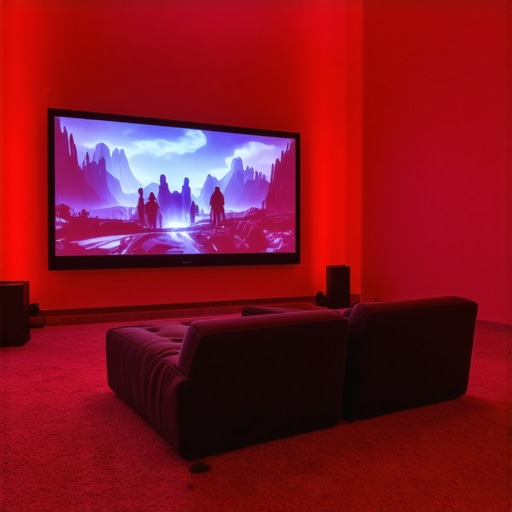
Expert home theater design leverages layered lighting to craft visual depth and spatial harmony. Combining LED strips behind the screen, along ceiling coves, and beneath furniture creates a multi-dimensional glow that enhances depth perception and viewer immersion. For example, installing bias lighting behind the display reduces eye strain and boosts contrast perception, as detailed in ultimate guide to bias lighting. When these layers are calibrated for color temperature and brightness, they produce a balanced environment that feels both natural and cinematic. Consider experimenting with different hues and intensities to match specific genres or moods, from cool blues for sci-fi to warm ambers for classic films.
Can You Achieve True Personalization in Your Lighting Design
Personalization is the frontier of expert home theater lighting. Using dedicated apps and control systems, users can create custom lighting profiles tailored to their preferences, viewing habits, or even specific movies. This customization extends to scheduling transitions, adjusting brightness levels, and selecting color schemes that resonate with individual aesthetic sensibilities. Moreover, integrating voice-controlled assistants can streamline adjustments, making ambient lighting both intuitive and adaptable. For more insights into creating a uniquely tailored environment, explore our comprehensive expert LED strip lighting tips.
How can I leverage professional calibration techniques to perfect my ambient lighting setup for maximum cinematic impact?
Professional calibration involves fine-tuning color temperatures, brightness levels, and contrast ratios to achieve optimal visual harmony between your display and ambient lighting. Utilizing tools like colorimeters and calibration software ensures your LED strips emit consistent, accurate colors that enhance image clarity. This process often includes adjusting the room’s ambient light to match the display’s native color temperature, reducing visual fatigue and improving overall viewing comfort. Industry standards recommend referencing authoritative guides, such as those from the expert guides to ambient backlight solutions, for step-by-step calibration procedures. Incorporating these techniques guarantees a seamless, immersive cinematic experience that rivals professional theaters.
Pushing the Boundaries of LED Synchronization for Next-Level Home Cinemas
While basic LED setups offer a pleasing ambient glow, true cinematic immersion demands sophisticated synchronization between your display and ambient lighting. By employing high-end media servers like MadVR or custom-developed software solutions, enthusiasts can achieve pixel-perfect, real-time lighting effects that respond instantaneously to on-screen action. This level of synchronization creates a seamless visual environment where the boundary between digital content and physical space dissolves, elevating the viewing experience from passive to profoundly immersive.
For example, integrating a high-performance HDMI 2.1 sync box with advanced firmware allows for ultra-low latency transmission of video signals, ensuring your LED strips react without perceptible delay. Additionally, leveraging open-source platforms like Ambibox or Prismatik, combined with high-CRI LED strips, offers customizable effects that adapt dynamically to scene content, whether it’s a fast-paced action sequence or a subtle atmospheric shot. This approach requires meticulous calibration, but the payoff is a home theater environment that rivals commercial cinemas in visual depth and engagement.
What are the most effective methods to calibrate LED lighting systems for color fidelity and scene responsiveness?
Calibration begins with understanding the native color temperature of your LED strips and the ambient room lighting conditions. Using professional tools such as a spectroradiometer or colorimeter, you can measure the emitted light spectrum and adjust settings in your control software to match industry standards—typically 6500K for daylight or 7500K for cinema-quality calibration. Software-based calibration tools like CalMAN or LightSpace allow for fine-tuning RGB channels, ensuring color accuracy and consistency across different scenes.
Furthermore, integrating a dedicated calibration process with your media server setup ensures that the lighting reacts precisely to scene changes. For instance, setting specific color profiles for different genres—warmer tones for dramas, cooler for sci-fi—can be achieved through pre-programmed scene profiles. Regular recalibration is recommended, especially if you upgrade your LED hardware or change room conditions, to maintain optimal visual harmony.
Research from the Cinema Technology Association emphasizes that meticulous calibration significantly enhances contrast perception and reduces visual fatigue, making your home cinema experience not just beautiful but also healthier for long viewing sessions.
Experimenting with Multi-Layered Illumination to Enhance Depth Perception
Advanced home theater design isn’t complete without exploring multi-layered lighting schemes that add depth and dimension to your space. Combining LED strips in various zones—behind the screen, along architectural coves, and under furniture—creates a layered glow that accentuates spatial contours and guides viewer focus. For instance, backlighting the display reduces eye strain and increases contrast perception, especially in rooms with significant ambient light, as highlighted in the Design Magazine’s article on layered illumination.
Implementing this technique involves selecting LED strips with adjustable brightness and color temperature, enabling dynamic adjustments based on content genre or mood. When properly calibrated, these layers work synergistically to produce a natural, immersive environment that amplifies the cinematic experience. Consider incorporating subtle color shifts—warm hues for emotional scenes or cool blues for suspense—to further enhance viewer engagement.
Unlocking Personalization for an Intuitive, Tailored Viewing Sanctuary
Personalization transforms a standard home theater into a bespoke sanctuary, perfectly aligned with your aesthetic and functional preferences. Modern control systems like Control4 or Crestron allow for seamless integration of lighting profiles, enabling you to switch moods with a single command. Customizable scenes—such as a “Movie Night” setting with dimmed warm lighting or a “Gaming Mode” with vibrant, reactive effects—bring a new level of convenience and atmosphere control.
Voice integration with assistants like Amazon Alexa or Google Assistant further streamlines adjustments, allowing you to modify lighting without interrupting your viewing. Advanced users can even develop custom scripts that synchronize lighting transitions with specific content cues, creating a truly immersive, intuitive environment.
How can professional calibration elevate your ambient lighting to match the visual fidelity of commercial theaters?
Professional calibration involves meticulous adjustment of your lighting system to meet industry standards for color accuracy, contrast, and luminance. Using tools such as a colorimeter, you can measure the spectral output of your LED strips and fine-tune settings to ensure the ambient light complements your display’s high dynamic range (HDR) content. This process minimizes color shifts and ensures that your lighting enhances, rather than detracts from, image details.
Industry guidelines from entities like the THX Home Theater Calibration recommend establishing baseline settings, then performing iterative adjustments to optimize contrast and color fidelity. Incorporating professional calibration into your setup guarantees an environment that maximizes visual impact and viewer comfort, bringing your home cinema experience ever closer to the quality of commercial theaters. For dedicated enthusiasts, periodic recalibration is essential as hardware updates or room conditions evolve—ensuring your immersive environment remains pristine and true to intent.
Pushing Beyond Basics with High-Precision Calibration Techniques
For audiophiles and home theater aficionados aiming for cinematic perfection, calibration transcends simple adjustments. Employing tools like spectroradiometers and colorimeters ensures your LED backlight precisely matches industry benchmarks, such as D65 white point standards, optimizing both color fidelity and contrast perception. This meticulous process involves iterative software calibration in platforms like CalMAN or LightSpace, fine-tuning RGB outputs and gamma curves for harmonious integration with HDR content. Moreover, integrating ambient light measurement devices during calibration sessions can dynamically adapt lighting to fluctuating room conditions, elevating visual consistency and reducing eye fatigue.
Innovative Use of Non-Linear Lighting Dynamics to Mimic Real-World Environments
Advanced lighting schemes leverage non-linear control algorithms to simulate natural lighting phenomena such as sunrise, sunset, or stormy skies, thereby enriching immersion. By programming LED strips with custom firmware or utilizing DMX lighting controllers with advanced scripting capabilities, users can create complex transition effects that evolve over time, synchronizing with media playback. This approach demands a deep understanding of color science and temporal modulation, demanding expertise in both hardware and software integration. As detailed in the Journal of Applied Lighting, these techniques can dramatically improve spatial perception and emotional engagement, especially in multi-purpose rooms where versatility is key.
How can real-time adaptive lighting enhance viewer engagement during fast-paced scenes?
Implementing real-time adaptive lighting involves integrating media analysis and AI-driven control systems capable of interpreting scene dynamics instantaneously. Using neural network-based algorithms and high-speed data processing, LED backlighting can respond to motion intensity, color shifts, and scene mood, creating a seamless, visceral experience. For example, during a high-octane chase scene, lighting can intensify in synchronization with on-screen action, heightening tension and excitement. Industry pioneers recommend platforms like MadVR with custom plugins or bespoke control architectures to achieve this level of synchronization. This technique not only amplifies immersion but also reduces visual fatigue by maintaining optimal contrast and color balance dynamically.
To explore this frontier further, professionals and enthusiasts are encouraged to delve into research from the Lighting Technologies and Systems Journal, which offers case studies and technical guidelines for adaptive lighting mastery.
Harmonizing Multi-Layered Illumination for Depth Mastery
Creating a multi-dimensional visual environment hinges on expertly orchestrating layered lighting zones—each calibrated to contribute to a cohesive depth illusion. For instance, combining backlit screens with perimeter cove lighting and subtle foot-level glows can dramatically amplify spatial perception. This technique requires selecting LED strips with high CRI ratings and tunable color temperatures, enabling precise control over each layer. When these are synchronized in real-time, the room transforms into a dynamic cinematic space where foreground, midground, and background seamlessly blend, mimicking professional theaters. Such layered setups can also be programmed to adapt to different content genres, enhancing emotional resonance and viewer immersion.
Achieving Personalization with Sophisticated Control Ecosystems
Personalization reaches new heights when integrating advanced control ecosystems like Crestron or Control4, which facilitate complex scene management and automation. Custom profiles can be created for various viewing scenarios—romantic evenings, gaming marathons, or family movie nights—each with tailored lighting, sound, and display settings. The inclusion of voice assistants like Alexa or Google Assistant simplifies real-time adjustments, while customizable scripting allows for scene transitions that respond to content cues. For discerning users, developing custom automation scripts using APIs from lighting control platforms can produce an intuitive, highly refined environment that elevates the overall cinematic experience to professional standards.
What are the benefits of employing professional-grade calibration in achieving true cinematic quality at home?
Professional calibration ensures your ambient lighting complements high-dynamic-range (HDR) displays, accurately reproduces color spaces, and maintains consistent luminance levels across different viewing conditions. By aligning LED backlighting with display calibration standards, you can maximize contrast ratios, enhance shadow detail, and prevent color shifts that diminish image fidelity. Experts from the Cinema Technology Association emphasize that such meticulous adjustments not only elevate visual clarity but also contribute to viewer comfort during extended sessions. Investing in professional calibration tools and expertise creates a bespoke environment where every frame is optimized for maximum cinematic impact, rivaling commercial theater quality.
Unlocking the Potential of Precision Lighting
Expertly calibrated ambient lighting transforms a home theater from basic to breathtaking, enhancing contrast, color fidelity, and overall immersion. Utilizing high-CRI LED strips and professional calibration tools ensures your environment complements high-dynamic-range content seamlessly.
Advanced Synchronization Techniques
Real-time synchronization between your LED backlights and on-screen action, achieved through media servers or HDMI sync boxes, creates a dynamic visual experience. This sophisticated approach demands a nuanced understanding of both hardware compatibility and software configuration, elevating your system to professional standards.
Layered Illumination for Depth and Focus
Implementing multi-layered lighting zones—behind the screen, along architectural coves, and beneath furniture—produces a rich sense of depth. Expert calibration of color temperature and brightness across these layers ensures an immersive, visually balanced environment that adapts to different genres and moods.
Personalization as a Craft
Using advanced control ecosystems like Crestron or Control4, combined with voice assistants, allows for effortless switching between meticulously designed lighting profiles. This level of customization enhances user experience, making each viewing session uniquely tailored and intuitively accessible.
Curated Expert Resources for Deepening Your Knowledge
- Ultimate Guide to LED Strips and Bias Lights for Home Theater – Comprehensive insights into selecting and deploying LED lighting tailored for cinematic environments.
- Effective Home Theater Lighting with Bias Lights and LED Strips – Practical tips for achieving balanced, flicker-free illumination that enhances contrast and reduces eye strain.
- Expert Guide to Ambient Backlight Solutions – Detailed calibration techniques and hardware recommendations for optimal color fidelity and responsiveness.
- Creating Immersive Ambiance Best Bias Lights for 2025 – Forward-looking strategies incorporating the latest in smart lighting technology and synchronization.
A Final Reflection from the Lighting Connoisseur
In the realm of home theater design, mastering ambient lighting stands as a pinnacle of personalized cinematic experience. The integration of expert calibration, dynamic synchronization, layered illumination, and sophisticated control systems transforms ordinary viewing into an immersive journey. For those committed to excellence, continuous learning and refinement are essential—dive into authoritative resources, experiment with innovative configurations, and elevate your space to professional heights. Your perfect home theater awaits, illuminated by the expertise you cultivate today. To deepen your understanding or share insights, visit our contact page and join a community of passionate enthusiasts.

Leave a Reply