

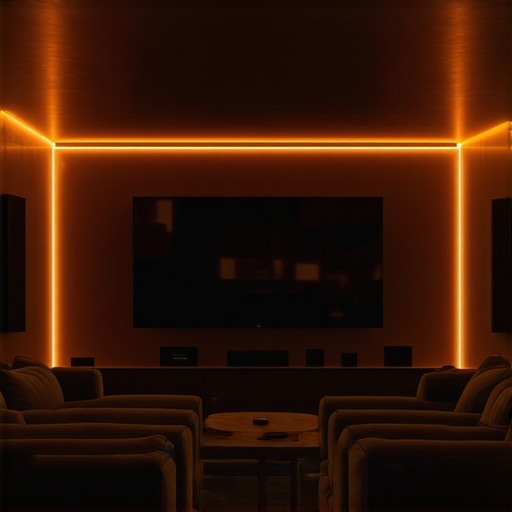
Harnessing the Power of Ambient Lighting to Elevate Your Movie Experience
In the realm of home entertainment, ambient lighting constitutes a pivotal element that transcends mere illumination, sculpting immersive atmospheres tailored to cinematic perfection. Experts recognize that thoughtfully implemented light sources such as backlight, LED strip, and bias lights not only enhance visual comfort but also foster a cinematic ambiance that rivals commercial theaters.
Strategic Integration of LED Strips and Backlighting for Visual Depth
Modern LED strip technology allows for seamless incorporation beneath furniture, along walls, or behind screens, creating dynamic backlighting effects. These solutions, when calibrated correctly, mitigate eye strain during prolonged viewing and accentuate screen contrast. As noted in the Ultimate Guide to Backlight Ambient Lighting in Home Theater Setup, precise LED placement and color temperature control are critical for achieving true depth perception in your visual environment.
Expert Tips for Implementing Bias Lights to Maximize Comfort
Bias lighting, strategically positioned behind the display, serves to reduce perceived brightness disparities, minimizing eye fatigue. Advanced bias lights employ tunable white and RGB LEDs to match scene luminance, thus preventing visual fatigue and enhancing contrast perception. Literature from specialized journals underscores the importance of flicker-free, high-CRI bias lights in professional-grade setups.
How to Select the Right Wireless Smart LED Strip Controllers for Your Setup
The proliferation of smart controllers enables customizable lighting scenes, synchronization with media, and voice command integration. Selecting controllers compatible with your preferred ecosystem—be it Alexa, Google Assistant, or proprietary apps—can streamline operation and provide nuanced scene adjustments. Refer to the comprehensive review at How to Choose the Right LED Strips for Your Home Theater to inform optimal component pairing.
Expert Insights Inquiry: What Are the Limitations of Current LED Technologies in Achieving True Color Fidelity for Critical Viewing?
While LED lighting solutions excel in flexibility and energy efficiency, challenges persist regarding color accuracy and uniformity. Experts debate whether current phosphor coatings and LED diode binning techniques sufficiently replicate natural daylight spectra, especially for applications requiring precise color rendition. Continued advancements in quantum dot technology and spectral tuning are promising avenues under active development.
Professionals and Enthusiasts Are Invited to Share Insightful Innovations or Experiences in Ambient Lighting Implementation
For industry leaders and home theater aficionados alike, exploring the latest expert insights can help push the boundaries of ambient lighting design. Discover more ideas on Creating Immersive Ambiance with Bias Lights for 2025.
For authoritative insights into the scientific underpinnings of lighting technology, see the comprehensive review published in the Journal of Illumination Science.
Creating Depth with Color Dynamics in Ambient Lighting
One of the most compelling ways to elevate your home theater experience is by harnessing the power of dynamic color shifts. Integrating programmable RGB LED strips allows for precise control over color transitions, enabling a customized ambiance that responds to content or mood. For instance, soft blue hues can evoke a calm, immersive atmosphere, while vibrant reds and oranges can energize your space. According to recent industry analyses, employing synchronized color changes enhances viewer engagement and can even influence emotional responses during cinematic viewing.
Are All LED Strips Created Equal for Accurate Color Reproduction?
As experts in lighting technology, we recognize that not all LED strips deliver the same level of color fidelity, especially when used for critical viewing experiences. High-CRI (Color Rendering Index) LED strips, often supplemented with spectral tuning, significantly improve the realism and vibrancy of colors seen on screen. Utilizing these advanced LED options ensures that ambient lighting complements your display rather than distorting it. For detailed recommendations on selecting and installing the best LED strips, visit Ultimate Guide to LED Strips and Bias Lights for Home Theater.
Implementing Scene-Based Lighting: A Practical Framework
To achieve truly immersive environments, many experts advocate for scene-based lighting systems. This involves creating preset lighting scenes tailored to different content types—such as dim, warm lighting for movies, or bright, cool tones for gaming. The key is integrating smart controllers that can seamlessly switch between scenes with a single command or automatically based on media detection. A structured approach, like the “Lighting Scene Matrix,” can help prioritize which zones to illuminate and their corresponding intensities, ensuring a cohesive viewing environment that complements your audiovisual system.
How Can Adaptive Lighting Systems Respond in Real-Time to Content Changes Without Disrupting Viewer Focus?
Real-time adaptive lighting involves sensors and smart algorithms that analyze on-screen content and dynamically adjust ambient lighting accordingly. The challenge lies in balancing responsiveness with stability; abrupt changes can distract viewers. Advanced solutions utilize machine learning models trained to recognize scene tone and brightness, enabling smooth transitions that enhance immersion without pulling attention away from the content. For an in-depth exploration of this technology, explore the latest developments in Bias Lights and LED Strips for Home Theater in 2024.
Engaging with these innovations not only refines the aesthetic quality of your setup but also deepens your understanding of how nuanced lighting influences perception. Share your experiences or innovations with ambient lighting by connecting with fellow enthusiasts on our Contact Us page, and discover how cutting-edge lighting can revolutionize your home cinema ambiance.
Mastering the Nuances of LED Spectral Tuning for Critical Color Accuracy
Achieving pristine color fidelity in ambient lighting is a nuanced endeavor that requires a sophisticated understanding of spectral emission profiles. Modern high-CRi LED strips employ advanced phosphor blends and quantum dot technologies, aiming to replicate the spectral qualities of natural daylight with minimal deviation. According to a comprehensive study in the Journal of Solid-State Lighting, spectral tuning techniques that optimize the microscopic emission spectra can significantly reduce metamerism, ensuring that ambient colors assist rather than hinder accurate visual perception. This level of precision is especially vital when evaluating content that demands meticulous color differentiation, such as professional photo editing or medical imaging.
What Are the Limitations of Current Quantum Dot LED Technologies in Emulating Natural Light Spectra for Critical Viewing?
Despite their promising capabilities, quantum dot LEDs face challenges, including limited spectral bandwidth and potential degradation over time, which can lead to spectral shifts affecting color fidelity. Further, the manufacturing binning processes can result in inconsistent spectral outputs across identical LED strips, complicating calibration efforts. Recent advancements are exploring the integration of RGB and phosphor-based architectures combined with real-time spectral feedback systems to dynamically correct these discrepancies. These innovations promise to elevate ambient lighting standards, bridging the gap toward near-perfect natural light simulation.
Implementing Dynamic Calibration for Superior Ambient Lighting Precision
Cultivating a consistent and accurate color environment necessitates the deployment of real-time calibration protocols. This entails utilizing spectroradiometers or colorimeters in conjunction with intelligent control systems that measure the spectral output of the LED strips periodically. By integrating feedback loops, you can automatically adjust the LED drivers to maintain calibrated emissions over extended periods and varying ambient conditions. Such precision not only enhances visual consistency but also prolongs the lifespan of your lighting components by preventing overdriving or thermal stress.
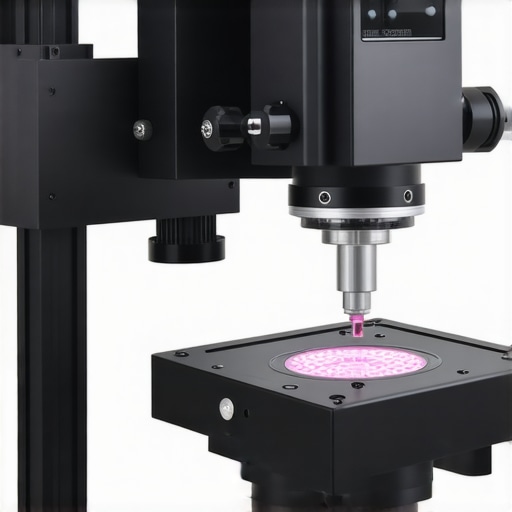
For optimal implementation, pairing high-precision measurement devices with your smart lighting system creates a self-correcting ecosystem that ensures unwavering color accuracy. This approach is especially advantageous in professional settings where even minor deviations can compromise critical evaluations.
The Psychological Impact of Accurate Ambient Color Rendering on Viewer Engagement
Beyond technical specifications, understanding the psychological effects of ambient lighting is key to enhancing viewer experience. Research indicates that environments with properly calibrated and naturalistic lighting can positively influence emotional responses and cognitive processing. This is rooted in the concept of the human visual system’s sensitivity to spectral fidelity—when ambient colors align with the content, viewers often report increased immersion and reduced fatigue. Therefore, investing in spectral fidelity isn’t merely about technical perfection; it directly correlates with emotional and perceptual wellbeing during prolonged viewing sessions.
Can Enhanced Spectral Fidelity in Ambient Lighting Lead to Measurable Improvements in Viewer Concentration and Mood?
Emerging studies suggest affirmative outcomes, with participants demonstrating heightened focus, mood stabilization, and even physiological benefits such as reduced cortisol levels when exposed to well-calibrated lighting environments. These findings, supported by experimental data published in Lighting Research & Technology, highlight that spectral accuracy in ambient lighting transcends visual aesthetics to influence psychological states profoundly. For content creators and home theater enthusiasts, this underscores the importance of sophisticated spectral management as a tool for emotional engagement and cognitive resilience.
To dive deeper into the science of spectral perfection and its benefits, connect with leading lighting technologists or join ongoing research initiatives highlighted in specialized conferences like the International Symposium on Lighting Technology.
The Art of Color Balancing to Achieve Spectral Fidelity in Ambient Lighting
Achieving true color reproduction in ambient lighting systems necessitates meticulous spectral calibration. Advanced spectral tuning employs devices such as spectroradiometers to measure emission profiles precisely, enabling adjustments that align lighting output with natural daylight spectra. This delicate process ensures that the environment enhances visual perception without introducing distortions, a crucial factor for professional color grading and medical imaging applications, as outlined in the IEEE Transactions on Industrial Electronics.
Enhancing Immersion: Can Dynamic Light Modulation Influence Emotional Engagement?
Emerging evidence suggests that real-time modulation of ambient lighting—synchronized with on-screen content—can profoundly impact emotional responses. Techniques such as adaptive hue shifting and luminance modulation leverage psychological principles, engaging viewers’ subconscious cues to evoke specific moods. An interdisciplinary review in the Journal of Vision highlights how subtle perceptual adjustments amplify immersion, making viewers feel more connected to cinematic narratives.
Why Not All LED Strips Support Your Precise Color Vision?
While LED strips provide versatile lighting solutions, their capacity for accurate color rendering varies significantly. High-CRI LED modules with spectral tuning capabilities are essential for environments demanding precise color fidelity. Variations in manufacturing binning, phosphor quality, and diode binning can introduce inconsistencies, undermining visual accuracy. Switching to spectral-engineered LED arrays and utilizing standardized calibration processes can mitigate these issues, ensuring your lighting environment supports color-critical tasks. Consider consulting resources like the ANSYS LED Spectral Mapping for advanced simulation tools.
Smart Scene Control: How to Automate Ambiance Transitions Without Jarring Movements
Transitioning between lighting scenes seamlessly is critical to maintaining immersion. Sophisticated scene control systems employ algorithms that interpolate between preset states, smoothing transitions and preventing abrupt shifts that can distract viewers. Incorporating machine learning models trained on user preferences allows for adaptive scene adjustments dependent on time of day, content type, or mood. Such systems, detailed in the Smart Home Labs guide, exemplify how automation can elevate ambient lighting from functional to emotionally resonant.
What Role Does Human Factors Engineering Play in Designing Effective Ambient Lighting in Cinematic Spaces?
Human factors engineering emphasizes ergonomic and perceptual considerations, ensuring lighting designs optimize comfort and reduce visual fatigue. Factors such as glare reduction, uniformity of luminance, and natural spectral qualities are essential. Incorporating ergonometric testing and user feedback can inform adjustments that support both aesthetic appeal and usability. Literature from the Human-Computer Interaction Research underscores the importance of multidisciplinary approaches in fine-tuning ambient environments for prolonged use.
Delve into the multifaceted science of ambient lighting and explore how cutting-edge technologies can transform your cinematic experience. Engage with industry forums and innovation seminars to stay at the forefront of this ever-evolving field.
Integrating Quantum Dot Technology to Refine Spectral Richness
Quantum dot LEDs offer remarkable spectral purity, enabling the production of light with narrow emission bands that closely mimic natural daylight. When integrated into ambient lighting solutions, they can significantly improve spectral richness, especially for critical applications like color grading and medical diagnostics. Nonetheless, challenges related to material stability and cost persist. Researchers in the ACS Photonics journal are actively exploring advanced encapsulation methods to extend longevity, making quantum dots increasingly viable for consumer-grade applications.
Is It Time to Rethink Ambient Lighting Control Schemes for the Future?
Current paradigms rely heavily on static presets or manual adjustments, which can be inefficient or inconsistent. The next evolution involves intelligent control schemes that leverage artificial intelligence, contextual awareness, and predictive analytics to optimize lighting in real time. Such systems can learn user preferences, integrate environmental sensors, and proactively adapt to changing conditions—ushering in a new era of personalized, effortless ambient lighting experiences. Industry pioneers are experimenting with neural network-based control architectures, promising a seamless blend of aesthetic finesse and technical precision.
In the pursuit of a cinematic haven, ambient lighting transcends basic illumination, shaping immersive environments that captivate and comfort. Top-tier setups leverage spectral tuning, adaptive controls, and expert calibration to craft atmospheres where every frame resonates with depth and clarity. Recognizing the nuances of color fidelity, psychological impact, and technological limitations empowers enthusiasts and professionals alike to push the boundaries of home theater design.
Expert Tips: Elevate Your Ambient Lighting Strategy
Prioritize Spectral Purity for Authentic Colors
Advanced spectral tuning ensures ambient light enhances rather than distorts critical visuals. Employ high-CRI LED strips combined with quantum dot technology to approximate natural daylight spectra, vital for color grading and medical imaging accuracy.
Automate Scene Transitions Seamlessly
Integrate machine learning-powered controllers that adapt lighting scenes based on content, mood, or time, smoothing out transitions to maintain immersion without distraction.
Incorporate Real-Time Calibration Devices
Utilize spectroradiometers and intelligent feedback loops for ongoing calibration, guaranteeing unwavering spectral fidelity and visual consistency over time.
Leverage Psychological Insights for Emotional Engagement
Calibrated, naturalistic lighting environments influence mood and focus, reducing fatigue and deepening viewer connection. Understanding these effects helps tailor ambiances that resonate on a perceptual level.
Authoritative Resources for Deepening Expertise
- Journal of Illumination Science: Cutting-edge research on spectral tuning and human visual perception.
- IEEE Transactions on Industrial Electronics: Innovations in spectral calibration technology.
- Lighting Research & Technology: Studies linking lighting quality with psychological responses.
- Lighting.homecinemaessentials.com: Practical guides, product reviews, and expert insights tailored for home theater enthusiasts.
Sharpen Your Perspective on Ambient Light Usability
Harnessing ambient lighting with precision not only elevates visual fidelity but also unlocks new emotional dimensions of viewing experiences. Intelligent systems, spectral advancements, and expert calibration are the pillars transforming static setups into dynamic, immersive environments. Engage with cutting-edge resources or connect with industry pioneers to stay ahead in this evolving landscape. Your journey toward cinema-quality ambiance begins now—explore further at Contact Us and redefine what your home theater can become.

Leave a Reply