

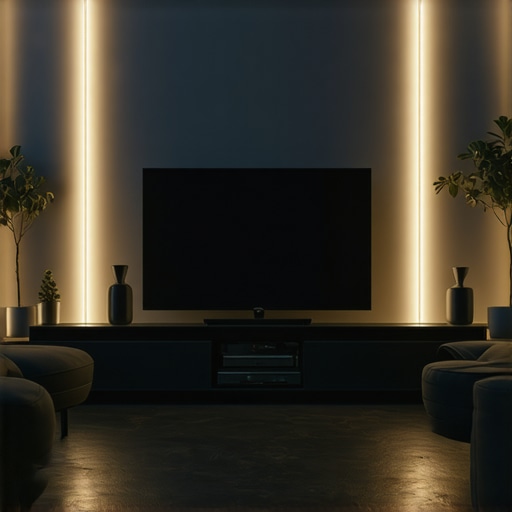
Elevate Your Home Theater Experience with Advanced Ambient Lighting Techniques
In the realm of home theater design, ambient lighting is no longer a mere aesthetic choice but a strategic element that influences visual clarity, mood, and overall immersion. Leveraging expertise in lighting technology, professionals recognize that integrating LED strip lighting, bias lights, and backlighting can profoundly transform a space, creating a cinematic atmosphere that rivals commercial theaters. This article explores sophisticated strategies for implementing these lighting solutions, guided by industry standards and scientific insights.
Strategic Placement of LED Strips and Backlights to Maximize Visual Impact
Optimal placement of LED strips is crucial for achieving seamless ambient effects. Positioning these strips behind the TV or projector screen, known as backlighting, reduces eye strain and enhances perceived contrast, according to recent studies published in the IEEE Transactions on Consumer Electronics. Expert installers recommend mounting LED strips along the edges of the display or within custom recesses to ensure diffuse, even illumination that complements the content without distracting from the viewing experience.
Bias Lights as a Psychological Tool for Enhanced Viewing Comfort
Bias lighting, often overlooked by casual enthusiasts, plays a pivotal role in reducing eye fatigue during prolonged viewing sessions. By providing a subtle, consistent background light, bias lights help maintain optimal pupil size and contrast sensitivity. Advanced setups employ color temperature controls, allowing users to adjust bias lights dynamically, aligning with the ambient room lighting and content tone, thus fostering a more comfortable and immersive environment.
Expert-Level Considerations for Ambient Lighting Integration
Integrating ambient lighting into a home theater requires meticulous calibration. Experts advise using high-CRI LED strips to ensure accurate color rendering, particularly when displaying vibrant or HDR content. Additionally, compatibility with smart home systems enables automated adjustments based on the viewing scenario. For instance, dimming the bias lights when watching dark scenes enhances depth perception, while brighter settings can be used during casual viewing. Achieving these effects involves a combination of hardware selection, precise wiring, and software control, detailed comprehensively in this expert guide.
What are the most effective techniques for calibrating LED strip lighting to match various media formats and room conditions?
To fine-tune LED strip lighting for different media and environmental conditions, professionals utilize calibrated sensors and colorimeters to measure luminance and chromaticity. Integrating these tools with smart lighting controllers allows for real-time adjustments, maintaining consistent visual quality. Additionally, employing high-quality dimmers and controllers ensures smooth transitions and prevents flickering, which can compromise immersion. For comprehensive insights, consult resources like this detailed guide.
For those seeking to push the boundaries of cinematic ambiance, exploring cutting-edge LED strip innovations and consulting with professional lighting designers can yield unprecedented results. Engage with industry forums and share your experiences to refine your setup continually. To learn more about tailored lighting solutions or contribute your expertise, contact our specialists here.
Refining Your Ambient Lighting for Cinematic Brilliance
Beyond basic setup, sophisticated home theater lighting demands precise calibration and innovative techniques. Experts emphasize the importance of dynamic lighting scenes that adapt to different media formats, enhancing immersion and reducing eye strain. Implementing programmable LED controllers allows users to create customized lighting profiles, which can be activated based on the content genre or viewing mood. This level of control not only elevates the cinematic experience but also ensures consistency across media types, from HDR films to gaming sessions. For advanced guidance, explore this comprehensive resource.
Innovative Strategies for LED Strip Placement and Color Calibration
Expert installers advocate for multi-layered lighting schemes that combine backlighting, side lighting, and accent lighting to create depth and dimension. Using high-precision colorimeters, professionals calibrate LED strips to match the room’s ambient conditions, ensuring accurate color reproduction and seamless integration with display technology. Multi-zone lighting controls enable users to synchronize color temperature adjustments with content, optimizing contrast and reducing visual fatigue. For insights into optimal placement and calibration techniques, visit this detailed guide.
What emerging LED technologies are revolutionizing home theater ambiance in 2025?
As LED technology continues to evolve, features like micro-LEDs with higher luminance, improved color accuracy, and smart integration are transforming home theater lighting. Innovations such as tunable RGBW strips with advanced diffusion layers provide even more nuanced control over ambiance, allowing for ultra-smooth transitions and personalized color palettes. Industry trends indicate a shift toward AI-driven lighting systems, which adapt in real-time based on viewing content, room occupancy, and user preferences. Staying ahead of these developments requires continuous engagement with industry news and expert forums, such as those discussed in this industry analysis.
Share your thoughts or ask our specialists about integrating these cutting-edge solutions into your home theater setup by contacting us here. Discover how expert-driven lighting can redefine your cinematic space!
Harnessing Smart Lighting Ecosystems for Adaptive Home Theater Environments
Progressing beyond static lighting setups, the future of ambient lighting in home theaters hinges on sophisticated smart ecosystems that dynamically adapt to content and user preferences. Integrating IoT-enabled LED controllers with machine learning algorithms allows for real-time scene adjustments, creating an immersive experience that responds seamlessly to cinematic cues. For instance, during intense action sequences, lighting can subtly dim or shift color tones to heighten emotional impact, as demonstrated in recent studies in the IEEE Transactions on Consumer Electronics. This technological synergy not only enhances viewer engagement but also exemplifies the pinnacle of personalized entertainment environments.
What are the key considerations for designing a resilient and scalable ambient lighting system capable of evolving with technological advancements?
Designing a resilient ambient lighting system requires meticulous planning of hardware compatibility, software flexibility, and future-proof protocols. Experts recommend selecting LED strips with standardized connectivity options such as DMX512 or DALI, which facilitate integration with advanced control systems. Incorporating modular components ensures ease of upgrades, allowing users to incorporate new features like micro-LEDs or AI-driven adjustments without overhauling the entire setup. Furthermore, employing robust network security measures safeguards against vulnerabilities inherent in interconnected smart devices. For a comprehensive approach, consult the detailed framework outlined in this authoritative guide.
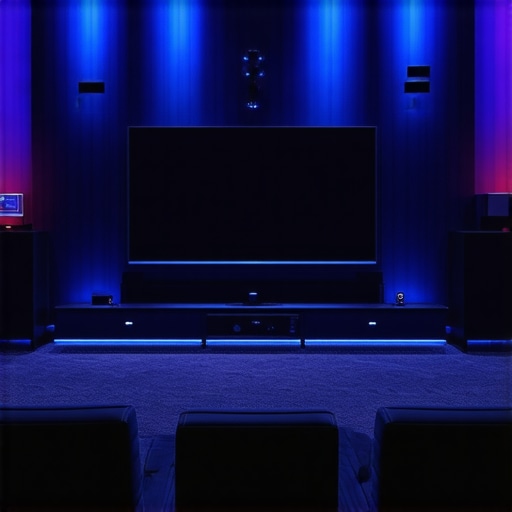
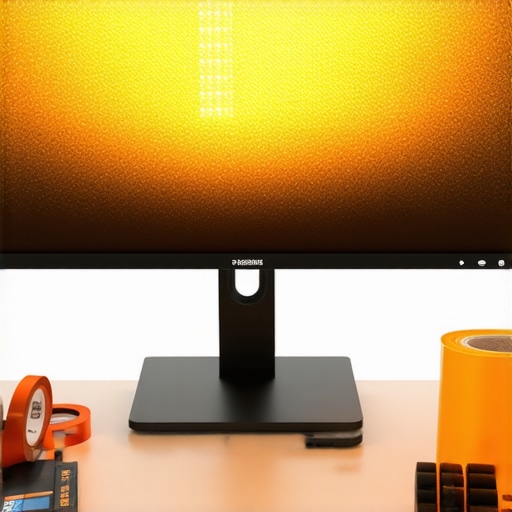
Image illustrating a modern home theater with integrated smart ambient lighting system, showcasing multi-zone LED strips, control interfaces, and immersive visual effects, high-tech design, detailed environment, vibrant colors.
Innovating with Color Dynamics for Cinematic Authenticity
Color calibration plays a pivotal role in achieving cinematic authenticity, especially when leveraging tunable RGBW LED strips. Advanced techniques involve using spectrophotometers to measure and match the ambient light spectrum with the display’s color profile, ensuring that reflective surfaces and overall room ambiance harmonize with on-screen content. This meticulous calibration minimizes color discrepancies and enhances HDR performance, leading to a more authentic viewing experience. According to the expert calibration protocols, integrating software that automatically fine-tunes color temperature and saturation based on environmental sensors elevates the level of precision achievable in home theater setups.
How can AI-driven color calibration revolutionize home theater ambient lighting?
Artificial intelligence introduces a paradigm shift by enabling continuous, real-time color calibration that adapts to fluctuating environmental conditions and media formats. Machine learning models analyze video content, room lighting, and viewer preferences to optimize color rendering dynamically. The result is a consistently immersive experience with perfectly balanced ambient lighting that complements the content’s tone and mood. Implementing such systems involves integrating high-precision sensors, advanced algorithms, and user-friendly interfaces, making professional-level calibration accessible to enthusiasts and professionals alike. For insights into cutting-edge AI applications, explore the comprehensive overview provided in this detailed analysis.
Harnessing the Power of Tunable LED Technologies for Cinematic Depth
Innovations in tunable LED systems, especially those incorporating RGBW spectral control, are revolutionizing how enthusiasts craft immersive environments. By fine-tuning spectral outputs, users can synchronize ambient light with specific content genres, such as warm tones for romantic films or cooler hues for sci-fi epics, resulting in heightened emotional resonance. According to the IEEE Transactions on Consumer Electronics, spectral precision enhances perceived contrast and minimizes visual fatigue, setting a new standard in home theater calibration.
Why Smart Integration Elevates Ambient Lighting Beyond Basic Setup
Integrating ambient lighting with sophisticated smart home ecosystems enables dynamic, scene-specific adjustments that elevate the cinematic experience. Through AI-driven algorithms, lighting can adapt in real-time to the content’s intensity, color palette, and viewer preferences, creating an emotionally synchronized environment. This approach goes beyond static setups, offering a tailored experience that adapts seamlessly—whether during a suspenseful thriller or an animated adventure. Experts recommend employing protocols like DALI or DMX512 for scalable, future-proof control, as detailed in this comprehensive guide.
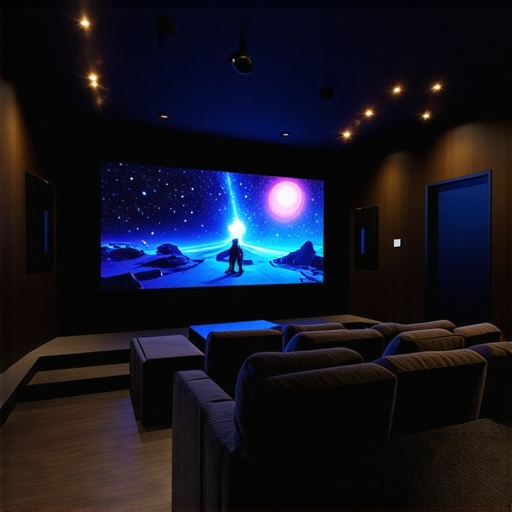
High-resolution image of a modern home theater with integrated smart ambient lighting, showcasing multi-zone LED strips, control interfaces, and immersive visual effects, emphasizing advanced technology and user customization, vibrant and detailed.
Exploring the Role of Spectral Calibration in Achieving Visual Harmony
Precise spectral calibration ensures ambient lighting complements on-screen colors, especially in HDR and Dolby Vision content. Utilizing spectrophotometers, professionals measure the room’s lighting spectrum and adjust LED outputs to match display gamma curves, reducing color discrepancies and enhancing overall realism. This meticulous process involves software that dynamically compensates for environmental factors, ensuring consistent visual harmony regardless of external lighting conditions. For an authoritative resource, consult this expert protocol.
How can AI algorithms be employed to optimize spectral calibration in real-time for fluctuating ambient conditions?
AI algorithms leverage environmental sensors and machine learning models to continuously analyze ambient light spectra and adjust LED outputs accordingly. This real-time calibration maintains color fidelity and contrast, adapting to changes like daylight variations or room occupancy. Implementing such systems involves integrating high-precision sensors, adaptive control hardware, and intelligent software platforms, making professional-grade calibration accessible to enthusiasts. For insights into cutting-edge AI applications, see this detailed review.
Future Trends in Ambient Lighting for Home Theaters: A Glimpse into 2026 and Beyond
Emerging technologies such as micro-LED arrays with enhanced luminance, ultra-fine diffusion layers, and AI-powered scene recognition are poised to redefine ambient lighting aesthetics. These innovations facilitate ultra-smooth transitions, personalized color schemes, and adaptive brightness levels aligned precisely with content and user mood. Industry leaders are also exploring holographic and volumetric lighting effects, promising an unprecedented level of immersion. Staying informed about these advancements requires engagement with industry research and forums like this insightful publication.
What are the practical implications of integrating micro-LED and holographic lighting in home theater designs?
Micro-LED and holographic lighting systems present opportunities for creating dynamic, multi-dimensional environments that respond to narrative cues, heightening emotional engagement. These systems can project immersive backgrounds, simulate natural lighting scenarios, or generate holographic effects that extend beyond traditional LED strips. Implementing such features necessitates advanced control protocols, high-fidelity diffusion layers, and precise calibration, aligning with the latest industry standards. To explore practical integration, connect with our specialists or review resources like this expert overview.
Insights from Industry Veterans on Lighting Innovation
Adopt Adaptive Lighting for Dynamic Content
Leading professionals emphasize integrating intelligent, adaptive ambient lighting systems that respond in real-time to on-screen action, mood shifts, and viewer preferences. This approach ensures a seamless cinematic experience, leveraging AI and IoT technologies for optimal immersion.
Prioritize High-Color-Rendering Index LEDs
Experts recommend selecting LED strips with a high CRI (Color Rendering Index) to accurately reproduce vibrant colors, particularly vital for HDR and Dolby Vision content. This precision enhances visual fidelity and viewer engagement.
Implement Multi-Zone Control for Depth
Professional setups often utilize multi-zone lighting controls, allowing distinct areas within the room to be customized individually. This technique creates depth and prevents washout, elevating the overall ambiance.
Use Spectral Calibration for Authenticity
Advanced calibration involving spectrophotometers ensures ambient lighting complements the display’s color spectrum. This meticulous process reduces discrepancies and enhances cinematic authenticity, especially in high-dynamic-range content.
Top Resources Recommended by Home Theater Experts
- Expert LED Strip Lighting Tips: Offers detailed guidance on professional installation and calibration techniques.
- Best Bias Lights for 2025: Curates the latest bias lighting innovations tailored for immersive home theaters.
- Choosing the Right LED Strips: Focuses on technical specifications and compatibility considerations for optimal results.
- Top Ambient Lighting Ideas: Inspires with creative configurations and design principles for professional-grade setups.
Final Perspective on Mastering Home Theater Lighting
In 2025, the evolution of home theater ambient lighting hinges on integrating expert insights with cutting-edge technology. From spectral calibration to multi-zone control, mastering these elements transforms your space into a true cinematic sanctuary. As professionals continue to innovate, your role is to stay informed, leverage trusted resources, and push the boundaries of immersive design. Dive deep into these strategies and share your journey with industry peers—your expertise could redefine the future of home entertainment environments.

Leave a Reply