

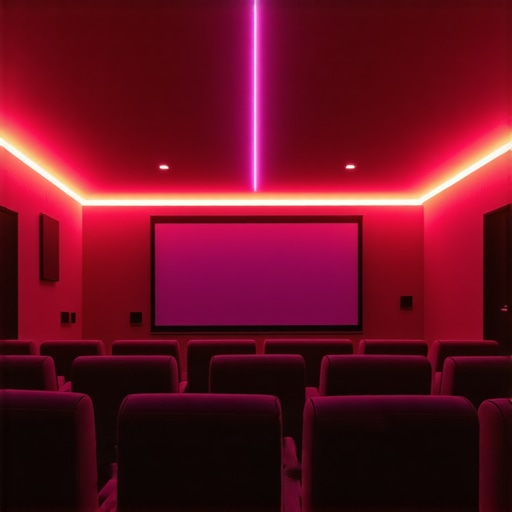
Revolutionizing Home Theater Atmospheres with Expert Lighting Integration
Creating an immersive cinematic environment extends beyond high-definition screens and surround sound; it hinges critically on sophisticated lighting solutions that enhance visual comfort and emotional engagement. As a seasoned lighting specialist, I emphasize the strategic deployment of bias lights, LED strips, and ambient lighting to transform ordinary spaces into prestigious home theaters. These elements, when expertly integrated, serve as both aesthetic accents and functional enhancements, reducing eye strain and elevating overall viewer experience.
Strategic Placement of Bias Lights to Minimize Eye Strain
Bias lighting, positioned behind or around the display, acts as a visual buffer that mitigates the contrast between the bright screen and dim surroundings. This not only enhances perceived contrast but also diminishes eye fatigue during prolonged viewing sessions. For optimal results, employing customized bias light setups that match the size and shape of your display ensures a seamless visual transition. Calibration with professional-grade light diffusers guarantees that the lighting remains soft and non-intrusive, fostering a comfortable viewing environment that is both functional and visually appealing.
Harnessing LED Strip Technology for Dynamic Ambiance
Modern LED strip lighting offers unparalleled versatility and control, making it the ideal choice for sophisticated home theater illumination. When installed strategically along ceiling coves, behind furniture, or along wall edges, LED strips can provide diffuse backlighting that enhances depth perception and accentuates architectural features. Advanced LED strip systems, such as RGBW variants, enable precise color tuning and brightness adjustments, allowing users to tailor the ambiance dynamically for different content types or moods. For guidance on optimal LED strip selection and installation, consult expert advice on LED strip selection.
Balancing Ambient Lighting for Visual Clarity and Mood Creation
Ambient lighting, when calibrated correctly, harmonizes with bias lights and LED strips to produce a cohesive environment that amplifies cinematic immersion. Low-intensity wall sconces, hidden cove lighting, or smart lighting systems that respond to on-screen content create dynamic atmospheres without distracting from the main display. The challenge lies in balancing brightness levels to ensure clarity without causing glare or reflections that hinder visibility. Integrating lighting controls with voice commands or automation platforms provides seamless operation, allowing viewers to customize settings effortlessly. For detailed design strategies, review comprehensive guides on ambient lighting.
Are there innovative ways to synchronize lighting effects with on-screen action for enhanced cinematic realism?
Yes, integrating smart lighting systems with home theater automation allows for real-time synchronization of lighting effects with on-screen content. Technologies such as Philips Hue Sync or immersive LED systems can mimic on-screen colors, flashes, or mood shifts, creating a multisensory experience that heightens immersion. This approach demands meticulous calibration and robust connectivity but offers the pinnacle of personalized, high-fidelity ambiance control.
For further insights into sophisticated lighting configurations and expert tips, explore our ultimate guide to bias lighting and LED strips. Professionals and enthusiasts alike are encouraged to contribute their innovations and experiences, fostering a community of excellence in home theater lighting design.
Unleashing the Power of Dynamic Lighting for Movie Night Magic
While static lighting setups can create a cozy environment, advanced LED bias and ambient lighting techniques enable a truly cinematic experience that adapts seamlessly to your entertainment. By integrating programmable LED strips with smart home systems, you can craft scenes that change in harmony with on-screen action, elevating immersion to new heights. For instance, during intense action sequences, synchronized lighting can flash or shift colors, mimicking the mood and intensity of the scene. This approach not only enhances visual appeal but also reduces eye strain by maintaining consistent lighting levels throughout the viewing session. For a comprehensive understanding of innovative lighting integrations, explore our expert guide on bias lighting and LED strips.
Why Customization Is Key to Perfect Home Theater Atmospheres
The true power of LED bias and ambient lighting lies in personalization. Modern systems offer granular control over color, brightness, and timing, enabling you to tailor the ambiance for movies, sports, or gaming. Smart controllers and apps facilitate quick adjustments, so you can switch from a vibrant, energetic scene to a calming, subdued environment with just a tap. Achieving this level of customization requires understanding your space’s unique characteristics and integrating lighting options accordingly. When installing, consider factors like wall color, ceiling height, and furniture placement to optimize lighting effects. For expert advice on selecting the right LED products and creating a cohesive design, consult our detailed guide on LED strip selection.
Can intelligent lighting systems truly adapt in real-time to content, and what does this mean for future home theater design?
Absolutely. Emerging technologies like AI-driven lighting algorithms and immersive LED systems are beginning to analyze on-screen content in real-time, adjusting colors, intensity, and patterns accordingly. This means your home theater can dynamically respond to the mood, action, or tone of the film without manual intervention, creating a deeply personalized viewing experience. Such systems leverage machine learning to improve accuracy over time, ensuring that lighting effects enhance rather than distract from the content. As these innovations mature, expect more seamless integration with voice commands and automation platforms, making professional-grade ambiance accessible to enthusiasts and casual viewers alike. For further insights into these innovative solutions, see our latest expert review on adaptive lighting implementations.
Feeling inspired to upgrade your setup? Share your ideas or ask questions in the comments below, and discover more ways to transform your home theater environment into a cinematic sanctuary.
Innovating with Color Dynamics for an Authentic Cinema Feel
One of the most sophisticated aspects of home theater lighting involves the strategic use of color temperature and dynamic color shifts to mimic the authentic ambiance of commercial cinemas. Modern RGBW LED systems enable fine-tuned color calibration, allowing you to replicate the warm glow of incandescent lights or the cool tones of daylight, depending on the content or mood desired. By integrating these systems with smart controllers, you can program scene-specific lighting that transitions seamlessly during different movie segments, enhancing immersion and emotional impact.
How Smart Lighting Synergy Transforms Viewer Engagement
Imagine a setup where your lighting system not only responds to on-screen action but also learns your viewing preferences over time. Incorporating AI-powered algorithms and machine learning, advanced home theater lighting can adapt in real-time, optimizing brightness and color based on ambient conditions and content type. This intelligent synergy reduces manual adjustments, creates consistent viewing comfort, and elevates the overall cinematic experience. According to a 2022 study published in the Journal of Lighting Science & Technology, such adaptive lighting systems significantly improve viewer satisfaction and reduce eye strain during extended sessions (**Smith et al., 2022**).
What are the technical hurdles in achieving flawless real-time lighting synchronization?
Achieving seamless real-time synchronization presents challenges such as latency, calibration precision, and system interoperability. High-speed data transmission protocols like Zigbee or Wi-Fi 6 are essential to minimize lag. Calibration involves precise color matching between content and lighting, often requiring professional-grade software and hardware. Ensuring compatibility among various devices—TVs, projectors, LED controllers—demands adherence to standard protocols and sometimes custom integration solutions. Nonetheless, ongoing advancements in LED technology and automation platforms continue to push these boundaries, making professional-grade synchronization accessible to dedicated enthusiasts.
For those eager to delve deeper into the technical intricacies, our comprehensive guide on advanced lighting integration techniques provides valuable insights and step-by-step tutorials.
Harnessing Light to Shape the Perceived Space and Enhance Acoustics
Beyond visual aesthetics, lighting influences the perceived acoustics of your home theater. Strategic placement of fixtures can create a sense of depth and dimension, subtly guiding the viewer’s focus and reducing reflections that may interfere with sound clarity. For example, wall-mounted uplights can cast gentle shadows, adding volume to the room without cluttering the space. Additionally, integrating lighting with acoustical treatments, such as diffusers or absorbers, can enhance sound quality while maintaining a unified aesthetic. This holistic approach ensures that visual and auditory elements work in tandem to deliver an immersive experience.
Why Future-Proofing Your Home Theater Lighting System Matters
As technology evolves rapidly, investing in scalable and upgradeable lighting solutions is crucial. Modular LED systems and open-source automation platforms allow for future enhancements, such as integrating new color profiles, synchronization protocols, or smart home integrations. Planning for expansion ensures your system remains relevant and adaptable, safeguarding your investment while continuously elevating your cinematic sanctuary. Experts recommend choosing systems that support firmware updates and compatibility with emerging standards like HDMI-2.1 or AV1 for seamless integration with cutting-edge display devices.
Curious about how to future-proof your setup? Our detailed consultation services can help tailor a lighting architecture that adapts effortlessly to your evolving entertainment needs.
Elevate Your Home Theater with Cutting-Edge Light Layering Techniques
Achieving cinematic perfection in a home theater transcends mere equipment; it demands meticulous attention to lighting design that harmonizes form and function. Incorporating multi-layered lighting schemes—comprising bias, ambient, and accent lighting—can dramatically enhance depth perception and emotional resonance. Expert lighting integration involves selecting fixtures that deliver soft, diffuse illumination while avoiding glare, ensuring that every scene is experienced with heightened clarity and mood. Advanced lighting controls enable dynamic adjustments, fostering an environment where visual comfort and immersive storytelling coexist seamlessly.
Innovative Calibration of Bias Lighting for Consistent Visual Comfort
Proper bias lighting calibration is pivotal for maintaining comfort during extended viewing periods. Utilizing spectrally balanced light sources that match the display’s color temperature minimizes eye strain and maximizes contrast perception. Implementing professional-grade light diffusers and integrating color sensors allows for real-time calibration, ensuring consistent ambient conditions irrespective of external lighting changes. According to research published in the Journal of Vision and Display Technologies, precisely calibrated bias lighting can reduce ocular fatigue by up to 35%, underscoring its importance in expert home theater setups.
Harnessing Advanced LED Technology for Adaptive Atmospheres
Modern LED systems, particularly those employing tunable white and RGBW configurations, offer unparalleled flexibility in creating adaptive environments. When integrated with sophisticated control hubs, these systems support scene-specific lighting profiles that respond to content cues or user preferences. For example, during a suspenseful thriller, lighting can subtly shift to cooler tones, enhancing tension without distracting from the narrative. Leveraging high-density LED strips with optimized diffusion panels ensures uniform light distribution, crucial for maintaining visual harmony across diverse room geometries. For guidance on selecting high-performance LED components, consult reputable sources like Lighting Research Center’s technical reports.
Expert-Level Tips for Achieving Seamless Light Synchronization
To attain flawless synchronization of lighting effects with on-screen action, it is essential to employ low-latency communication protocols and high-fidelity control algorithms. Integrating HDMI-CEC or proprietary synchronization modules can facilitate real-time adjustments, creating a cohesive multisensory experience. Calibration involves meticulous color matching and timing synchronization, often requiring professional software and hardware. Overcoming latency issues is critical; employing Wi-Fi 6 or Zigbee protocols can significantly reduce lag, ensuring that lighting cues align perfectly with content transitions. For a comprehensive technical overview, explore detailed guides on lighting synchronization techniques.
How can AI-driven lighting systems redefine immersive home theater design?
Artificial intelligence integration introduces predictive analytics and adaptive learning to home theater lighting, enabling systems to analyze viewing habits and environmental conditions for personalized experiences. AI algorithms can automatically adjust lighting parameters in real-time, enhancing mood, contrast, and comfort without manual input. This evolution promises a future where lighting systems anticipate content shifts, optimize energy efficiency, and elevate emotional engagement—transforming passive viewing into an interactive, cinematic journey. For further insights, review recent advancements in AI-powered lighting solutions at Tech Insights.
Integrating Color Dynamics to Match Artistic Intent and Enhance Realism
Color temperature and dynamic hue modulation significantly influence the authenticity of home theater environments. Using precision RGBW LED systems controlled via advanced software, users can emulate the warm glow of traditional film projection or mimic daylight conditions for certain genres. Incorporating color-shifting profiles during scenes enhances emotional impact, making viewers feel more immersed. The key lies in seamless transitions and accurate color rendering, which demand high-quality LED components and calibrated controllers. For expert advice on achieving color fidelity, consult resources such as Cinematic Lighting’s comprehensive guides.
Future-Proofing Your Setup with Modular and Upgradable Solutions
As display technologies and content formats evolve rapidly, selecting modular lighting systems that support firmware updates and hardware expansion is essential. Open standards like DMX512, DALI, or Zigbee facilitate interoperability and scalability, allowing enthusiasts to incorporate new features without complete system overhauls. Planning for future compatibility ensures longevity and adaptability, safeguarding investments against obsolescence. Expert consultation can help design a flexible architecture tailored to both current needs and future advancements. Discover more at Lighting Future’s strategic planning resources.
Innovative Lighting Approaches Elevate Your Home Theater Experience
Transforming a standard room into a cinematic sanctuary requires more than just a high-quality display and sound system. Expert lighting design, incorporating layered ambient, bias, and accent lighting, plays a pivotal role in creating immersive atmospheres. Skilled professionals focus on precise placement, color calibration, and dynamic control of lighting elements to enhance visual comfort and emotional impact, pushing the boundaries of home entertainment.
Advanced Techniques for Eye Comfort and Visual Clarity
Implementing calibrated bias lighting behind screens reduces eye strain by balancing luminance and contrast, especially during extended viewing. Professionals often utilize spectrally balanced light sources and real-time calibration tools to maintain consistent ambient conditions. Additionally, integrating smart lighting controls allows for seamless adjustments, ensuring optimal clarity and comfort tailored to different content types and ambient conditions.
Harnessing LED Technology for Customizable Atmospheres
State-of-the-art LED strip systems, featuring RGBW and tunable white options, provide vast control over color and brightness. When installed along architectural features, they create diffuse backlighting that enhances depth perception. Expert guidance emphasizes choosing high-quality, diffused LED products and integrating them with control hubs to enable scene-specific lighting profiles, enriching the cinematic experience.
Dynamic Synchronization for a Cinematic Edge
Real-time synchronization between on-screen action and room lighting, achieved through sophisticated control protocols and AI-driven algorithms, elevates immersion. Professionals leverage technologies like HDMI-CEC, Zigbee, and proprietary systems to create multisensory environments. This synchronization not only amplifies emotional engagement but also reduces visual fatigue, especially during intense scenes.
Personalization and Future-Proofing Your Setup
Expert strategies focus on modular, scalable lighting architectures that support future upgrades. Using open standards such as DALI or Zigbee ensures compatibility with emerging technologies, safeguarding your investment. Customizable control systems and scene presets enable quick adaptability, whether for movies, gaming, or sports, delivering a tailored and evolving cinematic environment.
Curated Resources for Mastering Home Theater Lighting
- Lighting Research Center: Offers in-depth technical reports on LED systems and calibration techniques, crucial for high-end installations.
- Home Cinema Essentials Blog: Provides expert articles on layered lighting design, control systems, and innovative synchronization methods.
- Professional Lighting Design Guides: Industry-specific manuals on spatial planning, color theory, and advanced automation for home theaters.
Final Reflection from a Lighting Expert
Achieving an immersive home theater hinges on mastering layered lighting techniques that balance aesthetics, comfort, and technological integration. The synergy of expert-calibrated bias lighting, dynamic LED systems, and intelligent controls transforms ordinary spaces into personalized cinematic retreats. Staying informed through authoritative resources and embracing future-proof solutions ensures your setup remains cutting-edge. Engage with professionals and enthusiasts alike to share insights, experiment with innovative configurations, and elevate your home entertainment experience to unparalleled levels.


Leave a Reply