

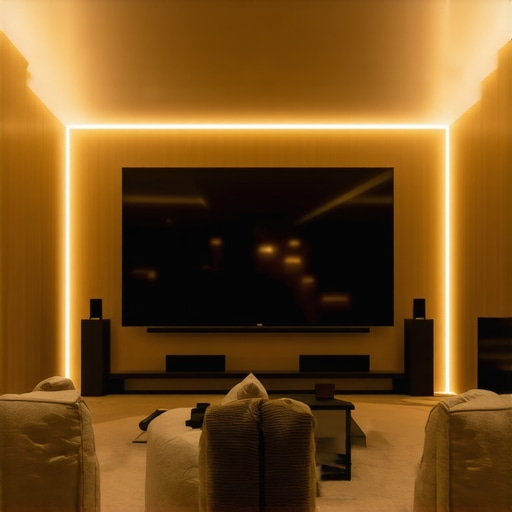
Elevate Your Home Theater Experience with Advanced Lighting Strategies
In the realm of home cinema, lighting transcends mere functionality, becoming a pivotal component of immersive entertainment. As an industry expert, I recognize that the nuanced application of bias lighting and LED strip configurations can profoundly influence visual clarity, ambient comfort, and aesthetic appeal. This article delves into innovative lighting ideas and expert tips tailored for 2024, designed to optimize your home theater environment with sophistication and technical precision.
Unlocking the Power of Bias Lighting for Cinematic Precision
Bias lighting reduces eye strain during extended viewing sessions and enhances contrast perception, crucial for high-dynamic-range content. The deployment of bias lights at strategic points behind your display ensures a seamless visual experience. Expert installations advocate for dimmable, color-adjustable bias lights that harmonize with the room’s overall palette, fostering a balanced luminance that amplifies picture quality without overwhelming the senses.
Optimizing LED Strip Placement for Dynamic Atmospheres
LED strip lighting offers unmatched versatility, enabling dynamic ambient effects that complement various viewing genres. When considering LED strip tips, placement is paramount. Experts recommend installing strips along coves, behind the seating area, or along architectural features to create layered lighting effects. The use of RGB or tunable white LED strips allows for color calibration, aligning room ambiance with mood-specific scenes or user preferences.
What Are the Critical Considerations in Selecting LED Strips for Your Setup?
Choosing the right LED strips involves assessing brightness levels, color rendering index (CRI), and compatibility with smart home systems. High CRI strips ensure accurate color reproduction, vital for appreciating film cinematography. Furthermore, integration with voice control platforms or home automation enhances user experience, allowing seamless adjustments during movie marathons or casual viewing. For detailed guidance, consult the comprehensive LED strip selection guide tailored for home theaters.
How Can Advanced Lighting Harmonize with Dolby Vision and HDR Content?
HDR and Dolby Vision demand precise luminance control to maximize contrast ratios and color depth. Expert setups often incorporate adaptive lighting solutions that respond dynamically to content, minimizing light bleed and preserving visual fidelity. Implementing smart LED strips with synchronized dimming capabilities ensures your home theater maintains optimal contrast, delivering a cinema-grade experience in the comfort of your living space.
For those seeking to refine their ambient lighting further, exploring ambient lighting ideas can provide additional inspiration. Sharing your insights or professional experiences can foster a community of enthusiasts dedicated to perfecting home theater illumination.
In conclusion, integrating expert bias lighting and LED strip configurations elevates your home entertainment environment, bridging the gap between professional cinema and personal setup. Continuous innovation and meticulous calibration are the hallmarks of a truly immersive home theater experience.
Harnessing the Latest Innovations in Ambient Lighting
As home theater technology advances, so too does the sophistication of ambient lighting solutions. Experts now leverage smart, adaptive LED systems that synchronize seamlessly with your content, creating an immersive experience that rivals commercial cinemas. For instance, dynamic backlighting that adjusts in real-time based on the scene’s brightness and color palette can significantly enhance viewing pleasure. Discover how the latest bias lighting innovations are transforming home entertainment.
Precision in Light Calibration for HDR and Dolby Vision
HDR content, especially Dolby Vision, demands meticulous calibration of your ambient lighting to prevent light bleed and preserve contrast fidelity. Expert setups incorporate programmable LED strips with high color accuracy and flicker-free dimming capabilities. These allow for nuanced adjustments that maintain the integrity of the picture, even during complex scenes. Understanding the interplay between luminance levels and content-specific settings requires a nuanced approach, often involving professional calibration tools. For detailed insights, see the comprehensive guide to backlight ambient lighting.
What Role Does Future-Ready Lighting Play in Evolving Home Theater Technologies?
As emerging display technologies like microLED and OLED become mainstream, the importance of adaptive, high-dynamic-range ambient lighting will only grow. These displays offer unprecedented contrast and color depth, making the ambient environment a critical factor in overall picture quality. Integrating intelligent lighting systems that can respond to these advancements ensures your setup remains cutting-edge. Moreover, such systems can integrate with voice control and automation platforms, offering seamless operation. Staying ahead in this field means embracing innovations that not only complement but enhance the capabilities of next-generation displays. For more on integrating smart lighting with advanced display tech, visit expert tips for smart ambient lighting.
If you’re eager to elevate your setup, sharing your experiences or asking questions in the comments can inspire others. Also, consider exploring our detailed articles on top ambient lighting tips for 2024 for more inspiration.
Elevate Your Viewing Experience with Precision Light Layering
In high-end home theater setups, layering different types of ambient lighting isn’t just about aesthetics—it’s a technical art form that enhances contrast, depth, and overall picture fidelity. By integrating diffuse ceiling fixtures, targeted accent lights, and dynamic LED backlighting, enthusiasts can craft a nuanced environment that adapts seamlessly to various content types. For example, implementing a combination of soft, indirect lighting with focused task illumination reduces glare and reflections, ensuring that the viewer’s eye remains comfortably tuned to the screen’s luminance range.
Why Smart Lighting Control Transforms Home Cinema
Advanced control systems, leveraging voice commands and mobile apps, enable real-time adjustments that respond to scene changes. For instance, during a dark, suspenseful scene, lights can dim automatically, while vibrant action sequences can trigger a slight increase in ambient luminance to preserve visual clarity. This dynamic adaptation hinges on integrating high-fidelity dimming drivers and color temperature tuners with sophisticated home automation platforms like Crestron or Control4. According to industry standards from the Smart Home Association, seamless integration ensures reliability and prevents flickering or lag that could spoil the cinematic immersion.
How Can Advanced Calibration Techniques Maximize HDR and Dolby Vision Performance?
High Dynamic Range (HDR) formats such as Dolby Vision demand meticulous calibration of both display and ambient lighting. Professional-grade calibration involves measuring luminance levels, color accuracy, and gamma curves using spectroradiometers and color analyzers. When paired with adaptive lighting systems capable of scene-by-scene adjustments, the result is a harmonious balance where the light environment complements the display’s capabilities, preventing halo effects or light bleed. Experts recommend employing calibration tools like the X-Rite i1Display Pro Plus, coupled with custom LUTs (Look-Up Tables), to fine-tune the environment for peak performance. Moreover, referencing authoritative standards such as the CTA-861 standard ensures your setup aligns with industry benchmarks.
Can intelligent lighting systems future-proof a home theater setup?
Absolutely. As display technology evolves toward microLED and OLED with ever-increasing contrast ratios and color depth, adaptive lighting solutions will play a pivotal role. Future-proofing involves deploying scalable, AI-driven lighting ecosystems that learn user preferences and automatically optimize ambient conditions. These systems can integrate with emerging technologies like quantum dot displays or even 8K resolution content, ensuring your investment remains relevant for years to come. For insights on implementing such future-ready lighting solutions, consult the latest publications from the Digital Cinema Research Institute.
If you’re eager to push your home theater to the next level, sharing your experiences or questions about integrating these advanced lighting techniques can drive community learning and innovation. Dive deeper into our expert guides to discover how to customize your ambient environment for unparalleled cinematic immersion.
Revolutionizing Ambient Lighting with Adaptive Technologies
As home theater enthusiasts seek unparalleled immersion, adaptive lighting systems leveraging AI and machine learning are transforming ambient environments. These smart systems analyze content in real-time, adjusting luminance, color temperature, and even dynamic effects to synchronize seamlessly with on-screen action. The integration of such advanced solutions ensures a consistent visual experience that elevates every viewing session, making your setup not just smart but intuitively aligned with cinematic artistry.
Leveraging Spectral Tuning for Enhanced Color Fidelity
Emerging spectral tuning technologies enable ambient lighting to match or complement the display’s color palette with astonishing precision. By employing tunable white and RGB LED systems capable of delivering high CRI and full spectrum output, you can significantly improve color perception and contrast. This nuanced control minimizes color shifts and enhances visual depth, especially critical for HDR and Dolby Vision content. The result is a harmonious balance where ambient light acts as an extension of the display’s color richness, creating a truly immersive environment.
What Are the Hidden Challenges in Integrating Advanced Lighting Systems?
While the benefits are compelling, integrating sophisticated lighting solutions involves overcoming challenges such as electromagnetic interference, latency in synchronization, and compatibility with existing automation platforms. High-fidelity dimming drivers and flicker-free power supplies are essential to prevent flickering artifacts that can detract from the cinematic experience. Additionally, meticulous calibration and professional setup are often required to achieve seamless synchronization between content and lighting, especially in multi-zone configurations. For expert insights, consult the detailed technical standards outlined by the International Association of Sound and Audiovisual Engineers.
How can future-proof lighting systems adapt to rapid technological advances in display hardware?
Future-proofing involves deploying modular, scalable lighting ecosystems that can integrate with upcoming display technologies like microLED and 8K OLEDs. Incorporating open standards such as DMX512 or DALI ensures compatibility with a range of control protocols, facilitating upgrades and expansion. Moreover, investing in AI-driven calibration tools allows your system to learn and adapt to new content formats, maintaining optimal performance without extensive manual recalibration. As industry reports from the Display Daily emphasize, embracing flexibility and interoperability is key to staying ahead in the evolving home theater landscape.
Engage with the community or reach out to industry experts to explore how these innovative lighting solutions can be tailored to your unique setup, ensuring your home theater remains at the forefront of technological excellence.
Harnessing Advanced Lighting Techniques Transforms Viewing Quality
Innovative lighting solutions are no longer optional but essential for achieving cinematic excellence at home. As a seasoned industry professional, I emphasize the importance of precise bias lighting placement, dynamic LED configurations, and adaptive controls to create immersive environments that rival commercial cinemas. Mastery of these elements ensures optimal contrast, color fidelity, and ambient comfort, setting a new standard for home entertainment.
Expert Insights That Shape High-End Home Theater Design
Prioritize Scene-Responsive Illumination
Implement smart LED systems capable of real-time scene adaptation. This approach minimizes light bleed during dark sequences and enhances vibrancy during action scenes, preserving the integrity of HDR and Dolby Vision content. Such precision requires integration of high-fidelity dimming drivers and content-aware controllers, facilitating seamless transitions and visual harmony.
Optimize Light Placement for Depth and Clarity
Strategically position bias lights behind displays and along architectural features to reduce eye strain and boost contrast perception. Layered lighting, combining indirect ceiling fixtures with targeted accent lights, enhances room depth and creates a visually engaging atmosphere that complements high-resolution content.
Leverage Spectral Tuning to Match Display Capabilities
Employ tunable white and RGB LED strips with high CRI ratings for spectral matching. This minimizes color shifts, enriches contrast, and elevates overall picture quality. Such spectral tuning ensures that ambient light acts as an extension of the display’s color palette, especially critical with emerging microLED and OLED technologies.
Integrate Robust Control Systems for Flexibility
Deploy automation platforms like Crestron or Control4 that support voice commands and mobile apps. These systems enable dynamic adjustments aligned with content changes, ensuring consistent cinematic immersion without manual intervention, and future-proof your setup against evolving technology standards.
Authoritative Resources for Deepening Expertise
- Lighting Home Cinema Essentials Blog: Offers comprehensive guides on bias lighting and LED strip configurations tailored for expert setups.
- CEA Standards Documentation: Provides industry benchmarks for calibration and spectral accuracy, essential for professional-grade installations.
- Professional Calibration Tools: Resources like the X-Rite i1Display Pro Plus facilitate precise luminance and color measurements, critical for HDR and Dolby Vision optimization.
Reflections from a Home Theater Professional
Achieving excellence in home theater lighting demands a blend of technical mastery and creative finesse. Integrating adaptive, spectral-tuned lighting with intelligent control systems elevates the viewing experience to a professional standard. As technology advances, maintaining flexibility and precision becomes paramount, ensuring your setup remains relevant and spectacular. Engage with your community, share insights, and continuously explore innovative solutions—your dedication transforms ordinary rooms into cinematic sanctuaries.

Leave a Reply