

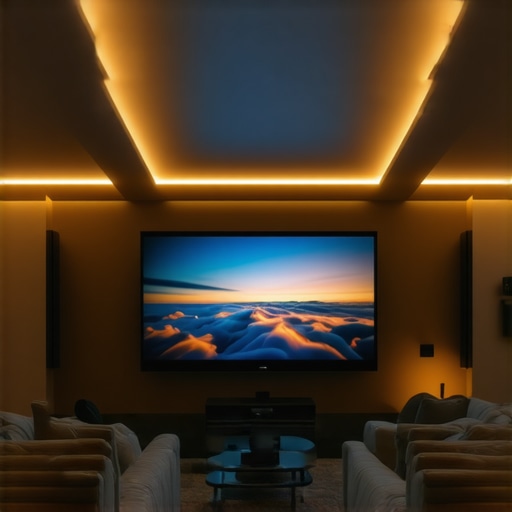
Unlocking the Power of Bias Lighting and LED Strips for Home Theater Excellence in 2024
In the realm of immersive home entertainment, the subtle interplay of ambient lighting and visual enhancement tools like bias lighting and LED strips can dramatically transform the viewing experience. As technology advances, the integration of sophisticated lighting solutions not only elevates aesthetic appeal but also optimizes visual performance and reduces eye strain during prolonged viewing sessions. Understanding the nuanced applications of bias lighting and LED strip configurations is crucial for both enthusiasts and professional AV integrators aiming for cinematic perfection at home.
Strategic Considerations for Advanced Ambient Backlighting
How can expert-level bias lighting configurations mitigate visual fatigue while enhancing contrast perception?
Expert practitioners emphasize the importance of color temperature calibration and dynamic adjustment capabilities in bias lighting systems. For instance, aligning bias light color temperature with ambient room lighting or screen content can significantly improve contrast perception and reduce eye fatigue, especially during extended viewing. Modern bias lighting solutions incorporate smart controls, enabling real-time adaptation that responds to content type and ambient conditions, thus maintaining optimal viewing comfort.
Innovative LED Strip Ideas for Cinematic Immersion
When deploying LED strips, attention to installation precision and spectral quality is paramount. High CRI (Color Rendering Index) LED strips deliver more accurate color reproduction, critical for cinematic fidelity. Experts recommend layered lighting approaches—combining indirect LED backlighting with accent and task lighting—to create a multi-dimensional ambiance that enhances depth perception and visual clarity. Such configurations are especially beneficial in multi-purpose media rooms, where lighting flexibility supports various activities from gaming to film viewing.
What Are the Challenges and Limitations of Integrating Bias Lighting with Modern Home Theaters?
While the benefits are well-documented, integrating bias lighting and LED strips presents challenges like color consistency, synchronization with display content, and potential glare issues. Advanced solutions mitigate these concerns through meticulous calibration and high-quality components. For example, proprietary LED controllers can synchronize lighting with HDR content, providing a seamless visual experience that rivals professional cinema setups. Nonetheless, open debates persist regarding the optimal brightness levels and spectral compositions that best serve diverse user preferences and visual needs.
To deepen your understanding of this integration, consider exploring expert insights on ambient backlight solutions and participate in professional forums to exchange insights with experienced AV designers.
For those seeking to elevate their setup further, visiting comprehensive guides on bias lighting can provide actionable strategies to refine your ambient lighting system and achieve cinematic excellence in 2024.
Balancing Brightness and Contrast: Advanced Strategies for Home Theater Lighting
While many enthusiasts focus on choosing high-quality LED strips and bias lighting solutions, expert-level configuration goes beyond simple installation. The key lies in balancing brightness levels and contrast perception, which can dramatically influence cinematic immersion. Optimal bias lighting should complement your screen’s luminance without overpowering it, creating a natural viewing environment that reduces eye strain and enhances detail recognition. This involves precise calibration of color temperature, brightness, and dynamic adaptation based on content type and ambient conditions. For example, adjustable smart controls can synchronize lighting intensity with scene transitions, elevating the viewing experience to professional standards. Exploring expert guidance on LED strip calibration can help refine your setup for maximum effect.
Are We Overlooking the Impact of Spectral Quality on Viewing Comfort?
Many users underestimate the importance of spectral quality in bias lighting and LED strips. High CRI (Color Rendering Index) LED strips, which accurately reproduce colors, do more than just enhance visual fidelity—they also play a vital role in reducing eye fatigue during extended viewing. A common misconception is that brighter is better; however, spectral composition and color temperature are equally critical. Cooler temperatures (6500K) align with daylight and can improve contrast perception, but may cause discomfort if overused. Conversely, warmer tones (3000K) promote relaxation but might diminish contrast. Expert research emphasizes tailoring spectral profiles to individual preferences and room conditions, ensuring a harmonious balance that supports both aesthetic and ergonomic needs. For practical tips, check out best practices for selecting spectral qualities.
What innovative tools or frameworks can help AV enthusiasts optimize bias lighting for personalized cinematic experiences?
Emerging tools like spectral analyzers and smart control systems provide unprecedented precision in tailoring bias lighting to your unique environment. These technologies enable meticulous calibration of color temperature, brightness, and spectral composition, aligning your lighting with specific content types or personal preferences. Additionally, software-driven solutions can adapt dynamically, responding to ambient light fluctuations and content transitions in real time. Integrating these tools into your setup can elevate your home theater to a professional level, offering a truly personalized cinematic experience. To delve deeper into these innovations, visit comprehensive expert guides on advanced bias lighting techniques.
Feeling inspired to upgrade your ambient lighting? Share your thoughts or experiences below, or explore more expert tips at top bias lighting ideas for 2024.
Harnessing Spectral Dynamics: Fine-Tuning Bias Lighting for Ultimate Visual Comfort
To truly elevate your home theater ambiance, delving into the spectral nuances of bias lighting is essential. While many focus on brightness levels, experts emphasize that spectral quality—specifically, the light’s spectral power distribution—plays a pivotal role in reducing eye strain and enhancing contrast perception. High CRI (Color Rendering Index) LEDs with tailored spectral profiles can mimic natural daylight or warm incandescent hues, depending on your viewing preferences. This customization not only improves visual fidelity but also aligns with your ambient lighting for seamless transitions.
Advanced calibration tools, such as spectrometers, enable precise measurement of your lighting’s spectral output. By analyzing these profiles, AV professionals can fine-tune LED settings to optimize contrast ratios and viewer comfort. For instance, spectral balancing between blue-rich and warm spectra minimizes flicker effects and visual fatigue during prolonged sessions. Such meticulous adjustments require a combination of hardware expertise and software control, making them accessible primarily for enthusiasts committed to professional-grade setups.
Innovative Control Systems: Elevating Dynamic Ambient Lighting with AI and IoT Integration
Imagine a home theater where your bias lighting intuitively adapts to every scene, mood, and ambient condition — this is where cutting-edge AI and IoT technologies come into play. Smart lighting ecosystems integrate real-time sensors, machine learning algorithms, and cloud connectivity to deliver a truly personalized cinematic experience. For example, intelligent systems can analyze display content, ambient light levels, and user preferences, dynamically adjusting LED brightness, color temperature, and spectral composition with minimal latency.
Moreover, these systems support programmable scenes, allowing users to preset lighting moods for different genres or activities—be it a tense thriller or a relaxing documentary. The seamless synchronization between display and ambient lighting not only enhances immersion but also preserves visual clarity and contrast, especially in HDR content. Industry leaders like Lutron and Philips Hue offer APIs and SDKs that enable custom integrations, empowering AV enthusiasts and professionals to craft bespoke lighting solutions that adapt in real-time.
What are the best practices for integrating AI-driven lighting controls in existing home theater systems?
Integrating AI-driven controls involves a combination of compatible hardware, sophisticated software platforms, and expert calibration. Start by selecting LED strips and controllers that support network connectivity and data exchange with smart home hubs. Then, employ calibration tools to establish baseline color and brightness settings, ensuring consistency across different content types and room conditions. Finally, leverage machine learning algorithms that learn from user interactions and environmental feedback to optimize lighting parameters over time. Consulting with professional AV integrators who specialize in smart lighting can significantly streamline this process, ensuring your setup delivers maximum immersion and comfort.
For a deeper dive into these innovations, explore authoritative resources such as the Journal of Lighting & Visual Environment, which publishes peer-reviewed studies on spectral photometry and intelligent lighting systems—an invaluable reference for pushing the boundaries of home theater lighting design.
Ready to transform your cinematic experience? Share your ideas or challenges in optimizing bias lighting, or explore more expert insights at top bias lighting solutions for 2024.
Unveiling the Latest Advances in Spectral Optimization for Bias Lighting
As home theater aficionados seek the pinnacle of visual comfort, the role of spectral quality in bias lighting becomes increasingly critical. Recent innovations involve the integration of tunable LED systems capable of dynamically adjusting spectral power distribution, aligning more precisely with human circadian rhythms and visual ergonomics. This refinement not only enhances contrast perception but also mitigates the risk of blue light-induced eye strain, a concern highlighted by the IEEE Journal of Lightwave Technology. Implementing these spectral tuning technologies requires sophisticated spectrometric calibration, often via portable spectrometers, to achieve a harmonious balance between aesthetic appeal and ergonomic efficiency.
How Can Adaptive Lighting Algorithms Revolutionize Home Theater Ambiance?
Emerging adaptive algorithms utilize machine learning to analyze real-time ambient conditions and content-specific luminance needs, facilitating a new era of intelligent lighting systems. These systems leverage IoT connectivity and advanced sensor arrays to continuously calibrate LED brightness and spectral output, responding seamlessly to scene transitions, viewer activity, and environmental fluctuations. This approach transforms static ambient lighting into a dynamic participant in the cinematic experience, fostering unparalleled immersion. Industry leaders such as Lutron’s Caséta and Savant have pioneered platforms that integrate AI-driven control, setting new standards for personalized home theater environments.

What Are the Critical Calibration Techniques for High-Fidelity LED Backlighting?
Achieving professional-grade bias lighting necessitates meticulous calibration protocols. Techniques such as integrating spectroradiometers for spectral measurement, along with colorimeter calibration for luminance and chromaticity, ensure lighting outputs are consistent and optimized for specific room conditions. Furthermore, the application of gamma correction algorithms can fine-tune the perceived luminance, preventing glare and ensuring contrast fidelity. These calibration practices are documented extensively in the SPIE Digital Library on Lighting and Illumination, offering advanced methodologies for AV professionals and dedicated enthusiasts alike.
What are the emerging tools that empower AV specialists to perfect bias lighting configurations?
Innovative tools like spectral analyzers, real-time color calibration software, and IoT-enabled controllers empower AV professionals to execute precise, adaptive bias lighting setups. These tools facilitate detailed spectral profiling and enable seamless integration with home automation systems, allowing lighting to respond intelligently to content and ambient variations. For example, software platforms like CalMAN and LightSpace CMS provide comprehensive calibration workflows, elevating the setup process from manual adjustments to data-driven precision. Engaging with these tools and techniques ensures your home theater maintains the highest standards of visual fidelity and viewer comfort.
Ready to elevate your home cinema with cutting-edge bias lighting? Explore expert resources and share your insights to revolutionize your immersive experience.
Strategic Insights from Industry Experts
1. Precise Spectral Calibration is Paramount
Achieving optimal visual comfort and contrast requires meticulous spectral calibration of LED strips. High CRI (Color Rendering Index) LEDs matched with spectrometric tools can ensure color accuracy and reduce eye strain, especially in HDR environments. This level of precision distinguishes professional setups from casual installations.
2. Dynamic Lighting as a Content Companion
Advanced bias lighting systems that adapt in real-time to on-screen content improve contrast perception without overpowering the visuals. Integrating AI-driven controllers with your LED strips can automate scene-specific adjustments, elevating immersion and comfort significantly.
3. Harmonize Ambient and Screen Lighting
Expert design emphasizes balancing ambient room lighting with bias lighting for seamless visual integration. Proper calibration reduces glare and enhances depth perception, creating a truly cinematic experience that minimizes fatigue during extended viewing sessions.
4. Leverage Cutting-Edge Spectral Tuning Technologies
Emerging tunable LED systems allow dynamic adjustment of spectral power distribution, aligning lighting with circadian rhythms and ergonomic needs. Such innovations are crucial for health-conscious setups aiming for both aesthetic excellence and ergonomic efficiency.
5. Integrate IoT and Smart Controls for Seamless Experience
Smart home ecosystems enable synchronized, scene-based lighting control, responding to ambient conditions and content transitions. Using platforms like Lutron or Philips Hue, users can craft personalized, adaptive light environments that respond intuitively to their viewing habits.
Authoritative Resources for Deepening Expertise
- SPIE Digital Library on Lighting and Illumination: Offers peer-reviewed research on spectral calibration techniques and high-fidelity lighting standards, essential for professionals seeking technical mastery.
- IEEE Journal of Lightwave Technology: Provides groundbreaking studies on blue light mitigation and spectral power distribution optimization, supporting ergonomic improvements.
- Lighting for Cinema and Home Theater Guides: Curated resources from industry leaders detailing practical implementation strategies, including bias lighting and LED strip integration.
Final Expert Perspective
Mastering bias lighting and LED strip integration in 2024 hinges on a blend of spectral precision, adaptive control, and ergonomic design. Embracing these advanced strategies elevates your home theater from a simple setup to a professional-grade cinematic environment. For those committed to excellence, exploring authoritative resources and leveraging smart technologies will unlock new levels of visual comfort and immersive experience. Engage with our community, share your insights, or seek tailored advice by visiting our contact page and take your home theater into the future with confidence.


Leave a Reply