

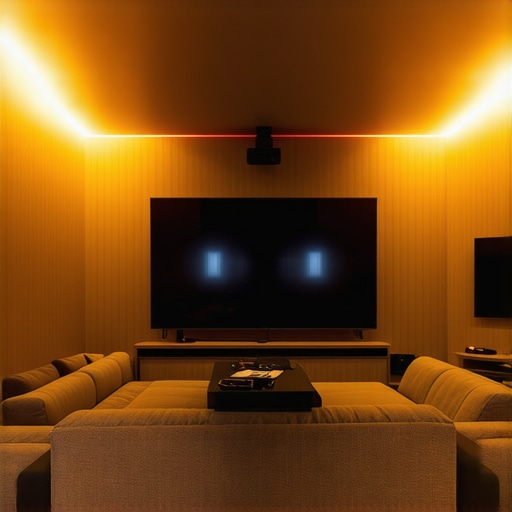
Unveiling the Next Generation of Bias Lighting & LED Strips for Home Theater in 2024
As home theater enthusiasts and AV professionals continually seek immersive viewing experiences, the integration of advanced bias lighting and LED strip solutions has become paramount. The evolution of these lighting technologies in 2024 reflects a nuanced understanding of ambient illumination’s role in visual comfort, color accuracy, and aesthetic enhancement. This article delves into expert-level insights, examining the latest innovations, technical considerations, and strategic applications for optimizing your home cinema environment.
Strategic Considerations in Selecting Bias Lighting for High-Fidelity Home Theaters
High-quality bias lighting, designed to reduce eye strain and enhance perceived contrast, hinges on precise color temperature control and seamless integration with display calibration protocols. Experts emphasize the importance of choosing LED strips with high CRI (Color Rendering Index), ideally above 90, to ensure true-to-life color reproduction. Moreover, the placement and diffusion of bias lights influence their efficacy, necessitating meticulous planning and expert installation techniques. For comprehensive guidance, consult our ultimate guide to LED strip installation.
What are the latest advancements in LED strip technology that enhance bias lighting performance in demanding home theater setups?
Recent innovations include the development of LED strips with adaptive color temperature adjustment, enabling dynamic tuning according to ambient conditions and content type. Integration of smart controllers with voice command and app-based customization allows for nuanced scene setting, aligning lighting with cinematic themes or mood lighting. Additionally, advancements in diffuser materials have minimized hotspots, delivering uniform illumination essential for professional-grade setups.
For in-depth technical insights, see the article on ultimate guide to bias lighting LED strips.
Balancing Aesthetics with Functionality: The Role of LED Strips in Creating Immersive Atmospheres
Expertly curated LED strip lighting transcends mere illumination; it becomes a pivotal element in crafting immersive atmospheres that elevate cinematic experiences. Choices in color palette, illumination intensity, and placement influence viewer perception and emotional engagement. Color psychology plays a significant role; for instance, blue hues evoke calmness and focus, while warmer tones foster coziness. The strategic layering of bias lighting with background ambient lighting—such as in backlight ideas—can transform ordinary spaces into professional-grade theaters.
How can professional-grade LED strip configurations be optimized for multi-use entertainment rooms?
Optimization involves layered lighting strategies, utilizing zones with independent control to switch between cinematic, gaming, or casual viewing modes. Employing RGBW strips with adjustable white temperature allows for seamless adaptation to various content and time-of-day scenarios, maintaining visual comfort and aesthetic harmony. Proper power management and cable organization also contribute to a clean, reliable setup, essential for high-end installations.
Explore more about ambient lighting setups in our best bias lights for 2025.
For those seeking expert-level tips on lighting integration, consider consulting our expert LED strip lighting tips.
In conclusion, the pursuit of the perfect home theater lighting setup in 2024 demands a synthesis of technological innovation, aesthetic sensibility, and expert application. Staying informed about the latest developments and leveraging professional insights ensures that your cinematic environment remains at the forefront of immersive entertainment.
Innovative Control Systems: Elevating Your Home Theater Lighting to New Heights
As technology advances, so do the possibilities for integrating sophisticated control systems into your home theater lighting. Expert enthusiasts now leverage **smart home integration platforms** such as Crestron, Control4, or Elgato to synchronize LED strip lighting with audio-visual components seamlessly. These systems enable scene-based lighting adjustments, voice commands, and remote control, creating a truly immersive experience. For optimal performance, carefully consider the compatibility of LED strips with these platforms, ensuring they support **advanced protocols** like DMX or Zigbee. Proper integration not only enhances convenience but also allows for dynamic, real-time adjustments that respond to your viewing or gaming scenario.
What are the emerging control system innovations that can redefine ambient lighting customization in high-end home theaters?
Emerging developments include AI-powered adaptive lighting that learns your preferences over time and adjusts automatically based on the content being played or the time of day. Additionally, wireless mesh networks are improving reliability and reducing latency, critical for synchronized multi-zone lighting setups. Integrators are also exploring IoT-enabled sensors that detect room occupancy and ambient light levels, automatically tuning your LED strips for maximum comfort and efficiency. These innovations promise not only enhanced usability but also increased energy efficiency and personalization, making your home theater smarter and more responsive. For a comprehensive overview of choosing compatible and future-proof control systems, visit our guide to selecting the right LED strips.
Designing Multi-Sensory Environments: Beyond Visuals with Bias Lighting
Creating an immersive home theater experience requires more than just lighting; it involves a multi-sensory approach that combines visual, auditory, and even olfactory elements. Professional-grade bias lighting can be paired with soundproofing and acoustic treatment to craft a space that minimizes distractions and enhances focus. Moreover, integrating scent diffusers with thematic fragrances can evoke specific moods—be it the freshness of a mountain retreat or the cozy warmth of a winter cabin—further immersing viewers into the cinematic universe. When designing these environments, consider the psychological impact of color and scent synergy, such as warm hues paired with inviting aromas to foster relaxation or cool tones combined with invigorating scents for energetic scenes. Expert consultation on sensory integration can significantly elevate your setup, making it a true sanctuary for entertainment. For inspiration, explore our best bias lights for 2025.
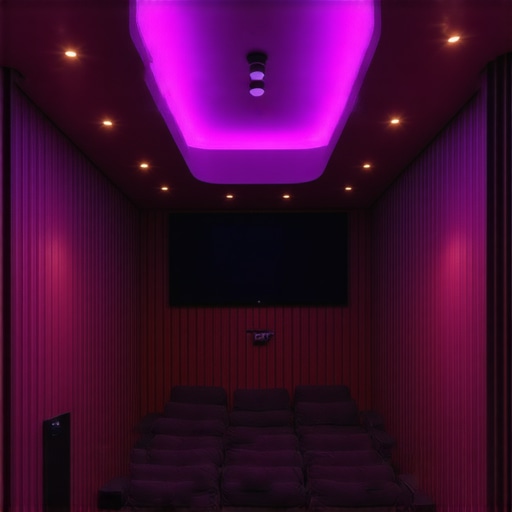
Visualize a multi-sensory home theater space with ambient lighting, soundproofing, and aromatic diffusers creating an immersive experience.
How can emerging multi-sensory techniques redefine the limits of home theater environments?
By combining advanced lighting, sound engineering, and olfactory elements, future home theaters could offer fully personalized, adaptive environments that respond to user preferences and content cues. For instance, sensors could detect viewer mood or emotional response and adjust lighting, sound, and scent in real-time, creating a deeply engaging experience. Such innovation would push the boundaries of current entertainment environments, transforming passive viewing into active, sensory-rich engagement. For detailed insights into multi-sensory design principles, consult our expert guide on ambient lighting solutions.
Harnessing Cutting-Edge LED Innovations for Unmatched Home Theater Ambience
In 2024, the landscape of bias lighting and LED strip technology is undergoing a revolutionary shift, driven by breakthroughs in material science and intelligent control systems. Experts now leverage quantum dot-enhanced LEDs, which provide superior color rendering and energy efficiency, to craft lighting solutions that closely mimic natural daylight. These advancements enable more precise control over color temperatures, ensuring that bias lighting enhances contrast without distorting the display’s color fidelity. Furthermore, the integration of micro-LEDs has allowed for ultra-fine pixel control, facilitating highly customizable lighting effects that sync seamlessly with high-dynamic-range (HDR) content, heightening the immersive quality of home theaters.
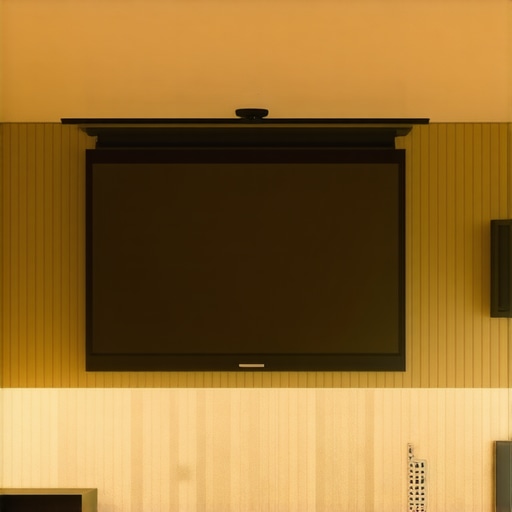
Visualize a state-of-the-art home theater illuminated with quantum dot LED strips, showcasing vibrant, true-to-life colors and adaptive lighting that responds dynamically to content.
Nuanced Control Protocols Elevate Ambient Scene Personalization
Emerging control protocols such as Zigbee 3.0 and Thread are redefining how we orchestrate multi-zone lighting systems. These protocols offer robust, mesh-network connectivity that ensures synchronized color transitions and scene changes, even in complex setups. Sophisticated algorithms harness AI to learn user preferences over time, auto-adjust lighting scenes based on the genre, mood, or time of day, and optimize energy consumption. For instance, during a tense thriller scene, the system might dim warm background lighting while accentuating cooler hues around the screen, heightening emotional impact. Such dynamic adaptability is now achievable through integrations with voice assistants like Alexa or Google Assistant, bringing professional-level ambiance control into the consumer domain.
For a deeper dive into protocol compatibilities and AI-driven scene management, visit our comprehensive guide to next-gen control systems.
Multi-Sensory Environments: Integrating Visuals, Sound, and Aromas for Hyper-Immersive Experiences
The future of home theaters extends beyond visual perfection into the realm of multi-sensory engagement. By combining advanced bias lighting with spatial audio systems and scent diffusers, designers are crafting environments where sight, sound, and smell converge to deepen immersion. For example, synchronized scent release systems can evoke the aroma of a forest during outdoor scenes or the scent of ocean breeze during seaside escapades, intensifying emotional response. When paired with adaptive lighting that reflects scene mood—cool, calming blue hues for tranquil moments or fiery reds for action sequences—the viewer feels transported into another world. The challenge lies in calibrating these elements to prevent sensory overload while maintaining a cohesive atmosphere, a task that demands both scientific rigor and artistic sensibility.
Imagine a home theater with synchronized lighting, surround sound, and aromatic diffusers creating a fully immersive environment tailored to the cinematic narrative.
How can multi-sensory integration redefine the boundaries of home entertainment, and what are the latest technological innovations enabling this shift?
Emerging technologies such as real-time biometric feedback—like heart rate or skin conductance sensors—allow environments to adapt dynamically to viewer emotional states, creating hyper-personalized experiences. Additionally, advances in IoT connectivity facilitate seamless synchronization of lighting, sound, and scent elements across multiple zones, ensuring consistency and immersion. These innovations are not only transforming passive viewing into active participation but are also setting the stage for multisensory storytelling that enhances emotional engagement and memory retention. To explore the latest in multisensory tech and how to implement it effectively, consult our expert guide to multisensory home theaters.
Exploring the Cutting-Edge of LED Innovations: Quantum Dots and Micro-LEDs for Immersive Viewing
In 2024, the adoption of quantum dot-enhanced LEDs and micro-LED technology is transforming bias lighting from basic illumination to a cornerstone of high-fidelity home theaters. Quantum dot LEDs offer unparalleled color accuracy and energy efficiency, enabling lighting solutions that mimic natural daylight with astonishing precision. Micro-LEDs, with their ultra-fine pixel control, facilitate dynamic, scene-specific lighting effects that seamlessly synchronize with HDR content, elevating visual immersion to unprecedented levels. These advancements are driven by breakthroughs in nanomaterials and semiconductor fabrication, making them accessible for premium consumer installations and professional setups alike.
How Do Advanced Control Protocols and AI Personalization Create Truly Adaptive Ambient Environments?
Emerging control protocols such as Zigbee 3.0, Thread, and the latest version of DMX facilitate robust, low-latency communication across multi-zone lighting systems. When integrated with AI-powered scene learning algorithms, these protocols enable environments that adapt in real-time to user preferences, viewing content, and ambient conditions. For example, an AI system can learn your preferred lighting for action movies and automatically adjust color temperature and intensity, creating a personalized cinematic atmosphere. Voice assistants like Alexa and Google Assistant, combined with these protocols, offer intuitive control, ensuring your ambient lighting becomes an invisible yet integral part of your entertainment ecosystem.
What are the key considerations for integrating next-generation control systems in high-end home theaters?
Integration requires meticulous planning around compatibility, scalability, and future-proofing. Opting for open standards such as Zigbee 3.0 or Thread ensures seamless interoperability between lighting, audio, and automation devices. It’s essential to select lighting hardware supporting advanced protocols and to leverage AI-driven scene management for optimal customization. Proper network topology, including mesh configurations, minimizes latency and ensures synchronized multi-zone control. For expert guidance, explore our detailed comprehensive guide to next-gen control systems.
Integrating Multi-Sensory Elements: Creating Hyper-Immersive Cinematic Environments
Beyond visual enhancements, the future of home theaters involves harmonizing lighting, sound, scent, and even tactile feedback to craft multi-sensory experiences. Scent diffusers synchronized with scene cues can evoke environments such as forests or seaside locales, intensifying emotional engagement. Spatial audio systems paired with adaptive lighting and scent elements elevate the realism, transforming passive viewing into active participation. Cutting-edge IoT sensors analyze biometric feedback—like heart rate and skin conductance—to dynamically adjust ambient conditions, ensuring each viewer’s experience is uniquely personalized. This holistic approach demands sophisticated calibration and artistic sensibility to balance sensory inputs without overwhelming the audience.
How can multisensory integration redefine emotional engagement in home cinema environments?
Emerging technologies leveraging biometric sensing and AI-driven content analysis enable environments that respond adaptively to viewer moods and reactions, creating deeply personalized, emotionally resonant experiences. Such innovations foster immersive storytelling, where lighting, sound, and scent evolve in harmony with narrative tension or relaxation cues. This represents a paradigm shift from traditional passive viewing to active, emotionally engaged entertainment, opening new frontiers for content creators and enthusiasts alike. For insights into implementing multisensory tech, visit our expert guide to multisensory home theaters.
Future Perspectives: Sustainability and Energy Efficiency in Bias Lighting
As the demand for sophisticated home theater lighting grows, so does the emphasis on sustainability. Advances in energy-efficient LED technologies, including OLED integration and smart dimming protocols, are reducing power consumption without compromising performance. Incorporating solar-powered or rechargeable battery systems for LED strips and diffusers further enhances eco-friendliness. Additionally, intelligent algorithms optimize lighting schedules based on room occupancy and ambient light levels, minimizing waste and extending device longevity. These innovations align with broader environmental goals while maintaining the high standards of visual fidelity and aesthetic appeal expected by discerning enthusiasts.
Expert Insights & Advanced Considerations
1. Adaptive LED Technologies Drive Precision in Ambience Control
Emerging LED innovations such as micro-LEDs and quantum dot-enhanced strips significantly elevate the fidelity of bias lighting, offering unparalleled color accuracy and dynamic scene adaptation. These advancements allow for seamless integration with high-dynamic-range (HDR) content, ensuring immersive viewing experiences that match professional standards.
2. AI-Driven Control Systems Transform Personalization
Advanced control protocols like Zigbee 3.0 and Thread, combined with AI algorithms, facilitate real-time scene adjustments based on user preferences and ambient conditions. This evolution results in truly adaptive environments that respond intuitively to content and mood, elevating the home theater experience.
3. Multi-Sensory Integration Expands Entertainment Horizons
Integrating scent diffusers, spatial audio, and biometric sensors into bias lighting setups creates multi-sensory environments. These innovations deepen emotional engagement and transform passive viewing into active, immersive storytelling, setting new standards for home entertainment.
4. Sustainability Enhances Long-Term Value
Energy-efficient LED solutions, including OLED integration and smart dimming, reduce power consumption while maintaining high performance. Incorporating solar-powered or rechargeable systems further aligns with eco-conscious design, ensuring sustainability without sacrificing quality.
5. Future-Ready Infrastructure Ensures Longevity
Investing in open-standard protocols and scalable control systems guarantees compatibility with future technologies. This proactive approach safeguards your investment, making your home theater adaptable to upcoming innovations in bias lighting and ambient control.
Curated Expert Resources
- Lighting Home Cinema Essentials Blog: Offers comprehensive guides and latest trends in bias lighting and LED strip innovations, serving as a valuable resource for professionals seeking technical depth.
- Advanced Home Theater Control Protocols: Industry whitepapers and technical manuals on Zigbee 3.0, Thread, and DMX provide insights into integrating next-gen control systems for seamless operation.
- Multi-Sensory Home Theater Design: Specialized publications and case studies demonstrating the integration of scent, sound, and lighting for hyper-immersive environments.
Final Expert Perspective
In 2024, mastering bias lighting and LED strip technology hinges on leveraging cutting-edge innovations like quantum dot and micro-LEDs, integrating sophisticated AI-driven control systems, and embracing multi-sensory design principles. These elements collectively redefine the boundaries of home theater excellence. I invite you to explore our comprehensive guide to choosing the right LED strips and share your insights or questions to push the frontier of immersive entertainment further.



Leave a Reply