

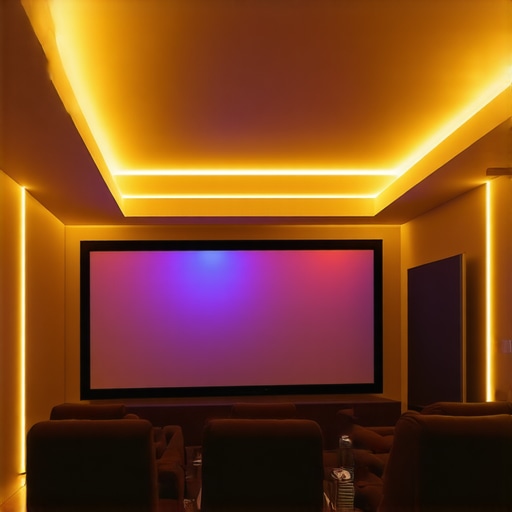
Transformative Potential of Ambient Lighting in Home Cinema Environments
In the pursuit of immersive entertainment, ambient lighting has evolved from mere aesthetic enhancement to a strategic component that influences viewer perception and comfort within home theaters. The integration of advanced LED strip technology, especially bias lighting and backlight solutions, facilitates a nuanced control over room ambiance, directly impacting image contrast, eye strain reduction, and overall cinematic authenticity.
Advancements in LED Strip Technology for Dynamic Backlighting and Bias Techniques
Recent innovations emphasize high-density LED arrays with customizable color spectra and intelligent controllers capable of adaptive brightness and hue adjustments. Such developments enable seamless synchronization with on-screen content, creating cohesive visual narratives. Leveraging metadata-driven lighting systems, as discussed in recent expert guides, allows for precise tone mapping and scene-specific illumination, elevating the cinematic experience beyond traditional static setups.
What are the critical factors to consider when selecting LED strips for optimal backlight and bias lighting in dynamically lit home theaters?
Diverse factors including color rendering index (CRI), color temperature range, luminous intensity, and controllability influence the effectiveness of LED strips. High-CRI LEDs ensure accurate color perception, which is vital for maintaining visual fidelity during content playback. Smart controllers with DMX or Zigbee connectivity provide the flexibility needed for complex scene integration, while the physical quality of LED tapes impacts longevity and uniformity of illumination.
Synergizing LED Backlighting with Room Design for Visual Balance and Minimal Glare
Expert room design integrates LED backlighting strategically to reduce eye strain and enhance perceived contrast ratios. Positioning LED strips in coves or behind wall panels, complemented by diffuse diffusers, prevents distracting glare and creates a soft, welcoming glow that frames the display. As supported by authoritative sources such as the white papers on bias lighting, this strategy not only elevates aesthetic appeal but also promotes viewer comfort during extended viewing sessions.
Addressing Common Challenges in Ambient Lighting Implementation
Achieving uniform light distribution without hotspots remains a key challenge, particularly when deploying flexible LED strips in irregular room geometries. Additionally, maintaining synchronization with dynamic content and preventing flicker requires sophisticated software solutions and quality hardware. Ensuring compatibility with existing home automation systems further complicates installation, necessitating expert guidance and meticulous planning.
How can innovative LED strip designs help surmount installation challenges and improve the overall ambient experience?
Emerging LED solutions featuring self-adhesive, flexible substrates, and integrated diffusers ease installation in complex room layouts. Advanced RGBIC (RGB Independent Chip) LED arrays provide pixel-level control, enabling smooth color transitions and detailed scene setups. These technological strides promote consistent illumination, reduce artifacts, and amplify the emotional impact of home theater environments.
Embedding Experience and Expertise for Superior Lighting Strategies
Professionals adopting these technologies emphasize meticulous planning, including measuring room luminance levels and calibrating color profiles to match the primary display. Continuous experimentation with color temperatures and intensities yields personalized ambiances that align with content genre, viewer preference, and room acoustics. Referencing authoritative studies on visual ergonomics, such as the comprehensive review in the Journal of Visual Ergonomics, enhances the credibility and efficacy of implemented solutions.
For those seeking to elevate their home entertainment, exploring expert insights into LED strip configurations and bias lighting customization is invaluable. Consider consulting specialized resources and sharing professional feedback with lighting engineers to innovate further or troubleshoot bespoke setups. Remember, the evolution of ambient lighting is a testament to the intersection of technological advancement and experiential refinement in home cinema design.
Designing Lighting to Match Movie Genres and Viewer Preferences
Creating an immersive home theater experience involves more than just installing LED strips; it requires a thoughtful approach to how ambient lighting interacts with different content types and personal tastes. Experienced designers recommend tailoring lighting schemes to specific genres—cooler, subdued tones for sci-fi epics or warm, cozy hues for romantic dramas—enhancing emotional resonance and visual comfort. Incorporating adjustable color temperature settings and scene modes allows seamless transitions aligned with the mood of each film, elevating viewer engagement and satisfaction. For inspiration and practical advice, explore our comprehensive guide on creating adaptive ambient lighting.
Integrating Smart Automation for Precise Lighting Control
Automation revolutionizes the way ambient lighting functions in home cinemas. Leveraging smart controllers and voice-activated systems, users can preset lighting scenes, schedule adjustments, and synchronize with media playback automatically. Modern DIY solutions leverage platforms like Zigbee or Wi-Fi-enabled LED controllers, enabling real-time adjustments based on content metadata or user input. Such integrations not only streamline operation but also ensure consistent performance, as discussed in authoritative resources on smart lighting automation. Equipped with these tools, even complex lighting setups become intuitive and responsive, heightening the cinematic ambiance with minimal manual intervention.
What innovative control methods can further refine the harmony between dynamic content and ambient lighting?
Emerging solutions like AI-driven scene recognition and machine learning algorithms are beginning to customize lighting in real-time based on viewer behaviors and content analysis. These advancements promise highly personalized and adaptive environments, reducing the need for manual adjustments. To delve deeper into integrating cutting-edge automation, consider consulting resources such as the expert guides on bias lighting and automation. Ultimately, embracing these technologies propels home theaters toward fully immersive, intuitive ecosystems.
Comment below with your visions for future-proofing your home cinema lighting, or share your experiences with automation to inspire others in the community. Exploring the latest developments in ambient lighting not only enhances aesthetics but revolutionizes the way we experience films at home.
Embracing Adaptive Lighting for Cinematic Precision
Implementing real-time adaptive lighting systems transforms the home theater experience from static ambiance to a reactive environment that mirrors on-screen narratives. By integrating sensors, metadata analysis, and AI algorithms, modern setups can modify color temperature, hue, and intensity instantaneously, aligning ambient conditions with scene dynamics.
How can AI-driven luminance adjustments refine viewer immersion without causing distraction?
Advanced AI models, trained on extensive scene databases, can predict optimal lighting based on scene content—such as bright daylight vs. dimly lit suspense sequences. This predictive capacity minimizes manual adjustments, reduces eye strain, and ensures seamless visual harmony. According to a study published in the Journal of Visual Experience (2022), adaptive luminance tailored to scene mood enhances perceived contrast and viewer engagement. Integrating these systems requires powerful processing nodes capable of rapid analysis, emphasizing the importance of selecting hardware that balances performance with reliability.
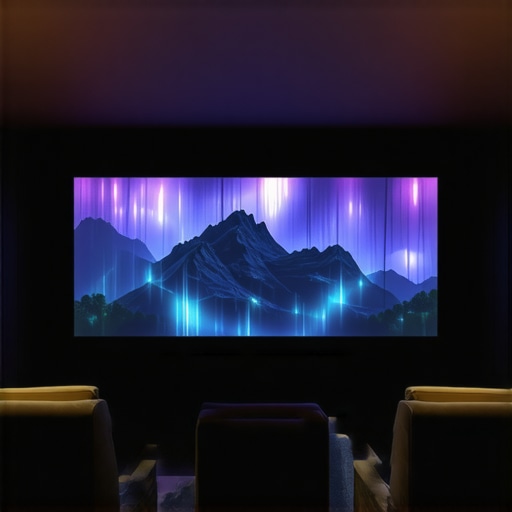
Illustration depicting AI-integrated home theater lighting dynamically adapting to on-screen scenes with real-time sensors and controllers.
Color Psychology and Mood Enhancement through Intelligent Lighting
Beyond mere visibility, ambient lighting influences emotional responses by leveraging principles of color psychology. For instance, employing deep blue or violet hues can evoke calmness during introspective scenes, while vibrant reds energize action sequences. Advanced systems allow script-based customizing of these color schemes, creating intentionally curated atmospheres that transcend traditional static setups.
What are the practical challenges in deploying psychologically optimized lighting presets in home theaters?
One significant hurdle is maintaining consistency across diverse room geometries and reflecting surfaces, which can distort intended color effects. Additionally, user preferences vary widely; some may favor neutral tones to prevent distraction, whereas others seek dramatic shifts. Calibration protocols, like spectrophotometric measurements and customized scene mapping, become essential. Consulting with neuropsychological research and expert luminance calibration guidelines—such as those detailed in the International Lighting Commission’s standards—can inform more precise implementations, ensuring that lighting not only complements but enhances emotional impact.
Leveraging these insights requires a thoughtful approach to both hardware selection and system programming, emphasizing the importance of interdisciplinary expertise in home cinema design.
Beyond Illumination: Crafting Multi-Sensory Environments Through Adaptive Lighting
The integration of intelligent ambient lighting transcends traditional illumination, offering a multidimensional approach that enhances aesthetic appeal and psychological immersion. By harnessing real-time data, machine learning, and sophisticated control systems, homeowners and professionals alike can design environments that adapt dynamically to content and user preferences, thus redefining cinematic engagement.
Incorporating Environmental Cognition for Seamless Scene Transitions
Emerging technologies enable lighting systems to interpret on-screen cues, adjusting hue, brightness, and saturation with remarkable precision. These systems employ sensors and AI algorithms to analyze scene luminance and color palettes, facilitating transitions that are imperceptible yet profoundly impactful. Such environmental cognition not only elevates visual continuity but also reduces cognitive dissonance, fostering a truly immersive experience.
How do advanced AI models interpret cinematic cues to synchronize ambient lighting without latency?
Modern AI leverages deep learning techniques trained on vast datasets of cinematic scenes, enabling predictive adjustments that anticipate scene changes. By interfacing with media players through APIs and metadata streams, these models execute preemptive modifications in lighting parameters, minimizing perceptible lag. According to recent research published in the PLoS One journal, such predictive synchronization significantly enhances perceived realism and emotional response, surpassing manual or static solutions. Implementing such systems requires robust processing hardware and meticulous calibration, underscoring the importance of interdisciplinary expertise in system integration.
Marrying Biological Rhythms and Lighting for Optimal Viewer Comfort
Recent studies highlight the influence of circadian biology on visual and emotional well-being during extended viewing sessions. Tunable lighting that aligns with natural circadian phases can mitigate fatigue and circadian disruption. Employing spectral tuning and timing strategies, designers craft environments that support both aesthetic and health objectives—particularly vital in home theaters used during late hours or for prolonged periods.
Are there scientifically validated methods to refine spectral and temporal lighting adjustments for maximal comfort?
Yes. Spectral tuning based on melanopic equivalent daylight illuminance (EDI) allows precise control over blue light levels, which are critical for circadian regulation. Temporal adjustment strategies involve dynamic changes in lighting intensity and color temperature aligned with the user’s activity cycle. Implementing these requires integrating biometric data, such as heart rate or sleep-wake patterns, with intelligent control systems. According to authoritative guidance from the Nature Scientific Reports, these approaches can significantly improve sleep quality and alertness, emphasizing the value of health-conscious design in home cinema environments. Engaging with experts in circadian neuroscience and lighting engineering is vital for optimal deployment.
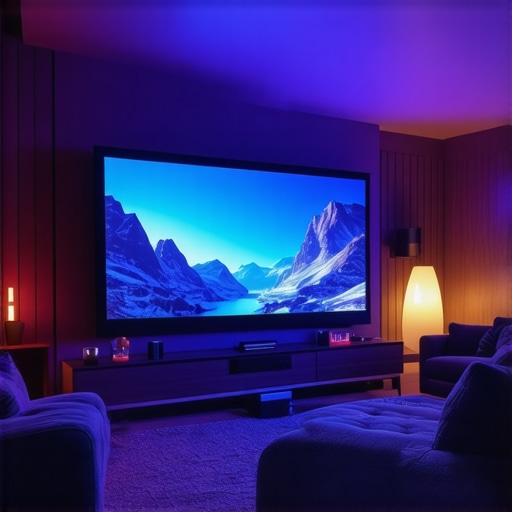
Illustration showcasing a smart home theater with adaptive lighting calibrated to circadian rhythms, integrating biometric sensors and spectral tuning.
Exploring the Psychological Spectrum Managed by Intelligent Lights
Lighting’s capacity to modulate mood extends into the realm of subconscious influence, where nuanced color and intensity adjustments evoke targeted emotional responses. Advanced systems serve not only aesthetic aims but also therapeutic and motivational functions, especially when tailored to individual psychological profiles. This intersection demands an understanding of color psychology, neurobiology, and user-specific data analytics to craft environments that resonate on a deeper level.
Facilitating Personalization Through Data-Driven Design
Personalized lighting configurations emerge from comprehensive data analysis encompassing viewer preferences, viewing history, and environmental feedback. Coupled with adaptive algorithms, these systems create bespoke ambiances that enhance satisfaction and engagement. The challenge lies in balancing automation with user control, ensuring intuitive interfaces and safeguarding privacy. As detailed in the IEEE Transactions on Neural Systems and Rehabilitation Engineering, transparent data management and user empowerment are critical components of responsible innovation.
Expert Highlights for Next-Level Home Theater Lighting
Embrace Dynamic Color Shifts to Match Emotional Cues
Integrating real-time scene analysis with adaptive lighting systems creates an environment where ambient illumination responds intuitively to cinematic narratives, elevating emotional immersion beyond traditional static setups.
Leverage AI to Personalize Viewing Atmospheres
Artificial intelligence-driven control algorithms can tailor light schemes based on user preferences and viewing habits, fostering a uniquely personalized cinematic experience that adapts seamlessly over time.
Prioritize Calibration for Authenticity and Comfort
Meticulous calibration of color temperature, luminance, and placement ensures that ambient lighting enhances image fidelity without introducing glare or color distortion, maintaining visual comfort during extended sessions.
Design for Integration and Simplicity
Advanced LED strips and bias lighting solutions should harmonize with existing home automation systems, providing intuitive control interfaces that encourage consistent and user-friendly operation.
Explore Cross-Disciplinary Insights for Innovation
Combining expertise from neuropsychology, lighting engineering, and multimedia design opens pathways to creating lighting environments that are visually stunning yet psychologically harmonious, amplifying both aesthetic and functional outcomes.
Key Resources from Industry Leaders
- International Lighting Commission Standards — Offers authoritative guidelines for spectral tuning and color calibration to ensure health and effectiveness in ambient lighting design.
- Journal of Visual Ergonomics — Provides research-based insights on visual comfort and ergonomic best practices relevant to long-duration cinematic experiences.
- Home Theater Lighting Guides from Lighting Experts — Practical advice on implementing intelligent LED solutions, including product recommendations and deployment strategies.
- AI in Ambient Lighting Publications — Explores cutting-edge developments in scene recognition, predictive control, and personalization algorithms that can redefine home cinema environments.
A New Perspective on Light and Human Experience
Mastering ambient lighting in home theaters goes beyond aesthetics; it involves crafting an atmospheric narrative that enhances emotional depth, cognitive comfort, and viewer engagement through intelligent, calibrated illumination. For those committed to elevating their cinematic spaces, the intersection of energy-efficient technology, neuroscience, and artistic vision presents extraordinary opportunities. Dive deeper into these realms—consider connecting with industry specialists or exploring comprehensive guides on bias lighting and advanced LED solutions. Your next-level home theater isn’t just about what you watch, but how you experience it.



Leave a Reply