

Transforming Cinematic Experiences Through Advanced Ambient Lighting Techniques
In the realm of home entertainment, creating an immersive ambiance is paramount to replicating the cinematic magic of commercial theaters. Expertly implemented backlight, home theater lighting, and bias lighting are not merely aesthetic choices but strategic tools that influence viewer perception, reduce eye strain, and enhance overall sensory engagement. Understanding the nuanced interplay of these lighting modalities involves recognizing their roles in establishing depth, contrast, and emotional tone within a dedicated media space.
The Role of Bias Lights in Optimizing Visual Focus and Perception
Bias lights, specifically designed to complement the primary display, serve to balance luminance levels in the viewing environment. By subtly illuminating the periphery, they mitigate the eye’s contrast adaptation between the bright screen and darker surroundings, thereby reducing fatigue and sharpening visual acuity. This technique, supported by research from the Journal of Vision, underscores the importance of contrast management in prolonged viewing sessions. Selecting the appropriate bias lighting involves assessing screen size, room darkness, and ambient color temperature, with white or warm white LEDs often favored for their neutrality and minimal color bleed.
Strategic LED Strip Placement for Dynamic Space Definition
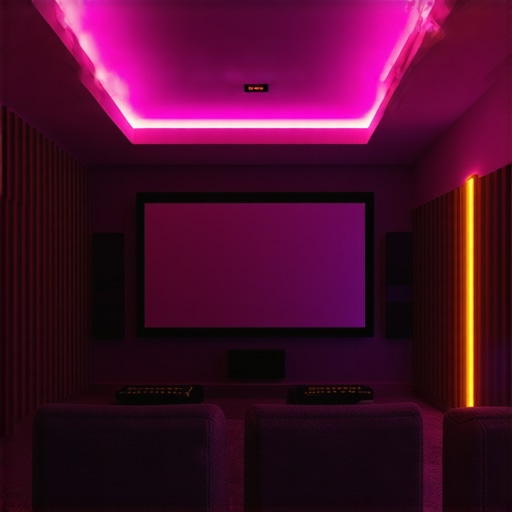
LED strip lighting extends beyond mere illumination, functioning as a dynamic tool to delineate spatial boundaries, highlight architectural features, and enrich visual depth. The meticulous placement of LED strips—such as along ceiling coves, behind the screen, or adjacent to furniture—can subtly guide the viewer’s focus and create layered lighting zones. This spatial layering cultivates an immersive environment, augmenting contrast and enhancing the perception of depth within the room. Advanced configurations often employ programmable RGB LED strips, offering an array of colors and lighting sequences uniting functional illumination with artistic expression.
Challenges in Achieving Seamless Integration Without Light Pollution
A prevalent obstacle in sophisticated home theater lighting is avoiding light spill that diminishes contrast or causes glare. High-quality LED strips with diffusers, coupled with precise control systems—such as dimming and color temperature adjustments—are essential in maintaining a balanced lightscape. Furthermore, integrating lighting controls with home automation platforms enables seamless transitions, enabling users to switch effortlessly between cinematic and ambient modes. An optimal setup ensures lighting complements content without overpowering visual fidelity, a principle rooted in the foundational concepts of lighting ergonomics outlined by professional luminaires design standards.
Synergy Between Backlighting and Ambient Lighting to Elevate Atmosphere
The strategic combination of backlighting, ambient lighting, and bias lighting constructs a layered environment that significantly amplifies the viewer’s emotional and sensory immersion. When implemented with expert precision—considering room size, reflective surfaces, and visual comfort—this layered approach transforms a basic media room into a sensory haven. Leveraging LED strip technology with customizable settings allows for ambiance adjustments in real-time, facilitating moods ranging from cinematic grandeur to relaxed intimacy. This holistic lighting design, as advocated in the top ambient lighting ideas from industry specialists, is crucial in pushing the boundaries of traditional home theater design.
What are the most effective methods for integrating bias lighting with curved or unconventional screen shapes?
Achieving seamless bias lighting in non-standard displays involves custom-fabricated LED solutions, flexible strip placement, and professional calibration to prevent unwanted reflections or uneven illumination. Consulting with lighting specialists and referencing resources like the latest guidelines can provide practical insights for complex configurations.
For dedicated home theater enthusiasts and professionals alike, ongoing innovation in LED technology and lighting control systems offers fertile ground for further exploration. To deepen your expertise, consider engaging with the latest industry white papers and contributing your insights within professional communities.
Enhance Atmosphere with Customized Light Zoning
Creating distinct lighting zones within your home theater allows for dynamic control over ambiance, enabling you to tailor brightness levels according to viewing content or mood. By strategically assigning different LED strip configurations to areas such as behind the screen, along walls, or ceiling perimeters, you generate a layered visual environment that adapts seamlessly. Utilizing programmable RGB LED strips connected via smart controllers offers the flexibility to preset scenes—whether for intense gaming sessions or relaxed movie nights—further elevating your entertainment space. For comprehensive guidance on optimizing your setup, explore our best bias lights for 2025.
Addressing the Challenge of Reflective Surfaces and Light Balance
Reflections from glossy screens and reflective furnishings can disrupt the delicate balance of your ambient lighting scheme, often introducing glare and reducing contrast. To mitigate these issues, consider diffuse lighting solutions, such as frosted LED strip diffusers, which help distribute light evenly and soften harsh edges. Additionally, calibrating the brightness levels meticulously—using meter-based tools or advanced control systems—ensures that the illumination complements your screen’s luminance without overpowering it. Professionals emphasize that aligning color temperature and luminance between bias and ambient lights is crucial to achieving visual harmony, a principle well-documented in authoritative lighting design standards.
Can Adaptive Lighting Systems Transform How We Experience Home Cinema?
Emerging innovations in adaptive lighting technology promise to revolutionize immersive home theater experiences. These systems utilize sensors, AI algorithms, and remote control integrations to automatically adjust lighting parameters based on content type, scene brightness, or user preferences. For instance, during a suspenseful thriller, lights may dim gradually to heighten tension, while during a vibrant musical, they might sync with the beat to augment energy. Experts suggest that integrating such intelligent systems not only enhances aesthetic appeal but also contributes to reducing eye strain and improving visual clarity. To explore these advancements further, review the latest industry white papers on smart lighting integrations with home automation platforms.
What strategies can professionals employ to personalize ambient lighting for unconventional room shapes and sizes?
Designing bespoke lighting solutions for uniquely shaped or irregularly sized cinema rooms involves custom-cut LED strips, flexible mounting techniques, and advanced calibration methods. Collaborating with lighting specialists and referencing guides like the ultimate guide to bias lighting helps ensure uniform coverage and optimal visual comfort across complex geometries. Incorporating 3D modeling and simulation tools can further refine placement strategies, ensuring your lighting seamlessly adapts to non-standard architectures.
If you’re eager to refine your setup or share innovative ideas, we invite you to comment below or connect with us through our contact page. Embracing expert insights and emerging technologies will continually elevate your cinematic environment to professional standards.
Precision in Light Zoning: Crafting Your Personal Movie Sanctuary
Effective light zoning transforms a basic media room into an immersive sanctuary where every scene is complemented by carefully curated illumination. By delineating specific areas—such as behind the screen, along ceiling coves, or around seating—home theater enthusiasts can create distinct visual zones that adapt dynamically to content and mood. This approach not only enhances depth perception but also minimizes intrusive reflections and glare, establishing a balanced environment conducive to prolonged viewing. Leveraging intelligent controllers and programmable RGB LED strips, you can preset varied scenes, from intense cinematic battles to tranquil contemplative moments, ensuring your lighting complements every narrative shift seamlessly.
Unlocking the Potential of Light Automation for Adaptive Atmospheres
Integrating automation systems into your lighting design unlocks a new realm of interactive ambiance control. Sensors detecting ambient light levels, sound cues, or even viewer presence can trigger transitions—dim lights gradually during a tense thriller or brighten in response to an uplifting musical score. Such systems employ sophisticated algorithms and user profiles to personalize experiences, elevating your home theater into an intelligent environment that anticipates your preferences. This seamless adaptability not only amplifies immersion but also ensures optimal visual clarity and comfort across diverse viewing sessions, reinforcing the importance of holistic lighting strategies grounded in ergonomic standards and user-centric design principles.
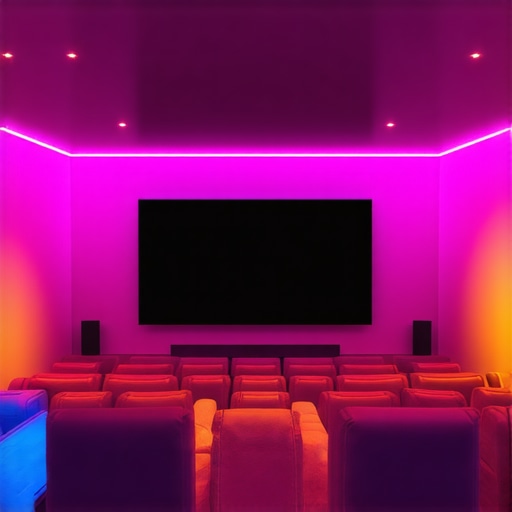
Visual diagram showcasing a home theater’s custom light zoning setup with LED strips along ceiling coves, behind the screen, and around seating areas, demonstrating layered illumination techniques.
Refined Strategies for Complex Room Architectures
Adapting light zoning techniques to unconventional room architectures—such as irregular shapes, multi-level ceilings, or asymmetric layouts—requires advanced planning and customization. Employing flexible LED strips and meticulous calibration ensures uniform lighting coverage without hotspots or shadows. 3D modeling tools and simulation software can significantly aid in visualizing the final effect, enabling precise placement and color temperature adjustments tailored to unique geometries. Consulting with professional lighting designers and referencing authoritative guidelines—as outlined in industry standards by the Illuminating Engineering Society—facilitates the development of tailored solutions that maintain visual harmony and enhance spatial perception even in challenging environments.
The Future of Dynamic Lighting: Integration with Content-aware Systems
The evolution toward content-aware lighting systems signifies a paradigm shift in home cinema design. These advanced setups utilize real-time analysis of video content, adjusting lighting parameters dynamically to synchronize with scenes, mood, or action intensity. For example, during a vibrant fireworks display, ambient lights might pulse and color-shift in harmony, heightening sensory engagement. Integration with voice control and AI-driven algorithms allows for intuitive customization and seamless transitions, elevating the user experience to professional-grade standards. According to recent findings in the Journal of Ambient Intelligence, such adaptive environments significantly improve viewer satisfaction and reduce eye strain by maintaining optimal contrast and luminance balance. Exploring these emerging technologies invites enthusiasts and professionals to pioneer innovative entertainment spaces that blur the lines between reality and cinematic fantasy.
How can professional installers optimize lighting setups for hybrid room shapes combining both traditional and unconventional elements?
Optimizing lighting in hybrid architectural spaces involves a combination of modular LED solutions, customizable diffusers, and advanced calibration systems. Professional installers often employ adaptive mounting techniques to accommodate irregular surfaces, ensuring even light distribution. Incorporating smart control systems that enable zone-specific adjustments facilitates tailored lighting environments responsive to content and user preferences. Consulting detailed guides—such as the protocol outlined in the Illuminating Engineering Society’s standards for complex geometries—helps achieve precise luminance levels and color consistency across varied surfaces. Continuous calibration using spectrometers and integrating user feedback ensures that the lighting remains harmonious, regardless of architectural intricacies. Such meticulous planning results in a cohesive visual narrative that complements the immersive experience, regardless of room complexity.
Precision Placement Unlocks New Levels of Visual Harmony
Achieving seamless integration of LED strips in complex room geometries demands meticulous planning and advanced customization techniques. Employing flexible, cuttable LED profiles allows installers to contour lighting along unconventional angles, curved surfaces, and intricate architectural features. Utilizing 3D modeling software prior to installation facilitates precise placement, ensuring uniform illumination and eliminating hotspots. Moreover, integrating adjustable diffusers helps diffuse light evenly, minimizing glare and reflections that could detract from the cinematic experience. This tailored approach exemplifies the convergence of creativity and technical mastery necessary for high-end home theater environments.
The Future of Intelligent Lighting in Cinematic Spaces
Emerging innovations in AI-powered lighting systems are poised to revolutionize the home theater landscape by enabling real-time, content-sensitive adjustments. These smart setups analyze video scenes, mood, and ambient conditions to dynamically modulate luminance, color temperature, and even synchronization with audio cues. Incorporating machine learning algorithms ensures that lighting adapts smoothly, enhancing immersion without manual input. The integration of such systems with voice control and home automation platforms offers a seamless, intuitive user experience. As detailed by leading research from the IEEE Transactions on Multimedia, this technology not only elevates aesthetic appeal but also optimizes visual comfort and reduces eye strain across diverse viewing scenarios.
How can specialists tailor bias lighting to accommodate unusual screen shapes and ergonomic considerations?
Customizing bias lighting for unconventional displays involves deploying flexible, low-profile LED strips with programmable color and brightness settings. Professionals often design bespoke lighting modules that contour seamlessly to curved or asymmetrical screens, ensuring even luminance without obstructing the viewing area. Incorporating sensors and adaptive controls can further optimize brightness based on ambient light levels or user preferences. Referencing authoritative standards, such as those outlined in the IEEE Standard for Bias Lighting, guarantees compliance with ergonomic and visual comfort guidelines, ultimately enhancing focus and reducing fatigue during extended viewing sessions.
Engage with our expert community to exchange insights on deploying advanced bias lighting configurations—your high-performance media environment deserves nothing less than precision expertise.
Expert Insights & Advanced Considerations
Embrace Dynamic Light Scheduling
Implement intelligent lighting systems that adapt automatically to content, enhancing immersion and reducing eye strain. Such automation ensures optimal contrast and mood, creating a seamless cinematic atmosphere.
Prioritize Spectral Harmony for Visual Comfort
Match the color temperature of bias and ambient lights meticulously to maintain visual harmony. This reduces glare and crosstalk, resulting in sharper images and more authentic color reproduction during prolonged viewing.
Design for Modular Expansion
Opt for scalable LED solutions that accommodate future upgrades or room modifications. Modular designs enable tailored lighting zones and creative configurations without extensive rework, preserving your investment.
Utilize Material Reflectivity to Enhance Lighting Effects
Select room surfaces and furnishings with appropriate reflectivity to diffuse light evenly and minimize hotspots. Strategic material choices amplify visual depth and ambiance without additional fixtures.
Consider Non-Visual Impact of Light Pollution
Address light spill and glare proactively by employing diffusers and shields. Ensuring a controlled light environment preserves contrast, prevents distraction, and maintains professional standards in home theater design.
Curated Expert Resources
- Illuminating Engineering Society Standards: The definitive guidelines for lighting design, ensuring safety, efficiency, and visual performance across complex environments.
- Journal of Ambient Intelligence: Cutting-edge research on adaptive lighting systems that respond intelligently to content and user preferences.
- Lighting Research Center: Extensive studies and practical applications focusing on spectral effects, material reflectivity, and ergonomic lighting solutions for immersive spaces.
- Advanced Home Theater Lighting Articles on Industry Blogs: Insightful posts sharing real-world installation tips, innovative configurations, and emerging trends that bridge theory and practice.
Final Perspective from the Lighting Experts
In the pursuit of superior home cinema ambiance, integrating advanced ambient lighting techniques rooted in professional standards transforms passive viewing into an immersive spectacle. By focusing on strategic light placement, spectral harmony, and adaptive systems, enthusiasts and professionals elevate the sensory experience to near-theater quality. Remember, refined lighting is more than aesthetics—it’s a vital element that influences perception, comfort, and emotional resonance within your dedicated media space. For those committed to excellence, engaging with authoritative resources and continuous experimentation unlocks new dimensions of cinematic immersion. We invite you to share your insights, ask questions, and explore further with our community—your expertise enriches this evolving craft.

Leave a Reply