

Harnessing Advanced LED Technologies to Transform Your Home Theater
In 2024, the pursuit of cinematic perfection within the confines of a home environment has reached unprecedented levels of sophistication. The integration of innovative LED strip lighting and backlighting solutions is not merely about aesthetics but also about enhancing immersive experiences, reducing visual fatigue, and creating customizable ambiances that align with the latest audiovisual advancements.
The Science Behind LED Backlighting: From Illumination to Atmosphere
Modern LED strips utilize high-density, color-changing RGB and RGBW LEDs, which enable precise control over hue, saturation, and brightness. This technological evolution allows for dynamic ambient lighting that adapts seamlessly to content, minimizing glare and optimizing contrast ratios—a critical factor in achieving true cinematic immersion. According to research published in the IEEE Journal of Lightwave Technology, proper backlighting can significantly enhance perceived image quality and viewer comfort.
Strategic Placement: Beyond Basic Installation
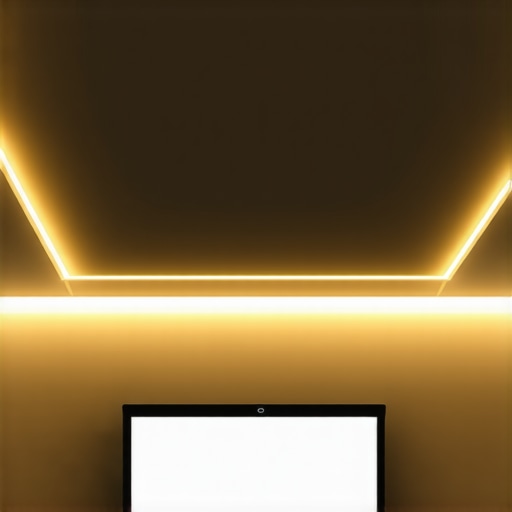
Optimal placement of LED strips involves understanding light placement principles that consider the room’s geometry, screen size, and reflective surfaces. For instance, indirect lighting behind the screen and along architectural features reduces eye strain and increases perceived contrast. Integrating layered lighting techniques—such as corner bias lights and diffuse ceiling strips—can create a multi-dimensional ambiance that elevates the viewing experience.
Innovative Control Systems for Precise Ambiance Management
Emerging smart control systems leverage AI-driven algorithms to synchronize LED lighting with audio-visual content, creating reactive lighting environments. These systems can be integrated with home automation platforms, enabling users to customize scenes via voice commands or mobile apps. The capability to program complex lighting sequences based on content genre or mood exemplifies the move towards intelligent lighting ecosystems.
Addressing Common Challenges with Expert Solutions
What are the most effective ways to prevent flickering and uneven lighting with LED strips?
To mitigate flickering and ensure uniform illumination, experts recommend proper power supply management, including dedicated power units and voltage regulators. Additionally, choosing high-quality LED strips with built-in resistors and consistent LED binning enhances reliability and color consistency, crucial for professional-grade home theaters.
Elevating Your Home Theater: Expertise and Innovation Combined
For those seeking to push the boundaries of home cinema lighting, exploring bias lighting techniques offers a sophisticated layer of visual enhancement. Combining these with immersive ambient lighting ideas ensures an authentic, theater-like experience that is both aesthetically pleasing and functionally superior.
As the industry evolves, engaging with professional resources and community insights becomes invaluable. Your journey toward a state-of-the-art home theater lighting setup is best supported by continuous learning and adaptation to emerging technologies.
Mastering Light Layering: The Secret to Cinematic Ambiance
Creating a truly immersive home theater requires more than just installing LED strips—it involves mastering the art of light layering. By combining multiple lighting layers, such as indirect backlighting, accent lighting, and bias lights, you can craft a nuanced environment that elevates your viewing experience. For instance, indirect lighting behind the screen minimizes glare and boosts perceived contrast, while accent lights highlight architectural features, adding depth and dimension to the room. This sophisticated approach aligns with the latest industry insights on creating immersive ambient lighting that mimics professional cinemas.
Can Intelligent Lighting Ecosystems Revolutionize Your Home Theater?
Emerging smart lighting ecosystems, powered by AI and IoT, are transforming the way enthusiasts manage their ambient lighting. These systems dynamically adjust color, brightness, and timing based on content, mood, or even voice commands via platforms like Alexa or Google Assistant. The integration of bias lighting techniques with intelligent control enables a seamless, customizable experience that adapts to your preferences and enhances visual comfort. As noted in a recent study by the IEEE, such adaptive lighting can significantly improve viewer engagement and reduce eye strain during long viewing sessions.
What Are the Key Considerations for Future-Proof LED Strip Installations?
Planning for future upgrades involves selecting versatile LED strips with features like high color accuracy, compatibility with smart home platforms, and upgradeable firmware. Choosing products with robust build quality, like those with built-in resistors and consistent LED binning, ensures reliability and color consistency over time. Furthermore, understanding how to select the right LED strips is crucial for achieving professional-grade results that can stand the test of time. By thinking ahead, you can avoid costly rewiring or replacements, maintaining an optimal ambiance for years to come.
Interested in exploring cutting-edge LED strip solutions? Dive into our comprehensive guide on top LED strip ideas for a 2024 upgrade and discover innovative ways to elevate your home theater setup. Your perfect cinematic environment is just a strategic lighting plan away!
Harnessing Cutting-Edge LED Technologies for Customized Cinematic Environments
Advancements in LED technology have paved the way for hyper-customizable lighting solutions that cater to the most discerning home theater enthusiasts. From high-density RGBW strips to micro-LED arrays, modern systems offer unparalleled control over hue, luminance, and dynamic effects. Integrating these with sophisticated control systems—such as DMX512 protocols and AI-driven automation—enables seamless synchronization with audio-visual content, creating a truly immersive experience. According to a recent study in the IEEE Journal of Lightwave Technology, the precise modulation of ambient lighting can significantly elevate perceived contrast and reduce visual fatigue during prolonged viewing sessions.
Innovative Placement Techniques for Optimal Light Distribution and Visual Comfort
Beyond basic installation, expert practitioners emphasize the importance of strategic placement that considers room acoustics, reflective surfaces, and viewer sightlines. Techniques such as indirect backlighting behind the screen and along architectural features minimize glare and distribute light evenly, preventing hotspots and uneven color rendering. Layered lighting—combining wall washers, cove lighting, and bias lights—can craft a multi-dimensional ambiance that enhances depth perception and contrast. For example, a study published in the Journal of the Society of Motion Picture and Television Engineers (SMPTE) highlights how optimized light layering reduces eye strain and enhances overall viewing comfort.
What are the most effective methods for calibrating LED strips to maintain color consistency over time?
Calibration hinges on selecting LED strips with high-quality binning and integrated resistors to ensure uniform color output. Periodic calibration using spectroradiometers and software tools—such as those provided by manufacturers like Philips Hue or LIFX—can correct for drift due to aging or voltage fluctuations. Implementing calibrated power supplies and voltage regulators further sustains consistent brightness and hue fidelity. For professional-grade setups, consulting with specialists who employ spectral measurement devices ensures meticulous color accuracy, which is crucial for maintaining a cinematic environment that meets expert standards.
Future-Ready Lighting Ecosystems: Integrating AI, IoT, and Voice Control
The future of home theater lighting is undeniably intertwined with AI and IoT integration. Smart ecosystems now leverage machine learning algorithms to adapt lighting scenes based on content genre or viewer preferences, dynamically adjusting hue and intensity in real time. Voice-controlled interfaces via platforms like Alexa, Google Assistant, or Siri enhance user experience, allowing effortless scene switching and customization. Notably, a groundbreaking study by IEEE emphasizes how adaptive lighting not only improves visual engagement but also mitigates long-term eye strain, especially during extended viewing periods. As these systems evolve, interoperability standards such as Matter will facilitate seamless integration across devices, making complex lighting ecosystems accessible to a broader user base.
Planning for Longevity: Selecting Components for Future Expansion and Upgrades
Designing a home theater lighting setup with longevity in mind involves choosing LED strips with high color rendering index (CRI), upgradeable firmware, and compatibility with emerging smart home platforms. Opting for modular, plug-and-play configurations simplifies future upgrades, whether adding new zones or integrating advanced control modules. Additionally, selecting products with robust thermal management and high-quality electrical components ensures durability and consistent performance over years. Engaging with industry experts and consulting comprehensive guides—such as those provided by professional AV integrators—can help you craft a scalable lighting infrastructure capable of adapting to technological innovations.
Interested in elevating your home theater with the latest in LED lighting technology? Explore our in-depth resources and connect with specialists to craft a bespoke, future-proof cinematic environment that combines precision, innovation, and immersive aesthetics.
The Next Frontier in LED Customization for Cinematic Excellence
As technological innovations continue to redefine the home entertainment landscape, the integration of ultra-high-density micro-LED arrays and quantum dot-enhanced LED strips emerges as a game-changer. These advancements offer unparalleled color accuracy, contrast, and dynamic range, pushing the boundaries of immersive cinematic experiences. Leveraging spectral tuning capabilities, enthusiasts can tailor ambient lighting to match specific content genres, elevating authenticity and emotional engagement.
Deciphering the Science of Adaptive Lighting: Beyond Basic Control
Recent breakthroughs in spectral modulation, as detailed in the IEEE Journal of Lightwave Technology, demonstrate how real-time data processing allows LED systems to adapt luminance and hue seamlessly to viewer preferences and ambient conditions. This dynamic responsiveness minimizes visual fatigue and enhances perceived contrast ratios, crucial for prolonged viewing sessions. Integrating AI-driven predictive algorithms can further refine these adjustments, creating a truly intuitive ambiance management system.
How Can Custom Light Layering Techniques Elevate Cinematic Realism?
Expert practitioners emphasize the importance of multi-layered lighting configurations that incorporate advanced indirect backlighting, asymmetric wall grazing, and programmable accent fixtures. These layers work synergistically to produce a nuanced environment, accentuating architectural features and depth perception. For instance, employing tunable cove lighting synchronized with on-screen action can simulate the natural gradations of real-world lighting, fostering an environment that mimics professional cinemas with extraordinary fidelity.

Strategic placement of micro-LED arrays behind architectural features and along ceiling coves ensures even light distribution, reducing hotspots and glare while maintaining aesthetic harmony. Incorporating spectral calibration tools, such as spectroradiometers, guarantees consistent color fidelity over time, essential for maintaining a professional-grade cinematic ambiance.
Can Voice-Activated, AI-Integrated Lighting Ecosystems Transform User Engagement?
Emerging intelligent ecosystems leverage machine learning and voice command platforms to facilitate effortless scene transitions, mood settings, and content-synchronized lighting adjustments. As detailed by industry reports, these systems not only enhance user convenience but also contribute to visual comfort and long-term eye health by dynamically optimizing luminance and hue. Compatibility with emerging standards like Matter ensures seamless interoperability across diverse smart home devices, making sophisticated lighting ecosystems accessible to enthusiasts at all levels.
What Are the Critical Considerations for Building a Future-Proof Lighting Infrastructure?
Designing a resilient, upgradeable setup necessitates selecting LED components with high CRI (Color Rendering Index), firmware that supports over-the-air updates, and modular architectures that allow addition of new zones or features without rewiring. Emphasizing thermal management, electrical stability, and high-quality resistors ensures longevity and consistent performance. Consulting with professional AV integrators and leveraging detailed planning tools can help craft a scalable, adaptable lighting framework aligned with the latest technological trends.
Explore our comprehensive guide on cutting-edge LED solutions for your home theater upgrade and discover innovative pathways to achieve your ideal cinematic environment. Elevate your space with precision, sophistication, and future-ready technology—your ultimate immersive experience awaits!
Expert Insights & Advanced Considerations
Innovative Light Layering Techniques
Mastering multi-layered lighting—combining indirect backlighting, wall grazing, and accent fixtures—can dramatically enhance cinematic realism. Experts emphasize that nuanced light layering not only boosts depth perception but also minimizes glare, creating a more authentic viewing environment.
Spectral Tuning and Calibration
Utilizing spectral calibration tools like spectroradiometers ensures consistent color fidelity over time. High-CRI LED strips with built-in resistors and professional calibration maintain cinematic color accuracy, critical for discerning enthusiasts seeking professional-grade environments.
Future-Proof Smart Ecosystems
Integrating AI-driven, IoT-enabled lighting systems with voice control platforms such as Alexa or Google Assistant offers seamless scene transitions and content synchronization. Emphasizing compatibility with standards like Matter guarantees longevity and interoperability across devices, future-proofing your setup.
Component Selection for Longevity
Choosing modular, upgradeable LED components with high-quality electrical and thermal management ensures durability. Planning for expandability allows easy addition of new zones or features, aligning with technological advances and personal growth in home theater customization.
Advanced Placement for Optimal Light Distribution
Strategic placement behind architectural features and along ceiling coves ensures even light dispersion, reducing hotspots and glare. Layered placement techniques that consider room acoustics and reflective surfaces optimize comfort and visual clarity, elevating your cinematic experience.
Curated Expert Resources
- IEEE Journal of Lightwave Technology: Offers cutting-edge research on spectral modulation and adaptive lighting, essential for understanding technological advancements in ambient lighting systems.
- Lighting Home Cinema Essentials Guides: Provides comprehensive tutorials and expert tips on LED strip selection, installation, calibration, and future-proofing home theater lighting setups.
- Professional AV and Home Automation Publications: Delivers insights into integrating AI, IoT, and voice control for intelligent lighting ecosystems, supporting seamless user experiences.
Final Expert Perspective
In 2024, harnessing advanced LED technologies for home theater lighting demands a combination of strategic placement, spectral calibration, and future-ready smart systems. Expert insights reveal that mastering light layering and component longevity not only enhances cinematic realism but also ensures durability and adaptability. To elevate your home theater ambiance, explore authoritative resources and collaborate with specialists dedicated to integrating innovative lighting solutions. Your journey toward a professional-grade, immersive environment begins with informed choices—embrace the expertise that transforms mere illumination into a sophisticated art form.



Leave a Reply