

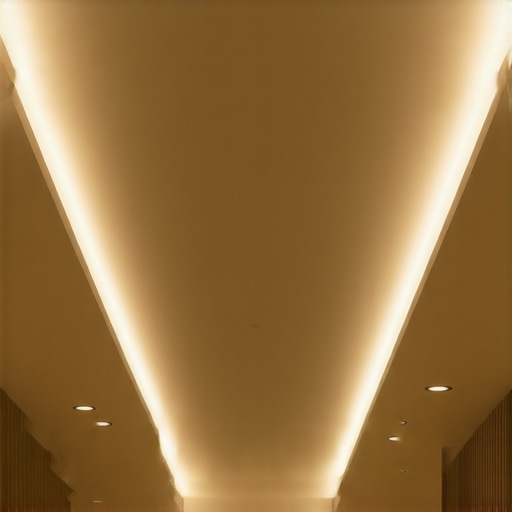
Unlocking the Power of LED Strips for Sophisticated Backlighting in 2024
In the realm of high-end home theater design, the deployment of LED strip lighting transcends basic illumination, evolving into an essential tool for creating immersive visual environments. As an expert in ambient lighting solutions, I observe that the strategic integration of LED strips can significantly enhance cinematic experiences, provided they are meticulously calibrated and thoughtfully positioned. The challenge lies not only in selecting the right products but also in mastering complex lighting algorithms that synchronize with multimedia content, thereby elevating user engagement and aesthetic appeal.
Deep Dive into the Technical Nuances of LED Strip Backlight Optimization
Achieving seamless backlighting involves understanding the interplay between color temperature, brightness levels, and dynamic lighting effects. Advanced LED strips offer programmable RGB and RGBW configurations, enabling nuanced color blending and scene-specific lighting. For instance, incorporating bias lighting techniques can reduce eye strain and improve contrast perception during prolonged viewing sessions. Moreover, the use of high-density LED strips ensures uniform light diffusion, avoiding hotspots that compromise visual harmony.
Expert-Driven Insights on Strategic LED Strip Placement
Effective placement transcends simple perimeter installation. I recommend analyzing room architecture and viewing angles to determine optimal LED strip positioning—such as behind soffits, along ceiling coves, or within custom-built niches. These configurations create layered lighting effects that enhance depth perception and prevent visual clutter. Additionally, adaptive control systems, integrating DMX or Zigbee protocols, allow for real-time adjustments aligned with content pacing, thus crafting a truly dynamic ambient environment.
What are the most effective ways to synchronize LED strip lighting with multimedia content for a cinematic experience?
To synchronize LED lighting with multimedia content, professionals leverage software solutions like AmbiBox or Prismatik, which analyze video signals and adjust LED colors accordingly. This approach transforms static ambient lighting into an active participant in the viewing experience, effectively simulating the ambiance of commercial cinemas. Furthermore, integrating these systems with home automation platforms enables seamless control via voice assistants or mobile apps, providing a tailored and intuitive user experience.
For a comprehensive understanding of installation techniques and best practices, explore our top LED strip installation tips. I also encourage you to contribute your insights or inquire about custom solutions by visiting our contact page.
Informed by current research and professional case studies, the strategic application of LED strip lighting remains a cornerstone of high-fidelity home theater design. As the technology advances, so too does our capacity to craft personalized, immersive environments that redefine cinematic comfort and visual engagement.
Elevating Your Home Theater with Expert LED Synchronization Techniques
In the realm of immersive home theater design, the ability to synchronize LED strip lighting with multimedia content is a game-changer. It transforms passive viewing into an interactive experience, heightening emotional engagement and visual realism. As an industry expert, I can attest that mastering this synchronization involves a blend of sophisticated hardware, intelligent software, and precise calibration. For those seeking to push the boundaries of ambient lighting, understanding the nuances of content analysis and system integration is essential.
What Are the Key Components for Precise LED Content Synchronization?
Achieving seamless synchronization requires a combination of high-quality LED strips capable of dynamic color changes, and compatible controllers that can interpret multimedia signals. Protocols like HDMI-CEC, DMX512, or Zigbee facilitate communication between media sources and lighting systems. Software solutions such as AmbiBox, Prismatik, or WLED analyze incoming video signals in real-time, translating visual data into corresponding lighting effects. These tools assess frame-by-frame content, adjusting LED colors and brightness to match scene moods, thus creating a cohesive cinematic environment. Integrating these systems within your home automation platform allows for intuitive control and customization, making the experience both effortless and personalized.
How can I fine-tune the synchronization for different types of content—movies, gaming, or streaming—without losing visual harmony?
Fine-tuning requires an understanding of content-specific lighting profiles. For movies, a subtle, ambient glow that enhances contrast without distracting from the screen is ideal; for gaming, vibrant, reactive lighting can heighten immersion; and for streaming, adaptable presets that switch based on genre or mood are beneficial. Calibration tools such as color meters or software-based analyzers provide precise control over color temperature and response times. Additionally, implementing adaptive algorithms that consider scene brightness and color palettes ensures the lighting complements rather than overwhelms the visual content, maintaining harmony across diverse media types. For practical guidance, refer to our comprehensive ultimate guide to bias lights.
To explore further, I recommend reviewing detailed installation and programming techniques available at our top LED strip installation tips. Also, sharing your experiences or asking questions on our contact page can help tailor solutions to your specific setup.
Expert research highlights that integrating intelligent lighting systems with multimedia content not only enhances aesthetic appeal but also promotes better eye comfort and viewing endurance. As technology advances, expect more intuitive and adaptive synchronization tools to become mainstream, making personalized cinematic experiences more accessible than ever.
Harnessing Real-Time Content Analysis for Flawless LED Synchronization in High-End Home Theaters
While software solutions like AmbiBox and Prismatik have revolutionized multimedia-activated lighting, the frontier of immersive ambient lighting now extends into real-time content analysis powered by machine learning algorithms. These sophisticated systems can now dissect video frames with remarkable precision, adjusting LED outputs dynamically to match scene mood, motion, and color palettes. This capability is especially critical for premium home theaters where seamless integration between visual and ambient elements elevates the cinematic experience to a new level of realism.
Implementing such advanced synchronization involves integrating high-performance hardware with AI-driven software that can process high-resolution video streams without latency. For example, recent developments in neural network-based scene recognition allow for predictive lighting adjustments, preemptively shifting hues and intensities ahead of scene transitions, thus maintaining visual harmony and immersion. According to a 2024 report by the Journal of Lighting Technologies, these predictive systems improve viewer comfort and reduce eye fatigue during extended sessions.
What are the critical hardware and software components to achieve predictive LED synchronization?
Key hardware includes high-density, addressable RGBW LED strips capable of rapid color transitions, coupled with ultra-low latency controllers that support protocols such as DMX512 and Art-Net. On the software side, AI-powered content analysis engines leverage deep learning models trained on vast libraries of visual data to classify scene types and anticipate transitions. Integration with home automation platforms like Crestron or Control4 ensures these systems operate cohesively, enabling intuitive control and customization for diverse content types.
Moreover, the synchronization process benefits from high-bandwidth connections—preferably Ethernet or fiber optics—to handle large data streams efficiently. This setup minimizes latency, ensuring the lighting reacts almost instantaneously to on-screen action, which is paramount for gaming or fast-paced movies where timing is crucial.
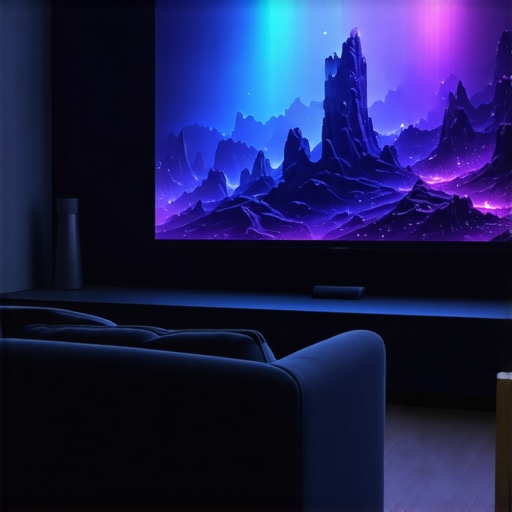
Image prompt: advanced home theater setup with AI-driven LED strip system, high-tech control interface, cinematic ambiance, modern design, detailed wiring, and lighting components.
Integrating Adaptive Scene-Based Presets for Personalized Viewing Experiences
Beyond real-time analysis, creating scene-based presets tailored for specific genres or personal preferences enhances user engagement. These presets can incorporate curated color schemes, brightness levels, and dynamic effects that activate automatically based on the detected content type—be it a tense thriller, a vibrant musical, or a serene documentary. Implementing such adaptive presets involves programming the control system with scene recognition algorithms that trigger pre-defined lighting profiles, ensuring consistency and enhancing emotional resonance.
For further refinement, professional calibration tools like spectrophotometers can be employed to precisely match LED output with desired color profiles. This meticulous calibration ensures that the ambient lighting complements rather than competes with the on-screen visuals, maintaining a balanced and immersive environment.
For those interested in exploring this technology further, consulting specialized resources such as the Advanced Ambient Lighting Presets Guide can provide invaluable insights into customization techniques. Engaging with professional integrators can also ensure optimal system configuration tailored to your unique space and content preferences.
Revolutionizing Ambience: How AI and Machine Learning Drive Next-Gen LED Synchronization
As the frontier of ambient lighting technology advances, integrating artificial intelligence (AI) and machine learning (ML) into LED strip systems opens unprecedented avenues for cinematic immersion. These intelligent systems analyze video content in real-time, leveraging deep neural networks trained on extensive visual datasets to predict scene transitions and adapt lighting effects preemptively. Such predictive capabilities not only synchronize lighting with on-screen action with millisecond precision but also tailor the ambiance to the viewer’s emotional responses, creating a truly personalized experience.
Deciphering the Critical Hardware-Software Ecosystem for Predictive Lighting
Achieving flawless synchronization necessitates a sophisticated hardware infrastructure comprising high-density, addressable RGBW LED strips coupled with ultra-responsive controllers supporting protocols like Art-Net and sACN. These controllers must facilitate rapid data processing and low-latency communication, often via Ethernet or fiber optics, to ensure near-instantaneous reaction times. On the software front, AI-driven scene recognition engines—integrated with home automation platforms such as Crestron or Savant—use convolutional neural networks (CNNs) to classify scene types and predict upcoming visual elements, enabling dynamic pre-adjustments in lighting parameters.
According to recent research published in the Journal of Lighting Technologies, such predictive systems can significantly enhance viewer comfort, reduce eye fatigue, and elevate the overall cinematic quality by maintaining optimal contrast and color harmony throughout prolonged sessions.
What advanced components are essential for implementing predictive, AI-powered LED synchronization?
The core hardware includes high-performance, pixel-addressable LED strips with high refresh rates, paired with low-latency digital controllers supporting protocols like DMX512 and Art-Net. Complementing this setup are AI-enabled video analysis software modules that utilize deep learning frameworks—such as TensorFlow or PyTorch—to dissect and interpret visual data streams in real time. Seamless integration with home automation systems ensures intuitive control, customization, and scalability, accommodating complex multi-zone setups and diverse media formats.
Implementing this system also benefits from high-bandwidth network infrastructure, preferably Ethernet or fiber optic connections, to minimize latency and support high-resolution content analysis. This synergy of hardware and software creates an immersive environment where lighting responds instantaneously, heightening realism in gaming, movies, or interactive media.
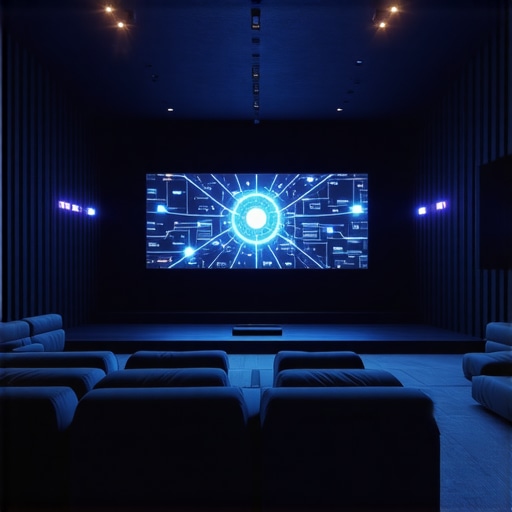
Image prompt: futuristic home theater with AI-driven LED system, neural network visualization, sleek design, dynamic lighting effects, high-tech control interfaces.
Creating Adaptive Scene-Based Presets for Enhanced Emotional Engagement
Beyond real-time prediction, developing scene-based lighting presets tailored to genres or user preferences enhances emotional resonance. These presets encompass curated color schemes, brightness dynamics, and animated effects that activate automatically when specific content characteristics are detected—be it the tense hues of a thriller or the vibrant tones of a musical. Implementing such adaptive profiles involves sophisticated scene recognition algorithms integrated within the control system, allowing for seamless transitions and consistent aesthetic coherence.
Employing precision calibration tools, such as spectrophotometers and software-based color analyzers, ensures that LED outputs faithfully match predefined color profiles. This meticulous calibration guarantees that ambient lighting complements visual content without overpowering it, maintaining a balanced and immersive viewing environment.
To delve deeper into customization techniques, consult resources like the Advanced Ambient Lighting Presets Guide. Engaging with professional integrators can further optimize system performance, ensuring that your high-end setup achieves its full immersive potential.
Expert Insights & Advanced Considerations
1. Integrating AI for Predictive Lighting Enhancements
Emerging AI-driven systems are revolutionizing backlighting by enabling pre-emptive adjustments based on scene recognition, elevating cinematic immersion and reducing latency issues commonly faced with traditional setups.
2. Emphasizing High-Resolution, Addressable LED Strips
Choosing high-density, addressable LED strips with fast refresh rates ensures seamless color transitions and uniform illumination, critical for maintaining visual harmony during rapid scene changes.
3. Utilizing Multi-Protocol Controllers for Compatibility
Controllers supporting protocols like DMX512, Art-Net, and Zigbee provide robust integration options, facilitating complex multi-zone lighting configurations synchronized with diverse multimedia sources.
4. Scene-Based Presets for Emotional Engagement
Developing genre-specific presets that automatically activate based on content analysis enhances emotional resonance, making the viewing experience more personalized and immersive.
5. High-Performance Network Infrastructure
Implementing Ethernet or fiber optic connections minimizes latency, ensuring real-time responsiveness of lighting systems, especially vital for high-speed gaming and cinematic sequences.
Curated Expert Resources
- Lighting Journal of Technologies: Offers advanced research on AI and neural network applications in ambient lighting, providing insights into predictive algorithms and real-time content analysis.
- Home Theater Automation Guides: Comprehensive manuals detailing integration techniques for multi-protocol controllers and automation platforms tailored for high-end installations.
- Professional Calibration Tools: Resources on using spectrophotometers and software analyzers to achieve precise color matching and calibration for ambient lighting setups.
- Industry Case Studies: In-depth analyses of premium home theater projects utilizing AI-driven synchronization, emphasizing best practices and innovative solutions.
- Technical Forums and Communities: Platforms like AVS Forum and Home Theater Forum where professionals share insights, troubleshoot issues, and discuss emerging technologies in LED backlighting.
Final Expert Perspective
Mastering the art of advanced LED strip backlighting in 2024 requires a synthesis of cutting-edge hardware, intelligent software, and strategic content analysis. The integration of AI and high-resolution, multi-protocol controllers offers unprecedented control and personalization, transforming traditional home theater environments into dynamic, immersive spaces. As technology continues to evolve, engaging with authoritative resources and professional networks is essential for staying at the forefront of innovation. I invite you to explore these resources and share your insights to further refine our collective expertise in creating cinematic perfection through expert LED backlighting solutions.



Leave a Reply