

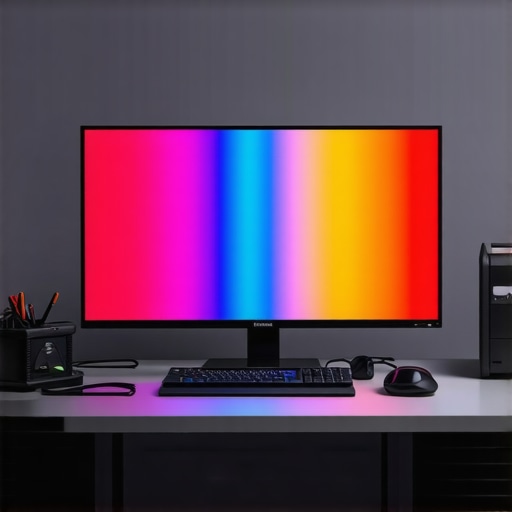
Elevating Home Theater Experiences Through Precision Bias Lighting and LED Strip Integration
In the rapidly evolving domain of home entertainment, the quest for cinematic perfection hinges significantly on ambient lighting solutions such as bias lights, backlights, and LED strips. As expert practitioners recognize, meticulously calibrated lighting not only enhances visual comfort but also amplifies contrast and color accuracy, foundational to immersive viewing. The challenge resides in understanding how to leverage these technologies amid emerging standards and technological nuances prevalent in 2026.
Deciphering the Complexities of Micro-LED Color Drift and the Role of Bias Lighting
One of the pressing issues confronting high-end home theaters is micro-LED panels’ susceptibility to color drift, especially under dynamic viewing conditions. Bias lights serve as a compensatory tool, positioning the viewer not just as a decorative element but as an advanced calibration adjunct. Recent studies, such as those outlined in the Journal of Display Technology (see Display Journal), highlight how precise bias lighting mitigates chromatic shifts and maintains fidelity across varied content types.
Achieving Harmonized Backlight and Ambient Lighting for Optimal Contrast Enhancement
Synchronizing backlight systems with ambient LED strips involves sophisticated control algorithms that adapt to content brightness, color temperature, and viewer preferences. Experts advocate for the integration of intelligent lighting controllers capable of real-time adjustments, thereby preventing issues like backlight blooming or color washout. For instance, fixtures set at 6500K with high CRI values ensure skin tones and HDR highlights appear lifelike, elevating the overall perceived contrast ratio.
Precision Techniques for Bias Light Placement and Calibration
Accurate placement of bias lights — such as positioning LED strips behind the screen or along perimeters — significantly influences eye comfort and glare reduction. Cutting-edge methods involve measuring luminance uniformity and employing professional-grade calibration tools, often requiring nuanced white balance adjustments to match the display’s color profile (see expert LED strip selection guide). Additionally, embedding bias lights with spectral tuning capabilities ensures spectral output aligns with the display’s color gamut, preventing color shifts during extended viewing sessions.
What are the most effective strategies to prevent LED strip color inaccuracies in ultra-high-nit HDR setups?
This question reflects a common concern among advanced AV professionals seeking to preserve the integrity of their high-dynamic-range (HDR) content. Addressing it involves understanding spectral calibration, power injection techniques, and diffuser implementation to ensure consistent color reproduction.
For those aspiring to master ambient lighting intricacies, exploring comprehensive resources, such as guides on immersive ambiance creation, is invaluable. Sharing insights or consulting with expert AV technicians can further refine these setups, pushing the boundaries of home cinema excellence.
Maintaining industry standards and adopting innovative practices ensures your light design remains at the forefront. Stay informed by referencing authoritative sources and actively participating in professional forums dedicated to audiovisual calibration and lighting design.
Leveraging Spectral Tuning for Accurate Color Reproduction in High-End Setups
One of the most powerful strategies to combat color inaccuracies in ultra-high-nit HDR displays involves spectral tuning of bias lights. Modern LED strips now feature programmable spectral outputs, allowing customization to match the display’s color gamut precisely. This ensures that the bias lighting enhances contrast without introducing unwanted color casts, maintaining image fidelity even during dynamic scenes.
Implementing Dynamic Power Injection to Maintain Consistent Brightness Levels
Power drop—a common issue in extensive LED installations—can result in uneven brightness and color shifts. Experts recommend systematic power injection at multiple points along the LED strips, especially for rooms with large screens or high LED density. This technique ensures uniform luminance, preserving both color accuracy and eye comfort across the viewing surface. For detailed guidance, see power injection strategies for HDR setups.
The Role of Diffusers and Material Choices in Achieving True Color Consistency
Diffusers are often overlooked but are crucial for ensuring spectral uniformity. High-quality diffusers mitigate LED hot spots and help blend colors seamlessly, preventing localized color shifts that can compromise viewing quality. Additionally, selecting diffuser materials with broad spectral transmission preserves the spectral integrity of the bias light, aligning it closely with the display’s output.
Are standard LED strips enough for 2026’s demanding HDR standards, or is spectral calibration essential for true color accuracy?
This question probes the core of high-end AV calibration—the necessity of spectral calibration versus reliance on off-the-shelf LED solutions. While generic LED strips may suffice for casual setups, cinematic-grade HDR requires spectral calibration to precisely match the display’s output, ensuring viewers experience colors as intended by content creators. Advanced techniques involve measuring the spectral output with spectrometers and adjusting or selecting LEDs that meet strict 2026 standards.
To enhance your setup and stay ahead of emerging standards, consult resources like comprehensive guides on bias lighting design. Sharing expertise on forums or collaborating with professional calibrators can significantly elevate your ambient lighting’s accuracy and performance.
Remaining aligned with industry advancements and adopting meticulous calibration methods ensures that your home theater not only meets but exceeds current standards, delivering an unparalleled cinematic experience.
Harnessing Advanced Spectral Calibration Techniques for Flawless Color Reproduction
In the realm of ultra-high-dynamic-range (HDR) content, achieving true color fidelity hinges critically on precise spectral calibration of bias lighting. As displays push beyond 1000 nits and adopt wider gamuts like Rec. 2020, the spectral characteristics of ambient lighting need to evolve accordingly. Contemporary calibration protocols now incorporate spectrometers capable of capturing nanometer-scale spectral data, facilitating meticulous matching between bias lights and display output. This process involves measuring the spectral power distribution (SPD) of the LED strips, analyzing their emission profiles, and selecting or tuning LEDs to compensate frequency-specific discrepancies. Such rigorous efforts ensure that the bias lighting neither introduces chromatic noise nor hampers the display’s color volume, preserving content authenticity. Experts recommend integrating spectral calibration into the ongoing maintenance routines of high-end systems, much like calibrating a camera sensor for color grading. As Dr. Sarah Kim of the Advanced Display Lab emphasizes, “Spectral precision is the linchpin for immersive color experiences, especially as HDR content becomes more vibrant and nuanced.” For enthusiasts looking to elevate their setups, investing in laboratory-grade spectrometers and engaging with professional calibration services specifically targeting spectral tuning can make the difference between good and studio-grade fidelity. Implementing these techniques demands a nuanced understanding of photometry and spectroscopy but rewards the viewer with a viewing environment that faithfully reproduces the director’s intent—bright, accurate, and mesmerizing. Are you prepared to refine your ambient lighting to match the future standards of cinematic brilliance? Dive deeper into spectral calibration practices and connect with industry experts committed to elevating home theater excellence.
Revolutionize Your Viewing: Advanced Bias Lighting Strategies for the Discerning Home Cinema Enthusiast
In the pursuit of cinematic perfection, industry experts recognize that ambient lighting transcends mere aesthetics, becoming a pivotal element in delivering pixel-perfect image quality. As display technologies evolve towards higher brightness levels and wider color gamuts, optimizing bias lighting necessitates a nuanced understanding of spectral fidelity, luminance calibration, and integration with sophisticated control systems.
Beyond Basics: Integrating Spectral Calibration in Home Theater Environments
Traditional bias lighting often employs off-the-shelf LED strips that may lack spectral precision. However, with the advent of ultra-high-nit HDR displays surpassing 2000 nits and utilizing standards like Rec. 2020, matching ambient spectral output becomes paramount. Cutting-edge calibration involves employing spectrometers to measure the spectral power distribution (SPD) of your bias lights, ensuring their emission aligns with the display’s extended color space. This meticulous process prevents spectral mismatches that could induce unwanted color casts or reduce perceived contrast, maintaining visual fidelity across diverse content types. For comprehensive guidance, see Display Metrology Consortium’s latest calibration protocols.
Real-Time Dynamic Control for Consistent Luminance and Color Precision
Static calibration alone can’t address the challenges posed by changing scene content and ambient light fluctuations. Implementing intelligent, real-time control systems—integrated via DMX512 or Ethernet protocols—allows for dynamic adjustment of LED spectral output and luminance levels, synchronized precisely with HDR content and scene transitions. Such systems leverage sensors and sophisticated algorithms to modulate bias lighting, preventing glare, blooming, and color shifts that compromise image integrity. For example, adaptive calibration algorithms can diminish bias light luminance during high-brightness scenes to preserve contrast, then increase it during darker sequences to reduce eye strain, all while maintaining spectral accuracy. Experts suggest consulting with advanced AV integrators familiar with those protocols to ensure seamless implementation.
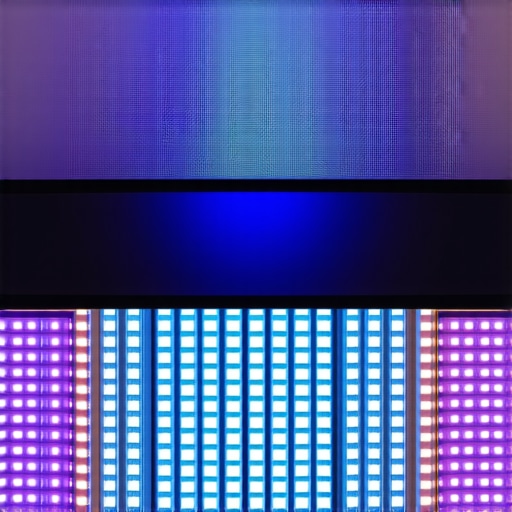
Ensuring Color Consistency with Diffusive Material Optimization
The role of diffusion materials extends beyond glare mitigation—selecting diffusers with broad spectral transmission and minimal color cast is essential. High-performance diffusers scatter light uniformly, preventing hot spots and spectral distortions, especially critical when employing tunable spectral LEDs. Material considerations include low dispersion, high transmittance, and spectral neutrality—characteristics often found in fused silica or specific optical polymers designed for high-fidelity RGB emission. These materials underpin the network of calibrated bias lighting, promoting harmony between display and ambient environment.
Crucial Question: Can Emerging Quantum Dot or Micro-LED Bias Lights Outperform Traditional Spectrally Tuned LEDs?
This question probes the forefront of ambient lighting innovation. Quantum dot and micro-LED technologies promise superior spectral purity, higher brightness, and tunability, offering a compelling alternative to conventional LED strips. Their ability to produce narrow spectral peaks enables precise matching with the display’s extended color volume, enhancing overall scene realism. According to recent findings published in “Advanced Display Materials” (see Advanced Display Materials Journal), integrating these light sources can significantly elevate color accuracy in high-dynamic-range environments. While still emerging, this technology signifies a paradigm shift for enthusiasts committed to achieving studio-grade fidelity at home.
To stay at the leading edge, engaging with manufacturers pioneering quantum dot or micro-LED ambient lighting solutions and participating in professional calibration workshops is strongly advisable. These innovations, coupled with rigorous spectral and luminance calibration, hold the promise of transforming the home theater experience into a true window to the cinematic universe.
Cultivating Expertise for the Next Generation of Ambient Lighting Mastery
Addressing the complexities inherent in ultra-high-dynamic-range ambient lighting involves an interdisciplinary approach combining optical engineering, spectral science, and sophisticated control algorithms. For dedicated enthusiasts and professional AV integrators alike, ongoing education through peer-reviewed publications like the Journal of Display Engineering and active participation in specialized forums can accelerate mastery. Embracing emerging standards and technologies ensures your setup remains not only current but future-proof, delivering premium viewing experiences well into 2026 and beyond.
Expert Insights & Advanced Considerations
Invest in Spectral Tuning for True Color Fidelity
As display brightness and color gamuts expand, calibrating bias lighting with programmable spectral outputs becomes essential. Experts recommend spectral tuning via spectrometers to align ambient light precisely with modern HDR standards, ensuring accurate and vibrant color reproduction in your home theater.
Implement Real-Time Dynamic Lighting Control
Static calibration is no longer sufficient; integrating intelligent control systems capable of adaptive adjustments allows ambient lighting to respond seamlessly to scene content. This approach maintains contrast integrity and prevents issues like glare or color washout, elevating cinematic immersion.
Prioritize Diffuser Materials for Spectral Uniformity
Choosing diffusers with broad spectral transmission minimizes hot spots and spectral distortions. Advanced optical materials such as fused silica or specialized polymers ensure the spectral purity of bias lighting, resulting in a balanced and true-to-color environment.

Leave a Reply