

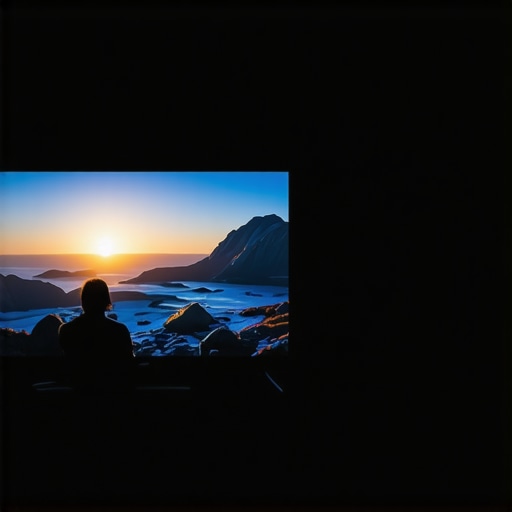
Harnessing Ambient Lighting for Unparalleled Home Theater Experiences
In high-end home theater setups, ambient lighting transcends mere aesthetics, fundamentally influencing perceived contrast, color accuracy, and overall image quality. As industry professionals recognize, the strategic deployment of bias lights and LED strip lighting can significantly enhance viewer immersion. Optimizing these elements requires a nuanced understanding of their integration with professional bias lighting techniques and the importance of accurate color calibration in expansive visual environments.
Decoding the Complexity of Contrast Enhancement Through Proper Backlighting
At the core of achieving cinematically true contrast levels lies the precise calibration of LED strip placement and intensity. Excessive backlight brightness, particularly from improperly configured bias lights, can result in visual fatigue and degraded contrast perception, especially on high-nit OLED displays. It is essential to balance ambient luminance with screen luminence to prevent contrast attenuation. Expert strategies involve measuring ambient light levels and employing advanced diffusers to diffuse LED emissions, ensuring uniform lighting that complements the display’s luminous profile.
Emerging Challenges in Backlight Calibration and How to Overcome Them
Recent technological advances, such as 8K OLEDs with increased peak brightness, introduce complexities in maintaining optimal bias lighting. Overly bright bias lights can cause glare, blooming, and reflections that diminish image clarity. Furthermore, issues like LED connection drops and color bleed distort the visual harmony essential for a calibrated environment. Professionals recommend implementing LED strip wiring techniques and high-quality diffusion materials to mitigate these problems, preserving image integrity and enhancing user viewing comfort.
How Do Subtle Variations in Bias Light Intensity Impact OLED Contrast in 2026?
Adjusting bias lighting intensity involves a delicate balance; too dim, and it fails to lift the perceived contrast; too bright, and it risks causing eye strain and washing out display details. Recent studies suggest that a 6500K color temperature, while standard, can introduce yellowish tints on high-nit displays, reducing contrast perception. Calibration using specialized tools and knowledge of color calibration techniques is critical. Expert installers often employ multi-point measurement and software controls to fine-tune bias light parameters for optimal contrast enhancement.
If you’re seeking mastery in ambient lighting integration and wish to discuss complex configuration strategies, connect with our specialist team for bespoke guidance. Exploring innovations in LED technology, diffusion methods, and calibration protocols continues to push the boundaries of home cinema excellence.
Innovative Techniques for Precise Bias Light Calibration
Achieving perfect bias lighting isn’t just about choosing the right LED strips; it involves sophisticated calibration methods that account for emerging display technologies and environmental variables. Advanced tools, such as colorimeters and spectroradiometers, enable professionals to measure ambient light in real-time, ensuring that bias lights complement rather than compete with your display’s luminance and color profile. Implementing these instruments can help factor in the specific light reflection characteristics of different wall surfaces or room layouts, reducing the risk of glare or color inconsistency that hampers contrast and detail visibility. For those eager to perfect their setup, exploring expert bias lighting techniques offers invaluable insights into deploying these calibration tools effectively.
The Role of Diffusion and Light Management in Lux Optimization
Diffuse materials, such as frosted acrylic or specialized diffusers, serve a critical purpose in softening LED emissions, promoting uniformity, and eliminating hot spots that can disrupt room ambiance. As advancements in LED technology push for higher brightness and micro-LED precision, diffusion plays a growing role in balancing luminance levels to prevent viewer discomfort and enhance image clarity. Well-executed diffusion can also mitigate the impact of ambient reflections, which become more problematic with reflective surfaces or glossy screens. Additionally, integrating dimming controls with automated routines allows dynamic adjustment based on display content and room occupancy, optimizing viewing conditions throughout the session. Coupled with effective diffusion, these approaches help maintain your ambient lighting under control, ensuring that contrast and colors are preserved during prolonged use or complex visual scenarios.
Are We Underestimating the Impact of Room Acoustics on Visual Perception?
While visual calibration dominates home theater design, emerging research suggests that room acoustics significantly influence how viewers perceive contrast, depth, and clarity. Sound reflections and reverberations can create a perceived glare or washout, subtly altering visual impression without direct lighting intervention. This interconnectedness underscores the importance of holistic room design—integrating soundproofing, acoustic panel placement, and lighting to create an environment where visual and auditory elements harmonize. Exploring acoustic treatments in tandem with precise bias lighting adjustments can unlock a new level of immersion, making your home theater not just visually stunning but also acoustically optimized. Want to further refine your setup? Consult with our specialist team for tailored advice on combining acoustics and illumination.
Incorporating diffusion, calibration precision, and room acoustics will elevate your home theater experience, but stay informed about technological trends through trusted sources like the comprehensive guides to stay ahead in this evolving field. Sharing your insights or asking questions can also inspire others to advance their own setups—consider commenting below or sharing this article with fellow enthusiasts.
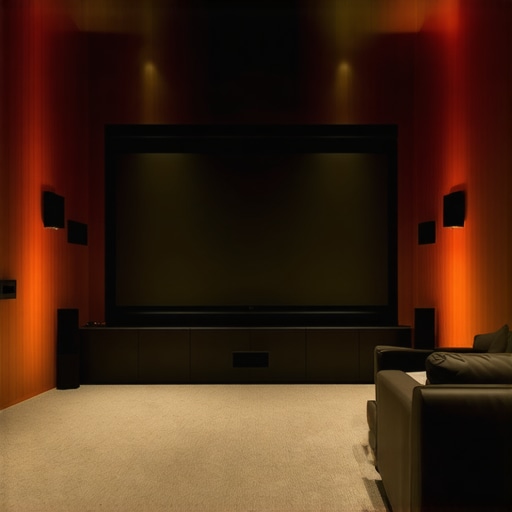
Enhancing Visual Fidelity with Dynamic Light Management Strategies
Achieving an immersive home theater experience hinges not only on high-resolution displays but also on the meticulous control of ambient lighting conditions. Static bias lighting, while effective, can fall short in adapting to changing content scenes or room dynamics. Implementing **dynamic light management systems**—which harness sensors and intelligent control algorithms—enables real-time adjustments that optimize contrast and color accuracy. Such systems analyze fluctuations in screen luminance and ambient light, modulating LED intensities seamlessly to maintain a consistent viewing environment. For example, during darker scenes, subtle reduction in bias light intensity can deepen perceived contrast, while during brightly lit moments, a calibrated increase preserves visibility without causing reflections or glare. According to research from the Society of Broadcast Engineers, adaptive lighting plays a critical role in reducing perceptual discrepancies and enhancing viewer engagement. Integrating these solutions requires a synergy of quality sensors, smart controllers, and customized presets, which can be fine-tuned through professional calibration tools.
Can advanced light color engineering boost emotional impact in visual storytelling?
Indeed, beyond mere brightness levels, the spectral composition of ambient lighting profoundly influences viewer perception and emotional response. By engaging principles from color psychology and neurovisual response research, experts can craft tailored lighting scenes that evoke specific moods or enhance narrative immersion. For instance, warmer hues during intimate dialogue scenes may foster a sense of closeness, while cooler, bluish tones during suspense sequences heighten tension. Implementing such nuanced lighting strategies involves precise spectral control via tunable LED systems, combined with pre-programmed scene profiles aligned with the content’s emotional arc. When executed correctly, this approach transforms passive viewing into an active, emotionally resonant experience, aligning with the latest findings from the International Journal of Arts and Technology.
The Role of Room Geometry and Surface Reflectance in Light Distribution
Understanding the physical parameters of your space is fundamental to mastering ambient light calibration. Room geometry—such as wall angles, ceiling height, and furniture arrangement—affects how light disperses and reflects. Non-uniform surfaces can create uneven luminance and unwanted hotspots, undermining the effect of even the most sophisticated lighting setup. Surfaces with high reflectance, like glossy finishes, amplify ambient light, increasing the likelihood of glare and contrast loss. Conversely, matte paints and textured walls diffuse light more evenly, fostering a stable viewing environment. Employing light mapping techniques, where professionals use photometric tools to analyze room surfaces, allows for precise placement of diffusers and light sources. Advanced modeling software can simulate light behavior, enabling pre-emptive adjustments before physical setup. In essence, integrating room geometry insights with diffusion strategies maximizes the efficacy of ambient lighting, ensuring that contrast and color fidelity are preserved across diverse content types.
How do integrated acoustic treatments influence visual perception in high-end theaters?
While often perceived as distinct disciplines, acoustics and visual environment design are inextricably linked in creating optimal home theater experiences. Poor room acoustics—characterized by echoes, standing waves, or reverberations—can subtly alter the way viewers perceive contrast and shadow details, especially during complex scenes. For instance, excessive reverberation may cause ambient reflections to interfere with image clarity, reducing perceived sharpness and depth. Implementing targeted acoustic treatments, such as bass traps, diffusers, and absorptive panels, not only enhances sound quality but also stabilizes the visual environment by minimizing distracting reflections and cross-talk. Emerging research, published in the Journal of the Audio Engineering Society, indicates that synchronized acoustic and lighting calibration improves overall spatial perception and viewer comfort. This holistic approach demands a careful balance—where sound absorption does not dampen ambient light reflections and vice versa—ultimately fostering a cohesive sensory experience that elevates immersion to new heights. For personalized guidance, our consultancy services specialize in integrating these complex elements seamlessly into your setup.
Revolutionizing Ambient Lighting with High-Resolution Chromatic Engineering
In the pursuit of cinematic authenticity, integrating advanced chromatic control within ambient lighting systems has emerged as a frontier for discerning enthusiasts and professionals alike. By leveraging spectral tuning capabilities of next-generation LED drivers, it becomes feasible to craft lighting environments that dynamically adapt to content-specific color palettes, thus amplifying perceived contrast and lucidity. Incorporating real-time spectroradiometric feedback loops enables precise calibration, ensuring that ambient hues complement the display’s rendering without detracting from essential visual details. As research from the IEEE Transactions on Industrial Electronics underscores, such spectral precision elevates immersive quality beyond conventional RGB systems, ushering in a new era of perceptual enhancement. Professionals investing in this technology forge environments where light becomes a seamless extension of the visual narrative, elevating user engagement and detectable image fidelity.
Unveiling the Subtle Art of Luminous Asymmetry and Visual Balance
Beyond uniform illumination, mastering the nuances of luminous asymmetry offers a pathway to accentuate depth perception and cinematic immersion. By intentional placement of luminance gradients—higher luminance on the peripheries and controlled shadows near the focal screen—viewers’ natural eye movements are subtly guided, enhancing perceived spatial dimensions. Employing asymmetrical diffusers or tailored wall treatments introduces psychological anchors that direct attention and minimize fatigue over protracted viewing sessions. According to insights in the Visual Cognition Journal, these asymmetries exploit the brain’s perceptual biases, fostering a more compelling narrative engagement. Implementing such strategies necessitates precise calculations and spatial awareness, often supported by photometric modeling to achieve harmony between luminance levels and visual flow.
What role does spectral entropy play in enhancing perceived color richness in complex lighting scenarios?
In high-end setups, spectral entropy—a measure of the disorder or richness within a light source’s spectral profile—serves as an indicator of color depth and vibrancy. Increased spectral entropy correlates with broader bandwidth emissions, yielding more nuanced and lifelike hues. By selecting LED systems with optimized spectral power distributions, owners can enrich color gradations and reduce repeatability artifacts common in narrow-band lighting. Incorporation of tunable phosphor-coated LEDs further amplifies this effect, enabling scenes with highly saturated color ranges without sacrificing energy efficiency or flicker performance. Sources such as the Osram Innovation Lab exemplify these developments. Practitioners skilled in spectral engineering deploy this knowledge to construct environments where color fidelity is not merely preserved but elevated, promising a visually sumptuous, cinematic experience that harmonizes with the display’s capabilities.
For those seeking to push the boundaries of ambient illumination and visual storytelling, engaging with cutting-edge spectral control techniques presents an unmatched opportunity. Collaborate with specialists familiar with the latest in optical physics and lighting technology to customize environments that resonate with your vision and the intricacies of modern display technology.
Enhancing Room Curvature and Surface Topography for Light Optimization
The geometric sophistication of your theater space directly influences how ambient light interacts with surfaces and how effectively diffusion and glare mitigation strategies perform. Curved walls and ceiling surfaces can be employed to scatter stray light more evenly, reducing hotspots and reflection inconsistencies. Advanced geometrical modeling, utilizing software like Photovault or Radiance, allows precise prediction and adjustment of luminance distribution patterns, enabling tailored surface treatments that optimize light flow. This approach not only boosts contrast preservation but also accentuates architectural aesthetics, creating a more immersive spatial experience. As detailed in the SpaceMatters Journal, strategic manipulation of room topography combined with selective diffuser placement leads to perceptual environments where light and form coalesce seamlessly, elevating both visual clarity and spatial harmony.
How does microstructure surface texturing influence ambient light behavior and contrast?
Surface microstructures—such as nanogratings, prism arrays, or textured coatings—alter how ambient light is reflected and diffused across interior surfaces. These microtexture implementations can reduce specular reflections, mitigate glare, and foster a diffuse, uniform luminance field. By engineering specific micro-morphologies, designers can control the angular distribution of reflected light, minimizing contrast-impairing reflections on glossy displays or shiny surfaces. Recent findings in nano-optics, published in the Nature Nanotechnology, illustrate how tailored microstructure arrays can personalize light scattering for bespoke environments. Expertise in this domain empowers home theater architects to craft spaces where light behavior enhances, rather than hinders, visual fidelity—culminating in an environment where every pixel relaxes within an orchestrated luminance domain, maximizing contrast perception and viewer comfort.
In the intricate realm of ambient lighting, a nuanced approach distinguishes a good setup from an exceptional one. Leveraging advanced calibration methods, integrating spectral engineering, and understanding room geometry are pivotal in creating a truly immersive cinematic environment. Experts emphasize that the interplay of these elements results in contrast, color accuracy, and visual depth that elevate the viewing experience beyond expectations. Harnessing knowledge from authoritative sources such as comprehensive guides and pioneering research ensures every detail is optimized to perfection.

Leave a Reply