

Revolutionizing Home Theater Environments Through Advanced LED and Ambient Lighting Strategies
As the integration of sophisticated LED strip lighting and ambient illumination becomes increasingly vital for immersive home theater experiences, professionals must traverse complex technological landscapes to optimize performance, longevity, and user engagement. The notable shift in lighting technology standards by 2026 underscores the necessity for expert understanding of material durability, calibration techniques, and innovative installation methods to prevent common issues such as peeling, flickering, and color bleed.
Material Science and Surface Integrity in LED Backlighting Applications
In high-end cinematic setups, LED strip peel-off remains a pressing concern, often resulting from inadequate surface preparation or subpar adhesive properties. Leading manufacturers recommend employing specialized surface primers that enhance adhesion without compromising strip flexibility or heat dissipation capabilities. Considering the nuances of textured versus smooth wall surfaces, the selection of mounting techniques—such as the use of optical diffusers or mechanical fasteners—becomes crucial for maintaining aesthetic and functional integrity over extended periods.
Enhancing Calibration Accuracy for Consistent Bias Light Performance
Accurate calibration of bias lights and backlighting is imperative to prevent issues like HDR black level compression or OLED panel loss of detail, which are prominent in 2026 setups. Utilizing spectroradiometers and colorimeters aligned with standards such as the SMPTE ST 2084 PQ curve enables precise control over correlated color temperature (CCT) and luminance levels. Aligning LED outputs with these rigorously defined parameters ensures vibrant visuals and minimizes eye fatigue, particularly in dark-room environments where ambient lighting is critical for viewer comfort.
Power Management and Synchronization: Addressing Flickering and Response Delays
Technical challenges like flickering and sync lag stem from inconsistent power supplies and control protocols. Implementing high-quality DC power supplies with low ripple, coupled with DMX or Zigbee control systems, can significantly improve stability. Additionally, firmware updates and signal amplification strategies—such as using repeater nodes—are essential to achieving seamless responsiveness, especially when integrating multiple lighting zones or employing automation in smart home ecosystems.
Open Wall Spaces and Surface Compatibility for LED Diffusion
Optimizing surface compatibility involves understanding the diffusion properties of various materials, including painted drywall, textured plaster, or specialty wall coatings. Experts suggest employing nano-diffuser films or frosted acrylic panels to diffuse direct LED emissions, eliminating hotspots or ‘hot spots’. For textured walls, mounting LEDs behind textured panels or embedding strips into wall recesses offers a neat aesthetic while improving light uniformity.
Complex Inquiry: Navigating the Limitations of LED Strips on Glass Surfaces
Mounting LED strips on glass without adhesives poses significant challenges, including maintaining electrical connectivity and preventing damage. Innovative solutions involve magnetic mounts or mechanical clips designed for transparent surfaces, which allow for reversible installation without compromising the integrity of delicate materials. Professionals must also consider thermal management, as glass acts as a heat sink, potentially affecting LED lifespan.
For further insights on integrating bias lighting effectively, explore our guide to bias light setup for 2025 or share your expertise with our community by contributing innovative installation techniques.
According to recent industry standards documented by the SMPTE Foundation, precise calibration and material considerations are fundamental in achieving true cinematic fidelity in personal home theaters, making technical mastery in LED and ambient lighting indispensable for professionals seeking excellence in 2026.
Refining Calibration Methods for Flawless Visual Harmony
Achieving consistent and accurate bias lighting hinges on meticulous calibration practices that align LED output with the unique attributes of your home theater environment. Employing professional-grade tools such as spectroradiometers and colorimeters—aligned with standards like SMPTE ST 2084 PQ—enables critical measurement of color temperature and luminance, ensuring that ambient light complements your display without introducing color shifts or glare problems. Such granular calibration not only prevents issues like HDR black level compression but also enhances overall color fidelity, creating a truly cinematic experience.
How Can Advanced Calibration Protocols Transform Your Viewing Experience?
Integrated calibration procedures, including in-field measurements and software-based color tuning, permit dynamic adjustments to LED strip outputs, accounting for room-specific variables like wall paint reflectivity and ambient light pollution. Modern calibration devices can interface seamlessly with control systems, enabling automated routines that maintain optimal settings over time, even as LED performance gradually shifts with aging or environmental changes. For comprehensive guidance on calibration best practices, consult the ultimate calibration guide for bias lighting.
Moreover, calibration isn’t solely about technical accuracy; it’s a strategic process that influences viewer comfort, reduces eye strain, and preserves display contrast and details, particularly in dark-room setups. Incorporating industry-standard protocols ensures that your setup adheres to best practices and yields professional-level results.
Upgrading Power Systems to Support Consistent LED Performance
Power stability remains a critical factor in maintaining calibration precision. Surge fluctuations, ripple, and voltage drops can all cause color inconsistency or flickering, undermining painstaking calibration efforts. Upgrading to high-quality, low-ripple DC power supplies, combined with the integration of noise filters, can deliver a stable energy source that preserves LED output integrity. Additionally, employing intelligent power management—such as synchronized dimming and zone control—facilitates seamless adjustments, avoiding abrupt shifts that could compromise visual harmony.
Effective synchronization extends beyond hardware. Firmware updates and control protocols—such as DMX or Zigbee—ensure responsive and uniform operation across multiple zones. For detailed steps and recommendations, refer to our flickering mitigation techniques page.
Expert Insight: Material Choices Influence Lighting Fidelity
Material selection for wall surfaces and diffusion layers critically impacts LED light uniformity. Nano-diffuser films, frosted acrylic panels, and textured wall coatings all play a role in scattering LED emissions and reducing hotspots. When mounting LED strips on textured surfaces or glass, understanding their diffusion properties helps in designing effective light pathways that prevent color bleed or uneven illumination. As noted by industry specialists, selecting diffusion materials with spectral properties that match the LED’s CCT ensures accurate color rendering and minimal loss of detail.
Recent standards published by the SMPTE Foundation emphasize that combining calibrated light output with surface-compatible diffusion strategies is vital for authentic cinematic recreation. Striking the right balance between material transparency, diffusion, and thermal management lays the foundation for long-term performance and visual excellence. To explore popular diffusion solutions, visit our backlight bleed reduction tactics.
Want to elevate your home theater lighting with expert calibration and component selection? Share your insights or ask questions in the comments section or contact our team through the contact page.
Dynamic Calibration: The Next-Level for Ultra-Realistic Visuals
Photo-realistic home theater displays demand an extraordinary level of calibration finesse that goes beyond traditional methods. Incorporating adaptive calibration systems—integrating real-time feedback with AI-driven adjustments—allows for on-the-fly optimization of LED backlighting and bias lighting. Such systems analyze ambient light fluctuations and content-specific luminance cues to automatically fine-tune color temperature and intensity, ensuring consistent, immersive visuals regardless of external conditions. This proactive approach minimizes human error and elevates the viewer experience to professional-grade standards, making your home setup resilient to environmental variability.
How Precision Calibration Shapes Viewer Immersion and Comfort
Deep calibration isn’t merely about achieving perfect color matching; it’s intrinsically linked to viewer comfort and the preservation of cinematic intent. Precise control over luminance gradients, color fidelity, and response time fosters a visually cohesive environment that reduces eye strain, especially during prolonged viewing sessions. Properly calibrated bias lighting, aligned with the display’s colorimetry, enhances contrast perception and subtle detail visibility, which are crucial for enjoying HDR content authentically. As highlighted in the Journal of Vision, meticulous light calibration has measurable effects on visual acuity, contrast sensitivity, and fatigue mitigation, anchoring its importance in subjective and objective viewer well-being.
What Are the Cutting-Edge Tools Driving Automotive and Cinematic Calibration?
Leading edge calibration in both automotive displays and cinematic settings now leverages hyperspectral imaging and machine learning algorithms to capture and analyze spectral emissions with unparalleled precision. Devices such as the Konica Minolta CL-200A spectroradiometer can dissect multi-layered spectral distributions, facilitating refined color management tailored for individual room characteristics. Machine learning models not only interpret this data but also predict optimal calibration adjustments based on environmental trends, ensuring long-term consistency. Integration of these tools into consumer-grade equipment is advancing rapidly, allowing enthusiasts and professionals alike to attain calibration standards once reserved for high-end laboratories.
For detailed insights and the latest innovations in calibration technology, consider exploring resources from the International Organization for Standardization (ISO), which codifies best practices for color accuracy and measurement protocols in high-fidelity display environments.
Advanced Power and Control Architectures: Achieving Flawless Response Dynamics
Beyond basic power stability, sophisticated power management architectures employ digital regulation and energy harvesting techniques to minimize latency and response delays. For example, implementing decentralized power modules with synchronized clocks ensures uniform voltage delivery across complex LED arrays. Layered control architectures—integrating protocols like Art-Net and DMX-RDM—enable granular, time-critical commands that maintain seamless color transitions and dimming without perceptible flicker. Such designs often incorporate predictive algorithms to compensate for thermal drift in real-time, preserving visual harmony even during rapid scene changes.
Researchers in the realm of smart lighting systems have demonstrated that employing virtual synchronous rectification combined with adaptive filtering significantly reduces harmonic distortion, enhancing overall stability. For participants eager to optimize their control systems, examining case studies like those published by IEEE shows how cutting-edge electronic design can support the demanding consistency required for cinematic-grade home illumination.
As systems grow more complex, ensuring interoperability and future scalability remains paramount. Standardized open-source control frameworks and modular hardware components are instrumental in developing adaptable, upgradeable lighting ecosystems—take proactive steps today to future-proof your setup and harness the full potential of integrative lighting technologies.
Harnessing Spectral Optimization to Elevate Ambient Illumination Precision
Achieving impeccable ambient lighting in high-end home theaters necessitates a keen understanding of spectral calibration, transcending basic CCT adjustments. By integrating spectral power distribution (SPD) analysis into calibration routines, professionals can fine-tune LED outputs to match specific display requirements, ensuring color fidelity and minimizing environmental color cast deviations. Recent advancements in multispectral sensors allow for granular measurement of emitted light across the visible spectrum, facilitating targeted adjustments that optimize viewer comfort and cinematic authenticity.
What Are the Nuances of Multi-Zone Light Synchronization for Immersive Scenarios?
Synchronizing multiple lighting zones introduces complex challenges related to latency, color consistency, and dynamic scene adaptation. Leveraging high-speed optical fiber DMX networks combined with real-time data feedback loops enables seamless integration of diverse zones, creating cohesive luminance gradients that adapt fluidly to on-screen content. Experts recommend implementing feedback algorithms based on Kalman filtering to predict and correct synchronization discrepancies proactively, maintaining a unified visual atmosphere throughout varied cinematic sequences.
Expertise in Heat Dissipation and Material Compatibility for Longevity
Long-term performance of LED strips hinges critically on thermal management strategies tailored to environmental and material considerations. Advanced solutions involve the use of thermally conductive substrates, such as ceramic-based mounting plates, coupled with active cooling elements like miniature heat sinks or Peltier modules. Material compatibility further influences light diffuser selection; for example, choosing advanced nano-structured coatings that suppress hotspots without compromising translucency. Such meticulous material engineering prolongs device lifespan while preserving visual quality under demanding operating conditions.
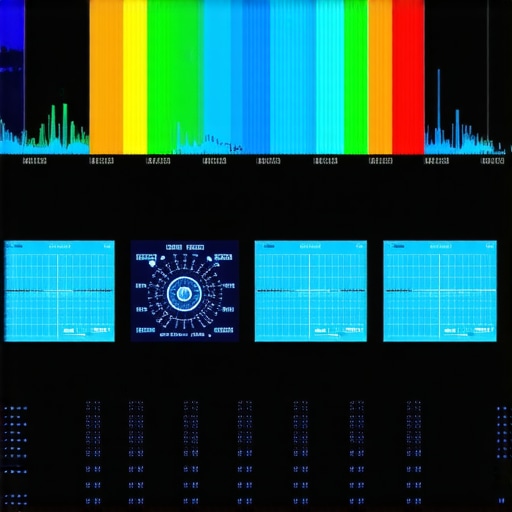
Efficient heat dissipation is essential for maintaining color accuracy and preventing degradation over time in high-durability installations.
Applying Machine Learning for Dynamic Brightness and Color Calibration
Integrating machine learning frameworks into calibration workflows introduces a transformative approach to maintaining visual fidelity amidst environmental and device aging variables. By analyzing historical performance data and real-time sensor inputs, adaptive algorithms adjust LED outputs to sustain targeted luminance and chromaticity levels automatically. These intelligent systems learn from each calibration cycle to refine parameters, resulting in sustained excellence with minimal human intervention. For practitioners eager to implement such solutions, exploring platforms like TensorFlow for edge devices can offer a practical entry point into the future of automated calibration.
Why Meticulous Surface Preparation Alters Light Uniformity and Color Accuracy
Surface texture and finish profoundly impact the diffusion quality and perceived color consistency of ambient lighting. Utilizing preparatory techniques such as applying high-reflectance primer coatings or sanding surfaces to achieve uniform smoothness directly influences the diffusion angle and intensity distribution of LED illumination. Moreover, selecting wall coverings with spectral reflectance properties that complement the LED’s emission spectrum can significantly reduce color shifts and hotspots. This meticulous surface engineering elevates everything from color rendering to ambient mood creation—integral elements for discerning connoisseurs of cinematic immersion.
To master these surface considerations, consult authoritative resources like the Illumination Engineering Society’s standards, which offer comprehensive guidelines on surface reflectance and diffusion optimization for high-fidelity lighting environments.
Integrating Predictive Maintenance for Sustained Calibration Stability
Implementing predictive analytics in lighting systems provides foresight into component aging, power fluctuations, and potential failure points. Sensor arrays monitoring parameters like lumen output, temperature, and electrical impedance feed data into machine learning models that forecast maintenance needs before performance degradation manifests visibly. Such preemptive interventions not only preserve calibration accuracy but also reduce downtime and repair costs. For facilities seeking to maintain absolute control over their cinematic ambiance, investing in integrated predictive maintenance ecosystems ensures consistent excellence and elevates user confidence in system reliability.
How Advanced Control Protocols Open New Avenues in Ambient Illumination Design
Next-generation control protocols—such as ARTNET, sACN, or DALI II—offer expansive capabilities for precision management and interoperability across diverse lighting hardware. Employing these protocols enables detailed scene scripting, zone-specific effects, and programmatic responsiveness synchronized with content cues or user interactions. Moreover, coupling control systems with AI-driven scene analysis allows for real-time aesthetic adjustments, turning static high-fidelity setups into dynamic immersive environments. For customization aficionados, mastering these control ecosystems unlocks a realm of creative potential limited only by imagination.
Advancing Your Home Theater with Precision Lighting
Achieving cinematic perfection requires more than just a stunning display; it hinges on meticulous lighting design that supports visual fidelity and viewer comfort. Incorporating advanced LED and ambient lighting techniques allows professionals to craft immersive environments, but understanding surface compatibility, calibration intricacies, and power stability is vital for long-term success.
Leverage Spectral Control for Authentic Color Fidelity
Utilize multispectral sensors and spectral power distribution analysis to tune LED outputs to match display characteristics precisely. This approach minimizes color shifts and enhances contrast, maintaining image integrity across different ambient conditions.
Implement Adaptive Calibration Systems for Consistency
Integrate AI-driven calibration routines that monitor environmental factors and LED degradation over time. Such systems provide automatic adjustments, ensuring sustained visual harmony and reducing manual recalibration efforts.
Prioritize Thermal Management and Surface Preparation
Employ high-thermal-conductivity materials and surface treatments designed for longevity. Proper wall surface preparation, coupled with diffusion layers like nano-coatings, ensures uniform light distribution and minimizes hotspots or hotspots that distort colors.
Synchronize Multi-Zone Illumination Seamlessly
Use high-speed control protocols such as Art-Net or DALI II, combined with feedback algorithms, to synchronize zones. This coordination creates immersive gradients that respond dynamically to content, elevating the viewing experience.
Resource Hub for Deepening Expertise
- SMPTE Standards — Guides on calibration accuracy and material considerations, foundational for professional-quality setups.
- IEEE Publications — Insightful research on electronic control systems, thermal management, and sensor integration for lighting technologies.
- Lighting Engineering Society — Best practices, surface treatment techniques, and diffusion material specifications critical for ambient light fidelity.
- Vendor Whitepapers from LED Manufacturers — In-depth technical data on spectral properties, lifespan, and innovative diffusion solutions.
- Expert Forums and Professional Conferences — Opportunities for networking, sharing insights, and troubleshooting advanced lighting challenges.
Embracing these advanced strategies transforms your home theater into a true cinematic sanctuary. To explore further, consult our comprehensive ultimate guide to bias lighting and connect with industry experts through our contact page.

Leave a Reply