

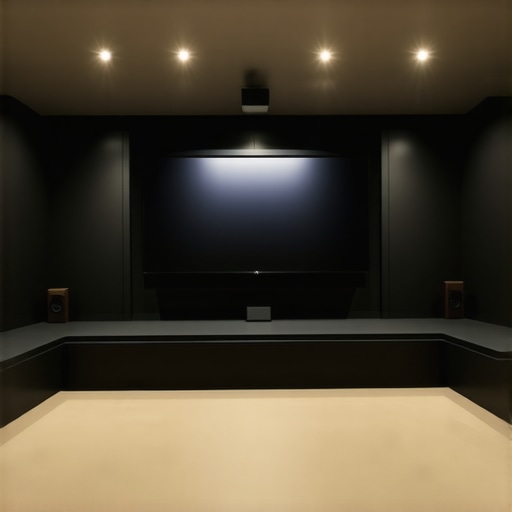
Elevating Home Theater Aesthetics Through Expert LED Strip Integration
In the realm of premium home cinema, ambient lighting—particularly backlight and bias lights—serves as a cornerstone for immersive experiences. As technology advances, the optimal utilization of LED strip lighting and home theater lighting techniques requires a nuanced understanding of both technical capabilities and aesthetic harmony. Today’s experts focus on harnessing sophisticated diffuser hacks and calibration strategies to eliminate hot spots, thereby elevating visual comfort and maximizing contrast—key metrics in cinematic immersion.
Deciphering the Intricacies of Diffuser Technologies and Light Distribution
Achieving uniform backlighting involves more than selecting high-quality LED strips; it demands precision diffuser application. Diffuser hacks—using materials like frosted acrylic, opal films, or water-based diffusion gels—are instrumental in mitigating LED hot spots that often compromise image fidelity. Experts emphasize that diffuser placement and material transparency profoundly influence light scattering, thus ensuring a seamless glow that enhances ambient contrast ratios without detracting from on-screen content.
Analyzing the Role of Calibration and Color Temperature Adjustment in Bias Lighting
Accurate color calibration, especially concerning 6500K bias light calibration, is vital for reducing eye strain and color misperception. Mismatched hues between bias lights and display luminance can introduce color bleed or visual fatigue. Advanced techniques involve using spectrometers and custom firmware to fine-tune LED outputs, aligning the bias lighting with preferred gamma settings for optimal contrast perception and overall image quality.
What Are the Best Strategies for Impactful Wall Reflectance and Wall-mounted Diffuser Deployment?
One of the more sophisticated challenges involves ensuring that diffuser placement does not compromise wall reflectance aesthetics. Wall-mounted diffuser panels or subtly integrated corner lighting can prevent direct LED hot spots, maintaining a background that reinforces scene depth. Pro tips include applying diffuse coatings on textured wall surfaces and orienting LED strips away from primary sightlines, ensuring ambient light augments rather than distracts from viewing content.
Are There Innovative Solutions to Sync Ambient Light with Dynamic Content?
Synchronization of bias lighting with video content—mitigating lag and color inconsistencies—represents an evolving frontier. High-end integrations leverage HDMI-CEC protocols and real-time processing algorithms to adjust LED responses instantaneously, preventing visual dissonance, such as delayed light response or color misalignment. Innovations also include microcontroller-based smart systems that allow users to customize lighting profiles for different genres or viewing times, elevating home theater experiences to professional standards.
How Can the Expertise of Lighting Professionals Contribute to Eliminating Hot Spots in Custom Movie Rooms?
Leverage insights from seasoned lighting designers and audio-visual integrators to select diffuser materials, calibrate LED outputs, and craft wall treatments that inherently suppress light bleed and hot spots. Consulting specialized content like comprehensive guides can inform best practices and inspire innovative solutions tailored to unique room geometries. Engaging with professional communities and sharing experiential insights fosters continual improvement in backlight uniformity and overall ambient quality.
For further nuanced strategies on bias lighting calibration and diffuser integration, consult the works of academic researchers in lighting ergonomics and visual performance published by the Lighting Research Center. Your sophisticated application of diffuser hacks and calibration techniques is crucial in transcending conventional home theater limitations, thus achieving cinema-level perfection.
Ready to refine your room’s illumination? Explore more expert insights on professional LED strip lighting tips and elevate your cinematic environment.
Uncovering the Science Behind Light Diffusion and Hot Spot Prevention
One of the most nuanced aspects of installing LED strip lighting in a cinematic environment lies in achieving impeccable light uniformity. While choosing quality LED strips is foundational, understanding the physics of light diffusion is crucial. Experts advocate for leveraging layered diffusion strategies—such as combining frosted acrylic with water-based diffusion gels—to scatter light effectively and prevent hotspots. These techniques hinge on the interplay between the scattering index of diffusion materials and the geometric placement of light sources, ultimately creating an even ambient glow that enhances contrast without distracting glare.
Implementing Precision Calibration for Consistent Luminosity and Color Fidelity
Beyond diffuser application, meticulous calibration ensures the light output remains consistent across the room. Calibration extends to adjusting both brightness and color temperature, which can be fine-tuned through spectrometer-assisted methods. Leading consensus within the industry recommends matching bias light color temperature to display luminance—typically around 6500K—to minimize eye strain and support true color perception. This process involves iterative measurements and firmware programming to harmonize LED output with the display’s gamma settings, producing a seamless viewing experience as discussed in the Calibration Guide.
Could Smart Lighting Systems Revolutionize Hot Spot Management?
The latest advancements are steering toward intelligent solutions that dynamically adjust lighting based on content and room conditions. Smart LED systems integrated with HDMI-CEC protocols or Wi-Fi connectivity can adapt brightness and hue in real-time, minimizing perceptual inconsistencies. These systems often utilize machine learning algorithms to detect ambient lighting needs, further refining the uniformity. For instance, microcontroller-based setups can be programmed to calibrate responses instantly, offering a sophisticated level of control that traditional static installations cannot match. Expert papers—like those from the Lighting Research Center—highlight the potential of such adaptive technologies to eliminate residual hot spots and achieve a truly immersive, glare-free environment.
Enhance Room Aesthetics by Integrating Wall Treatments and Light Reflectance Tactics
Strategically designing wall surfaces to complement diffused lighting can dramatically reduce hot spots. Matte or textured wall paints, along with textured wall panels, diffuse reflected light, creating a uniform ambient background. Wall-mounted diffuser panels crafted from matte finish materials help distribute light evenly, accentuating the room’s immersive qualities. Applying diffuse coatings on surfaces and orienting LED strips away from direct sightlines fosters an environment where light acts as an enriching backdrop rather than a distraction. For comprehensive ideas on wall treatments, consider exploring Ambient Lighting Ideas for inspiration.
What Role Can Professional Design Play in Achieving True Light Uniformity?
Leveraging the expertise of lighting designers with specialization in home cinema setup offers a pathway to perfection. Professionals carry the tools, experience, and nuanced understanding needed to calibrate diffuser systems, optimize wall reflectance, and fine-tune smart controls. Engaging with established experts often results in bespoke solutions tailored to room geometry, material finishes, and usage patterns. A consultation can reveal subtle issues like color bleed or light bleed that general guidelines might overlook. For actionable insights, dive into comprehensive guides and establish collaborative dialogues with seasoned specialists to elevate your setup beyond conventional standards.
In the quest for cinematic perfection, continually refine your understanding of diffuser materials, calibration techniques, and adaptive lighting solutions. Integrating technological innovations with artistic room design empowers you to craft an environment where light becomes a seamless extension of the viewing experience, free of hotspots and inconsistencies. For more expert strategies on achieving flawless ambient lighting, explore the article Ultimate Guide to Bias Lighting.
Harnessing Advanced Diffuser Materials to Achieve Immersive Uniformity
Ensuring consistent illumination across extensive LED installations demands not only quality diffusers but also an understanding of material science principles. Professional setups often employ multilayer diffusion stacks—combining frosted acrylic with engineered films like opal or prismatic diffusers—to optimize light scattering. Selecting materials with tailored scattering indices enables precise control over light dispersion, preventing hotspots while maintaining brightness levels conducive to cinematic clarity. Such layered approaches allow light to emanate seamlessly, integrating with room aesthetics without creating distracting glare. For room builders aiming to push the limits of diffuse uniformity, expert consultation can reveal the subtle interplay between material transparency, thickness, and placement that makes all the difference.
The Nuances of Dynamic Color Calibration for Seamless Content Integration
Beyond initial calibration, dynamic color tuning involves real-time adjustments aligned with the content’s luminance and hue profile. Modern calibration tools—such as spectrometers paired with sophisticated firmware—allow technicians to create adaptive profiles that respond to scene changes. For example, during high-contrast sequences, bias lighting can subtly shift temperature and brightness to reinforce contrast thresholds without causing visual fatigue. Advanced individuals integrate these systems with HDMI-CEC protocols, enabling synchronized responses to scene lighting cues and display adjustments. Implementing such calibrations not only enhances visual fidelity but also reduces the cognitive load on viewers, allowing for an undistracted cinematic experience. For those interested in mastering this approach, consulting industry-leading calibration guides—like the comprehensive resources from the Imaging Science Foundation—can establish a solid foundation for expert-level tuning.
Harnessing Advanced Diffuser Compositions to Eliminate Hot Spots in LED Installations
Achieving impeccable light uniformity in sophisticated home theater setups demands an intimate understanding of diffuser material science and layering techniques. Instead of relying solely on standard frosted acrylic, integrating multilayer diffusion stacks—including engineered prismatic films and water-based gels—can dramatically scatter incident light, effectively nullifying hotspots and ensuring a seamless ambient glow. Expert applications involve tailoring the scattering indices and thicknesses of each layer, a nuanced task that balances brightness and diffusion to uphold contrast integrity without introducing glare.
Optimizing Color Fidelity Through Real-Time LED Calibration
Static calibration techniques, while foundational, often fall short amidst room dynamics and LED aging. Cutting-edge experts leverage spectrometer-assisted firmware adjustments and real-time feedback loops to continuously fine-tune the color temperature and luminance levels of bias lighting, harmonizing it with the display’s gamma curve. Such precision ensures not only perceptual consistency but also minimizes eye fatigue during extended viewing sessions. Practical implementation involves sophisticated hardware, like microcontroller-based controllers linked to sensor arrays, enabling adaptive calibration that responds instantaneously to environmental and content-driven shifts.
Can Smart Lighting Systems Truly Revolutionize Hot Spot Suppression?
Integrating intelligent control systems—featuring HDMI-CEC protocols, Wi-Fi connectivity, and machine learning algorithms—ushers in a new era of dynamic ambient light management. These systems analyze on-screen content in real-time, adjusting LED outputs to maintain uniformity and prevent hot spots that distract viewers. Advanced professional installations utilize microcontroller frameworks that dynamically recalibrate LED responses based on histogram analysis and scene luminance, effectively rendering static diffuser limitations obsolete. Adopting such adaptive solutions ensures that ambient lighting complements cinematic content flawlessly, creating a viewing environment indistinguishable from commercial theaters.
**Image Prompt:** High-contrast close-up of multilayer diffuser materials scattering LED light evenly with diffused beam pattern, illustrating advanced diffusion techniques.
Strategic Wall Treatments Complementing Diffusion to Enhance Ambient Uniformity
Beyond diffuser layers, the physical environment profoundly impacts light distribution. Implementing matte, textured wall finishes and strategically placing diffuse wall-mounted panels can reflect and scatter ambient light effectively, reinforcing uniformity. Subtle textured wall surfaces—such as limestone or specialized acoustic panels—diffuse reflected light, minimizing the perception of hot spots and creating a rich, immersive backdrop. Orientation and material selection of wall treatments are critical; expert advice suggests positioning diffuse elements away from direct sightlines, thereby ensuring ambient illumination enhances depth perception without causing glare or visual distraction.
Engaging with Expert Design to Push Ambient Lighting Boundaries
Collaborating with seasoned lighting designers who specialize in cinematic environments yields bespoke solutions that seamlessly blend diffuser materials, smart controls, and architecture. These professionals utilize detailed room analysis—considering wall reflectance, room acoustics, and seating ergonomics—to craft integrated lighting schemes. Accessing advanced knowledge from resources like comprehensive guides uncovers insights into tailored diffuser positioning, spectral tuning, and control algorithms. Such partnerships elevate ambient lighting from mere functionality to an aesthetic asset, aligning illumination precisely with cinematic ambitions and room characteristics.
To elevate your setup, consider consulting industry standards outlined by entities like the Lighting Research Center, which provide empirical benchmarks for light distribution uniformity and color accuracy. Mastery in diffuser layering, calibration, and environmental integration pushes the boundaries of home theater perfection, transforming a standard room into a veritable cinematic sanctuary.
Unveiling the Power of Diffuser Innovations to Achieve Seamless Glow
Implementing multilayer diffusion stacks with materials like prismatic films and engineered gels allows precise control over light dispersion, effectively eliminating hotspots and creating a consistent ambient atmosphere that enhances cinematic immersion.
Calibrating Your System: Going Beyond Static Settings
Dynamic calibration using spectrometers and firmware adjustments ensures the LED bias lighting maintains true color fidelity and luminance, adapting to room conditions and display changes for an optimal viewing environment.
Harnessing Smart Technologies for Perfect Light Synchronization
Real-time content-aware lighting systems utilizing HDMI-CEC protocols and machine learning can adjust hues and brightness instantly, preventing perceptual inconsistencies and elevating your home theater’s professionalism.
Designing Walls as Allies in Light Distribution
Textured finishes and diffuse wall-mounted panels reflect ambient light uniformly, reducing perceptual hot spots and enriching room depth—key ingredients for an immersive cinematic experience.
Partnering with Experts to Elevate Your Setup
Consulting with lighting designers specialized in home cinema not only refines diffuser placement and material choices but also ensures integration with room architecture, delivering a cohesive and glare-free environment.
Curated Resources for Advanced Ambience Crafting
- Lighting Research Center: Offers cutting-edge research and empirical benchmarks on light diffusion and visual ergonomics, vital for scientific precision in ambient lighting design.
- Ultimate Guide to Bias Lighting: Provides comprehensive insights into calibration, diffuser applications, and smart control integrations for optimal results.
- Home Theater LED Strip Ideas: Curates innovative lighting schemes combining diffuser tech and dynamic controls for modern cinema environments.
- Professional Consultation: Connect with industry specialists to tailor solutions that meet your unique room specifications and aesthetic goals.
Elevating Your Knowledge of Ambient Lighting Excellence
By focusing on advanced diffuser materials, proactive calibration, and adaptive control systems, you position yourself at the forefront of home theater ambient lighting mastery. Integrating these expert insights elevates your setup from standard to sensational, ensuring that light enhances content without distraction. Explore detailed resources and collaborate with specialists to transform your cinematic space into a true reflection of professional-grade design. If you’re committed to pushing the boundaries of visual comfort and aesthetic perfection, continue delving into authoritative guides and reach out for expert advice—your ideal lighting environment awaits.
Leave a Reply