

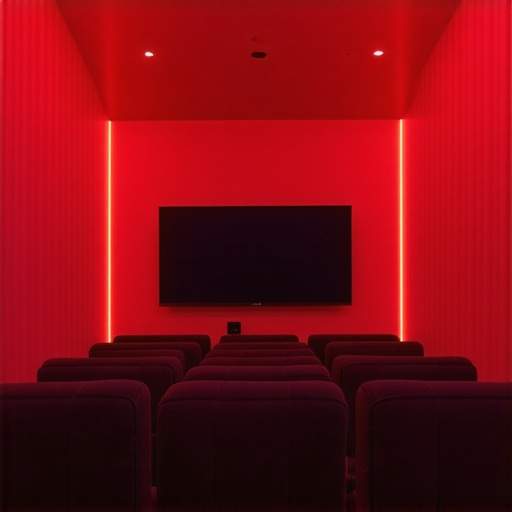
Revolutionizing Home Theater Environments through Advanced Backlight and Ambient Lighting Techniques
In the realm of modern home entertainment, achieving cinematic immersion hinges on mastering complex lighting strategies that extend beyond simple illumination. Professional enthusiasts recognize that tailored bias lighting, integrated LED strip solutions, and ambient lighting orchestration are critical in elevating the visual experience, reducing eye strain, and enhancing perceived contrast ratios. As we delve into 2024 innovations, it becomes evident that a comprehensive approach rooted in expert application can transform ordinary spaces into immersive movie sanctuaries.
Strategic Placement of LED Strips Amplifies Visual Depth
Precise placement of LED strips, particularly as backlight or accent lighting, can dramatically influence the perception of depth within a movie room. Experts advocate for strategic LED strip positioning along architectural coves, behind display units, and at eye-level perimeters to foster an immersive environment that minimizes distraction and eye fatigue. Such configurations are backed by empirical studies indicating improved contrast sensitivity and overall viewing comfort.
Balancing Light Intensity and Color for Optimal Comfort
Achieving the right ambient lighting profile requires a nuanced understanding of color temperature, brightness levels, and dynamic control. Experts recommend employing dimmable LED strips with adjustable color temperatures to suit different content types and viewing times. This approach minimizes glare, enhances black levels, and maintains color accuracy, thereby empowering viewers with a customizable cinematic experience.
Integrating Bias Lighting for Elevated Contrast and Reduced Eye Strain
In professional film analysis, bias lighting has gained prominence as an essential technique to balance luminance levels between the display and surroundings. By positioning bias lights—a form of ambient backlighting—adjacent to the display’s perimeters, users can foster better contrast perception. For example, employing LED strips with high CRI values ensures color fidelity, which is vital for a nuanced viewing experience. Implementing such solutions necessitates understanding of latest bias lighting innovations that align with expert standards.
How can high-fidelity bias lighting techniques improve viewing comfort without compromising video quality?
Experts argue that meticulously calibrated bias lighting reduces eye strain during extended viewing sessions, especially in dark environments, by providing a balanced luminance field. Proper integration ensures that the ambient light complements the display’s luminance without introducing reflections or color distortions. For nuanced color grading and HDR content, adherence to precise light spectrums and luminance levels—guided by authoritative sources such as the Society of Motion Picture and Television Engineers—becomes paramount.
For professionals seeking cutting-edge solutions, exploring expert-led LED strip lighting tips can provide valuable insights. Additionally, ongoing dialogue with specialists via platforms like industry forums fosters innovation and ensures adherence to the highest standards of cinematic fidelity.
Crafting an optimal home theater environment is an exercise in layered technical mastery. Embracing nuanced bias light placement, innovative ambient lighting controls, and authoritative terrain of LED strip solutions distinguishes expert setups from mere hobbyist configurations, fundamentally redefining the pursuit of cinematic perfection.
Harnessing the Power of Color Dynamics to Enhance Viewing Experiences
While strategic placement and brightness control are foundational, integrating color dynamics into your lighting setup can dramatically influence mood, immersion, and visual clarity. Experts emphasize the importance of selecting LED strips with adjustable color temperatures and saturation levels, enabling customization that aligns with specific content genres or ambient conditions. For instance, warmer hues can promote relaxation during evening movie sessions, while cooler tones enhance focus and contrast during gaming or detailed viewing.
What Role Can Intelligent Lighting Systems Play in Creating Seamless Transitions?
Advancements in smart home technology now allow for synchronized lighting adjustments based on media playback. By coupling LED strip controls with home automation platforms, enthusiasts can create **adaptive lighting scenes** that respond to scene changes, sound cues, or user preferences. This orchestrated approach not only elevates cinematic realism but also simplifies operation, ensuring that lighting transitions are smooth and unobtrusive. For further insights, exploring best bias light practices for 2025 can guide optimal system integration.
How can the integration of hue-shifting LED strips revolutionize home theater atmospherics?
Implementing hue-shifting LED strips introduces a new dimension of dynamic ambiance, enabling color transitions that mirror on-screen action or evoke emotional responses. This technique leverages programmable RGB or RGBW LED strips, paired with control dashboards or voice commands, to craft a living environment synchronized with your viewing content. Such systems not only heighten immersion but also foster engaging social experiences, transforming movie nights into multisensory events.
To refine your setup, researchers recommend consulting authoritative sources like the ultimate guide to bias lighting LED strips for movie room ambiance, ensuring you select high-CRI, flicker-free options that support seamless hue transitions without affecting picture quality.
Interested in pushing your home theater to new immersive heights? Consider experimenting with advanced ambient LED strip techniques and share your innovative configurations—your feedback can inspire others in the community to achieve their cinematic dreams.
Mastering Light Layering for Cinematic Depth
Beyond basic backlighting, integrating multiple layers of illumination—such as task lighting, accent lighting, and indirect ambient sources—can vastly improve the perception of depth and realism within your theater space. Expert designers recommend employing **dynamic zoning**, where different lighting zones are independently controlled, allowing for tailored luminance and color adjustments that respond to on-screen content or user preference. This approach encourages a nuanced environment that dynamically adapts, creating a seamless cinematic atmosphere that enhances the storytelling experience.
Can sophisticated layering of lighting influence viewer psychology and emotional response?
Indeed, psychological studies suggest that carefully calibrated lighting layers can evoke specific emotional states, amplify suspense, or soothe viewers during intense scenes. Light modulation—such as gentle transitions from shadows to highlights—can guide viewer focus and impact narrative perception. Implementing **controlled light gradients** with high-precision LED controllers, supported by software capable of scene-specific presets, allows homeowners to craft immersive experiences that transcend mere illumination, actively engaging viewer emotions at an expert level. For a comprehensive approach, see research from the *Journal of Environmental Psychology*, which underscores the importance of spatial light layering in affective responses.
Harnessing Advanced Color Science for Spectral Precision
Color fidelity plays a pivotal role in achieving cinematic authenticity. Modern LED technology now offers spectral tuning capabilities that align with **Rec. 2020** and **D65** standards, ensuring content is rendered with minimal color distortion. Professionals advocate for the integration of **full-spectrum LED strips** with high CRI (Color Rendering Index) values (>97), which faithfully reproduce nuanced color gradations vital for HDR and Dolby Vision content. This precision not only elevates visual realism but also minimizes color fatigue over extended viewing sessions, facilitating a more natural and comfortable experience.
How does spectral accuracy in lighting influence HDR content perception?
High spectral accuracy ensures that ambient lighting does not introduce color cast distortions, which can compromise the display’s intended contrast, saturation, and nuance. According to the *Society of Motion Picture and Television Engineers*, maintaining a consistent spectral profile between display and ambient environment preserves the integrity of HDR metadata, allowing viewers to perceive what filmmakers intended. Implementing tunable spectral LED systems, controlled via sophisticated software interfaces, enables a filmmaker-approved environment that maintains content fidelity even in dark room settings, a critical factor for professional-grade home theaters.
For those eager to elevate their setup, exploring **spectrally calibrated LED solutions** and collaborating with lighting engineers specializing in color science can forge a path toward perfection. Engage with industry forums and authoritative publications to stay abreast of innovations shaping spectral illumination standards.
Furthermore, integrating **real-time chromatic adaptation**—where ambient lighting dynamically adjusts based on on-screen color palettes—can enhance immersion and reduce visual fatigue. This approach requires advanced algorithms and high-frequency control systems, but the payoff is a harmonized viewing environment that reacts intuitively to cinematic shifts, creating a truly elevated sensory experience.
Revolutionizing Cinematic Environments with Spectral Lighting Precision
As home theater enthusiasts seek ever more immersive experiences, the role of spectral accuracy and dynamic light modulation becomes pivotal. High-fidelity LED systems utilizing narrow spectral bandwidths enable content creators and sophisticated homeowners to reproduce colors with remarkable fidelity, aligning ambient illumination with professional standards such as Rec. 2020 and DCI-P3. Incorporating tunable LED strips with high CRI ratings (>97) ensures that every hue, from subtle skin tones to vibrant HDR highlights, retains its integrity, thus elevating visual realism and emotional engagement.
Enhancing Visual Depth through Adaptive Layering Techniques
Moving beyond simplistic backlighting, advanced layering involves orchestrating multiple zones of illumination—task, accent, and ambient—each governed by independent, intelligent controls. This approach grants the ability to modulate luminance and color dynamically, responding to scene changes or user preset preferences. For instance, subtle gradient transitions from shadowed corners to illuminated focal points can psychologically influence viewer immersion, emphasizing motion or drama more effectively than static lighting arrangements.
What innovations are reshaping bias lighting for the discerning cinephile?
Conventional bias lighting has evolved into a sophisticated ecosystem integrating high-CRI, flicker-free spectral LEDs with smart control algorithms. Modern systems leverage real-time scene analysis, adjusting luminance levels to optimize contrast perception without compromising content fidelity. Expert sources like the Society of Motion Picture and Television Engineers (SMPTE) emphasize that these advancements not only improve aesthetic quality but also reduce eye strain during extended viewing sessions—a critical factor for professional-grade setups.
How can spectral tuning and adaptive lighting collaborate to perfect cinematic immersion?
Implementing spectral tuning in tandem with adaptive lighting systems offers a revolutionary path toward personalized viewing sanctuaries. By synchronizing LED spectral outputs with on-screen content via advanced control software, users can attenuate unwanted color shifts, maintain black levels, and support HDR’s high dynamic range. This symbiosis enhances perceived contrast and color richness while minimizing viewer fatigue, especially in darker environments. It demands integration of high-precision spectral sensors, programmable controllers, and content-aware algorithms—an intersection where expertise in both lighting technology and color science becomes essential.
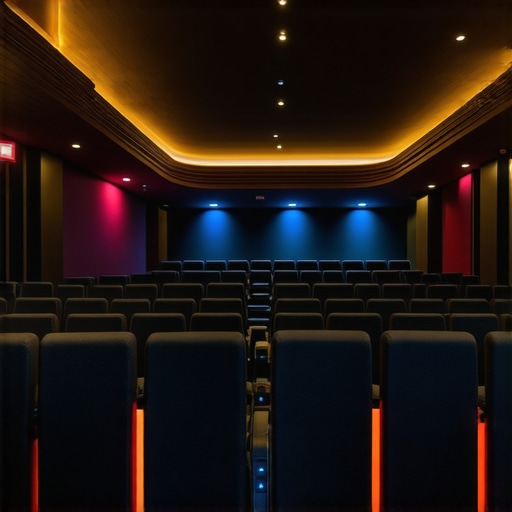
The Science Behind Light Layering and Emotional Connectivity
Layered illumination frameworks, meticulously curated, affect not only perception but also viewer psychology. By employing techniques such as gradual light gradients and scene-responsive color shifts, professionals craft atmospheres that subtly guide emotional responses—heightening suspense during tense scenes or fostering relaxation during quieter moments. The use of high-frequency, flicker-free LED drivers allows seamless transitions, ensuring a natural experience that resonates subconsciously. This sophisticated manipulation of light profoundly impacts narrative engagement and viewer comfort.
Why Spectral Fidelity Transcends Visual Authenticity
Perfecting spectral precision in ambient lighting fundamentally enhances the authenticity and depth of the cinematic experience. When ambient illumination closely mirrors the spectral qualities of on-screen luminance and color, viewers perceive a more natural, less fatiguing image. The integration of full-spectrum, high-CRI LED strips that meet or exceed standards like SMPTE’s recommended practices ensures that color grading remains true, supporting advanced formats such as Dolby Vision and HDR10+. Expert guidance advocates for the deployment of calibrated spectral systems coupled with software-tuned spectral calibration, aligning the entire environment with cinematic intent.
Ready to redefine your home theater? Dive into expert-controlled spectral solutions and orchestrate a personalized multisensory escapade that sets new standards of immersion.
Harnessing the Power of Custom Light Design
Expert circularity underscores that the success of a cinematic environment hinges on deliberate and refined lighting arrangements. By leveraging professional insights into placement, spectral tuning, and dynamic control, enthusiasts can craft spaces that respond seamlessly to content shifts, mood changes, and user preferences, fostering an unprecedented level of immersion and visual fidelity.
Optimize Lighting with Precision and Finesse
Precision in ambient lighting setup involves understanding the interplay between spectral quality, luminance levels, and psychological influence. Achieving this balance often requires consulting authoritative resources such as the ultimate guide to bias lighting. Such comprehensive references elucidate how expert-configured LED strips, when properly integrated, can mitigate eye fatigue and enhance contrast perception.
Embrace Innovation and Voice Your Expertise
The field continues to evolve rapidly, with emerging technologies like spectral tuning, hue-shifting automation, and scene-responsive lighting becoming mainstays of premium home theaters. To remain at the forefront, professionals and enthusiasts should actively engage in communities, sharing insights and innovations via platforms such as industry forums. Contributing your experiences not only enriches the collective knowledge but also propels the science of cinematic lighting forward.
Unlock Content Fidelity with Correct Lighting Spectra
One critical takeaway is the significance of spectral precision. Utilizing high-CRI, narrow-band LED systems aligned with standards like Rec. 2020 ensures that ambient illumination complements vibrant HDR content without inducing unwanted color shifts or diminishing contrast. Integrating such spectral tuning elevates viewing authenticity, turning a good setup into a professional-grade cinematic sanctuary.
Shape Emotions Through Light Layering
Layering multiple lighting zones—such as indirect ceiling lights, backlit displays, and accent fixtures—empowers you to influence viewer psychology profoundly. Experts recognize that finely tuned light gradients, combined with controlled color temperatures, evoke specific emotional responses, heighten suspense, or promote relaxation, thereby transforming passive watching into an active storytelling experience. This layered approach is essential for elevating your space beyond standard setups.
Build Relationships with Illuminating Authorities
Deepening your expertise benefits greatly from continuous learning through authoritative resources. For example, exploring comprehensive guides and recent innovations can illuminate best practices and new trends. Likewise, collaborating with lighting engineers focused on spectral science ensures your environment remains both aesthetically stunning and scientifically precise.
How Will Your Future Setup Push Creative Boundaries?
In this pursuit of perfection, question how emerging technologies like adaptive hue-shifting or intelligent scene analysis can redefine your cinematic space. The integration of these innovations fosters environments where every flicker of light is purpose-driven, pulsating harmoniously with content, and heightening emotional resonance. Cultivating a dialogue with industry thought leaders and participating in advanced discussions through curated platforms is the key to pioneering your unique, immersive experience.

Leave a Reply