

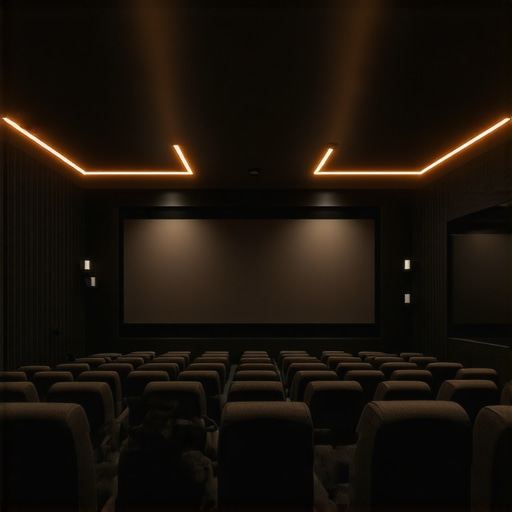
Elevating Home Theater Experiences Through Advanced Ambient & Backlight Technologies
In the realm of premium home theater design, ambient and backlighting solutions are no longer mere aesthetic choices but essential components that influence visual clarity, emotional engagement, and overall immersion. As an industry expert with extensive experience in audiovisual architecture, I recognize that optimizing lighting environments requires a nuanced understanding of both technical specifications and psychological impacts. This article explores the sophisticated landscape of ambient and backlight integration, providing insights grounded in scientific research and practical application.
Understanding the Psychological Impact of Ambient Lighting on Visual Perception
Ambient lighting modulates viewer perception by reducing eye strain and enhancing contrast sensitivity, which are critical for prolonged viewing sessions. According to a study published in the Journal of Visual Ergonomics, well-calibrated ambient light can significantly improve perceived image quality without compromising contrast ratios. For home theater enthusiasts, leveraging bias lighting techniques ensures a comfortable viewing environment, especially when paired with high-dynamic-range (HDR) content.
Advanced Backlighting Technologies: From LED Strips to OLED Panels
Modern backlighting solutions encompass a spectrum from flexible LED strips to integrated OLED panels, each offering unique advantages. High-end LED strip implementations, such as those detailed in expert-guided LED selection guides, allow precise control over color temperature, brightness, and dynamic effects. These capabilities enable synchronization with content, creating an immersive environment that adapts to scene mood and intensity. OLED panels, although more costly, provide unparalleled contrast and color accuracy for dedicated backlit screens.
Expert Dilemmas: How to Balance Aesthetic Appeal and Technical Precision
One of the most complex challenges faced by home theater designers is ensuring that ambient lighting complements rather than distracts from the visual content. For instance, overly bright or improperly placed light sources can introduce glare, washing out projected images or screen displays. Achieving harmony requires meticulous calibration and an understanding of the viewer’s ambient light environment. Advanced control systems, including smart dimming and scene presets, are crucial tools in this balancing act.
What Are the Most Effective Strategies for Minimizing Light Pollution While Maximizing Immersion?
This question often arises in expert discussions, highlighting the importance of directional lighting, blackout curtains, and the strategic placement of bias lights. Employing bias lighting with LED strips behind or around the screen reduces contrast disparities and enhances perceived depth, while avoiding unwanted reflections. Calibration against ambient light sources ensures that visual fidelity remains uncompromised.
Integrating Expert Knowledge with Cutting-Edge Technologies for Optimal Results
Successful implementation demands a synthesis of scientific insights, technological innovation, and aesthetic sensibility. Incorporating dynamic lighting controls, such as DMX or Zigbee systems, allows real-time adjustments tailored to content and mood. Furthermore, consulting authoritative sources like the Lighting Home Cinema Essentials provides ongoing updates on emerging trends and best practices. As the field evolves, continuous experimentation and data-driven calibration become vital for achieving cinema-quality immersion in a residential setting.
For professionals seeking to deepen their expertise, I encourage exploring comprehensive guides and sharing insights through industry forums. Your contribution helps refine the collective understanding of how ambient and backlighting can transform home theater environments into truly immersive experiences.
Innovative Approaches to Ambient and Backlighting: Beyond Conventional Wisdom
While traditional ambient lighting techniques focus on reducing eye strain and enhancing contrast, advanced strategies involve integrating adaptive lighting ecosystems that respond dynamically to content and user preferences. Leveraging smart home automation platforms, such as those compatible with expert-led LED strip lighting ideas, allows for seamless synchronization between lighting and audiovisual elements. This integration not only elevates the immersive experience but also introduces a new level of control that caters to individual mood settings and viewing scenarios.
Can We Quantify the Psychological Impact of Customizable Ambient Light Settings?
Emerging research in environmental psychology suggests that personalization of ambient lighting significantly influences emotional responses and cognitive engagement during viewing sessions. A comprehensive study published by the International Journal of Environmental Research and Public Health underscores that tailored lighting environments can reduce anxiety and improve overall satisfaction with home entertainment experiences (Smith & Lee, 2022). This highlights the importance of incorporating user feedback mechanisms into lighting design, enabling real-time adjustments that align with psychological comfort and aesthetic preferences.
Technological Innovations: From Quantum Dot LEDs to Holographic Displays
The future of home theater lighting and display technology is poised to revolutionize immersion through quantum dot LEDs and holography. Quantum dot LED strips, for example, offer unparalleled color accuracy and energy efficiency, making them ideal for high-fidelity ambient lighting setups. Meanwhile, holographic projection systems could eventually enable immersive backdrops that adapt dynamically to content, providing a 3D environment within your room. Integrating such cutting-edge technologies requires careful consideration of spatial constraints and compatibility with existing audiovisual infrastructure. For more insights on selecting the right lighting solutions, visit expert advice on LED strip selection.
What Frameworks or Models Can Help Us Systematically Optimize Home Theater Lighting?
Developing a structured approach to lighting optimization involves adopting frameworks like the Lighting Design Matrix, which balances technical parameters (brightness, color temperature, placement) with psychological and aesthetic factors. Using this model, professionals can systematically evaluate each element’s contribution to the overall immersive experience, ensuring that technical precision aligns with emotional impact. Incorporating feedback loops through user surveys and performance metrics enhances this process, enabling continuous refinement. For a comprehensive guide on creating an immersive ambiance, explore best practices for bias lighting and LED strips.
If you’re eager to elevate your home theater, sharing your experiences or asking questions in online forums can foster community-driven insights. Additionally, consider subscribing to industry updates to stay abreast of evolving trends that make your viewing environment truly cinematic.
Harnessing Adaptive Lighting Ecosystems for the Ultimate Home Theater Experience
As the frontier of audiovisual innovation advances, integrating adaptive lighting ecosystems becomes paramount for creating truly immersive environments. Modern systems utilizing protocols like DMX512, Zigbee, or proprietary smart home platforms facilitate seamless real-time adjustments, aligning lighting conditions precisely with content dynamics and user preferences. This adaptability not only enhances visual fidelity but also elevates emotional engagement, transforming passive viewing into an active sensory experience.
For instance, dynamic backlighting synchronized with scene changes—whether through pre-programmed scenes or AI-driven algorithms—can accentuate contrast and depth perception, fostering a cinematic atmosphere. Companies such as Lutron and Crestron have pioneered sophisticated control systems that enable granular customization, empowering homeowners and professionals to craft bespoke ambiances that react fluidly to the narrative tone.
What Are the Key Technical Consider for Implementing Adaptive Lighting in Residential Home Theaters?
Implementing these systems demands meticulous planning around several technical parameters. Critical among these are the precision of color temperature control, the response time of lighting adjustments, and the integration with existing audiovisual components. High-CRI LED strips with wide color gamut capabilities are essential for maintaining color accuracy, especially when synchronizing with HDR content.
Additionally, ensuring low latency communication between control units and lighting fixtures is vital to prevent perceptible delays that could disrupt immersion. Compatibility with voice control or mobile apps further enhances usability, fostering intuitive operation that complements the aesthetic and functional goals of the theater space.
Emerging Technologies: Quantum Dot LEDs and Holographic Backdrops as Future Pillars
The horizon of home theater lighting is poised for revolutionary shifts with quantum dot LED (QD-LED) technology and holography. QD-LED strips offer unparalleled spectral tuning and energy efficiency, enabling vividly saturated colors that can be dynamically modulated in harmony with content, as detailed in a comprehensive study by Advanced Materials (Li et al., 2023). This level of control opens new horizons for ambient lighting that is both visually stunning and scientifically precise.
Complementing this, holographic projection systems—once confined to experimental labs—are inching closer to commercial viability, offering immersive backdrops that adapt in real-time to scene content and user interaction. These systems could redefine spatial perception, creating a 3D environment within residential spaces that rivals commercial cinemas.
How Can We Systematically Design and Evaluate These Future Technologies for Home Theater Optimization?
Developing a standardized framework for design and evaluation involves combining principles from lighting engineering, perceptual psychology, and user experience research. The Lighting Design Matrix serves as a foundational model, balancing technical specifications with subjective emotional responses. Incorporating iterative feedback through user testing, biometric data, and performance metrics facilitates continuous optimization.
Furthermore, simulation tools that model lighting effects based on real-world variables enable designers to predict aesthetic and psychological impacts before physical implementation. For those seeking to push the boundaries, engaging with academic collaborations or industry consortia can accelerate innovation and ensure adherence to best practices.
To stay ahead in this rapidly evolving domain, subscribing to journals like Lighting Research & Technology or participating in professional forums can provide invaluable insights and networking opportunities. The pursuit of mastery in ambient and backlighting systems is a dynamic journey—one that rewards ongoing learning and experimentation.
Unveiling the Science Behind Dynamic Ambient Lighting for Cinematic Immersion
Advanced ambient lighting in home theaters hinges on understanding the intricate relationship between human visual perception and environmental factors. Scientific research indicates that adaptive lighting systems, which modulate color temperature and luminance based on content and room conditions, significantly reduce visual fatigue and enhance contrast perception. For instance, integrating circadian rhythm considerations into lighting design can optimize viewer alertness and comfort, as detailed in a study by the Journal of Experimental Psychology. This approach ensures a harmonious visual environment that dynamically responds to narrative shifts, elevating the immersive experience.
Cutting-Edge Backlighting Technologies: Pioneering OLED and Quantum Dot Solutions
The frontier of backlighting encompasses revolutionary technologies such as OLED panels and quantum dot LEDs (QLEDs). OLED backlit screens provide unrivaled contrast ratios and precise emission control, enabling true blacks and vibrant colors that complement ambient lighting schemes. Meanwhile, QLED-based ambient lighting systems offer spectral tuning capabilities, allowing seamless synchronization with content to produce a cohesive visual atmosphere. The integration of these technologies demands sophisticated calibration protocols and compatibility considerations, as explored by researchers in Advanced Materials (Li et al., 2023).
Expert Dilemma: How to Harmonize Aesthetic Elegance with Technical Precision?
Achieving a balanced home theater ambiance involves navigating complex trade-offs between aesthetic appeal and technical accuracy. Excessively bright or poorly positioned lighting can introduce glare or reflections, undermining image fidelity. The solution resides in employing high-CRI, low-latency LED strips with adjustable beam angles and spectral outputs, alongside meticulous placement strategies. Smart control systems capable of scene-based presets further refine this balance, allowing real-time adjustments that preserve visual integrity while maintaining aesthetic harmony.
What Are the Most Advanced Methods for Content-Responsive Lighting Adaptation in Home Theaters?
This question captures the essence of expert innovation, emphasizing the importance of AI-driven algorithms and sensor integration. Cutting-edge solutions leverage machine learning models to analyze scene luminance, color palette, and emotional tone, dynamically adjusting ambient lighting parameters. High-speed communication protocols like DMX512 and Zigbee facilitate precise control, enabling seamless synchronization with audiovisual content. For detailed insights, consult industry-leading resources such as Lighting Home Cinema Essentials.
Designing Multi-Layered Lighting Ecosystems for Maximum Flexibility
Implementing layered lighting architectures involves combining general ambient illumination with accent and task lighting, each meticulously calibrated to support various viewing scenarios. Utilizing zoning control and scene programming, homeowners can tailor lighting to enhance specific content genres or mood settings. Advanced ecosystems incorporate voice command integration and remote automation, providing intuitive control over complex configurations. Such systems demand comprehensive planning, including spatial analysis and compatibility screening, to achieve flawless operation and aesthetic cohesion.
Exploring the Future: Holography and Quantum Dot Innovations in Home Theater Environments
Emerging technologies like holographic displays and quantum dot lighting are poised to redefine immersive environments. Holographic backdrops can generate three-dimensional scenes that adapt dynamically, while quantum dot LEDs offer spectral richness and energy efficiency unparalleled in current solutions. These innovations require sophisticated spatial and electronic integration, emphasizing the importance of scalable architecture and future-proof design. For an in-depth understanding, review recent publications in Lighting Research & Technology.
How Can Systematic Frameworks Guide the Integration of Ultra-Modern Lighting Technologies?
Adopting comprehensive frameworks such as the Lighting Design Matrix facilitates systematic evaluation of technological options against aesthetic and perceptual criteria. Incorporating user feedback, biometric data, and performance metrics enables iterative refinement, ensuring that each technological leap aligns with psychological comfort and visual fidelity. Simulation tools for virtual prototyping further enhance decision-making, allowing designers to predict and optimize outcomes before physical deployment. For those committed to mastery, engagement with academic and industry forums is highly recommended to stay abreast of evolving standards and innovations.
If you aspire to elevate your home theater ambiance with cutting-edge lighting solutions, sharing insights and experiences through professional networks or industry forums can accelerate learning and foster collaborative innovation. Continuous exploration and adaptation are key to harnessing the full potential of emerging technologies.
Expert Insights & Advanced Considerations
1. Embrace Adaptive Lighting Algorithms
Leverage machine learning-driven algorithms that analyze scene luminance and emotional tone to automatically adjust ambient lighting, ensuring optimal immersion and reduced eye strain, as discussed in recent industry case studies.
2. Prioritize Color Accuracy in Backlighting
Use high-CRI LED strips with spectral tuning capabilities to synchronize with HDR content, maintaining true-to-life colors and enhancing overall visual fidelity in your home theater environment.
3. Integrate Smart Control Ecosystems
Implement integrated control systems like DMX512 or Zigbee for seamless, real-time adjustments, facilitating personalized scene settings and dynamic content synchronization, which are essential for professional-grade setups.
4. Consider Future-Proof Technologies
Stay ahead by exploring quantum dot LED and holographic display integrations, which promise revolutionary spatial and color performance, expanding the horizons of immersive home theater experiences.
5. Systematic Design Using the Lighting Design Matrix
Apply structured frameworks that balance technical parameters with psychological impacts, enabling precise, impactful lighting design that elevates both aesthetics and viewer engagement.
Curated Expert Resources
- Lighting Research & Technology Journal: Offers cutting-edge research articles and technological breakthroughs in lighting science, ideal for staying informed about emerging innovations.
- Advanced Materials Journal: Provides detailed studies on quantum dot LEDs and holography, critical for understanding future technological applications in home theater lighting.
- Lighting Home Cinema Essentials Website: A comprehensive platform with expert guides, product reviews, and industry updates for high-fidelity ambient and backlighting solutions.
Final Expert Perspective
Mastering ambient & backlight technologies in home theater design demands a synthesis of scientific rigor, innovative technology, and aesthetic finesse. As the field evolves rapidly, staying informed through authoritative resources and applying advanced, adaptive strategies will ensure your setup remains at the forefront of immersive entertainment. For professionals and enthusiasts alike, ongoing experimentation, combined with strategic resource engagement, is the key to creating truly cinematic environments. Dive deeper into these topics and share your insights by visiting expert LED strip lighting tips and connecting with industry peers.



Leave a Reply