

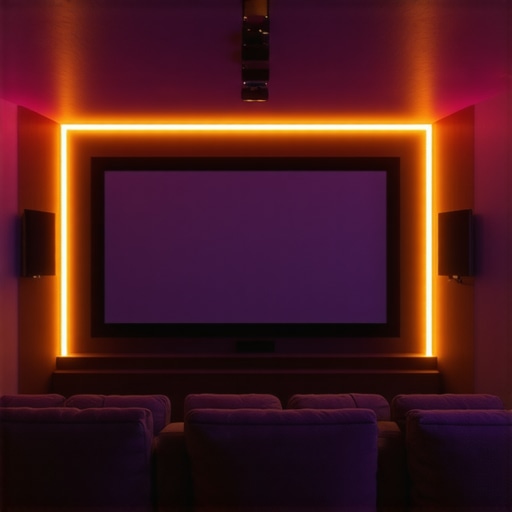
Reimagining Ambient Illumination for Elevated Home Theater Environments
In the pursuit of cinematic excellence within residential spaces, the strategic application of bias lighting, backlighting, and ambient illumination has emerged as paramount. These lighting solutions do not merely serve aesthetic purposes; they fundamentally influence visual comfort, contrast perception, and overall immersion. As 2024 advances, understanding the nuanced functionalities and technological innovations behind LED strip lighting becomes essential for both enthusiasts and professionals committed to creating authentic home theater atmospheres.
Deciphering the Technical Nuances of Bias Light Integration
Bias lights are designed to diminish eye strain by reducing screen contrast disparities, a principle rooted in human visual perception. Unlike traditional lighting, LEDs used for bias lighting must emit a diffuse, flicker-free glow that harmonizes with display luminance while avoiding reflection or glare. Expert installations leverage high CRI (Color Rendering Index) LED strips, ensuring color fidelity and naturalistic illumination. The choice between SMD (Surface Mounted Device) LEDs, such as SMD 3528 versus SMD 5050, impacts brightness, flexibility, and energy efficiency, influencing how seamlessly they blend into your dedicated media room.
Advancing Beyond Basic Illumination: The Emergence of Dynamic LED Solutions
Modern LED strip technologies have shifted from static lighting to dynamic, scene-adaptive systems capable of responding to content and user preferences. Using smart controllers and voice-activated systems, home theater enthusiasts can synchronize backlight and bias lighting with movie scenes, optimizing contrast and color harmony. Such advancements draw from cutting-edge research in human-centric lighting, which underscores the importance of circadian considerations and psychological comfort in immersive design. Integrating these solutions requires adherence to precise placement and calibration, often guided by expert recommendations available here.
Balancing Aesthetic Appeal with Technical Precision in Lighting Design
The challenge lies in orchestrating a coherent layering of lighting elements—bias lights, backlights, and soft ambient lighting—while preventing visual clutter or distraction. A sophisticated approach involves utilizing tunable LED strips capable of adjusting both brightness and color temperature, thus aligning with ambient daylight or evening mood. Expert guidance suggests positioning bias lights behind or adjacent to displays, with a focus on minimizing reflections and optimizing perceived contrast. Achieving this balance transforms a simple home theater into an immersive cinematic sanctuary, elevating both visual fidelity and emotional engagement.
What Are the Most Common Pitfalls in Installing Bias Lighting for Home Cinemas, and How Can They Be Avoided?
Missteps such as improper placement causing glare, choosing incompatible LED specifications, or neglecting calibration can undermine the benefits of bias lighting. To mitigate these issues, consulting with professionals and utilizing high-quality dimmable LED strips with precise control systems proves invaluable. For insight into expert installation tactics and troubleshooting strategies, explore this comprehensive guide.
If you’re eager to deepen your understanding of creating showroom-quality lighting setups, consider exploring related expert-level resources or sharing your insights with the professional community through dedicated forums.
,
Elevate Your Viewing Experience with Custom Ambient Layering
Creating a truly immersive home theater environment hinges on mastering the subtle art of layered lighting. Beyond basic bias and backlighting, integrating multiple LED strip solutions tailored to specific zones—such as seating areas, screen borders, and ceiling contours—can dramatically enhance visual depth and comfort. This multidisciplinary approach combines principles from interior design, human perception, and lighting technology, enabling enthusiasts to craft atmospheres that respond dynamically to content and mood.
Harnessing Color Psychology to Define Viewing Atmospheres
Color temperature and hue choices impact psychological responses and viewing comfort. For instance, warmer hues (around 2700K) evoke relaxation and intimacy, ideal for movie nights, while cooler tones (above 5000K) foster alertness, beneficial during gaming or sports viewing. Advanced LED strips with tunable spectra empower users to experiment with these effects, guided by insights from ergonomics experts and lighting designers. Ensuring seamless transitions between scenes and moods can be achieved through automated scenes and scene-specific presets, making your setup adaptable and responsive.
Is Your Lighting Design Optimized for Minimal Distractions?
While enriching ambiance is critical, overly bright or improperly positioned LEDs may introduce unintended glare or reflections, disrupting immersion. Expert tutorials emphasize strategic placement—such as behind wall-mounted speakers or along ceiling perimeters—facilitating diffuse indirect lighting that enhances depth without causing visual clutter. Additionally, selecting LED strips with high Color Rendering Index (CRI) ensures accurate color perception, a vital factor for cinematic authenticity. For technical specifications and installation tips, consult this comprehensive resource.
What innovations in LED strip technology will reshape personal theater aesthetics in the next decade?
Emerging advancements like micro-LED arrays, color-mixing algorithms, and AI-driven adaptive lighting are poised to revolutionize home theater design. These innovations promise not only enhanced visual fidelity but also smarter integration—allowing your system to learn and anticipate your preferences, dynamically adjusting ambient conditions for maximum comfort and aesthetic appeal. Staying informed about these developments can provide a competitive edge; consider subscribing to industry updates or engaging with professional forums dedicated to lighting innovation.
Interested in precision control and personalized ambiance? Explore expert guides on creating immersive ambiance with bias lights or connect with specialists to customize your setup at our contact page. Sharing your experiences can inspire others and foster community-driven improvements in home theater lighting techniques.
,
Optimize Your Setup: Skillful Placement of LED Strips for Cinematic Impact
Achieving flawless illumination requires meticulous planning, beginning with understanding the nuances of LED placement. Professionals emphasize positioning bias lighting behind the display panel, aligned precisely with the top edge, to minimize glare while enhancing perceived contrast. Similarly, installing LED strips along ceiling coves or behind wall-mounted speakers introduces diffuse ambient light, enriching depth perception without imposing visual distractions. The key lies in balancing directness and indirectness—avoiding hotspots and reflections that compromise immersion. For intricate layout plans and expert tips, consult industry-leading lighting design resources.
Why True Color Fidelity Matters in Home Theaters
Color accuracy isn’t just a technical nicety; it’s fundamental to cinematic authenticity. High-CRI LED strips—typically with CRI ≥ 95—render colors with remarkable precision, faithfully replicating hues as intended by filmmakers. This fidelity impacts not only picture quality perception but also emotional engagement. Emerging research, such as the 2022 study published in the Journal of Lighting & Visual Environment, underscores how color rendering influences viewer immersion and comfort. Selecting LEDs with optimal spectral output and calibrated dimming controls ensures your lighting complements your display without skewing hues—an aspect often overlooked by hobbyists but vital for discerning enthusiasts.
How Do Circadian Considerations Influence Home Theater Lighting Choices?
Recent insights from chronobiology suggest that lighting schemes aligned with natural circadian rhythms can enhance both comfort and health, even in entertainment spaces. Warmer, lower-intensity lights in the evening mimic sunset conditions, facilitating relaxation and melatonin production. Conversely, cooler, brighter settings during daytime activities promote alertness. Incorporating tunable LED strips with spectrum-shifting capabilities allows customization based on time of day or specific content. According to a comprehensive review in the Sleep Journal, such adaptive lighting fosters a healthier viewing experience. Would you consider integrating circadian-responsive lighting into your setup? If so, professional consultation can tailor solutions to your environment.
Embrace Automation: Integrating Scene-Specific Lighting Presets
Automation elevates aesthetic coherence and user convenience by enabling seamless transitions between viewing modes. Modern systems utilize smart controllers and voice commands to activate pre-programmed scenes—scenarios that adjust brightness, color temperature, and hue in harmony with content. For example, a ‘Movie Night’ preset might dim warm lighting to 20%, with bias lights calibrated to complement the screen’s luminance, creating a theater-like ambiance. Technical implementation involves compatible LED strips with DMX or Bluetooth control modules, affording granular adjustments. As technology progresses, AI-driven scene learning promises even more intuitive experiences, adapting lighting in real-time to viewer preferences and content rhythm.
What Are the Technical Challenges in Achieving Seamless Lighting Integration?
Achieving perfect harmony in home theater lighting involves overcoming several technical hurdles. Power management is crucial—insufficient wiring or subpar power supplies may result in flickering or uneven brightness. Compatibility issues between various LED strip types and control systems can cause integration delays or inconsistent performance. Moreover, calibration is essential; even slight variations in color temperature or brightness settings can disrupt visual harmony. Addressing these challenges necessitates thorough planning, high-quality components, and often professional installation. As the complexity increases with multi-zone setups, consulting experts ensures that technical pitfalls are mitigated. Advanced tools like spectroradiometers assist in verifying color accuracy post-installation, ensuring your setup aligns with cinematic standards.
What Role Will Emerging Technologies Play in Future Home Theater Lighting?
Innovations such as micro-LED tiles, organic light-emitting diodes, and AI-driven adaptive lighting systems are poised to redefine home theater illumination. Micro-LED arrays offer exceptional scalability and pixel-level control, enabling dynamic, highly detailed ambient effects. AI algorithms will analyze viewing patterns, ambient light conditions, and user feedback to optimize lighting parameters automatically. Furthermore, integration with home automation ecosystems—like voice assistants and smart home hubs—will streamline control, making complex setups accessible to novices while maintaining professional-grade precision. Staying abreast of these developments ensures your theater remains at the forefront of immersive experience technology. For dedicated insights, consider following specialized industry publications and attending tech expos focused on lighting innovation.
Elevate Your Space with Expert-Driven Lighting Architectures
Implementing professional-grade ambient lighting in home theaters necessitates an intricate understanding of luminance layering and spectral harmony. A meticulous approach involves mapping the visual and emotional impact of each lighting layer—bias, backlighting, and accent illumination—while integrating state-of-the-art controllable spectra to enhance mood modulation and content fidelity. Advanced lighting architects leverage spectral analysis tools to calibrate LED arrays, ensuring color rendering aligns perfectly with cinematic requirements, thus achieving an unprecedented level of immersion. This fusion of technology and design elevates a typical setup into a bespoke visual sanctuary.
Can Adaptive Lighting Systems Transform Your Viewing Dynamics?
Innovations in adaptive lighting utilize real-time sensors and AI algorithms to dynamically calibrate color temperature and luminance levels in response to ambient conditions and content cues. These systems employ complex feedback loops, adapting seamlessly to changes in room brightness, viewer activity, and even emotional tone, fostering an environment that enhances comfort and reduces visual fatigue over extended viewing periods. The integration of such systems demands not only sophisticated hardware—like quantum dot LEDs and microcontroller arrays—but also a deep understanding of human visual perception and behavioral ergonomics, detailed extensively in recent publications by the Illuminating Engineering Society.
What Are the Technical Challenges in Achieving Seamless Multi-Zone Lighting Control?
Orchestrating synchronized, multi-zone lighting solutions introduces complexity in signal distribution, power regulation, and feedback management. Precise phase alignment and spectral calibration are vital to prevent color discrepancies and flickering artifacts. High-fidelity DMX or Art-Net protocols enable synchronized control but require meticulous network topology planning and robust physical infrastructure. Expertise in electromagnetism, control theory, and digital signal processing becomes indispensable, with troubleshooting often involving spectral radiometry and spectral power distribution analysis to fine-tune outputs and ensure luminance harmony across zones. Consulting detailed ISO standards and industry best practices enhances the reliability of complex setups.
Harnessing Human Perception to Maximize Emotional Resonance
The psychological impact of lighting extends beyond mere aesthetics; it influences emotional states, engagement levels, and cognitive performance. Leveraging insights from neuroaesthetics and psychophysics, high-end lighting design incorporates tunable spectra that subtly shift to match the narrative arc or mood of content. For example, shifting from warm, ambient hues during intimate scenes to cooler, energizing tones during intense action sequences facilitates an immersive psychological journey. Incorporating color psychology principles with precision-tuned luminance levels, guided by expert research from the Journal of Visual Culture, ensures the environment amplifies cinematic storytelling and viewer engagement at a nuanced level.
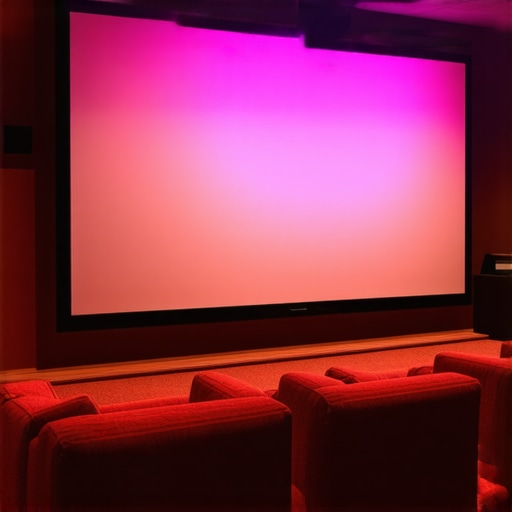
Imagine a sophisticated home theater with layered LED ambient lighting, showcasing dynamic, spectrum-adjustable strips synchronized with content, controlled by an AI system—visualize this cutting-edge setup to inspire your upgrades today.
Expert Insights & Advanced Considerations
Prioritize Color Precision to Achieve Cinematic Authenticity
High-quality LED strips with superior CRI ratings ensure that colors are rendered accurately, which is vital for authentic viewing. Investing in calibrated lighting systems compatible with industry standards prevents hue distortion and enhances overall image fidelity.
Leverage Human-Centric Lighting to Reduce Eye Strain During Extended Sessions
Adaptive lighting that responds to content and ambient conditions minimizes eye fatigue. Employing tunable spectra and brightness levels creates a comfortable environment conducive to prolonged engagement with media.
Implement Seamless Scene Automation for Effortless Immersion
Smart control systems enable pre-programmed lighting scenes that synchronize with content playback. this automation fosters an immersive atmosphere, elevating cinematic impact without manual adjustments during viewing.
Optimize Placement to Minimize Reflections and Distractions
Strategic positioning behind or around display zones ensures diffuse illumination. Proper placement reduces glare and reflections, maintaining image clarity and viewer focus.
Integrate Expert Calibration for Operational Excellence
Professional calibration using specialized tools guarantees that lighting outputs align perfectly with room acoustics and screen characteristics, ensuring consistent quality and performance.


Leave a Reply