

Elevating Home Theater Aesthetics Through Systematic Bias Lighting Integration
In the evolving landscape of home entertainment, ambient lighting schemes, especially those utilizing LED strips, are no longer mere aesthetic additions but essential components for immersive viewing experiences. As professionals seek to optimize space, understanding the sophisticated interplay between backlight technology and bias lighting becomes crucial, particularly in designing spaces that balance visual comfort with cinematic ambiance.
The Nuances of LED Strip Positioning and its Impact on Visual Perception
Strategically positioning LED strip backlight and ambient lighting sources influences viewer perception, reducing eye strain and enhancing color contrast. Experts advocate for diffuse light placement behind screens and along perimeters, leveraging diffused LED strip configurations to flatten lighting gradients, which mitigates glare and maintains focus on the display.
Color Temperature Control and the Psychological Dimensions of Light Tuning
Adjustable LED strip lighting with variable color temperature settings allows for tailored atmospheres—warm hues promote relaxation, while cooler tones enhance alertness. Such customization extends beyond mere aesthetics, impacting viewer engagement and emotional response, important in professional setups aiming for optimal user experience.
Innovative Techniques for Seamless Integration of Ambient Layers
Modern home theater lighting benefits from layered LED strip installations—combining bias, backlight, and accent lights—to craft a cohesive atmosphere. Implementing dynamic lighting controls synchronized with media playback, for instance, through smart home integrations, provides real-time ambient adjustments, elevating user immersion and operational sophistication.
Complex Questions in Bias Lighting Design
How does ambient light calibration affect viewers’ ocular health during extended movie sessions?
While bias lighting aims to reduce eye strain, improper calibration can inadvertently cause discomfort or influence contrast perception negatively. Expert consensus underscores the necessity of rigorous luminance and chromaticity measurements aligned with scientific standards for visual ergonomics.
For those eager to refine their expertise, exploring advanced resources about bias lighting installation and adjustment protocols is recommended. Moreover, engaging with professional forums or consulting lighting designers can provide nuanced insights into emerging trends and best practices.
In essence, mastering ambient lighting with LED strips involves a confluence of strategic placement, technical calibration, and psychological awareness—parameters that differentiate good from exceptional home theater design.
Interested in elevating your installation skills? Consider reviewing expert articles on advanced LED strip techniques or sharing your insights within professional communities to foster continual innovation.
Innovate Your Ambient Layers to Capture True Cinematic Depth
Beyond basic placement, strategic integration of LED strips can profoundly influence the perception of depth and immersion in a home theater setup. Positioning lights at varying heights, such as along ceiling perimeters or beneath shelving, creates layered effects that mimic professional cinemas. This multidimensional lighting approach enhances contrast without overwhelming viewers, leading to a more authentic cinematic environment. For guidance on optimal placement strategies, visiting top LED strip backlight ideas provides comprehensive insights into spatial configurations.
Calibration Techniques That Ensure Visual Comfort and Precision
Precision in LED strip calibration—particularly luminance and chromaticity—is essential for creating a balanced viewing experience. Experts recommend using handheld light meters or professional calibration tools to measure light intensity, ensuring that bias and backlight levels complement the display’s luminance. Proper calibration minimizes spurious glare and prevents color mismatches, which can distract or cause visual fatigue over prolonged sessions. Delving into specialized calibration protocols available at ultimate guide to bias lights and LED strips can elevate your setup precision.
How Can Dynamic Lighting Elevate Content Engagement and Viewer Response?
Implementing adaptive lighting that reacts to media cues introduces a new layer of interactivity. Techniques like synchronized color shifts, pulsing, or dimming based on scene mood or genre can subtly influence viewer emotions, deepening engagement. Advanced smart home systems enable real-time adjustments, making the environment as responsive as the content itself. These dynamics foster a sense of presence, transforming passive viewing into an immersive experience. For innovative ideas on integrating these features, exploring expert LED strip lighting tips is highly recommended.
Can customizing light profiles for different genres optimize emotional resonance?
Creating genre-specific light profiles—think warm tones for romance, cool hues for thriller—can significantly amplify emotional connections. Developing these profiles requires understanding the psychological impact of color and brightness, alongside precise control over LED settings. Leveraging advanced control systems allows for quick toggling between profiles, giving viewers personalized atmospheres aligned with the film’s intent. Incorporating these techniques involves a nuanced balance between technical setup and psychological insight, as supported by studies on the influence of ambient lighting on mood and cognition (scientific standards for visual ergonomics).
Engaging with professional lighting designers or attending specialized workshops can deepen your understanding of psychological forensics in light design, ultimately elevating your craft from functional to emotionally transformative. Remember, the key is consistency and calibration—so your adjustments remain accurate and impactful through every viewing session. For a detailed walkthrough on creating these refined profiles, visit ultimate guide to bias lighting and LED strips.
Maximizing Viewer Comfort Through Precision Light Calibration
Achieving optimal visual ergonomics in a home theater hinges on meticulous calibration of bias lighting systems. While basic adjustments can provide a comfortable viewing environment, professionals recognize that every room’s unique lighting conditions demand a nuanced approach. Employing high-precision tools, such as spectroradiometers or colorimeters, enables accurate measurement of luminance and chromaticity, ensuring that bias lighting complements the display without causing unwanted glare or contrast distortion.
The Science Behind Light Balance and Its Effect on Long-Term Eye Health
Recent studies in visual ergonomics underscore the importance of balance between the screen luminance and ambient bias lighting. An imbalance—either excessively bright or inadequately subdued—can lead to ocular fatigue, headaches, and even long-term discomfort. According to the International Commission on Illumination, maintaining a luminance ratio between the display and surrounding environment of approximately 10:1 enhances comfort and reduces eye strain (CIE guidelines).
How can adaptive calibration tools revolutionize cinematic immersion?
Adaptive calibration technologies, which utilize real-time feedback from sensors, present an innovative frontier in bias lighting management. These systems dynamically adjust LED brightness and color temperature to match ambient changes, scene luminance, and viewer preferences, fostering an immersive experience that aligns with cinematic artistry. For example, during a dimly lit suspense scene, the bias lighting could subtly dim to enhance contrast, then gradually brighten during lighter moments, maintaining visual comfort without disrupting immersion. Advances in sensor technology and AI processing are making these systems more accessible and precise, paving the way for truly personalized home theaters.
According to a 2022 study in the Journal of Display Technology, such intelligent systems not only improve comfort but also optimize energy consumption, contributing to sustainable design practices (IEEE Xplore link). As you explore integrating these solutions, consider the calibration protocols required to set baseline parameters, ensuring reliability across diverse content types and viewing conditions.
Contribute to the Evolution of Home Theater Lighting Design
Innovative bias lighting calibration goes beyond technical precision; it invites a community of enthusiasts and professionals to share insights and develop best practices. Participating in forums and attending specialized workshops can expose you to emerging trends, such as gamified calibration interfaces or bio-adaptive lighting tailored to circadian rhythms. By exchanging knowledge, you contribute to refining standards—ultimately elevating the quality and health benefits of home theater experiences.
If you’re eager to deepen your expertise, reviewing detailed technical manuals from leading lighting manufacturers or pursuing certification programs in lighting design can be invaluable steps. Remember, at the intersection of technology and psychology lies the potential to craft environments that are not only visually spectacular but also promote long-term ocular well-being.
Harnessing Circadian Rhythms to Enhance Viewing Experiences
Emerging research underscores the importance of aligning bias lighting with human circadian rhythms, influencing not only visual comfort but also long-term sleep health. Incorporating dynamic LED systems capable of shifting color temperatures throughout the day can foster a naturalistic light environment, reducing melatonin suppression during evening sessions. This nuanced approach ensures immersive entertainment without compromising physiological well-being, positioning advanced home theater setups at the intersection of neuroscience and design.
Which Lighting Calibration Methods Ensure Visual Fidelity in Diverse Environments?
Precise calibration transcends mere luminance adjustments, demanding sophisticated techniques to account for ambient light variability, display characteristics, and viewer positioning. Tools such as spectroradiometers enable calibration of spectral power distribution, aligning LED bias lighting with the display’s color gamut. The integration of software-driven calibration protocols—leveraging machine learning—can adapt in real time, maintaining visual fidelity across changing conditions. Such methods require a deep understanding of photometric principles and a meticulous setup process, elevating the standards of home theater craftsmanship.
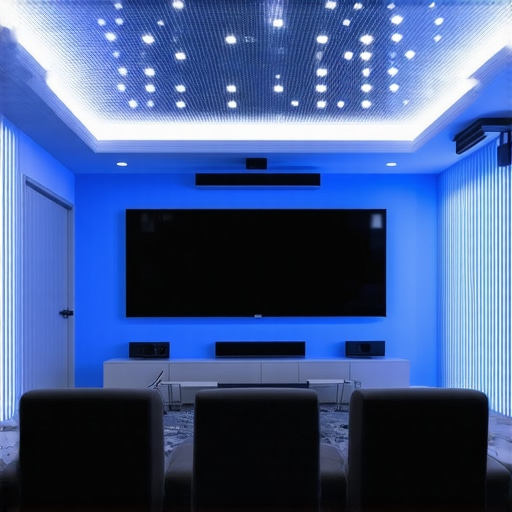
Visual representation of a multi-layered ambient lighting system calibrated for spatial harmony in a high-end home theater environment, illustrating spectral balance and layering techniques to optimize viewer comfort and content immersion.
Advanced Control Systems Transforming Ambient Light Dynamics
The deployment of intelligent lighting ecosystems equipped with Internet of Things (IoT) interfaces enables unparalleled customization. Through complex algorithms and sensor inputs, these systems adjust LED color, intensity, and timing with remarkable precision—instantaneously responding to content cues or user preferences. Incorporating neural networks trained on scene analytics allows for predictive adjustments, creating environments that adapt proactively. This technological leap demands expertise in both hardware integration and programming, pushing the boundaries of traditional lighting design into a realm of immersive responsiveness.
How Can Expert-Level Bias Lighting Drive Emotional Engagement in Content?
Beyond passive illumination, finely tuned bias lighting can shape emotional narratives by leveraging psychological principles. Implementing scene-specific lighting cues synchronized with soundtrack cues enhances immersion—lighting shifts subtly to reflect tension, serenity, or excitement. Utilizing color psychology and luminance modulation, designers craft atmospheres that evoke targeted viewer responses, elevating the sensory impact of film or gaming. Achieving this requires a mastery of both cinematic storytelling and advanced lighting control systems, facilitating a symbiosis between visual environment and narrative arc.
What role does spectral tuning play in optimizing viewer alertness during prolonged sessions?
Adjusting the spectral composition of bias lighting—emphasizing blue-rich cool tones during daytime viewing and warmer hues in evening—can modulate alertness levels, mitigating fatigue. This spectral tuning aligns with research on melanopic stimulation, supporting sustained focus or relaxation as desired. Implementing tunable LED arrays governed by ambient sensors enables this adaptive approach, ensuring the viewer’s state remains aligned with their circadian needs without sacrificing aesthetic integrity. Mastery of spectral science and control technology is paramount for professionals seeking to push this frontier effectively.
Proficiency in bias lighting design transcends basic placement; it involves a strategic synthesis of visual ergonomics, psychological cues, and technological innovation. Experts recognize that meticulous calibration, spectral tuning, and adaptive controls can transform your home theater into an immersive sanctuary that delights the senses while safeguarding ocular health. Future-ready systems that incorporate IoT and AI-driven feedback loops promise to redefine personalized cinematic environments, making mastery in these advanced techniques essential for discerning designers and enthusiasts alike.

Leave a Reply