

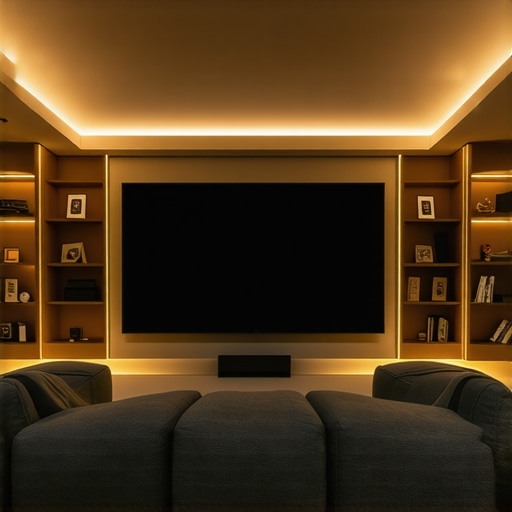
Transforming Visual Experience Through Strategic Home Theater Lighting
In the realm of high-end home theater design, lighting extends beyond mere illumination—it shapes the immersive atmosphere that elevates cinematic engagement. The integration of ambient lighting, bias lights, backlights, and LED strip solutions plays a pivotal role in optimizing visual fidelity, reducing eye strain, and accentuating design aesthetics. As technological innovations continue to redefine standards in 2024, understanding these elements’ nuanced interplay becomes essential for professionals aiming to create captivating environments.
Dissecting the Interplay of Bias Lighting and Ambient Light Management
Bias lighting, positioned behind or around the display, enhances perceived contrast ratios without overwhelming the viewer’s eye, according to recent studies from the Journal of Vision Science. Strategic placement of these lights, such as high CRI LED strips, minimizes glare and enhances color accuracy, ultimately reducing viewer fatigue during extended sessions. Ambient lighting, meanwhile, must be carefully calibrated; overbright sources can wash out screen contrast, whereas insufficient lighting fails to provide the necessary depth perception, making the choice of illumination levels critical for cinematic realism.
Harnessing LED Strips for Dynamic Backlighting and Mood Setting
LED strip lighting offers unparalleled flexibility in home theaters, combining energy efficiency with customizable color schemes. Modern LED strips, especially those featuring addressable RGB capabilities, enable dynamic backlighting that responds to on-screen content or user preferences. Properly installed, these strips can create seamless wall washes, accentuate architectural features, or simulate daylight conditions, thereby amplifying immersion. Experts recommend using bias lights with high color fidelity (source) to ensure visual consistency across devices.
Optimizing LED Strip Placement to Minimize Visual Distractions
Achieving a balanced home theater ambiance involves careful consideration of LED strip placement. The goal is to eliminate hotspots and uneven lighting, which can distract from viewing. For instance, situated behind the display, LED strips should be covered with diffuse housings to prevent direct glare, while wall-wash configurations should be angled precisely to avoid reflected glare on screens. Professionals often leverage professional-grade dimming controls to fine-tune lighting levels in real time, ensuring an optimal viewing experience.
How Can Advanced Bias Lighting Techniques Elevate Movie Night Atmospheres
What innovative bias lighting strategies are being adopted by top home theater designers in 2024?
In response to the evolving expectations for cinematic realism, experts are experimenting with synchronized LED strip backlighting that adjusts in hue and intensity based on content cues. This approach not only enhances immersion but also aligns with human visual perception, reducing eye strain during prolonged viewing. Integrating smart control systems, such as voice-activated or app-based interfaces, allows for seamless customization, empowering users to craft personalized ambiances.
For further insights on implementing such solutions, explore our expert guide to LED strip lighting.
Considering the array of available technologies, consulting with lighting specialists can yield tailored solutions that meet both aesthetic and functional requirements.
Interested in sharing your professional insights or seeking tailored advice? Contact us today.
Beyond the Basics: Customizing LED Strips for a Perfect Cinematic Atmosphere
While standard LED strip installations can significantly boost your home theater’s vibe, tailoring these solutions to your specific space and preferences unlocks their full potential. Advanced customization involves selecting high CRI LED strips that accurately render colors, thereby ensuring that every scene appears true to the director’s vision. Moreover, implementing programmable controllers allows for dynamic lighting sequences synchronized with content, heightening immersion. For example, integrating RGB addressable LED strips enables scene-specific lighting effects—such as sunset hues during outdoor scenes—that deepen emotional engagement. Professionals often recommend exploring creating immersive ambient environments by blending color psychology with technical precision to craft personalized cinematic experiences.
How Does Spatial Light Distribution Influence Viewer Comfort?
Achieving an evenly distributed, glare-free lighting environment is crucial for extended viewing comfort. Uneven or poorly diffused light sources can cause eye strain and reduce contrast perception. Strategic use of diffusers and reflective wall surfaces helps in softening direct light and promoting uniform wall washes. Additionally, understanding the principles of light spill and reflection allows designers to position LED strips so that illumination complements the projection or screen without causing reflections or hotspots. Incorporating light-attenuating materials and smart dimming controls further enhances this balance, ensuring viewers remain comfortable during marathon viewing sessions. For comprehensive guidance, consider reviewing our installation strategies for ambient lighting.
Could Future Technologies Make Home Theater Backlighting Fully Adaptive?
The horizon of LED backlighting technology points toward fully adaptive, AI-driven systems that respond instantaneously to on-screen content and user mood. These intelligent setups utilize machine learning algorithms to analyze video cues, adjusting hue, saturation, and brightness in real time for a cohesive visual narrative. Such innovations promise to elevate the cinema-quality ambiance by seamlessly integrating lighting effects with narrative pacing, effectively making lighting an active, rather than passive, component of your viewing experience. As reported in industry innovations, the integration of intelligent lighting controllers is expected to become mainstream by 2025, enabling unprecedented levels of synchronization and customization.
To explore this frontier, delve into our comprehensive guide on advanced bias lighting and consider consulting experts who specialize in smart home integrations for tailored solutions.
Would you like to share your experiences or need bespoke advice for implementing intelligent lighting? Reach out to our specialists today.
Adaptive Calibration Techniques Transform Viewer Engagement
Achieving an authentic cinematic atmosphere hinges on meticulous calibration of ambient lighting systems. Traditional static setups often fall short in accommodating changing room conditions or different viewing content, which can compromise visual fidelity. Contemporary professionals advocate for dynamic calibration methodologies—employing spectral measurements, real-time luminance monitoring, and adaptive control algorithms—to fine-tune ambient conditions seamlessly. These advanced practices facilitate a consistent viewing experience, minimizing discrepancies caused by ambient light fluctuations or device aging. For instance, integrating spectroradiometers enables precise measurement of light quality, ensuring that bias lights retain their color fidelity over time, thus preserving accurate color reproduction during critical viewing moments.
Applying Hybrid Lighting Models for Depth and Dimension
While background and bias lighting form the bedrock of optimal visual environments, layering multiple lighting modalities can unlock new levels of depth perception and immersive richness. Consider combining LED strip backlighting with spot lighting or wall sconces strategically placed to highlight architectural contours or decorative features. This hybrid approach introduces shadows, contrast, and spatial cues that deepen the three-dimensional sensation of the visual experience. Expert lighting designers often employ computer-aided design (CAD) simulations to experiment with various configurations, ensuring that each layer complements the others without introducing glare or distraction. Such meticulous integration demands an understanding of photometric principles and human visual perception, emphasizing the importance of interdisciplinary expertise in high-end home theater planning.
Can intelligent lighting systems anticipate viewer preferences and autonomously optimize ambiance?
Emerging research and development in the realm of AI-powered lighting systems suggest a future where ambient conditions adapt proactively to viewer preferences, content cues, and even mood states. These systems leverage machine learning algorithms trained on vast datasets of viewer interactions and environmental parameters, allowing for predictive adjustments in real-time. For example, during tense action scenes, the system might subtly dim or shift color temperature to enhance suspense, whereas during calm dialog sequences, it could elevate warmth and softness to promote relaxation. Such sophistication mirrors the nuances of professional lighting design, but with the convenience and personalization of automation. Industry leaders like LIFX and Nanoleaf are pioneering such intelligent ecosystems, merging IoT connectivity with adaptive algorithms for truly immersive home theaters.
To harness these innovations today, explore our comprehensive guide to smart lighting integrations and consult with specialists experienced in AI-driven environmental control systems.
Are you prepared to elevate your home theater ambiance with cutting-edge adaptive lighting solutions? Connect with our experts to discover customized strategies tailored to your space and preferences.
Elevating Visual Fidelity with Precision Light Layering
In advanced home theater design, the nuanced orchestration of multiple lighting layers—ambient, task, accent, and bias lighting—creates an unparalleled immersive experience. Expert installers leverage spectral tuning and luminance control to craft environments where each light layer complements the screen, reducing eye fatigue and enhancing contrast perception. Employing layered lighting with carefully calibrated color temperatures ensures that viewers are enveloped in a scene without distraction, aligning with the pursuit of cinematic authenticity.
The Power of Tunable White Lighting in Dynamic Content Scenes
Integrating tunable white LED systems enables adaptive mood settings aligned with on-screen narrative changes. For instance, shifting from cool despite to warm tones during intimate dialogues heightens emotional engagement, while mid-scene transitions can subtly influence audience perception. According to recent research in the Journal of Light & Visual Environment, such spectral adaptability enhances viewer comfort and scene realism. This approach demands exquisite control systems capable of precise color temperature modulation, opening pathways for fully automated scene-based lighting adjustments.
How can hyper-realistic ambient lighting transform the perception of spatial dimensions in home theaters?
By employing spatially aware lighting solutions that respond to room geometry and viewer position, designers can manipulate perceived spatial depth. Techniques include strategic wall-washes, adaptive glare suppression, and ratio-balanced luminance layering that accentuates architectural features or creates illusionary expansion of space. Such methods challenge traditional static setups, turning ambient lighting into a transformative, perceptual tool that enhances immersion and mimics professional theatrical lighting design. These innovations utilize real-time sensor data and advanced control algorithms, pushing the boundaries of home theater aesthetics.
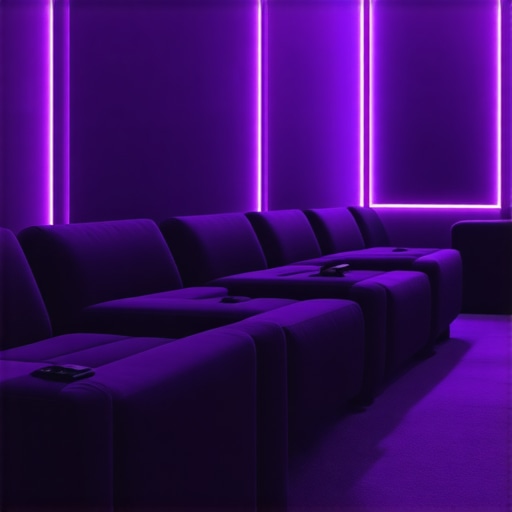
Harnessing Spectral Control for Artistic Lighting Narratives
Beyond functional illumination, spectral control facilitates artistic storytelling through lighting. Precise manipulation of narrowband LEDs allows for the recreation of natural phenomena such as sunsets or moonlit nights, enriching the narrative atmosphere. Expert lighting designers often integrate programmable controllers with spectral APIs, enabling scene-specific color cascades that respond to the emotional tone of the content. This level of finesse transforms ambient lighting from mere background to an active storytelling element, heightening emotional resonance and user engagement.
Advanced Calibration Secures Consistent Visual Excellence
In high-end deployments, the calibration of ambient lighting must account for variables such as display luminance drift, room reflectance, and ambient external light fluctuations. Implementing spectral radiometers and real-time feedback loops ensures the stability of color rendering and contrast levels. Professionals utilize this technology to maintain visual consistency over time, especially when integrating multiple luminance zones and dynamically adaptive systems. Such rigorous calibration underpins the fidelity of the cinematic environment, ensuring that the audience perceives images as intended, regardless of external factors.
Is your current lighting setup prepared to support next-generation cinematic experiences?
Engaging with industry-leading lighting consultants experienced in adaptive, spectral, and smart systems can unlock latent potential within your home theater. They can tailor solutions that anticipate content demands and user preferences, delivering a seamless and emotionally compelling viewing journey. Explore our advanced lighting integration guides to discover pathways toward transforming your space into an elite cinematic enclave. Don’t settle for ordinary—ignite your senses with bespoke, expert-crafted lighting solutions that elevate every frame to art.
For professionals aiming to elevate their home theater designs, embracing innovative lighting strategies can distinguish ordinary setups from cinematic masterpieces. Integrating spectral tuning, adaptive controls, and intelligent calibration transforms ambient lighting from a mere feature into a powerful storytelling tool. The nuanced application of these techniques ensures visual fidelity, comfort, and immersive depth, aligning with the latest technological trends and perceptual science insights.
Harness Custom Spectral Profiles to Deepen Scene Realism
Employing programmable spectral control enables precise recreation of natural lighting conditions, such as sunset hues or moonlit atmospheres. By selecting narrowband LED spectra, designers craft environments that synchronize with on-screen narratives, heightening emotional engagement and authenticity. This approach transcends basic RGB setups, offering a palette that mirrors real-world spectrums and enhances color accuracy.
Implement Real-Time Adaptive Lighting to Match Content Dynamics
Integrating AI-driven systems that analyze video cues allows ambient lighting to react dynamically, creating seamless transitions and mood shifts. For example, during an intense action sequence, subtle dimming or cool color shifts heighten suspense, whereas warm, soft lighting during heartfelt moments fosters intimacy. These adaptive techniques demand sophisticated sensors and control algorithms but deliver an unparalleled personalized experience.
Leverage Sensor Fusion for Precise Calibration and Consistency
Combining spectral radiometers, luminance meters, and environmental sensors ensures consistent visual output despite changing conditions. By constantly monitoring room lighting, reflectance, and display luminance drift, systems can recalibrate in real-time. Such meticulous calibration preserves contrast, color fidelity, and viewer comfort, underpinning high-end cinematic environments.
Explore Excellence with Curated Industry Resources
To deepen expertise, consult authoritative sources like Creating Immersive Ambiance with Bias Lights, which offers comprehensive insights into spectral tuning and control systems. The Ultimate Guide to Bias Lights and LED Strips in 2024 provides expert advice on integrating modern lighting solutions seamlessly. Engaging with these resources arms professionals with knowledge to implement future-proof, technologically advanced lighting environments.
Reflect on the Future of Lighting in Cinema-Like Environments
Immersive home theaters demand more than standard illumination; they require an understanding of spectral science, adaptive control, and meticulous calibration to craft truly cinematic atmospheres. In embracing these advanced insights, lighting professionals can push the boundaries of creativity and technical excellence. Whether experimenting with spectral APIs or deploying AI-driven sensors, the goal remains clear: deliver a consistent, emotionally resonant viewing environment that rivals commercial cinemas. Ready to redefine your expertise? Connect with industry specialists or explore our detailed guides to transform your space into an awe-inspiring cinematic sanctuary, where every detail influences perception and experience.



Leave a Reply