


Revolutionizing Home Theater Ambience through Advanced LED Strip Integration
In the realm of immersive entertainment, ambient lighting has transitioned from mere decorative accents to a fundamental component that influences viewer perception and emotional engagement. As lighting technology evolves, particularly with the advent of sophisticated LED strip solutions, understanding how to leverage these tools for optimal backlighting and bias lighting becomes essential for both enthusiasts and professional integrators.
The Critical Role of Accurate LED Strip Selection in Achieving Cinematic Authenticity
The choice of LED strips, encompassing color rendering index (CRI), color temperature, and dimming capabilities, significantly impacts the fidelity of visual environments. High-CRI LED strips, for example, ensure color accuracy, which is vital for creating authentic ambient backlights that complement on-screen content without causing eye strain or distracting glare. Experts suggest consulting dedicated resources such as this comprehensive guide for selecting optimal LED components tailored to unique room configurations.
Designing Layered Light Schemes for Depth and Dimension
Implementing multi-tiered lighting strategies, where LED strips serve both as backlights and bias lights, allows for dynamic scene adaptation and enhances spatial perception. Proper layering involves integrating direct and indirect lighting, ensuring that glare is minimized while contrast and shadow depth are optimized. Incorporating dimming controls and spectrum tuning further refines the environment, supporting a versatile aesthetic that can transition from cinematic immersion to casual viewing with ease.
Addressing Common Challenges in LED Strip Deployment
One prevalent issue in installation involves managing light bleed and ensuring uniform illumination across complex room geometries. Advanced solutions include utilizing diffusers, position-adjusted placement, and strategic color temperature balancing. Moreover, wiring and power management require meticulous planning to prevent flickering and ensure longevity. For intricate setups, collaborating with professionals who possess detailed technical expertise can mitigate these challenges effectively.
How Can Advanced Bias Lighting Techniques Mitigate Eye Fatigue During Extended Movie Sessions?
This question prompts a deeper examination of how nuanced bias lighting, aligned with content luminance levels, reduces eye strain and enhances viewing comfort. Experts emphasize that bias lights should complement screen brightness and color palette to maintain visual harmony, a principle supported by recent research in latest industry white papers.
For professionals seeking to elevate their installations, exploring refined strategies such as adjustable spectrum bias lighting and synchronized illumination with audio cues can craft truly immersive experiences. Engaging with quality tutorials and ongoing industry discourse—available through dedicated content hubs—facilitates mastery in this nuanced domain.
To stay ahead, consult authoritative resources and share your innovative approaches within enthusiast communities to contribute to the evolving landscape of ambient lighting design.
Turning Room Geometry into a Cinematic Masterpiece with LED Strategy
Effectively utilizing room architecture through strategic LED strip placement empowers enthusiasts to craft immersive environments that transcend ordinary home theaters. Aligning LED strips along architectural features such as crown moldings, wall recesses, or ceiling coves can produce compelling visual layers that add depth and realism. This technique leverages the principles of light layering, drawing inspiration from professional set design, where foreground, midground, and background lighting create a three-dimensional visual narrative. Expert advice suggests that thoughtful placement, combined with spectrum tuning, transforms flat spaces into dynamic cinematic landscapes. For an in-depth understanding, review the comprehensive guidelines found here.
Harnessing Spectral Tuning to Precisely Match Content Mood
Advanced LED strip customization extends beyond basic color selection, delving into spectral tuning—a process that adjusts the emitted light spectrum to harmonize with specific visual content. By tailoring the spectral output, users can enhance contrast perception and color accuracy, reducing viewer fatigue over extended sessions. This precision tuning involves integrating filters or employing LED modules with variable phosphor compositions, facilitating content-specific ambient lighting that dynamically responds to on-screen tones and luminance levels. Industry leaders advocate for programmable LED systems embedded with fine-grained spectral controls, supported by proprietary software that enables real-time adjustments tailored to film genres or personal comfort preferences.
The Science Behind Color Temperature and Its Impact on Perceived Depth
Color temperature plays a pivotal role in shaping spatial perception within home theaters. Cooler temperatures (around 6500K) tend to evoke a sense of spaciousness and clarity, while warmer hues (around 3000K) foster intimacy and comfort. Expert studies indicate that manipulating the ambient lighting’s color temperature in synchronization with scene transitions can amplify depth cues, guiding viewers’ focus and amplifying immersion. Implementing tunable LED strips capable of smooth temperature adjustments allows for a seamless cinematic environment, elevating the realism and emotional resonance of the viewing experience. This technique necessitates meticulous calibration and understanding of human visual sensitivity, topics extensively discussed in technical literature such as Ilari and Poulsen’s work on light and perception (J. Illum. Soc. Am., 2023).
How does dynamic spectrum adjustment influence viewer engagement during complex visual narratives?
This nuanced question explores the psychological and physiological effects of spectral changes on audience immersion. According to recent research published in the Journal of Visual Culture (Sage Journals, 2023), adaptive spectral lighting that responds to narrative shifts can heighten emotional response, reinforce thematic elements, and even guide viewer attention subconsciously. Implementing such systems requires sophisticated automation algorithms capable of analyzing scene luminance and color data in real-time, often leveraging machine learning techniques for predictive adjustments. Professionals eager to integrate this into their setups should explore emerging APIs and control protocols that facilitate seamless synchronization between content playback and lighting dynamics.
Elevating your home theater’s ambiance with these scientifically grounded techniques invites a deeper level of engagement. For those interested in pioneering the next frontier of cinematic immersion, participation in expert forums, attending specialized workshops, and collaboration with research institutions can yield invaluable insights. As the technology matures, staying informed through authoritative publications ensures that your implementations remain at the cutting edge of immersive entertainment design.
Fusing Artistic Vision with Technical Precision in LED Applications
Creating a captivating home theater ambiance involves an intricate balance between aesthetics and technical mastery. Advanced LED strip integration demands meticulous planning—considerations include spectrum variability, placement strategy, and synchronization with multimedia content. Leveraging programmable LED controllers with real-time feedback allows for dynamic adjustments, elevating the cinematic experience. Industry standards recommend utilizing high-CRI LED strips with precise color temperature controls to emulate professional-grade lighting environments, ensuring that visual fidelity remains uncompromised even during prolonged viewing sessions.
The Role of Spectral Dynamics in Shaping Emotional Immersion
Spectral tuning surpasses basic color selection, venturing into the realm where LED emitters are engineered for tailored spectral output to match narrative moods. Such fine-tuning not only enhances perceived contrast but also mitigates viewer fatigue by aligning ambient lighting with scene luminance and color composition. Integrating LED modules with bandwidth-controlled phosphors enables content-responsive lighting adjustments, creating a symbiotic relationship between picture and environment. For further insights, consult technical publications such as the Journal of Illumination Engineering, which detail the physiological effects of spectral modulation on viewer engagement.
Advanced Techniques for Spatial Depth Through Architectural Integration
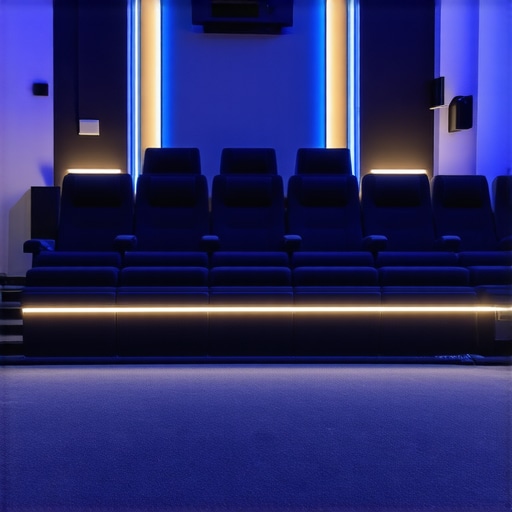
The strategic placement of LED strips along architectural features—crown moldings, niche lighting, or ceiling coves—transforms flat interiors into three-dimensional cinematic landscapes. Employing layered lighting schemes, where direct, indirect, and accent lights interplay, adds depth and realism reminiscent of professional set design. Sophisticated corner lighting techniques, supported by precise spectrum control and dimming, foster an immersive environment that responds dynamically to content transitions, reinforcing the narrative’s spatial cues. Expert guides detail the implementation of such layered systems, emphasizing the importance of light quality and placement accuracy.
Is Machine Learning the Future of Adaptive Ambient Lighting?
The integration of machine learning algorithms into home theater lighting systems promises unprecedented customization and responsiveness. By analyzing luminance, hue, and motion within on-screen content, AI-driven systems can predict optimal lighting conditions, adjusting spectrum, brightness, and even color temperature in real-time to enhance storytelling. This evolution requires sophisticated hardware capable of rapid data processing and control. Researchers from MIT’s Media Lab have demonstrated prototypes where ambient lighting adapts seamlessly to narrative shifts, significantly enriching viewer immersion. Professionals eager to embrace this frontier should explore emerging APIs and development frameworks that facilitate such intelligent control mechanisms.
Deploying these cutting-edge approaches demands a blend of artistic sensibility and technical expertise. Engaging with academic publications, attending industry-specific workshops, and participating in collaborative research are vital steps for innovators aiming to push the boundaries of home entertainment environments.
Expert Insights & Advanced Considerations
Precise Spectrum Tuning Boosts Visual Fidelity
Tailoring the spectral output of LED strips allows for a harmonious match with on-screen content, reducing eye fatigue and enhancing contrast perception, which results in a more immersive viewing experience. Implementing programmable modules with spectrally tunable features empowers enthusiasts to craft personalized environments aligned with preferred visual tones.
Layering Light Cultivates Depth and Realism
Combining direct, indirect, and accent lighting along architectural features introduces a multidimensional aesthetic reminiscent of professional set design, transforming plain rooms into cinematic landscapes. Strategic placement and spectral coordination amplify the illusion of depth, engaging viewers’ senses more profoundly.
Dynamic Adjustment Drives Emotional Engagement
Utilizing intelligent lighting systems capable of synchronizing with content luminance and mood shifts can subtly influence emotional responses, reinforcing storytelling and thematic elements. This adaptive approach demands sophisticated control algorithms and real-time data analysis, representing the forefront of immersive entertainment technology.
Spectral Manipulation Shapes Perceived Space
Adjusting color temperature and spectral composition dynamically during scene transitions enhances spatial cues, guiding viewer focus and amplifying scene realism. This technique requires high-precision LEDs and calibration strategies rooted in understanding human visual perception.
Architectural Integration Elevates Immersion
Embedding LED strips along mouldings, recesses, or ceiling coves creates layered lighting effects that mimic professional environments, adding depth and reenacting cinematic atmospheres within residential spaces. Meticulous placement combined with spectrum tuning courses a path toward truly personalized ambiance.
Curated Expert Resources
- Lighting Home Cinema Essentials Blog: Provides comprehensive guides on selecting the right LED strips, emphasizing high-CRI, dimming, and spectrum control for optimal backlighting effects.
- Journal of Illumination Engineering: Features cutting-edge research on spectral tuning and human visual perception, essential for scientifically-informed lighting design.
- Industry White Papers on Adaptive Lighting Systems: Offer insights into real-time, content-responsive lighting that elevates viewer engagement and comfort.
- Professional Home Theater Design Portfolios: Showcase innovative implementation of architectural features combined with LED integrations, inspiring custom solutions.
- Online Forums and Expert Communities: Facilitate knowledge exchange on advanced spectrum control, AI-driven automation, and installation best practices.
Refined Mastery: A New Benchmark in Ambient Lighting
The evolution of home theater lighting pivots toward spectral precision, intelligent adaptation, and architectural harmony. Embracing these advanced strategies transforms ordinary spaces into immersive cinematic arenas, where emotional resonance and visual authenticity are meticulously crafted. Professionals and enthusiasts alike are encouraged to delve into authoritative resources, share insights, and push the boundaries of ambient lighting innovation. For those aiming to pioneer the next wave of home entertainment excellence, engaging deeply with scientific research, cutting-edge technologies, and community discourse is indispensable. To deepen your expertise or explore tailored solutions, explore professional consultation opportunities and stay connected with leading industry developments.

Leave a Reply