

Transform Your Viewing Experience with Expert-Recommended Ambient Lighting Strategies
In the pursuit of achieving cinematic perfection within a home environment, the integration of sophisticated ambient lighting—particularly bias lights and LED strip systems—has become a cornerstone of high-end home theater design. These lighting solutions do more than enhance aesthetics; they fundamentally influence visual comfort, reduce eye strain during prolonged viewing, and amplify the immersive quality of your space. As we advance into 2024, understanding the nuanced interplay of backlight, bias lights, and ambient LED lighting becomes essential for discerning enthusiasts seeking optimal results.
Why Precision in Bias Light Placement Enhances Visual Fidelity
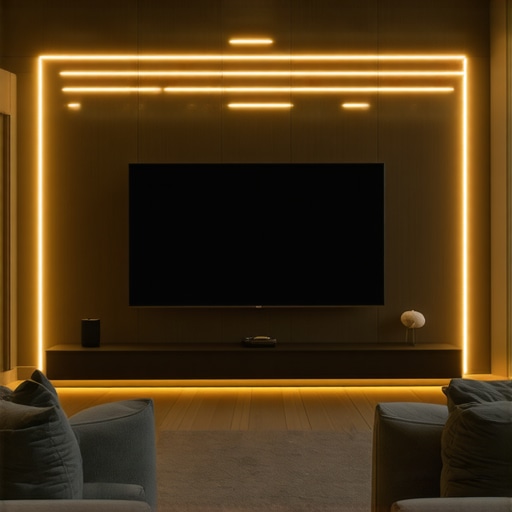
Bias lighting, positioned behind or around your display, acts as a visual anchor that minimizes the contrast between the screen and dark surroundings, thereby reducing eye fatigue and improving perceived contrast. Expert installations often leverage adjustable, color-calibrated LED strips to tailor the ambiance dynamically, aligning with content mood and personal preference. For example, neutral or warm white bias lights are favored for their non-intrusive, soothing effects, while RGB LED strips enable versatile color schemes that can sync with content for a more engaging experience. The key is strategic placement—integrating bias lights seamlessly into the room’s architecture for maximum efficacy.
Advanced LED Strip Technologies and Their Impact on Ambient Dynamics
Modern LED strip innovations, such as addressable RGBW strips, offer granular control over color zones, allowing for sophisticated lighting effects that respond to on-screen action or ambient sound cues. These capabilities are critical for creating a cohesive, immersive environment. When selecting LED strips, considerations extend beyond brightness and color to include diffusion quality, power consumption, and compatibility with smart home systems. Proper integration with home automation not only simplifies control but also enables complex lighting scenes that elevate the overall cinematic ambiance.
What Are the Key Challenges in Achieving Seamless Backlight Integration?
How can homeowners ensure their LED installations do not distract from the viewing experience while maximizing aesthetic appeal?
Achieving a seamless backlight or bias lighting setup involves meticulous planning and professional-grade installation techniques. Experts recommend using high-quality, diffused LED strips installed with precision to prevent hotspots or uneven lighting. Additionally, calibration tools—like spectrometers—are employed to match the color temperature of bias lights with the room’s overall lighting scheme, ensuring visual harmony. The challenge often lies in balancing brightness levels to avoid glare or distraction, which can be mitigated through dimming controls and scene-based presets.
For a deeper understanding of optimal bias lighting practices, consult the comprehensive Ultimate Guide to Bias Lighting LED Strips.
To elevate your expertise further, explore innovative ambient lighting ideas that push the boundaries of traditional setups by visiting Top Ambient Lighting Ideas for a Cinema-Quality Setup.
Interested in customizing your home theater environment? Contact our experts for tailored advice on integrating backlight and ambient lighting solutions that transform your space into a true cinematic sanctuary.
Crafting a Cohesive Lighting Ecosystem for Home Theaters
Creating an immersive home theater experience extends beyond selecting the right screen and sound system. It involves designing a comprehensive lighting ecosystem that complements your setup, enhances visual comfort, and elevates the overall ambiance. Integrating multiple layers of lighting—such as ambient, backlight, and bias lights—requires strategic planning and a nuanced understanding of how these elements interact. Expert insights suggest that layering lighting with different color temperatures and control schemes can significantly improve the perception of depth and realism in your viewing environment. For detailed guidance, see the Ultimate Guide to Backlight and Ambient Lighting.
Leveraging Smart Controls for Dynamic Atmospheres
One of the most significant advancements in home theater lighting is the advent of smart control systems. These systems enable users to automate lighting scenes, synchronize with content, and adjust brightness and color with voice commands or mobile apps. The ability to create personalized scenes—such as a dim, warm glow for drama or vibrant colors for gaming—adds a layer of customization that enhances immersion and comfort. For example, integrating LED strips with home automation hubs allows for seamless transitions and scene recall. To discover how to optimize your setup, visit Expert LED Strip Lighting Tips.
What Are the Hidden Pitfalls of Over-Illuminating Your Space?
While it might seem intuitive to brighten your home theater for safety or aesthetic reasons, excessive illumination can be counterproductive. Overly bright ambient lighting can cause reflections on screens, reduce contrast, and diminish the cinematic feel. Balancing light levels is crucial—using dimmable fixtures and scene-specific presets helps maintain visual harmony. Additionally, choosing diffuse, indirect lighting prevents harsh glare and hotspots that distract from the viewing experience. For practical advice on avoiding these common pitfalls, consult the Bias Lighting Techniques.
If you’re eager to push your setup further, consider exploring innovative lighting ideas that incorporate tunable white and color-changing LED strips to achieve the perfect mood. Share your experiences or ask questions in the comments—your insights might help others elevate their home theater environments.
Integrate Multi-Layered Lighting for a Cohesive Viewing Environment
Creating an immersive home theater involves more than just a high-quality display and sound system; it requires a sophisticated approach to lighting design. By layering ambient, bias, and backlighting, homeowners can craft an environment that enhances visual depth, reduces eye strain, and elevates cinematic immersion. The key lies in understanding how these layers interact and tailoring each to complement specific content and room characteristics. Expert strategies include using diffused LED strips with adjustable color temperatures and integrating them with smart home systems for seamless control. This multi-tiered approach ensures your space not only looks stunning but also functions optimally during prolonged viewing sessions.
Harnessing the Power of Dynamic Lighting Scenes for Different Content Types
One of the most advanced techniques in ambient lighting is programming dynamic scenes that adjust automatically based on the content being viewed. For instance, dim warm whites for drama and bright, vibrant hues for gaming or action movies. Modern LED systems equipped with addressable RGBW strips and compatible control hubs allow for precise scene recall, creating an environment that adapts on-the-fly. This level of customization necessitates a nuanced understanding of color psychology, luminance levels, and content-specific requirements. Moreover, integrating sensors that detect ambient light changes can further refine these scenes, ensuring consistent visual comfort regardless of external lighting conditions. This approach transforms your home theater into a living, breathing ecosystem that responds intuitively to your entertainment needs.
How can homeowners calibrate their ambient lighting to match the room’s unique characteristics for optimal contrast and color accuracy?
Calibration is the cornerstone of achieving perfect ambient lighting. Professionals often employ spectrometers and colorimeters to measure the light output and ensure it aligns precisely with the room’s existing color temperature and luminance levels. Using calibration tools, homeowners can fine-tune LED strip settings—adjusting brightness, hue, and saturation—to match the room’s reflective surfaces and the display’s capabilities. Additionally, software solutions like DMX controllers or dedicated home automation apps facilitate scene-specific adjustments, allowing for a harmonious visual experience. Regular calibration, especially after changes in furniture, wall paint, or lighting fixtures, maintains this harmony over time. For the most accurate results, consulting with a lighting specialist or audiovisual expert is recommended, ensuring your calibration process accounts for room-specific variables and content types.
Innovative Bias Lighting for Enhanced Visual Dynamics
Implementing precision-calibrated bias lighting that adapts to content and ambient conditions can dramatically elevate your viewing experience. Modern systems utilize high-resolution, addressable LED strips with dynamic color temperature adjustment, ensuring seamless integration with your display’s luminance profile. This approach not only minimizes eye strain but also enhances perceived contrast, making dark scenes more immersive. For optimal results, consider employing spectrometric calibration tools to fine-tune color accuracy and luminance levels, aligning your bias lights precisely with your room’s reflective qualities.
Harnessing the Power of Tunable White and RGBW LED Technologies
Cutting-edge LED strip innovations, such as tunable white and RGBW (Red, Green, Blue, White) systems, offer unparalleled control over ambient lighting. These technologies enable the creation of sophisticated lighting scenes that respond dynamically to content, mood, and time of day. When integrated with advanced home automation platforms, they facilitate scene recall and real-time adjustments, producing an environment that adapts seamlessly to your cinematic needs. This level of control is essential for achieving a truly professional-grade home theater ambiance.
How to Ensure Backlighting Does Not Distract from the Screen
What are the best practices for achieving a seamless and distraction-free backlight setup?
Creating a cohesive backlight involves meticulous planning and professional-grade installation. Use diffused, high-quality LED strips installed with precision to eliminate hotspots and uneven lighting. Incorporate dimming controls and scene presets to maintain optimal brightness levels that complement your content without causing glare or reflections. Employing calibration tools like spectrometers ensures the color temperature matches your room’s environment, fostering harmony between the backlight and display. Regular adjustments and calibration are vital, especially if the room’s layout or lighting conditions change over time.
For comprehensive guidance on backlight integration, consult the Ultimate Guide to Bias Lighting LED Strips. To push your setup further, explore innovative ambient lighting concepts that leverage real-time content synchronization and adaptive control systems.
Building a Layered Lighting Ecosystem for Depth and Comfort
Developing a sophisticated lighting ecosystem involves layering diverse lighting types—ambient, bias, and accent—to craft an environment that enhances depth perception and minimizes eye fatigue. Expert strategies emphasize the importance of selecting fixtures with adjustable color temperatures and integrating them with smart home controllers for scene-specific adjustments. This layered approach not only elevates visual realism but also provides functional benefits, such as reducing glare and reflections, especially during prolonged viewing sessions.
Creating Atmosphere with Dynamic Scene Control
Incorporating intelligent scene management transforms static lighting setups into dynamic environments. Programmable scenes that automatically adjust based on content type—such as warm tones for drama or vibrant hues for action movies—add a personalized touch to your theater. Leveraging addressable RGBW LED strips and compatible automation hubs allows for precise scene recall and real-time modifications. Integrating ambient light sensors further refines this process, ensuring consistent visual comfort regardless of external lighting conditions. This technological synergy makes your home theater a responsive and immersive sanctuary.
How can calibration techniques improve the harmony between ambient lighting and display performance?
Calibration methodologies involving spectrometers and colorimeters are essential for achieving perfect harmony. By measuring the room’s reflective surfaces and the display’s luminance output, homeowners can adjust LED strip settings—brightness, hue, and saturation—for optimal compatibility. Software tools like DMX controllers or dedicated automation apps facilitate scene-specific fine-tuning, ensuring that ambient lighting complements rather than competes with the display. Regular recalibration, especially after room modifications, maintains this delicate balance. Consulting with professional AV and lighting specialists guarantees the highest fidelity and consistency in your cinematic environment.
Expert Insights & Advanced Considerations
High-Precision Calibration Elevates Visual Fidelity
Achieving professional-grade calibration with spectrometers and colorimeters ensures your bias lights and LED strips perfectly match your display’s luminance and color temperature. This meticulous process minimizes discrepancies, resulting in a harmonious visual experience that reduces eye strain and enhances contrast.
Dynamic Scene Programming Transforms Viewing Atmospheres
Implementing intelligent scene management with addressable RGBW LED strips allows your environment to adapt seamlessly to content types—vivid hues for action movies, warm tones for dramas—boosting immersion and emotional impact through real-time adjustments.
Layered Lighting Fosters Depth and Comfort
Designing a multi-layered lighting ecosystem, combining ambient, bias, and accent lights with adjustable color temperatures, creates a sense of depth and reduces glare. Integration with smart controls ensures effortless scene switching and personalized ambiance.
Harnessing Content Synchronization for Enhanced Realism
Utilize sensors and automation to synchronize lighting effects with on-screen content, creating an immersive, responsive environment that elevates cinematic experiences and minimizes distractions from external light fluctuations.
Curated Expert Resources
- Ultimate Guide to Bias Lighting LED Strips — An authoritative resource on calibration, placement, and advanced lighting techniques for home theaters.
- Top Ambient Lighting Ideas for a Cinema-Quality Setup — Innovative concepts and creative integrations to elevate your lighting design.
- Effective Home Theater Lighting with Bias Lights and LED Strips — Practical tips backed by industry experts for seamless installation and operation.
- Home Theater Light Calibration Tools — Insights into spectrometers, colorimeters, and automation software for precise calibration.
Final Expert Perspective
Mastering ambient lighting with an expert’s eye transforms your home theater into a true cinematic sanctuary. Precise calibration, intelligent scene management, and layered design are the pillars of a sophisticated setup that maximizes visual comfort and immersion. Dive into these advanced strategies and explore the recommended resources to elevate your audience experience to professional standards. For personalized guidance or to share your innovations, connect with our specialists and continue pushing the boundaries of home theater excellence.
,



Leave a Reply