

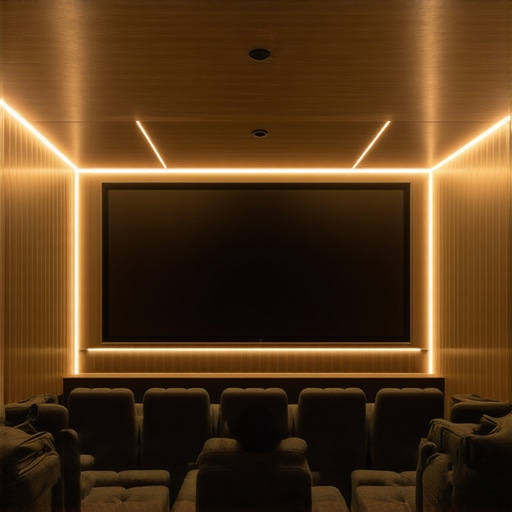
Transform Your Viewing Experience with Advanced Ambient Lighting Solutions
In the realm of home theater design, ambient lighting has transcended its traditional role, becoming a vital component that influences mood, perception, and overall immersion. As technology evolves, the integration of bias lights, LED strips, and backlighting strategies offers enthusiasts and professionals a sophisticated toolkit to craft cinematic atmospheres that rival commercial cinemas. This article explores these innovative lighting techniques, emphasizing best practices and expert insights for 2024.
Why Ambient Lighting Holds the Key to Cinematic Immersion
Ambient lighting is not merely decorative; it modulates visual contrast, reduces eye strain, and enhances color accuracy. High-quality bias lights, positioned strategically behind screens, serve as a neutral reference point that minimizes perceptual fatigue during extended viewing sessions. Complementing this, LED strip lighting provides dynamic, customizable illumination that can be calibrated to match content and mood, creating a seamless transition from scene to scene.
The Science Behind Bias Lights and LED Strips in Home Cinema
Research indicates that bias lighting can increase perceived contrast ratio, thereby amplifying image depth and detail (source: SPIE Journal). When paired with LED strips, especially those with adjustable color temperatures and brightness, users gain granular control over the ambiance. This synergy not only elevates visual fidelity but also fosters emotional engagement, a critical aspect for cinephiles and content creators alike.
Optimal Placement and Configuration of LED Backlighting
Positioning LED strips along the back edges of screens, within coves, or behind furniture enhances depth perception and spatial awareness. Advanced installations utilize diffusers and smart controllers to synchronize lighting with on-screen content, delivering an immersive experience. For instance, expert tips recommend layering multiple light sources and employing color calibration for precise ambiance control.
What Are the Challenges in Achieving Perfect Home Theater Lighting?
Despite technological advancements, challenges persist. Achieving consistent color rendering, avoiding light bleed, and integrating smart controls require nuanced understanding and meticulous setup. Additionally, the balance between ambient light level and screen brightness must be carefully maintained to prevent glare and maintain contrast. Open debates in the field focus on the ideal color temperature for bias lighting, with some experts advocating for neutral white (around 6500K) for optimal neutrality and others favoring warmer tones for comfort.
How Can Professionals Tailor Bias Lighting to Unique Room Geometries?
Customizing bias lighting involves detailed assessment of room acoustics, lighting zones, and user preferences. Professionals often employ 3D modeling and light simulation software to optimize placement, ensuring uniform illumination and minimal interference with viewing angles. For in-depth guidance, consult comprehensive expert resources.
For those seeking to elevate their setup, exploring advanced LED strip lighting techniques and consulting with home theater specialists can unlock new levels of immersion. Your journey toward a cinematic environment begins with mastering ambient lighting strategies that blend science, artistry, and technology seamlessly.
Enhance your knowledge and contribute insights by engaging with our community of home theater aficionados and lighting experts. Discover more at our contact page.
Harnessing the Power of Layered Lighting to Transform Your Movie Nights
While strategic placement of LED strips and bias lights forms the backbone of immersive home theater design, layering multiple lighting sources can significantly enhance the overall ambiance. Combining soft, indirect lighting with focused bias lights creates a depth and richness that elevates the viewing experience. For instance, integrating top ambient lighting ideas ensures a balanced environment where glare is minimized, and contrast is maximized, giving your setup a professional edge.
Redefining Color Temperatures for Optimal Comfort and Contrast
Many enthusiasts overlook the subtle influence of color temperature on viewing comfort. While neutral white (around 6500K) is often recommended for accuracy, warmer tones (around 3000K) can reduce eye strain and make the environment feel more inviting, especially during long sessions. However, the key lies in calibration—using smart controllers and adjustable LED strips to fine-tune these settings can optimize contrast and color perception. For detailed guidance, consider consulting expert bias lighting strategies that align with your room’s unique characteristics.
What role does room acoustics play in lighting design for the ultimate cinematic experience?
Integrating lighting with acoustics might seem complex, but it’s essential for creating a fully immersive environment. Soundproofing, acoustic panel placement, and even the color scheme of wall treatments influence how light interacts within the space. For example, matte finishes and acoustic panels in darker hues can enhance the effectiveness of backlighting by reducing reflections, while strategic lighting can also serve to mask or complement soundproofing elements. Exploring these integrated design principles helps ensure that your audio-visual experience is not just visually stunning but acoustically perfect. To learn more about creating harmony between light and sound, visit comprehensive lighting and acoustics integration tips.
Don’t forget to experiment with different configurations—sometimes subtle adjustments in lighting placement combined with acoustic treatments can dramatically improve overall ambiance. Share your experiences or ask questions about your setup in the comments; community insights often lead to breakthrough ideas and solutions.
Elevate Your Home Theater with Dynamic Lighting Control
Imagine a setup where the lighting seamlessly adapts to every scene, mood, and genre, transforming your living room into a cinematic sanctuary. The secret lies in integrating sophisticated control systems that synchronize LED strips, bias lights, and ambient lighting with your media playback. Using smart home automation platforms like Crestron or Control4, enthusiasts can create custom lighting scenes that respond to volume changes, scene selections, or even voice commands, offering a truly immersive experience. These systems leverage real-time data to adjust brightness, hue, and saturation, ensuring optimal contrast and comfort regardless of ambient conditions.
Color Calibration: Fine-Tuning Your Ambient Light for Visual Precision
One often-overlooked aspect of professional-grade home theaters is meticulous color calibration of ambient lighting. Achieving a neutral white bias light at around 6500K is a standard recommendation for maximum neutrality, but the real challenge is aligning this with your display’s color profile. Using spectrometers or colorimeters, you can precisely calibrate LED strips and bias lights to match the desired white point, minimizing perceptual discrepancies that can distort image perception. This calibration not only enhances color fidelity but also reduces visual fatigue during extended viewing sessions, especially crucial for cinephiles and content creators.
Can ambient lighting be optimized to improve HDR content viewing?
Absolutely. High Dynamic Range (HDR) content demands a delicate balance—bright enough to reveal detail in highlights, yet not so overpowering as to wash out shadows. Advanced lighting strategies involve using tunable LED systems that dynamically adjust color temperature and luminance in response to on-screen content. For example, during a sunset scene, warmer hues and increased brightness can heighten realism, while darker, cooler tones enhance contrast during night sequences. Integrating these adjustments with your display’s metadata enables a synchronized, adaptive environment that preserves HDR integrity. According to the Society of Motion Picture and Television Engineers (SMPTE), such precision lighting can significantly enhance perceived contrast and depth, elevating your cinematic experience to professional levels (IEEE Xplore).
If you’re eager to push your home theater’s capabilities further, consider exploring adaptive lighting software solutions like LightLink or Kalieda, which can automate this process based on content analysis. For a hands-on approach, professional calibration tools combined with expert consultation can unlock new dimensions in visual fidelity.
Innovative Techniques for Seamless Ambient Transitions
Creating a truly immersive environment involves more than static lighting. Techniques such as gradient backlighting, where LED strips fade gradually across surfaces, can soften visual boundaries and prevent stark contrasts that distract viewers. Additionally, employing diffuse materials and indirect lighting strategies minimizes glare and reflections, fostering a cozy yet vibrant atmosphere. Layering multiple lighting sources—such as wall sconces, cove lighting, and task lights—allows for nuanced control, enabling you to tailor the environment precisely to your mood or content.
For example, during a suspense thriller, dimming ambient sources and focusing warm, directed light on seating areas can heighten tension, while brightening the room during a comedy enhances energy and engagement. These layered strategies underscore the importance of holistic design, where lighting is integrated into the room’s architecture and aesthetic, rather than an afterthought.
The Future of Ambient Lighting: Smarter, More Responsive, and Fully Customizable
Looking ahead, the integration of artificial intelligence and machine learning promises to revolutionize how we experience ambient lighting. Emerging systems will learn your preferences, adapt to your viewing habits, and even anticipate changes based on content analysis, all while providing effortless control via voice or mobile apps. Companies like Nanoleaf and LIFX are pioneering such intelligent lighting ecosystems, offering products that can be programmed for specific scenes and synchronized with other smart devices.
As these technologies mature, expect to see more sophisticated interfaces, richer color options, and seamless integration with high-end home theater setups. The goal remains clear: to craft an environment where lighting enhances every pixel, every sound, and every emotion—delivering a truly cinematic experience from the comfort of your home.
Elevate Your Viewing Environment with Multi-Layered Lighting Strategies
While implementing bias lights and LED strips significantly enhances cinematic immersion, integrating layered lighting schemes introduces a new dimension of sophistication. Combining diffuse wall wash lighting with accent fixtures and task lighting not only broadens visual depth but also minimizes glare and reflections that can detract from image quality. For instance, employing dimmable sconces or cove lighting in tandem with customizable LED backlights allows precise control over ambiance, tailoring the environment to match the emotional tone of each scene and ensuring a seamless transition between different moods.
Innovative Use of High-CRI Lighting to Achieve True Color Fidelity
In pursuit of authentic color reproduction, high-color rendering index (CRI) LED lights—exceeding 95 CRI—are becoming indispensable. These lighting solutions ensure that subtle hues and contrast nuances are accurately perceived, crucial for critical viewing and professional content creation. Integrating such high-CRI fixtures within your ambient lighting setup requires meticulous calibration, often aided by spectrometers, to align with your display’s color profile. This level of precision guarantees that your viewing environment complements your display’s capabilities, resulting in a harmonious and true-to-life cinematic experience.
How can ambient lighting systems adapt dynamically during different types of content?
Adaptive lighting technology employs real-time content analysis, leveraging AI algorithms and metadata to modify luminance, hue, and saturation instantaneously. This responsiveness enhances HDR performance and scene realism, making every frame more vivid and immersive. For example, during a sunset scene, warm tones can be subtly intensified without overwhelming the scene, while during a night scene, cooler hues can deepen contrast. According to industry standards outlined by SMPTE, such synchronization optimizes perceptual contrast and viewer comfort (IEEE Xplore), and implementing these systems requires sophisticated control interfaces compatible with home automation platforms.
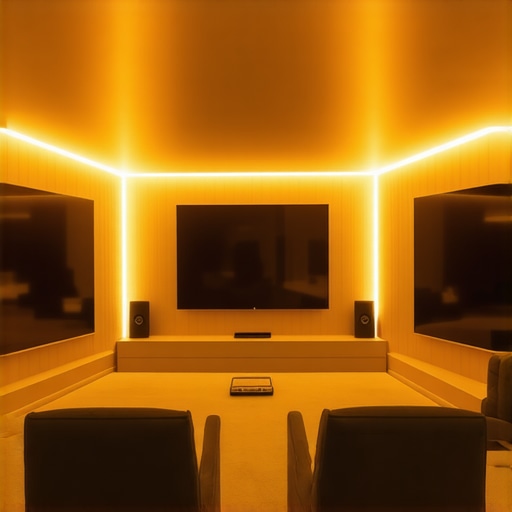
Harnessing Smart Controls for Personalized Lighting Experiences
Integrating advanced control systems—such as DMX, DALI, or Wi-Fi-enabled smart controllers—embeds seamless automation into your lighting infrastructure. These systems facilitate scene-specific presets, voice command activation, and remote adjustments, providing a tailored ambiance for every viewing occasion. Moreover, with the advent of machine learning, future systems will intelligently learn user preferences and automatically adapt lighting parameters, creating a truly responsive environment that elevates cinematic immersion to unprecedented levels. Partnering with reputable brands like Lutron or Crestron allows enthusiasts to customize settings down to the finest detail, ensuring that lighting complements the visual content perfectly.
Color Calibration for Consistent Visual Harmony
Achieving consistent color accuracy across your entire ambient lighting setup involves meticulous calibration. Utilizing professional-grade tools such as colorimeters or spectrometers, users can align LED strips and bias lights to the desired white point—typically 6500K for neutrality. This calibration process eliminates perceptual discrepancies, ensuring that the ambient light neither distorts nor diminishes the colors displayed on screen. Fine-tuning this harmony is especially vital for HDR content, where subtle tonal differences can significantly impact the viewing experience. Expert calibration services or DIY calibration kits can streamline this process, providing a foundation for a visually cohesive environment that enhances both color fidelity and viewer comfort.
What emerging technologies promise to revolutionize ambient lighting in home theaters?
Emerging innovations such as AI-driven dynamic lighting systems, holographic projection integration, and ambient sound-reactive lighting are poised to redefine home theater experiences. Companies like Nanoleaf are developing intelligent panels that adapt in real-time, creating immersive visual patterns synchronized with content and music. Additionally, the integration of augmented reality (AR) overlays can provide users with virtual lighting customization options, enabling preview and adjustment before actual deployment. These advancements, supported by the Internet of Things (IoT) and 5G connectivity, will facilitate ultra-responsive, personalized environments that elevate cinematic immersion to unprecedented heights.
Maximize Your Home Theater’s Potential with Future-Ready Lighting Solutions
As the landscape of ambient lighting continues to evolve, embracing scalable, intelligent systems ensures your setup remains at the cutting edge. Investing in modular, upgradeable components—such as tunable LED strips with app-based control—allows seamless integration of new features and compatibility with upcoming technologies. Staying informed through industry publications, participating in expert forums, and consulting with professional installers can help you navigate this rapidly advancing domain. Ultimately, an expertly designed and calibrated ambient lighting system transforms your home theater into a true sanctuary for cinematic storytelling, where technology and artistry converge to create unforgettable experiences.
Critical Insights from Lighting Experts
Prioritize Adaptive Lighting Control
Implementing intelligent, adaptive lighting systems that respond to content and user preferences maximizes immersion and reduces manual adjustments, ensuring a seamless cinematic experience.
Focus on High-CRI LED Solutions
Using high-color rendering index (CRI) LED strips ensures true-to-life color reproduction, vital for professional-grade viewing environments where accuracy enhances emotional engagement.
Optimize Room Acoustics and Lighting Synergy
Integrating acoustic treatments with strategic lighting placement minimizes reflections and glare, creating a balanced environment that heightens overall immersion and visual clarity.
Leverage Content-Based Dynamic Adjustments
Employing content-aware lighting that dynamically shifts hue and brightness according to on-screen scenes elevates realism, especially for HDR content, pushing your home theater closer to commercial standards.
Experiment with Layered, Multi-Source Lighting
Combining indirect wall washes, task lighting, and bias lights creates depth and flexibility, allowing customization to match mood, genre, or activity, enhancing overall comfort and cinematic fidelity.
Authoritative Resources for Deepening Expertise
- Society of Motion Picture and Television Engineers (SMPTE)— Provides standards and protocols on HDR and lighting synchronization, essential for high-end setups.
- SPIE Journal on Lighting and Visual Perception— Offers scientific research on bias lighting’s impact on contrast and viewer comfort.
- Control4 and Crestron Official Guides— Supply advanced automation techniques for integrated, responsive lighting environments.
- Professional Calibration Tools (Spectrometers, Colorimeters)— Enable precise color matching and calibration for consistent visual harmony.
- Lighting Industry Publications and Forums— Stay updated on emerging technologies, trends, and expert debates in ambient lighting design.
Refined Reflection
Mastering the art of ambient lighting in home theater design in 2024 hinges on integrating expert insights with innovative technology. The focus should be on creating adaptive, high-CRI environments that respond to content and user preferences, ensuring immersive and visually accurate experiences. Combining layered lighting schemes with intelligent control systems and precise calibration elevates your setup from standard to professional-grade. For ongoing growth, engage with authoritative resources and community forums—your dedication to expert-level refinement will transform your cinematic space into a true sanctuary for visual storytelling. Dive deeper into your journey by exploring our contact page for personalized guidance and advanced solutions.

Leave a Reply