

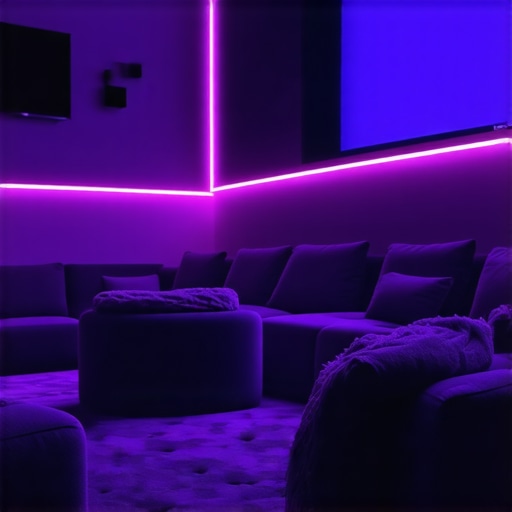
Harnessing the Power of Advanced LED Strip Configurations for Immersive Home Cinema
In the realm of home theater design, ambient lighting plays a pivotal role in elevating visual experience and psychological immersion. The integration of sophisticated LED strip and backlight ideas enables enthusiasts and professionals alike to craft environments that transcend basic illumination, fostering a cinematic atmosphere rooted in technical mastery and aesthetic finesse.
Strategic Placement of LED Backlights for Visual Depth and Contrast Enhancement
Optimal placement of LED strips—such as behind the display, along ceiling coves, or beneath furniture—can significantly improve perceived contrast and depth perception in a movie room. By utilizing expert backlight solutions, designers create a layered lighting environment that reduces eye strain while boosting scene realism. This approach aligns with research indicating that well-positioned ambient lighting enhances color fidelity and image clarity.
Addressing the Challenge of Light Spill and Glare in LED Installations
One of the most complex technical issues in LED strip implementation involves controlling stray light to prevent glare and distraction. Employing specialized diffusers, directional LED strips, and strategic shielding minimizes undesirable spillover, ensuring that backlighting complements rather than competes with the display. These techniques demand a nuanced understanding of light behavior and advanced installation skills, often guided by industry standards outlined in professional white papers.
What are the best practices for balancing brightness and color temperature to achieve a natural viewing experience?
Achieving a natural, film-like ambiance requires careful calibration of LED brightness and color temperature. Experts recommend adjustable LED strips with high CRI (Color Rendering Index) and dynamic control systems that adapt lighting based on content and ambient conditions. This calibration enhances visual comfort and prevents the unnatural glow often associated with poorly configured lighting setups. For detailed guidance, consult the ultimate guide on LED strips.
For those seeking to elevate their installation skills, exploring high-end LED strip options such as RGBW or tunable white variants offers significant creative and functional benefits. These options allow for precise control over hue, saturation, and warmth, creating a personalized and dynamic environment that adapts to different viewing moods and times.
To deepen your understanding of professional lighting design, reviewing industry standards and case studies can provide valuable insights. Engaging with expert communities or consulting with audiovisual specialists ensures that your lighting system not only enhances aesthetics but also meets technical and safety standards.
Interested in expanding your home theater expertise? Explore related articles on ambient lighting ideas for cinema-quality setups or contact our specialists for tailored advice at our contact page.
Refining the Art of LED Placement for Optimal Visual Harmony
Effective LED strip placement goes beyond simple installation; it requires a nuanced understanding of room architecture and light behavior. Positioning strips behind the display can create a floating image effect, while ceiling coves add a soft glow that frames the viewing area. Beneath furniture or along baseboards, LEDs can subtly direct attention and improve spatial perception. Using expert guidance on LED selection and placement ensures a layered, balanced lighting scheme that enhances contrast and depth without overwhelming the visual experience.
The Challenge of Dynamic Light Control and Adaptive Brightness
In high-end home theater setups, static lighting often falls short of creating truly immersive atmospheres. Integrating smart control systems that adjust brightness and color temperature in real-time based on content or viewer preferences can dramatically improve the experience. This adaptive approach minimizes eye strain during long viewing sessions and maintains consistent image quality. Professionals often recommend using tunable white or RGBW LED strips, which offer extensive customization options for different scenarios. For more insights, see the ultimate guide on LED strips and bias lighting.
How can I develop a lighting scheme that evolves with different content types and moods?
Designing a dynamic lighting environment involves combining scene-specific presets with manual controls for quick adjustments. Implementing advanced control systems, such as voice-activated or app-based interfaces, allows seamless transitions between cinematic, casual, or festive modes. Experts emphasize calibrating LED brightness levels and color temperatures to match scene intensity, ensuring that lighting enhances rather than distracts from the content. This nuanced calibration aligns with research highlighting that well-balanced ambient lighting can significantly improve perceived image quality and viewer comfort.
To deepen your expertise, explore case studies and professional tutorials on cinema-grade ambient lighting ideas. Engaging with community forums or consulting with audiovisual specialists can also provide tailored solutions and innovative ideas that push the boundaries of home theater lighting design.
Looking to further elevate your setup? Consider reading about bias light innovations for 2025 or reaching out to our experts for personalized advice on creating the perfect ambiance.
Push the Boundaries with Multi-Zone LED Control for Personalized Viewing
Imagine a lighting setup that adapts seamlessly to different movie genres or gaming sessions—creating an environment that enhances immersion without overwhelming the senses. Multi-zone LED control systems make this possible by allowing independent adjustment of lighting segments, enabling users to craft highly customized ambiances. Such configurations require sophisticated controllers capable of managing multiple channels, often integrating with smart home ecosystems for remote or voice-activated adjustments. According to industry-leading standards outlined by IEEE’s guidelines on intelligent lighting control, multi-zone systems significantly improve the versatility and aesthetic appeal of home theater environments.
Uncover the Secrets of Achieving Perfect Color Calibration for Cinematic Authenticity
Color accuracy is paramount when developing an LED backlighting scheme that complements high-definition displays. Calibration involves fine-tuning hue, saturation, and brightness levels to ensure that ambient lighting enhances rather than distorts the perceived image quality. Advanced color management systems utilize spectrophotometers to measure and adjust LED outputs precisely, aligning them with the display’s color profile. Experts recommend employing tunable white and RGBW LED strips equipped with high CRI (Color Rendering Index) ratings—typically above 90—to replicate natural light conditions accurately. For comprehensive methodologies, refer to The International Color Consortium’s standards for color calibration.
What innovations in LED technology are set to revolutionize home theater lighting in the next five years?
Emerging developments such as micro-LEDs and quantum dot-based LED strips promise unprecedented levels of color richness, efficiency, and lifespan. Micro-LEDs, with their tiny size, enable finer control and more vibrant color rendering, while quantum dot technology enhances spectral purity, resulting in more realistic and vivid ambient lighting. Additionally, integration with AI-driven control systems will allow dynamic, scene-aware adjustments that respond in real-time to content and user preferences. Industry forecasts, such as those published in NVIDIA’s research on quantum dot displays, suggest that these innovations will make professional-grade lighting accessible to home enthusiasts, democratizing immersive viewing experiences.
If you’re eager to stay ahead in the home theater lighting game, consider exploring the latest publications and product releases from leading LED manufacturers like Osram and Samsung, which are pioneering these cutting-edge technologies.
Enhance Your Setup with Real-Time Adaptive Lighting for Flawless Cinematics
Adaptive lighting systems employ sensors and AI algorithms to analyze ambient conditions and adjust LED brightness and color temperature instantaneously. This approach ensures consistent visual comfort and scene accuracy, especially during long viewing sessions. Implementing such systems involves integrating smart controllers with sensors capable of detecting ambient light levels, color temperature, and even viewer proximity. As an example, Lutron’s smart lighting solutions exemplify how professional-grade adaptive control can be tailored for home theaters. These systems not only optimize visual quality but also contribute to energy efficiency, reducing unnecessary power consumption while maintaining optimal ambiance.
Developing a truly responsive lighting environment demands a nuanced understanding of both hardware capabilities and software programming. It’s a blend of art and science—one that, when perfected, elevates the cinematic experience to new heights.
Harnessing Quantum Dot Technology for Spectacular Color Fidelity
Emerging advancements in quantum dot LED technology promise to elevate ambient lighting beyond current standards, delivering unparalleled spectral purity and brightness. These micro-LEDs offer finer control over hue and saturation, allowing for near-perfect color matching with high-definition displays. Integrating quantum dots into home theater lighting systems not only enhances realism but also reduces energy consumption, aligning with sustainability goals. For an in-depth exploration of this frontier, consult the comprehensive review on NVIDIA’s research portal on quantum dot innovations.
Adaptive Lighting Systems Driven by Artificial Intelligence
AI-powered control units are transforming ambient lighting by enabling real-time scene analysis and dynamic adjustment. These intelligent systems utilize sensors to monitor ambient light levels, viewer proximity, and content mood, orchestrating a seamless transition that optimizes visual comfort and cinematic immersion. The integration of machine learning algorithms ensures that lighting responds intuitively to user preferences, minimizing manual adjustments. This approach exemplifies the future of personalized home theater environments, supported by standards from IEEE’s guidelines on intelligent lighting.
What are the emerging materials promising to redefine LED longevity and efficiency?
Next-generation LED materials, such as perovskite-based compounds, are showing extraordinary potential in increasing lifespan, stability, and luminous efficacy. These materials exhibit exceptional spectral tunability, enabling the creation of highly customized lighting spectra that can adapt to specific content or mood settings. The development of durable, eco-friendly phosphors also contributes to reducing hazardous waste and improving sustainability. Industry leaders like Osram and Samsung are investing heavily in these innovations to bring cutting-edge solutions into mainstream applications, as detailed in recent publications from Nature Materials.
How can professionals leverage these technological breakthroughs to craft truly immersive home theater environments?
Professionals should prioritize integrating these advanced materials and AI systems into holistic lighting schemes, emphasizing seamless user interfaces and scene-specific presets. Embracing multi-zone control with adaptive color rendering ensures that ambient lighting complements high-resolution images while maintaining energy efficiency. Consulting industry standards and engaging with specialized manufacturers enables precise calibration and optimal deployment. For inspiration and technical guidance, explore case studies documented by Home Cinema Essentials.
Innovating with Ultra-Responsive Multi-Zone Control for Cinematic Customization
Multi-zone lighting control systems now offer unprecedented flexibility, allowing independent adjustment of lighting segments to match different genres or viewing moods. Combining high-resolution sensors with AI algorithms facilitates real-time scene adaptation, such as dimming specific zones during tense thriller sequences or brightening areas for casual viewing. Industry standards from IEEE’s guidelines on smart lighting control underscore the importance of robust, scalable architectures that support such complexity. This technology empowers enthusiasts to craft personalized, immersive experiences that evolve seamlessly with content.
Future-Proofing Your Setup with Modular and Scalable Lighting Solutions
As home theater lighting technology advances rapidly, adopting modular systems that can be easily upgraded or expanded is essential. Scalable architectures enable integration of new materials, control protocols, and AI capabilities without overhauling entire setups. This approach ensures longevity, cost-effectiveness, and adaptability to future innovations. Industry leaders advocate for open standards and interoperability, as outlined in ISO standards on lighting system interoperability. Future-proofing your environment positions your home theater at the forefront of immersive entertainment technology, ready to embrace the next wave of breakthroughs.
Discover the Cutting Edge of Home Theater Lighting with Expert Insights
Stay ahead by engaging with industry experts, attending specialized conferences, and participating in dedicated forums to exchange knowledge on emerging materials, control systems, and design philosophies. Collaborating with professionals ensures that your installation harnesses the full potential of technological advancements, delivering an unparalleled cinematic experience. For tailored advice and the latest innovations, contact our specialists through our consultation page.
Consult Top-Tier Insights to Elevate Your Home Theater Experience
In the realm of sophisticated home cinema design, leveraging expert knowledge and cutting-edge technology is essential for achieving immersive visual environments. Understanding the nuances of LED strip placement, color calibration, and adaptive control systems can significantly enhance viewer comfort and image fidelity. Industry leaders emphasize the importance of integrating multi-zone control and high-CRI LED options to create dynamic, scene-specific lighting that responds seamlessly to content variations. Staying informed through authoritative resources ensures your setup remains at the forefront of innovation.
Prioritize Precision in Lighting Calibration
Expert-level calibration of brightness and color temperature is non-negotiable for authentic cinematic replication. Utilizing spectrophotometers and high-quality tunable white or RGBW LED strips allows for meticulous adjustment, aligning ambient light with high-definition displays. This precision minimizes distractions and maximizes contrast and color accuracy, pivotal for discerning viewers and enthusiasts seeking professional-grade environments.
Implement Intelligent Control Systems
Adaptive lighting, driven by AI and sensor integration, offers real-time scene adjustments that elevate immersion. Smart controllers capable of multi-zone management enable personalized ambiance settings, whether for horror thrillers or vibrant gaming sessions. Industry standards from IEEE and specialized manufacturers guide the deployment of these sophisticated systems, ensuring reliability and scalability for future expansion.
Curated Resources for Deepening Your Expertise
- International Color Consortium: Offers comprehensive standards for color calibration, essential for accurate ambient lighting design.
- IEEE Smart Lighting Guidelines: Provides industry benchmarks for intelligent lighting control, crucial for developing adaptive environments.
- Home Cinema Essentials Blog: Delivers practical tutorials and case studies on LED installation, calibration, and scene management.
- Research on Quantum Dot Technologies: Explores emerging materials that promise unprecedented color fidelity and energy efficiency.
- Professional Lighting Forums: Connects you with industry experts and innovative discussions on scalable, future-proof lighting solutions.
Reflections from the Cutting Edge of Home Theater Design
Harnessing the latest advancements in LED technology and expert insights positions your home theater at the pinnacle of immersive entertainment. The integration of multi-zone control, precision calibration, and adaptive AI-driven lighting not only enhances audiovisual fidelity but also future-proofs your setup against rapid technological evolution. Engaging with authoritative resources and industry standards ensures your environment remains both innovative and reliable. For those committed to excellence, continuous learning and professional collaboration are the keys to crafting truly extraordinary cinematic spaces. To deepen your expertise, explore the suggested resources and consider consulting with specialized AV professionals who can tailor solutions to your unique space and vision.



Leave a Reply