

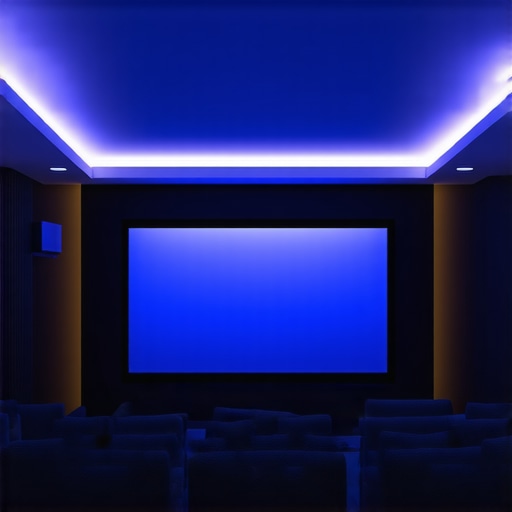
Revolutionizing Home Theater Atmosphere: The Strategic Role of LED Strip and Backlight Integration
In the realm of immersive home entertainment, ambient lighting transcends mere aesthetics, becoming a pivotal component of sensory engagement. Expertly curated LED strip and backlight configurations not only enhance visual clarity but also influence psychological perception, shaping the cinematic experience in sophisticated ways. This article explores advanced concepts in LED lighting design, emphasizing the synergy between technical precision and artistic intent, crucial for creating a truly cinematic ambiance.
Understanding the Psychophysical Impact of LED Backlighting on Viewer Perception
From a neuroscientific perspective, ambient light modulates visual comfort and emotional response. Properly aligned LED strips reduce eye strain during prolonged viewing sessions and deepen color contrast, thereby amplifying the perceived depth of images. For instance, bias lighting behind screens minimizes glare and enhances contrast sensitivity, as supported by research in vision science journals. Advanced LED configurations, such as perimeter backlighting combined with dynamic color adjustments, can create a multi-sensory environment that intensifies viewer engagement.
Expert Approaches to Customizing LED Strip Installations for Cinematic Excellence
Optimal LED placement requires precise planning, considering factors like room acoustics, wall color, and furniture layout. High-quality LED strips with adjustable white temperature and RGBW capabilities facilitate nuanced control over ambient light, aligning with scene-specific requirements. For example, warm hues for cozy atmospheres or cooler tones during intense action sequences. Referencing installation techniques, experts often recommend installing LED strips in coves or behind wall-mounted panels to achieve seamless diffusion, avoiding harsh shadows and hotspots.
How Can Advanced LED Backlighting Techniques Be Integrated with Smart Home Systems?
Integrating LED lighting with intelligent control systems enables dynamic synchronization with audio-visual content, heightening immersion. Protocols such as DMX512 or Zigbee allow for real-time adjustments responsive to scene changes, creating a cohesive ambiance. This approach is particularly effective in multi-purpose rooms where lighting must adapt swiftly between different entertainment modes. For further insights, consult our comprehensive guide on smart lighting integration.
In conclusion, mastering the art of LED strip and backlight design involves a nuanced understanding of psychophysical effects, technical customization, and system integration. Such expertise transforms conventional home theaters into professional-grade cinematic environments, elevating audience experience and setting new standards in entertainment technology.
What are the latest innovations in LED backlighting technology that can further enhance home theater setups?
Explore our curated content on bias lighting innovations for 2025 and contribute your insights to the evolving landscape of cinematic illumination.
What Are the Emerging Trends in LED Backlighting for Cinematic Environments?
As technology continues to evolve, so do the possibilities for creating immersive home theater experiences through innovative LED lighting solutions. Recent developments include the integration of OLED-based lighting panels that offer superior contrast and color accuracy, as well as the adoption of micro-LEDs that enable even more precise control over lighting zones. These advancements not only enhance visual fidelity but also open new avenues for personalized ambiance creation, allowing users to tailor lighting to specific content types or mood settings. Staying ahead in this domain requires a thorough understanding of these innovations and how they can be seamlessly integrated into existing setups.
How Can Experts Leverage Psychological Insights to Optimize LED Backlight Design?
Understanding the psychological impact of lighting on viewer perception is crucial for experts aiming to craft optimal home cinema environments. Research in environmental psychology suggests that specific color temperatures and brightness levels can significantly influence mood, focus, and overall cinematic enjoyment. For instance, cooler white tones tend to promote alertness and clarity, ideal for action-packed scenes, while warmer hues foster a cozy atmosphere suitable for dramas or romantic films. By applying these insights, professionals can fine-tune LED configurations not just for technical perfection but also for emotional resonance. For comprehensive guidance on designing psychologically optimized lighting, visit our detailed expert-backed strategies.
Incorporating these advanced techniques ensures that your home theater remains a dynamic, emotionally engaging space, elevating the overall viewing experience. For further inspiration and practical tips, explore our LED strip lighting tips and stay updated on the latest innovations in ambiance creation.
Harnessing the Power of Dynamic Color Calibration for Cinematic Precision
Achieving true cinematic excellence requires meticulous attention to color calibration, particularly when integrating LED backlighting systems. Modern LED technology allows for pixel-level color adjustments, enabling custom calibration that matches the director’s intent or specific content requirements. By leveraging professional-grade software and hardware calibration tools—such as spectroradiometers and colorimeters—home theater enthusiasts can fine-tune LED color outputs, ensuring hue accuracy and saturation fidelity. This process not only enhances visual realism but also reduces color inconsistencies that can distract viewers during critical scenes. For expert insights on calibration techniques, consult industry standards outlined by the Society of Motion Picture and Television Engineers (SMPTE).
What are the technical considerations when integrating high-precision LED calibration into existing home theater setups?
Implementing advanced calibration involves compatibility assessments between LED controllers, content sources, and display hardware. Ensuring that your LED strips support high-dynamic-range (HDR) and wide color gamut (WCG) is crucial for matching cinematic standards. Additionally, integrating calibration workflows with media servers and AV processors requires attention to latency and signal integrity. Experts recommend using professional-grade calibration software like CalMAN or LightSpace to streamline the process, coupled with hardware that supports 10-bit color depth and high refresh rates. Properly calibrated LED backlighting can dramatically improve contrast ratios and color accuracy, elevating the overall viewing experience.
Innovative Use of Micro-LED and OLED Technologies for Ambient Lighting
The evolution of micro-LED and OLED panels is revolutionizing ambient lighting solutions. These self-emitting display technologies offer unparalleled contrast and color fidelity, which can be harnessed to create immersive ambient environments that dynamically adapt to on-screen content. For instance, micro-LED panels integrated behind the display or within architectural features can emit synchronized lighting that responds to scene luminance and color palette changes, delivering a seamless cinematic experience. Moreover, with advancements in pixel density and controllability, these panels enable zone-specific lighting effects, enhancing depth perception and emotional impact.
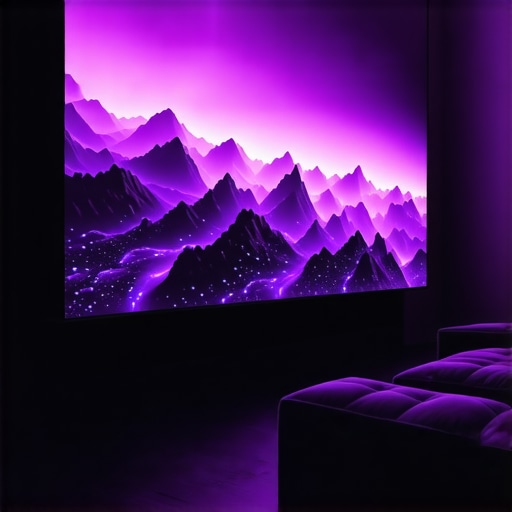
How can micro-LED panels be seamlessly integrated into existing home theater architecture for maximum aesthetic and functional benefit?
Integration involves strategic placement within walls, ceilings, or custom panels, with consideration for power supply, control interfaces, and aesthetic coherence. Modular micro-LED panels can be embedded into wall designs or concealed within soffits, providing unobtrusive yet impactful lighting zones. Connectivity with home automation systems through protocols like Zigbee or Z-Wave facilitates synchronized control with existing lighting and AV equipment. An expert approach also emphasizes acoustic considerations, ensuring that ambient lighting does not interfere with soundproofing or sound quality. For detailed installation guidance, consult resources from leading manufacturers such as Samsung’s The Wall or Sony’s Micro-LED solutions.
Leveraging Artificial Intelligence for Adaptive Ambient Lighting in Real-Time
The integration of AI-driven algorithms into home theater lighting systems marks a new frontier of personalized cinematic experiences. Using machine learning models trained on scene recognition, lighting systems can automatically adjust brightness, color temperature, and saturation based on real-time analysis of video content. This adaptive approach ensures optimal viewing conditions, reducing eye strain and enhancing color perception without manual intervention. Furthermore, AI can learn user preferences over time, tailoring lighting profiles for specific genres or individual moods. As this technology matures, it promises to deliver truly intelligent ambiance control that responds intuitively to content and user interactions.
Interested in mastering AI integration for your home theater? Explore our comprehensive guide on AI-powered ambient lighting solutions for expert-level customization and control.
Exploring the New Horizons of LED Color Dynamics in Home Cinema Design
As the boundaries of home theater illumination expand, innovative LED backlighting solutions now incorporate adaptive color dynamics that respond to content and user preferences. These systems utilize high-speed microcontrollers and sophisticated algorithms to deliver real-time color shifts, creating an immersive environment that aligns perfectly with the cinematic narrative. Implementing such technology requires a nuanced understanding of color science, hardware integration, and user interface design, ensuring that the ambiance elevates rather than distracts from the viewing experience.
How Can High-Resolution LED Arrays Elevate Cinematic Visual Fidelity?
High-density LED arrays, featuring pixel-level control, enable ambient lighting effects with unprecedented precision. This fine-grained control facilitates zone-specific lighting that complements scene luminance and color palette, effectively extending the on-screen imagery into the room’s architecture. Experts leverage these arrays to craft dynamic lighting scenarios—ranging from subtle glow to vibrant bursts—thus enhancing perceived contrast, depth, and realism. For authoritative insights, consult recent publications by the Society of Motion Picture and Television Engineers (SMPTE), which detail standards and practices for high-resolution lighting integration.
What are the technical challenges associated with pixel-level LED calibration in complex home theater environments?
Calibrating pixel-level LED arrays involves addressing issues like color uniformity, thermal management, and synchronization with display systems. Ensuring consistent hue and brightness across thousands of micro-LEDs demands advanced calibration tools—spectroradiometers and colorimeters—and software capable of compensating for environmental variables. Additionally, integrating these arrays with existing AV hardware requires compatibility with control protocols such as HDMI-CEC or proprietary automation systems. Mastering these challenges guarantees seamless visual harmony and technical reliability, crucial for professional-grade cinematic experiences.
Integrating AI-Driven Adaptive Lighting with Content Recognition Technologies
The deployment of artificial intelligence in ambient lighting systems revolutionizes the customization process. Machine learning algorithms, trained on vast databases of cinematic scenes, can analyze video content in real-time to adjust lighting parameters dynamically. This process involves complex scene recognition, mood detection, and predictive modeling to preemptively modify room ambiance. Such integration not only enhances immersion but also reduces manual intervention, enabling a truly autonomous home theater environment. Interested professionals should explore AI frameworks such as TensorFlow or PyTorch, which facilitate the development of bespoke adaptive lighting solutions.
What Role Do Emerging Micro-LED and OLED Technologies Play in Ambient Lighting Innovation?
The advent of micro-LED and OLED panels as ambient lighting sources introduces a new paradigm of cinematic illumination—self-emitting, highly customizable, and capable of zone-specific control. These panels can be embedded into architectural features such as ceilings, walls, or custom fixtures, providing a seamless integration of light and design. Their ability to produce deep blacks and vibrant colors makes them ideal for synchronized lighting that reacts to on-screen content, thereby amplifying depth perception and emotional engagement. Considering their complexity, integration strategies should involve collaboration with manufacturers like Samsung or Sony, who are pioneering these technologies.
How can adaptive micro-LED panels be incorporated into existing home theater architectures without compromising aesthetics?
Seamless integration involves strategic planning of placement, concealment, and control architecture. Modular micro-LED panels can be embedded within wall panels or soffits, making them virtually invisible when not in use. Connectivity with home automation systems via protocols such as Zigbee or Z-Wave ensures synchronized operation with existing lighting and AV components. Aesthetic coherence is achieved through custom cabinetry and architectural features that hide wiring and controllers, preserving the room’s visual integrity while delivering advanced lighting capabilities. For comprehensive guidance, consult architectural lighting design standards and collaborate with specialized integrators experienced in high-tech installations.
Expert Insights & Advanced Considerations
1. Dynamic Color Calibration Enhances Realism
Implementing pixel-level calibration with spectroradiometers and professional software ensures that LED backlighting accurately matches cinematic standards, significantly improving visual fidelity and viewer immersion.
2. Integration of Micro-LED and OLED Technologies Opens New Avenues
Utilizing self-emitting micro-LED and OLED panels enables zone-specific lighting that reacts seamlessly to on-screen content, creating a more immersive environment with superior contrast and color accuracy.
3. AI-Driven Adaptive Lighting Elevates Viewing Experience
Incorporating machine learning algorithms for scene recognition allows real-time adjustment of lighting parameters, optimizing ambiance dynamically and reducing manual control needs.
4. Strategic Placement of Ambient Lighting Enhances Room Acoustics and Aesthetics
Embedding micro-LED panels within architectural features like soffits or concealed within custom wall panels ensures aesthetic coherence while providing functional, synchronized lighting that complements the room’s acoustics and décor.
5. Emphasizing Psychophysical Research Guides Emotional Engagement
Applying insights from environmental psychology—such as selecting warm hues for intimate scenes or cooler tones for action sequences—can deepen emotional resonance and viewer engagement.
Curated Expert Resources
- SMPTE Standards Documentation: Offers industry benchmarks for color calibration and lighting consistency, essential for professional-grade home theaters.
- Society of Motion Picture and Television Engineers (SMPTE): Provides comprehensive guidelines on luminance, color fidelity, and calibration techniques vital for high-fidelity backlighting setups.
- Lighting Research Center Publications: Features cutting-edge research on environmental psychology and visual perception related to ambient lighting design.
- Industry Whitepapers on Micro-LED and OLED Integration: Share technical insights into embedding self-emitting panels within home environments for optimal aesthetic and functional outcomes.
Final Expert Perspective
Mastering LED backlighting in home theater environments demands a sophisticated blend of technical precision, innovative technology adoption, and psychological insight. By integrating advanced calibration, emerging micro-LED/OLED panels, and AI-driven adaptive controls, professionals can craft immersive cinematic atmospheres that elevate viewer engagement and authenticity. For those committed to excellence, continuous exploration of authoritative resources and emerging innovations remains essential. To deepen your understanding and stay at the forefront of this dynamic field, explore our comprehensive guides and industry standards, and consider contributing your insights to the evolving landscape of immersive home theater design. Engage with us to refine your expertise and transform ordinary rooms into professional-grade cinematic environments.

Leave a Reply