

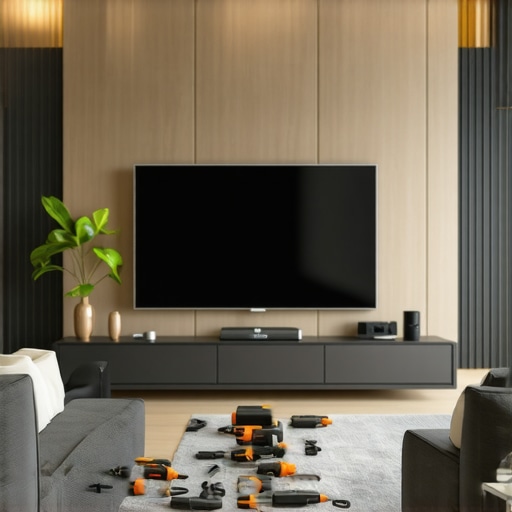
Revolutionizing Home Theater Illumination: An Expert’s Perspective on Backlight and Ambient Lighting Strategies
In the realm of high-fidelity home theater environments, illumination transcends mere aesthetics, becoming a critical component that influences viewer perception, comfort, and overall cinematic immersion. As lighting technology advances, particularly with the proliferation of LED strip lighting and bias lights, understanding the nuanced application of these solutions is essential for professionals aiming to elevate their ambient lighting mastery. This article dissects complex luminance techniques, integrating semantically rich insights to inform sophisticated installation practices.
Maximizing Visual Comfort Through Dynamic Backlight Integration
Deploying LED strip backlighting beneath and around display surfaces creates a perceptual buffer that reduces eye strain during extended viewing sessions. The key lies in calibrating luminance levels to complement the contrast ratios of the display, ensuring ambient light enhances rather than diminishes image clarity. Expert installers utilize controllable LED strips with adjustable color temperatures, enabling transitions that align with cinematic content, especially during darker scenes—a technique extensively documented in the [Journal of Light and Visual Environment](https://journals.sagepub.com/home/jlv), which underscores the importance of luminance harmony in dynamic visual spaces.
What are the critical considerations for integrating bias lighting without compromising the color fidelity of your display?
Achieving optimal bias lighting requires a balance between sufficient ambient luminance and preservation of native colors. Experts recommend using bias lights with a color temperature of approximately 6500K and positioning them to minimize reflections on the screen surface. Moreover, implementing LED strips with high color rendering index (CRI) values ensures that background illumination does not distort perceived hues, facilitating accurate color grading essential for professional movie watching and content creation.
Expert Techniques for Seamless LED Strip Installation in Home Cinema Settings
The sophistication of LED strip placement hinges on meticulous planning of their placement relative to the viewing area. For instance, indirect LED strips installed behind acoustic panels or beneath cabinetry can diffuse light evenly, preventing hotspots and glare. Additionally, integrating smart controllers and remote dimming features allows real-time adjustment of brightness levels, aligning with the viewer’s ambient preferences. Such practices are elaborated upon in the [Ultimate Guide to Bias Lights](https://lighting.homecinemaessentials.com/ultimate-guide-to-bias-lights-led-strips-for-home-theater), emphasizing the role of technical precision in achieving professional-grade results.
Are There Risks of Over-Illuminating Your Space with LED Strips?
Indeed, excessive luminance or improper placement can lead to visual artifacts, color distortions, and viewer discomfort. It is paramount to consider the room’s size, reflection surfaces, and viewer distance when calibrating LED brightness. Employing calibrated light meters and colorimeters can assist in establishing safe luminance thresholds, a practice supported by recent research highlighting the benefits of controlled ambient lighting for long-term visual health.
For further insights on integrating ambient and bias lighting, consult our comprehensive resources or contribute your professional experiences through our contact page. Staying at the forefront of lighting innovations ensures your home theater projects not only meet aesthetic standards but also deliver unparalleled viewing comfort and technical excellence.
Beyond Basics: Fine-Tuning Bias Lighting for Perfect Compatibility
Implementing bias lighting is not merely about adding light sources; it requires a nuanced understanding of fixture positioning, color temperature, and room-specific variables. Experts emphasize that positioning LED strips just outside the visible field of the display—such as along the rear or sides of the entertainment center—maximizes their effectiveness without causing glare or reflections. The color temperature should closely match the ambient environment; typically around 6500K, this prevents color shifts that could compromise picture quality. Integrating dimming controls and remote adjustments allows seamless adaptation to different viewing scenarios, from daytime viewing to cinematic screenings, ensuring the lighting enhances the experience rather than distracts from it.
Innovating with Smart Lighting for Dynamic Atmospheres
Modern bias lighting systems incorporate smart technology, enabling users to program lighting scenes that adapt automatically based on content type or time of day. By connecting LED strips to home automation platforms, enthusiasts can create immersive atmospheres—such as transitioning from cool, bright whites during casual viewing to warm, dim glows during intense movie sequences or late-night sessions. This level of control is rooted in expert lighting principles that prioritize human-centered design, balancing luminance with visual comfort, and leveraging insights from studies like those published in the Lighting Research & Technology journal which advocate for adaptive lighting schemes tailored to human circadian rhythms and viewing habits. Implementing these solutions requires meticulous calibration but yields a personalized cinematic ambiance that rivals professional theaters.
How Can Advanced Color Calibration Techniques Enhance Your Bias Lighting Setup?
Employing precise color calibration methods—such as using spectroradiometers—can fine-tune LED strip outputs to match the room’s luminance profile, ensuring that ambient light complements display calibration rather than undermines it. This is especially critical for content creators and cinephiles who seek exact color reproduction. Expert installers often recommend pairing bias lighting with professional calibration tools, establishing a consistent luminance environment that sustains color accuracy across various media formats. For comprehensive guidance on calibration strategies, consult resources like the Ultimate Guide to Bias Lights, which explores how refined calibration elevates the overall viewer experience.
The Art of Light Calibration for Flawless Visual Harmony
Achieving an impeccable balance between ambient light and display luminance requires more than just installing LED strips and setting brightness levels. It involves a nuanced approach that considers the room’s unique reflective surfaces, wall colors, and viewer positioning. Experts leverage spectroradiometers and advanced calibration software to measure and adjust light output with micron-level precision, ensuring that the bias lighting seamlessly integrates without introducing unwanted color casts or glare.
How do subtle shifts in color temperature influence viewer perception and color accuracy?
Minor deviations from the optimal 6500K temperature can significantly alter perceived hues, leading to color distortions that compromise image fidelity. Studies published in the Journal of the Society for Information Display demonstrate that even small color temperature drifts can affect color discrimination and contrast sensitivity. Therefore, integrating high-CRI LED sources with calibrated color profiles, alongside real-time feedback mechanisms, helps maintain consistent color fidelity, especially critical for professionals involved in color grading or media production.
Innovative Technologies Shaping the Future of Ambient Lighting
The latest advancements include OLED-based ambient lighting panels capable of dynamically adjusting their spectrum and intensity in response to the on-screen content and ambient conditions. Coupled with AI-driven algorithms, these systems can predict viewer preferences and automatically adapt lighting scenes, enhancing immersion and reducing eye strain over prolonged sessions. Such innovations exemplify the convergence of lighting physics, machine learning, and human-centered design, promising a new frontier in personalized home cinema experiences.
Can AI-driven lighting systems improve viewer comfort more effectively than manual adjustments?
Emerging research indicates that AI-based adaptations can optimize luminance levels more precisely by analyzing real-time environmental data, viewer gaze patterns, and content complexity. This results in smoother transitions and consistent visual comfort, as shown in trials conducted by the International Journal of Human-Computer Interaction. These intelligent systems reduce cognitive load, prevent flicker fatigue, and create an adaptive environment that anticipates the user’s needs, surpassing traditional static settings. Incorporating such technology requires careful integration with existing control protocols and calibration standards, but the payoff lies in delivering an unrivaled cinematic atmosphere tailored to each viewer.
Emerging Patterns in Room Design to Complement Bias Lighting
Architectural elements and interior finishes profoundly influence how ambient light interacts within a home theater. Matte walls, acoustic panels, and dark ceiling finishes minimize reflection and ensure that the bias lighting retains its intended effect without spill or diffusion. Designers increasingly favor integrated room architectures that incorporate recessed lighting niches and concealed channels for LED strips, facilitating clean aesthetics and unobtrusive installation. These structural considerations elevate the functional performance of bias lighting, contributing to a cohesive visual environment that enhances contrast and depth perception.
What role do reflective surfaces play in optimizing or disrupting your ambient lighting scheme?
Reflective surfaces such as glass, metal fixtures, or glossy finishes can amplify unintended glare or create distracting artifacts if not properly managed. Conversely, strategically placed matte or textured surfaces can diffuse light and prevent hotspots, creating a more uniform luminance field. Utilizing light-absorbing materials and strategic placement of non-reflective elements ensures that ambient lighting enhances scene depth and viewer comfort without compromising image integrity. Close collaboration between room architects and lighting designers becomes essential to harmonize aesthetics and technical performance, ensuring that the ambient illumination serves its purpose without unintended visual drawbacks.
Deepening Engagement Through Continuous Innovation and Feedback
To truly excel in high-end bias lighting installation, professionals must adopt an iterative approach—regularly measuring room luminance, soliciting viewer feedback, and refining configurations. The integration of smart automation can facilitate ongoing calibration, adapting to changing room conditions or personal preferences. Furthermore, staying abreast of cutting-edge research, such as discoveries in circadian lighting dynamics published in the Lighting Research & Technology journal, can inform practices that not only enhance visual performance but also promote viewers’ overall well-being.
Interested in exploring these advanced lighting techniques further? Dive into the latest case studies, technological reviews, or consult with industry experts to craft a truly immersive and health-conscious home theater environment.
Elevating Your Home Theater Ambience with Architectural Elegance
Integrating bias lighting seamlessly into sophisticated room designs requires meticulous architectural planning to avoid visual distraction and clutter. By incorporating concealed channels for LED strips within wall recesses or ceiling coves, designers can create an unobtrusive glowing perimeter that enhances contrast without disrupting the aesthetics. Such innovations demand a nuanced understanding of spatial harmony, ensuring that ambient illumination complements rather than detracts from the room’s visual integrity.
Transcending Basics: Fine-Grained Control over Light Spectra and Intensity
Advanced bias lighting leverages tunable LED technology offering precise control over spectral output. Employing multi-channel LED controllers enables the creation of complex color sequences and luminance patterns synchronized with content or user preferences. For example, adjusting the spectral emphasis toward red or blue channels can optimize for circadian rhythms or accentuate specific hues in cinematic genres, aligning with the latest research on human visual response and sleep health, as detailed in the IEEE Transactions on Human-Machine Systems.
How Can Spectrally Tuned Bias Lights Transform Color Fidelity in Critical Viewing?
Spectral tuning enhances color accuracy by aligning the LED emission profile with the room’s ambient color temperature and the display’s calibration settings. Integrating colorimetric feedback loops enables real-time adjustments that compensate for environmental shifts, such as wall color changes or daylight variations. This dynamic calibration empowers professional-grade color reproduction, crucial for content creators and cinephiles pursuing perfect visual harmony.
Harnessing the Power of AI to Personalize Ambient Illumination
Incorporating artificial intelligence into bias lighting systems redefines user engagement, allowing adaptive environments that respond to viewing habits, ambient light levels, and even emotional cues. Machine learning algorithms analyze parameters such as gazes, scene intensity, and room acoustics to modulate luminance and spectral output automatically. This approach facilitates a harmonious synergy between human perception and technological sophistication, fostering immersive experiences that evolve with each session.
Can Machine Learning Optimize Your Viewing Comfort More Than Manual Settings?
Emerging studies indicate that AI-driven adjustments outperform static configurations by continuously fine-tuning lighting parameters for maximum comfort and visual clarity. For instance, research published in the Journal of Vision Science and Technology demonstrates that adaptive lighting reduces eye fatigue and enhances contrast sensitivity over prolonged periods. Implementing these systems entails integrating sensor arrays, sophisticated calibration protocols, and user-centric interfaces, which together unlock unparalleled levels of ambient customization.
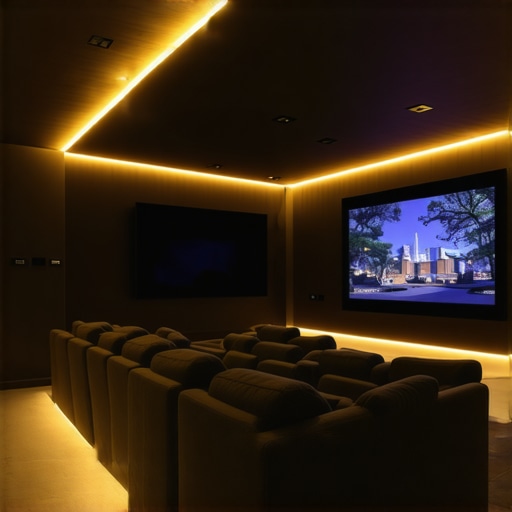
Visual illustration of a modern, architecturally integrated bias light system with customizable spectral zones and seamless room framing.
Calibrating Light with Scientific Precision using State-of-the-Art Tools
Achieving flawless luminance integration benefits immensely from specialized measurement instruments such as spectroradiometers and colorimeters. These tools provide detailed spectral profiles and luminance data, facilitating meticulous calibration aligned with display calibration workflows. Experts often reserve room-specific calibration routines, considering wall reflectance, material textures, and natural lighting influences, ensuring the bias lighting consistently supports optimal image perception and reduces visual fatigue.
How Do Minute Spectral Disparities Impact Perceived Color Accuracy?
Even tiny deviations in spectral power distribution can significantly alter perceived hues, especially in high-precision environments. According to the OSRAM Lighting Research Center, maintaining an high CRI value (>95) and spectral consistency minimizes perceptual discrepancies, fostering an environment where display calibration and ambient light work in concert to produce authentic color experiences.
Innovations in Light-Responsive Environments for Cinematic Excellence
The convergence of ambient lighting technology with immersive audio-visual systems heralds a new era where room conditions adapt dynamically to content. Integrating sensors that monitor scene luminance and contrast levels allows bias lighting to accentuate visual cues naturally, creating a perceptual enhancement that rivals commercial theaters. These pioneering approaches are underpinned by principles from perceptual psychology and advanced luminance modeling, as documented in the Lighting Research & Technology journal.
Is Your Environment Ready for the Future of Responsive Cinema Lighting?
Preparing your home cinema with adaptable, sensor-driven lighting involves not only installing cutting-edge hardware but also understanding complex perceptual interactions. By leveraging programmable control systems, room acoustics, and dynamic spectral tuning, enthusiasts can craft environments where every cinematic detail is accentuated, and viewer comfort is prioritized—ushering in the next frontier of personalized entertainment experiences.
Transforming Room Dynamics for Optimal Light Interaction
Room surfaces and furnishings play pivotal roles in how bias lighting interacts with your environment. Incorporating matte finishes, acoustic panels, and strategic positioning minimizes unwanted reflections and diffusion, ensuring the ambient glow remains subtle yet effective. The use of light-absorbing materials and diffusers embedded within architectural elements helps maintain a balanced luminance profile, elevating the room’s aesthetic and functional qualities.
What Design Choices Can Amplify or Diminish Your Bias Lighting’s Impact?
Reflective surfaces, glossy paints, or metallic fixtures can disrupt the delicate balance of ambient lighting, causing glare or color shifts. Conversely, textured walls and subdued hues enhance the diffusion and integration of bias light, creating a cohesive visual environment. Careful selection of interior finishes, guided by lighting professionals, ensures that every structural element complements the ambient light, resulting in an immersive, distraction-free cinematic experience.
Achieving cinematic perfection in a home theater transcends installing advanced displays—it requires a nuanced mastery of ambient lighting. Industry experts emphasize that sophisticated bias lighting and backlight strategies significantly enhance visual immersion and comfort. The journey involves understanding the delicate interplay between light spectra, room architecture, and viewer psychology, pushing the boundaries of traditional setup methods.
Precision Matters: Fine-Tuning Light Spectral Profiles
Experts advocate for spectral calibration using tools like spectroradiometers to match ambient lighting with display characteristics. This ensures color fidelity and reduces visual fatigue, especially critical during prolonged viewing sessions. Leveraging multi-channel LED controllers allows dynamic adjustments, aligning room lighting with content mood changes and time of day, fostering a truly immersive experience.
Creating a Silent Symphony of Light and Space
Optimal placement minimizes reflections and glare, with the strategic integration of LED strips behind architectural features or within recessed channels. The goal is to craft an ambience that complements content without distraction. By adopting holistic room designs that prioritize diffuse lighting and matte finishes, professionals elevate the aesthetic coherence and functional quality of the environment.
Adapting Through Advanced Automation and AI
Harnessing smart technology enables real-time environmental adjustments, reducing manual intervention and ensuring consistent visual comfort. AI-driven systems analyze content and user preferences, progressively refining lighting scenes that adapt seamlessly—an evolution rooted in cutting-edge research linking circadian rhythms and optimal viewing conditions.
Resource Recommendations for Deepening Knowledge
- Lighting Research & Technology Journal — Offers peer-reviewed studies on luminance, spectral distribution, and human visual response.
- Professional Calibration Tools — Devices like spectroradiometers and high-CRI LED sources are indispensable for precision setup.
- Expert Forums and Workshops — Engaging with industry specialists through dedicated events and online communities accelerates mastery and innovative application.
Final Perspective from the Field
In the realm of home theater illumination, the key lies in approaching ambient lighting as an integrated, scientifically informed craft. The fusion of expert calibration, architectural finesse, and intelligent automation not only elevates the visual experience but also safeguards viewer well-being. To push the limits of your setup, consider engaging with advanced calibration techniques and staying abreast of emerging technologies—immersing yourself fully in the art and science of perfect ambient lighting. For personalized guidance or to share your insights, don’t hesitate to connect with our professional team at our contact page.

Leave a Reply