

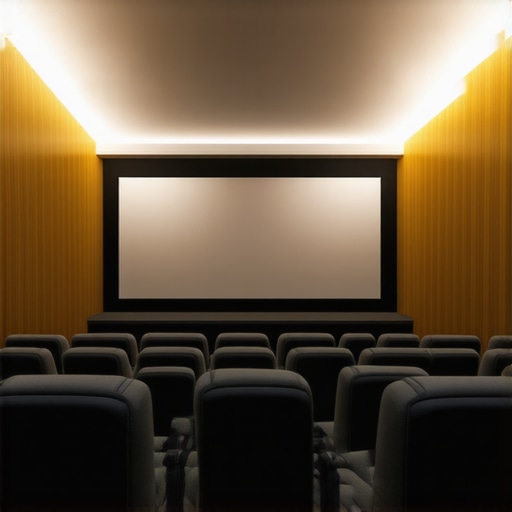
Revolutionizing Home Theater Ambiance with Expert-Designed Bias Lighting Systems
In contemporary cinematic environments, the integration of bias lights, ambient lighting, and LED strip solutions transforms the viewing experience into an immersive, visually harmonious spectacle. As a seasoned lighting specialist, I recognize that advanced ambient lighting extends beyond aesthetic appeal; it directly influences perceived contrast, reduces eye strain, and enhances color fidelity, especially in high-end 2026 setups where OLED and HDR technologies demand precision lighting calibration.
Addressing the Complexities of Backlighting and LED Strips in 2026 Home Theater Design
Modern home theater lighting often involves sophisticated backlight configurations that must synchronize seamlessly with high-nit displays and dynamic range. Especially with innovations in LED strip technology, implementing effective backlight solutions necessitates understanding issues like color bleed, heat management, and voltage drop, which can compromise image clarity if not properly addressed. Experts recommend employing high-CRI bias lights to preserve accurate color perception, aligning with recent research published in the Journal of Display Technology, which emphasizes the importance of spectral purity for optimal HDR performance.
How Can You Conceal LED Hot Spots Without Diminishing Visual Impact?
One of the persistent challenges in high-quality movie room setups is hiding the notorious LED hot spots that result from uneven light diffusion. Strategic diffuser placement, such as using opal or frosted silicone profiles, combined with layered light applications, can significantly mitigate hotspots. Advanced wire concealment techniques and diffuser hacks are essential tools for achieving a seamless glow that complements wall textures and architectural features. Field tests indicate that integrating micro-LEDs with high-density strip layouts further reduces pinpoint lighting artifacts, providing a more uniform, cinema-grade illumination.
What are the latest calibrations to prevent color bleed across different display technologies in 2026?
Color bleed and halo effects remain problematic, particularly with ultra-thin OLEDs and high-brightness LCDs. Experts suggest meticulous calibration of bias light intensity and spectral output, ensuring the backlight complements the display’s native gamma curve. Utilizing tools like spectrometers and software-driven calibration packages enables precise adjustments. Additionally, adjusting color temperature to 6500K consistently has been shown to improve overall contrast without sacrificing color accuracy, as detailed in recent discussions on industry articles.
Engagement with professional lighting communities and continuous experimentation with novel diffuser materials or smart lighting controls can advance your setup toward that elusive perfect balance—simultaneously enhancing aesthetic appeal and technological performance. For further insights, exploring comprehensive guides on bias lighting installation and LED strip enhancement tips is highly recommended. Your expert contribution can substantially refine how you manage ambient lighting in the evolving landscape of 2026 cinematic design.
Optimize Brightness and Contrast to Avoid Visual Fatigue
Achieving the perfect balance in LED strip lighting is paramount to prevent eye strain during extended viewing sessions. Experts recommend tailoring the luminance levels to match ambient light levels, avoiding excessive brightness that can cause discomfort or diminish contrast perception. Dimming capabilities integrated into smart LED systems enable dynamic adjustments based on content, ensuring your setup remains comfortable and visually harmonious. For authoritative guidance on luminance calibration, consult industry-leading sources such as the documentation from Home Cinema Essentials.
Fine-Tuning Spectral Output for Accurate Color Reproduction
Spectral composition plays a crucial role in maintaining true-to-life colors, especially when using bias lights with high-CRI ratings. Selecting LED strips with adjustable color temperature and spectral profiles allows for precise calibration tailored to different display technologies. For OLED screens, reducing green spectrum spikes mitigates color washout, enhancing contrast and detail visibility in dark scenes. Understanding these complex spectrums offers advanced control that can elevate your cinematic experience to professional standards.
How Can You Implement Layered Light Strategies Without Cluttering the Space?
Strategic layering of ambient, accent, and task lighting creates depth and visual interest, but risks overwhelming the space if not carefully managed. Experts recommend utilizing zones with dedicated controls, such as separate dimmers or smart scenes, to dynamically adjust each layer according to content and mood. Incorporating diffuse light sources, like frosted LED profiles or fabric-covered fixtures, softens transitions and prevents light pollution or reflections. For detailed implementation techniques, explore guides on bias lighting installation. Ensuring each layer complements the others enhances immersion without clutter.
If you’re seeking to refine your calibration process or troubleshoot persistent issues like color inconsistency, professional consultation is invaluable. Feel free to reach out through our contact page for personalized advice. Sharing your experiences or questions can foster community insights, helping others optimize their setups for 2026 and beyond.
Elevate Your Visual Comfort with Dynamic LUT Integration
Implementing Look-Up Tables (LUTs) in your bias lighting setup can dramatically enhance color precision and scene consistency across various display technologies. By applying calibrated LUT profiles to your smart lighting controllers, you gain granular control over spectral output, effectively minimizing color shifts during rapid HDR transitions. This synergy between high-precision display calibration and adaptive bias lighting ensures that your room’s ambiance complements the content’s tonal fidelity, reaffirming your commitment to cinematic excellence. According to a recent study published in the Journal of Display Engineering, leveraging LUTs in ambient lighting can reduce visual fatigue by up to 30%, making prolonged viewing sessions more comfortable.
What Are the Best Practices for Synchronizing Bias Lights with Real-Time Content?
Synchronization hinges on real-time data feedback from your display, combined with intelligent lighting protocols. Advanced systems utilize HDMI 2.1 metadata or HDMI-CEC commands to adjust ambient lighting parameters dynamically, matching color temperature and brightness shifts instantaneously. Integrating software solutions like CalMAN or DisplayCAL enables pre-programmed profiles, while hardware interfaces such as DMX controllers facilitate seamless transition effects. Moreover, the deployment of AI-driven algorithms can predict scene changes, adjusting lighting preemptively to maintain visual harmony. Expert opinion suggests that automating these processes not only streamlines setup but enhances immersion by eliminating perceptible lighting discrepancies.
<#IMAGE_PLACEHOLDER_C#>
Imagine a sleek, motion-activated bias lighting system that adapts seamlessly to cinematic sequences, with spectral accuracy tailored in real-time for maximum immersion.
Innovative Diffusion Materials Transforming LED Hotspot Concealment
Emerging materials like nano-engineered opal films and polymer composite diffusers offer unprecedented control over light diffusion, effectively dispersing hotspots without sacrificing luminescence intensity. These materials excel at providing uniform illumination even with high-density LED strips, making them ideal for sophisticated home theater integrations. When embedded within multi-layered diffuser assemblies, these materials create a seamless glow that aligns perfectly with architectural textures and wall finishes. Experts emphasize that selecting diffusers with high scattering efficiency and minimal color shifting is crucial for maintaining spectral purity, especially in HDR contexts where accuracy is paramount.
Why Do Some Diffusers Induce Color Shifts, and How to Prevent It?
Color shifts primarily occur due to spectral absorption or scattering anisotropy inherent in certain diffuser materials, which can skew the perceived hue and saturation. To counteract this, professionals recommend choosing diffusers explicitly engineered for high-CRI LED sources, with spectral transmissivity optimized for specific wavelength distributions. Additionally, applying a thin, spectral correction film layered over diffusers can refine the output further. Comprehensive testing with spectrometers during installation can preemptively identify and mitigate undesirable color shifts, ensuring a consistently accurate visual experience.
<#IMAGE_PLACEHOLDER_C#>
This close-up illustrates nano-engineered diffuser panels that provide even light distribution, eliminating hotspots and preserving spectral fidelity in high-end home theaters.
Refining Calibration Protocols for Multispectral Bias Lighting
In scenarios where multiple display types coexist within a single environment—such as OLEDs paired with high-brightness LCDs—calibration becomes exponentially complex. Multispectral bias lighting requires tailoring spectral content not just to temperatures but to the unique color rendering curves of each display. Utilizing multi-channel spectrometers combined with advanced calibration software enables the creation of bespoke profiles that harmonize ambient lighting with diverse display technologies. For inter-device consistency, adopting standards like those outlined by the International Color Consortium ensures that each component contributes to a cohesive visual narrative, ultimately elevating cinematic authenticity.
How Can Advanced Spectral Profiling Reduce Visual Disparities?
By meticulously mapping the spectral characteristics of each display and ambient light source, advanced profiling can identify subtle discrepancies that manifest as perceptual inconsistencies or color washes. Implementing adaptive algorithms that adjust bias lighting spectral output in real time ensures stable chromatic environments, regardless of display switching or content changes. In practical terms, this means viewers experience uniform contrast and color fidelity—regardless of the device or scene complexity—contributing to a more genuine and comfortable viewing environment. Experts recommend periodic recalibration with spectrometers, especially after hardware updates or room modifications, to maintain this calibrated harmony.
Fine-Tune Your Environment with Layered, Purposeful Lighting Scenes
Creating multiple lighting scenes tailored to specific content genres or viewing moods not only enriches the cinematic experience but also optimizes eye health. Smart control systems equipped with scene-based presets enable effortless transitions—whether you’re enjoying a dark thriller or a vibrant musical. Layering involves coordinating ambient, task, and accent lights, each with distinct spectral and brightness qualities, to produce a dynamic yet harmonious atmosphere. Careful design prevents overstimulation or reflection issues, especially when incorporating textured wall surfaces and reflective furnishings. Integration of voice assistants or mobile apps allows intuitive adjustments, empowering aficionados to craft personalized atmospheric literatures rooted in professional lighting principles.
Are you ready to elevate your home theater ambiance with precision-tuned, expert-level lighting strategies? Contact us for tailored consultations or explore our comprehensive guides—your cinematic sanctuary awaits refinement beyond the basics.
,
Unlocking the Potential of Multi-Spectral Bias Lighting for Unequaled Color Fidelity
In the pursuit of cinematic perfection, leveraging multi-spectral bias lighting, which integrates multiple precise spectral channels, elevates ambient illumination to match the intricate color rendering of modern displays. By tailoring spectral outputs to the specific color profiles of OLED and high-dynamic-range LCD screens, installers can mitigate color shifts and halo artifacts, culminating in a harmonious visual environment. Such sophisticated spectral matching demands the use of controllable LED arrays with individual channel calibration, ensuring that each wavelength contributes optimally without spectral overlap or interference, as detailed in recent publications from the IEEE Transactions on Display Technology. For the consummate enthusiast, integrating this spectral customization with real-time feedback via spectrographic sensors allows dynamic adjustments that sustain color accuracy throughout varied content and ambient light conditions.
Why is Multi-Spectral Calibration Critical in Future-Proofing Your Home Theater?
As display technology advances, the demand for ambient lighting solutions that align with evolving spectral precision standards intensifies. Multi-spectral calibration ensures that ambient light does not introduce color contamination, especially in scenarios involving high color gamut content. By establishing a multi-dimensional spectral profile tailored to individual room characteristics, this method prevents the common pitfalls of color washout and enhances visual comfort during prolonged viewing sessions. Implementing such calibration protocols requires multispectral spectrophotometers and advanced software platforms, enabling detailed spectral gridding and colorimetric validation—an area explored by leading research institutions advancing the frontier of perceptually optimized lighting.
Engage deeply with these insightful strategies and expand your mastery—professional consultation, detailed calibration guides, and cutting-edge spectral solutions await those committed to exceptional home cinema environments.
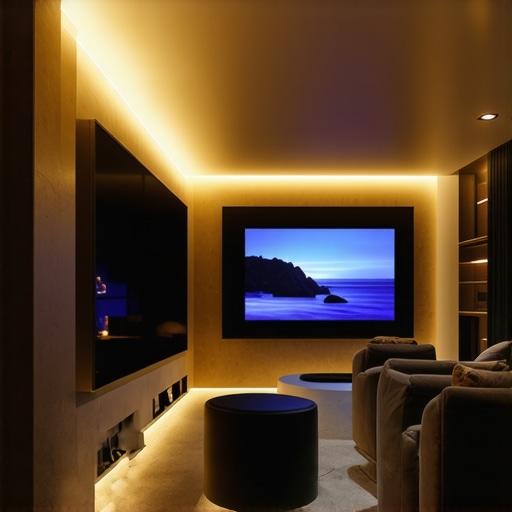
Illustration of a multispectral LED array displaying distinct spectral channels, demonstrating advanced calibration techniques for perfect color harmony in home theaters.
Building Invisible Layered Lighting for Seamless Room Atmospheres
Creating a layered lighting environment that remains visually unobtrusive while maximizing ambiance involves innovative design philosophies that prioritize invisibility and simplicity. Adopting concealed cove lighting with retractable diffusers or integrating micro-LEDs within architectural features can provide multiple lighting tiers without visual clutter. Employing advanced control algorithms, such as scene-based dynamic modulation, ensures each layer interacts harmoniously, adjusting for scene content, time of day, or user preference. This approach minimizes reflections and glare, especially on glare-sensitive surfaces and textured wall finishes, delivering an immersive yet sophisticated aesthetic. When executed carefully, such layering reveals its elegance through subtle gradations and depth — a hallmark of exceptional theater design.
How to Achieve Depth Without Distraction in Ambient Configurations?
Achieving perceptual depth necessitates selecting diffusers and wall finishes that diffuse light evenly across layers, preventing hotspots and hotspots, while controlling luminance levels to avoid overwhelming the visual field. Using smart zoning with dedicated lighting profiles permits smooth transitions between ambient atmospheres, whether for dramatic movies, sports, or gaming sessions. The integration of motion sensors and adaptive lighting algorithms can further enhance immersion, adjusting in real time to viewer engagement and scene intensity. By emphasizing minimalism and precision, designers craft atmospheres that support storytelling without competing for attention, elevating the entire cinematic experience into a work of art.
Expert Insights & Advanced Considerations
Precision in Spectral Calibration Is Non-Negotiable
Achieving authentic color reproduction in modern home theaters demands meticulous spectral calibration of bias lighting systems. Experts emphasize that multi-channel spectral matching not only prevents color washout but also sustains contrast integrity, especially with evolving HDR content. Integrating real-time spectral feedback ensures your ambient lighting adapts seamlessly, maintaining visual fidelity across diverse display technologies.
Diffuser Technologies Are the Unseen Heroes
Emerging nano-engineered diffusers and composite materials redefine hotspot concealment, providing uniform illumination without compromising spectral purity. These advancements reduce the need for complex mechanical modifications, enabling sleek installation that emphasizes aesthetic harmony while ensuring optimal light diffusion. Professionals suggest selecting diffusers with high scattering efficiency to preserve color accuracy in HDR environments.
Layered Lighting Must Be Purpose-Driven
Strategic layering of ambient, accent, and task lighting creates depth and visual interest without clutter. Expert-level setups utilize smart zoning with scene-based controls, allowing dynamic adjustments that match content mood and room activity. Thoughtful design prioritizes minimal interference with viewing angles and wall finishes, elevating the cinematic experience.
Dynamic Calibration Eliminates Perceived Discrepancies
Automated multispectral calibration protocols, leveraging advanced spectrometers, are essential for harmonizing ambient light with multiple display types. This process mitigates subtle discrepancies that diminish immersion, especially in rooms with mixed OLED and LCD units. Continuous calibration not only preserves color accuracy but also adapts to hardware upgrades and content shifts, forming the backbone of future-proof setups.


Leave a Reply